


Varun Katyal | Founder, Clapboard
Varun Katyal is the Founder & CEO of Clapboard and a former Creative Director at Ogilvy, with 15+ years of experience across advertising, branded content, and film production. He built Clapboard after seeing firsthand that the industry’s traditional ways of sourcing talent, structuring teams, and delivering creative work were no longer built for the volume, velocity, and complexity of modern content. Clapboard is his answer — a video-first creative operating system that brings together a curated talent marketplace, managed production services, and an AI- and automation-powered layer into a single ecosystem for advertising, branded content, and film. It is designed for a market where brands need content at a scale, speed, and level of specialization that legacy agencies and generic freelance platforms were never built to deliver. The thinking, frameworks, and editorial perspective behind this blog are shaped by Varun’s experience across both the agency world and the emerging platform-led future of creative production. LinkedIn: https://www.linkedin.com/in/varun-katyal-clapboard/
A Comprehensive Overview of the Types of Camera Movements
What are the main types of camera movements?
The types of camera movements in filmmaking are the backbone of visual storytelling. Each movement is more than a technical choice; it’s a narrative decision that shapes how viewers experience a scene. The foundational camera movement list includes pan, tilt, dolly, truck, pedestal, handheld, crane, Steadicam, and zoom. Each is defined by the axis of motion and the emotional or narrative effect it produces.
A pan rotates the camera left or right from a fixed point, often used to reveal information or track lateral action without moving the camera’s position. A tilt shifts the camera up or down on its vertical axis, guiding the viewer’s gaze or establishing scale. Dolly moves the entire camera forward or backward, drawing the audience into or out of the scene. Truck is a lateral move, gliding the camera left or right parallel to the action—useful for following movement or shifting perspective. Pedestal raises or lowers the camera vertically, subtly changing the audience’s vantage point. Handheld injects immediacy and tension, while crane and Steadicam movements enable sweeping, floating shots with dynamic range. Zoom, though technically a lens movement, alters composition and focus without shifting the camera’s physical position—its psychological effect is distinct from a dolly or truck.
Camera movement glossary for filmmakers
- Pan: Rotating the camera horizontally from a fixed position.
- Tilt: Moving the camera up or down on its vertical axis.
- Dolly: Physically moving the camera forward or backward.
- Truck: Moving the camera left or right, parallel to the subject.
- Pedestal (or “boom”): Raising or lowering the camera vertically.
- Crane/Jib: Lifting or lowering the camera through space, often in arcs.
- Handheld: Operating the camera without stabilization for a raw, immediate feel.
- Steadicam: Stabilized, fluid movement, often following characters through complex environments.
- Zoom: Adjusting the lens focal length to magnify or widen the shot, without moving the camera.
Choosing the right camera movement for your project
Intentionality is everything in cinematic movement styles. The right camera movement isn’t about technical prowess—it’s about aligning visual language with story and emotion. A slow dolly-in invites intimacy; an abrupt handheld shot signals chaos or urgency. Pans and tilts can establish geography or shift attention, while cranes and Steadicam shots immerse viewers in a character’s world.
Seasoned filmmakers don’t move the camera for the sake of movement. Every choice is rooted in the scene’s needs, the director’s vision, and the practical realities of the set. For commercial work, the movement must serve both brand narrative and pacing. In narrative film, the movement becomes invisible, felt rather than noticed. The best cinematographers build a cinematic shot list that’s intentional, not ornamental—each movement is a storytelling tool, not a flourish.
Understanding the full range of filmmaking techniques empowers creative leaders to communicate their vision and collaborate more effectively with camera teams. Mastery of movement—knowing when to hold steady and when to push in—elevates both branded content and narrative work, delivering images that don’t just look good, but land with meaning.
Understanding the Role of Camera Movement in Visual Storytelling
Camera movement isn’t just a technical flourish—it’s a storytelling tool as fundamental as lighting, performance, or dialogue. The types of camera movements you choose don’t just dictate what the viewer sees; they shape how the viewer feels, where their attention lands, and how they interpret the unfolding narrative. In film and video production, every pan, tilt, or tracking shot is a deliberate decision that can elevate the emotional resonance and clarity of a scene. For filmmakers, understanding the nuances of camera movement in film is non-negotiable—because it’s not about moving the camera, it’s about moving the audience.
Why camera movement matters in filmmaking
Static shots have their place. They can anchor a scene, create tension, or let performances breathe. But the moment you introduce movement, you’re adding a new layer of meaning. A slow dolly in suggests intimacy or impending revelation. A sudden handheld push can inject chaos or urgency. Camera movement influences mood and emotion by controlling proximity, rhythm, and the viewer’s sense of space. The audience doesn’t just watch the story—they feel it, physically and psychologically, through the camera’s choreography. This is why cinematic camera techniques are never arbitrary. Each movement is a calculated risk, a visual statement that must serve the story’s intent.
How different camera movements affect storytelling
Every type of movement—be it a subtle tilt, a sweeping crane, or a steady tracking shot—serves a distinct narrative function. A lateral move can reveal relationships between characters or introduce new information without a cut. A whip pan can compress time, create energy, or shift focus in a way that feels organic. Mastering the types of camera movements isn’t about memorizing a list; it’s about understanding their psychological impact. For example, a locked-off shot can isolate a character in their environment, while a floating Steadicam shot can immerse the viewer in their subjective experience. The difference between static and moving shots is the difference between observation and participation. The camera isn’t just a witness—it’s a participant in the scene’s emotional logic.
The evolution of camera movement techniques
Camera movement has evolved alongside technology and storytelling ambitions. Early cinema relied on static frames, partly out of necessity. As equipment became lighter and more versatile, filmmakers began to experiment—think of the kinetic tracking shots in classic noir, or the bravura Steadicam work in modern epics. Today, drones, gimbals, and virtual production tools have expanded the vocabulary even further. But the principle remains: movement must be motivated. The best directors and cinematographers use new tools not for spectacle, but to reinforce story beats, character arcs, and thematic undercurrents. The craft isn’t in the gear; it’s in the intent behind every move.
Camera movement and scene dynamics
Effective storytelling with camera movement is about pace and dynamics. A well-timed push-in can heighten suspense; a lingering tracking shot can slow down time, letting an audience absorb detail or emotion. These choices impact not just the look, but the rhythm of a film. In commercial and branded content, where every second counts, camera movement can clarify messaging, direct viewer focus, and inject energy or restraint as needed. It’s a core element of film storytelling techniques and cinematic shot planning—one that demands both creative vision and technical discipline.
For filmmakers and creative leaders, mastering camera movement isn’t optional. It’s a craft built on intuition, experience, and a relentless drive to tell stories that move—literally and figuratively. The audience may not always notice the camera, but they’ll always feel its presence.
Analytical Deep Dive: Static vs. Dynamic Shots
Every director wants their work to resonate, but the choice between static vs dynamic camera movement is more than a stylistic tick—it’s a narrative decision with measurable impact. The seasoned cinematographer knows that neither approach is inherently superior. Instead, each is a tool, shaped by intent, story, and the unspoken contract between camera and audience. Understanding the trade-offs is essential for anyone serious about creative shot choices.
When to use a static shot in film
Static shots in film are about restraint. They evoke stillness, calm, intimacy, and connection by keeping the camera stationary, allowing focus on details and character emotions without distraction (Editmentor, 2023). Locking the camera off isn’t about laziness—it’s about precision. In dialogue-heavy scenes, a static frame can heighten tension or invite the viewer into a character’s private world. It’s the backbone of shot-reverse-shot for a reason: when you want performances to land, you clear the visual noise.
But static shots can also signal authority. They let the audience observe, unhurried, sometimes even uncomfortably so. In commercial work, a locked-off product shot exudes confidence—no need to embellish, just look. In narrative, the same approach can evoke vulnerability or isolation. The limitation: overuse leads to stagnation. If every shot is static, the film risks feeling inert, regardless of what’s happening in frame. The camera’s stillness must be a choice, not a default.
Pros and cons of dynamic camera movement
Dynamic camera techniques—dolly, Steadicam, handheld—inject energy and momentum. They generate action, excitement, unease, and tension, adding intensity to scenes (Editmentor, 2023). Movement can immerse the audience, making them feel as if they’re inhabiting the space, not just observing it. In branded content, a well-executed move can make even the mundane feel cinematic. In narrative, it can externalize a character’s state of mind or propel the story forward.
But movement is not always additive. Poorly motivated camera moves distract. If the camera is moving for its own sake, it dilutes the emotional clarity of the scene. The audience senses when movement is ornamental rather than essential. The best dynamic shots are invisible—they serve the rhythm of the edit, the pulse of the story, and the emotional temperature of the moment. When overused, dynamic movement can exhaust the viewer, making genuine moments feel forced or performative.
Balancing movement and stillness for storytelling impact
Choosing between static and dynamic shots is rarely binary. The craft lies in modulation—knowing when to let a moment breathe and when to push it forward. The most compelling sequences often juxtapose both: a static frame that lulls the viewer, followed by a sudden move that jolts them awake. This contrast is where emotional impact lives.
On set, the decision is guided by narrative intent. What does the scene demand? Does the camera need to observe, or participate? If the goal is to draw the audience into a character’s subjective experience, a moving camera can enhance involvement and the sense of seeing through one’s own eyes (PMC, 2023). If the goal is to scrutinize, to hold a moment to the light, a static frame is unmatched. The best cinematographers interrogate each scene: What does the story need right now? What will serve the cut, not just the shot?
Ultimately, the choice between static and dynamic camera movement is a negotiation between control and energy, observation and immersion. The answer is never found in the gear list—it’s found in the script, the
Pan, Tilt, and Roll: Mastering Axis-Based Camera Movements
Axis-based camera movement—pan, tilt, and roll—forms the visual grammar of motion in film and commercial work. Each is deceptively simple in execution, but the difference between a shot that’s merely functional and one that’s narratively charged comes down to knowing exactly when and how to deploy these moves. Understanding pan tilt roll camera movement isn’t just technical; it’s a matter of intent, rhythm, and psychological impact.
How to use pan, tilt, and roll in filmmaking
Start with definitions. A pan shot in film is a horizontal swivel of the camera from a fixed position, moving left or right to reveal or track action. Tilt is its vertical counterpart—pivoting up or down to adjust the angle of view, again from a stationary base. Roll, the least conventional, rotates the camera along its lens axis, tilting the horizon itself.
Technically, these moves require stable support—tripod, fluid head, or remote head for precision. The camera doesn’t travel through space; it rotates on a single point, shifting perspective without changing position (Panning & Tilting Camera Movements — The Ultimate Guide, 2024). The result is pure axis-based motion, free from parallax or spatial distortion.
Mastery is about restraint and timing. A pan can follow a character across a room, reveal a new layer of information, or cue the audience to anticipate what’s just out of frame. Tilt shot techniques often introduce scale, power, or vulnerability—tilting up to aggrandise, down to diminish, or simply to unveil a setting. Roll is a calculated disruption, rarely used except to evoke disorientation or psychological imbalance (Types of Camera Movements in Film Explained: Definitive Guide, 2024).
The psychological effects of axis-based camera movements
These movements are not neutral. A slow pan or tilt ratchets up suspense, controlling what’s revealed and when. The audience is made to wait—anticipate—rather than being handed information with a cut. Fast pans and tilts inject urgency, propelling the viewer from one focal point to another in a single, kinetic gesture. Roll, by contrast, is a visual alarm bell: it destabilises, forces the viewer to recalibrate, and is often reserved for moments of crisis, intoxication, or narrative rupture.
Compositional impact is equally crucial. Pans can maintain spatial geography, connecting characters or spaces without fragmenting the edit. Tilts recalibrate verticality—making ceilings loom or floors recede, shifting power dynamics within the frame. Roll camera effect is inherently jarring; it works because it’s so rarely used, drawing attention to itself as a deliberate break from visual convention.
Pan vs tilt vs roll: Which is right for your scene?
Choosing between these movements is not about preference—it’s about narrative function. Use a pan when geography or lateral movement matters: tracking a character, revealing a threat, or connecting spaces. Tilt when you need to alter perceived scale, introduce a setting, or express emotional weight. Roll should be reserved for moments where you want to unsettle or immerse the audience in a character’s altered state.
Common mistakes stem from overuse or lack of motivation. Don’t pan just to show off movement; every axis-based move should serve the story or the brand’s message. Avoid jerky, unmotivated tilts—they break immersion and draw attention to the apparatus. With roll, less is always more. Unless the script demands it, leave the horizon level and the audience grounded.
Axis-based camera movements are foundational, but their impact is always contextual. The difference between routine coverage and a
Tracking, Dolly, and Arc Movements: Immersive Audience Engagement
Spatial movement is where camera language becomes kinetic—where the audience doesn’t just watch, but feels the geography of a scene. Tracking, dolly, and arc shots are the backbone of immersive camera techniques. Used well, they pull viewers into the narrative’s physical space, creating a sense of presence and momentum that static shots can’t match. The distinction between tracking shot vs dolly shot isn’t just technical; it’s about intent and the emotional experience you want to deliver.
Tracking vs dolly shots: Key differences explained
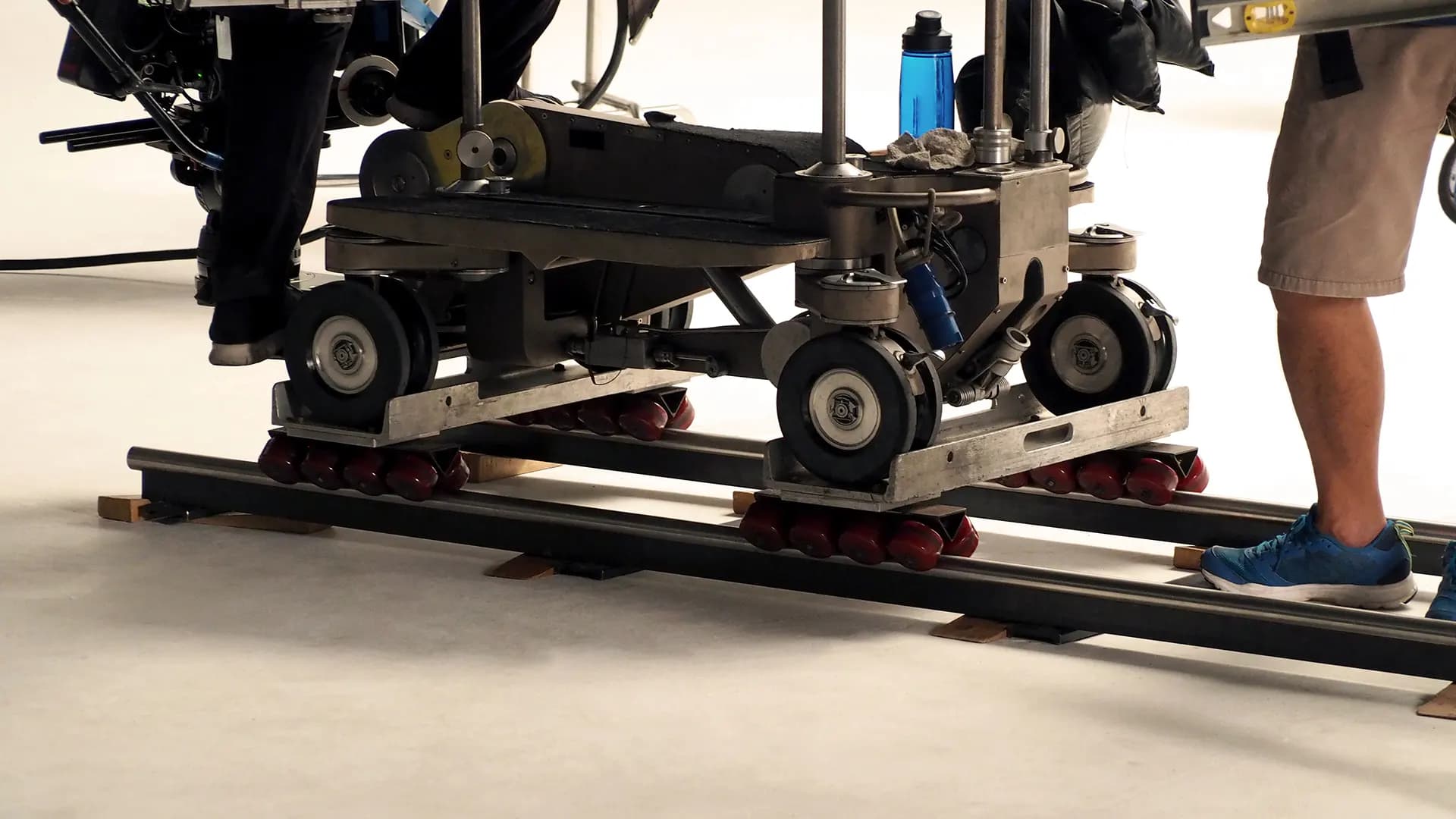
Tracking shots and dolly shots both involve moving the camera through space, but their philosophies diverge. A tracking shot typically follows a subject—think Steadicam gliding behind an actor or a camera on rails matching a runner’s pace. The energy is pursuit, observation, or accompaniment. In contrast, a dolly shot often moves the camera toward or away from a subject, usually along a straight path. It’s about approach, retreat, or revealing context. The dolly shot guide is clear: it’s about spatial relationship, not just motion.
Where tracking shots are about matching a subject’s movement, dolly shots can be more architectural, mapping the space between camera and subject. A tracking shot might put the viewer in the character’s shoes; a dolly shot can make the viewer feel the weight of distance closing or opening. Both are moving camera shots, but their psychological impact is distinct.
When to use an arc shot for dramatic effect
Arc camera movement—where the camera circles or partially circles a subject—injects dynamism and tension. Unlike tracking or dolly moves, arcs are about shifting perspective around a fixed point. The classic use-case: two characters in heated conversation, the camera orbiting to heighten emotional stakes, or to visually represent shifting power. Arcs can also reveal new information, exposing details as the perspective changes. They’re less about following and more about enveloping, pulling the audience into the center of the action.
Arc shots are especially effective for scenes that demand psychological complexity or a sense of entrapment. They can make a boardroom feel like a boxing ring, or a hero’s revelation feel like the world is spinning with them. The best arcs feel motivated—serving story, not just style.
Planning immersive camera movements for your film
Immersive camera movements don’t happen by accident. They require pre-visualization, technical precision, and a clear understanding of narrative intent. Storyboards and floor plans are essential, but so is walking the space—feeling the rhythm of the move, anticipating obstacles, and aligning camera choreography with blocking. On set, timing is everything. The operator, focus puller, and talent need to be in sync, especially when executing complex tracking or arc moves.
For commercial or branded content, these techniques can elevate the ordinary—turning a product reveal into a journey, or a founder’s walk-and-talk into something cinematic. The key is to let movement support the message, not overshadow it. In narrative work, well-executed moving camera shots can build tension, intimacy, or scale, depending on how you deploy them. The challenge is always to keep the audience inside the story’s physical world, rather than aware of the machinery behind it.
Whether you’re planning a long tracking shot through a bustling office, a dolly-in for emotional impact, or an arc to capture a pivotal exchange, these movements are more than technical flourishes. They’re tools for immersive storytelling—when chosen and executed with purpose, they make the audience not just see, but inhabit your film’s world. For deeper dives into execution, see
Push-In, Pull-Out, and Zoom: Shifting Emotional Proximity
The language of camera movement is not just technical—it's psychological. When we talk about push-in vs pull-out camera movement, we’re discussing more than choreography. We’re shaping how close the audience feels to a character or moment. These are tools for controlling cinematic proximity, and they have consequences for emotion, tension, and the way a story lands.
Push-in vs pull-out: When and why to use each
A push-in draws the viewer closer, both literally and emotionally. It’s a visual invitation—an escalation. Used at the right moment, it can signal a character’s realization or intensify a beat that needs weight. The pull-out, by contrast, creates distance. It’s a release valve, a way to contextualize, to let the audience breathe or to reveal the world pressing in on a subject. The decision isn’t arbitrary. Push-ins are about focus and intimacy; pull-outs are about perspective and sometimes, isolation.
On set, the choice comes down to narrative intent. Is the story tightening its grip, or is it letting the audience see the bigger picture? The same shot, reversed, can turn a moment of connection into one of alienation. That’s why these movements demand clarity of purpose. Used carelessly, they become visual noise—undercutting the very emotion they’re meant to amplify.
The power of zoom shots in storytelling
The zoom shot technique is a different beast. Unlike the physical dolly, a zoom changes focal length without moving the camera. The effect is unmistakable: a flattening of space, a compression of background and foreground. It’s less organic, more clinical. When used with intention, a zoom can isolate a character, heighten anxiety, or draw attention to a crucial detail. But it’s easy to misuse. Zooms can feel mechanical, even dated, if they’re not motivated by story.
There’s also the hybrid: the dolly zoom, or Vertigo effect. It’s a technical flex, but also a psychological one—a way to visually represent internal disorientation or shock. These techniques are not interchangeable. Each offers a different emotional impact of camera movement, and each asks the audience to feel something specific.
Using camera movement to create emotional shifts
Every movement is a nudge to the audience’s subconscious. A slow push-in can build dread or anticipation; a sudden pull-out can punctuate loss or isolation. The best operators calibrate speed, distance, and timing to the narrative’s needs. In branded content, a push-in might sell intimacy with a product or spokesperson. In narrative, it might underscore a character’s vulnerability or resolve.
But there’s a line. Overusing these movements—especially in quick succession—dilutes their power. Audiences become numb to the technique, and the intended emotional shift gets lost. The key is discipline. Use movement to serve story, not style for its own sake.
Ultimately, the craft lies in knowing when to move, when to hold, and when to let the frame breathe. Push-in, pull-out, and zoom are not just camera tricks; they’re the grammar of cinematic proximity. Used with intent, they turn the lens into an emotional conduit, drawing the audience exactly where you want them—closer, further, or somewhere in between.
Boom, Crane, and Bird’s Eye: Elevating Scale and Perspective
Boom shot camera movement is more than a technical flourish—it’s a deliberate choice that shapes how an audience perceives space, scale, and narrative power. Unlike lateral dollies or locked-off frames, vertical and overhead moves break ground-level perspective, inviting viewers to see the world from above or glide through it with godlike detachment. The difference between a boom, a crane, and a bird’s eye isn’t just height; it’s intention, context, and the emotional register each unlocks.
When to use boom and crane shots in film
Boom and crane shots are the workhorses of cinematic elevation. A boom shot—often executed with a jib or telescoping arm—gives precise, controlled vertical movement, useful for revealing or concealing information within a scene. Cranes, on the other hand, offer sweeping, grand gestures: rising above a crowd, descending into the action, or arcing across a landscape to deliver an establishing shot that instantly orients the audience. The decision to deploy a boom or crane is rarely about the gear itself. It’s about the narrative moment—when the story demands a shift in scale, a reveal of geography, or a change in emotional altitude. Used well, these shots don’t just impress; they clarify, contextualize, and elevate the material.
Creating dramatic scale with bird’s eye movements
Bird’s eye view in film is a statement: omniscient, sometimes clinical, always commanding. It’s not just about height—it’s about perspective. Overhead shots strip away the subjective, placing characters as pawns within a larger design. This can be used to emphasize isolation, vulnerability, or the sheer scale of an environment. Think of a protagonist dwarfed by city blocks, or a single car winding through endless desert. Bird’s eye isn’t for every scene. It’s a tool for when the story needs to zoom out, to remind the viewer of context, fate, or the insignificance of individual action within a grander tableau. The risk? Overuse flattens drama. The reward? When deployed with restraint, it can transform a sequence into something mythic.
Establishing context with vertical camera movement
Vertical movement isn’t just spectacle—it’s orientation. In establishing shots, a slow crane or boom up can reveal the geography of a space, the hierarchy of characters, or the stakes of a scene. This isn’t about showing off the budget; it’s about grounding the audience. For creative leaders, the temptation is to chase scale for its own sake, but the most effective vertical moves are motivated. They serve the story, not the sizzle reel. When the camera rises, the audience’s understanding should rise with it—whether that means grasping the size of a location, the scope of a conflict, or the interconnectedness of narrative threads. For teams seeking cinematic scale techniques, the lesson is clear: use height to reveal, not just to impress.
In practice, boom, crane, and bird’s eye movements are a test of creative discipline. They offer the chance to elevate production value and audience perspective, but only if wielded with purpose. The best practitioners know when to rise above—and when to stay grounded.
Handheld and Subjective Movements: Realism vs. Chaos
Handheld camera movement is a language all its own—one that trades polish for pulse, and precision for presence. In the right hands, it’s a tool that can collapse the distance between audience and subject, making every beat of tension, every flicker of uncertainty, feel immediate and lived-in. But the line between realism and chaos is thin, and crossing it—intentionally or not—can reshape the entire emotional architecture of a scene.
Handheld camera movement: When to use it
Handheld shooting excels when the story demands proximity and vulnerability. In narrative films, it’s often deployed for moments of crisis or revelation—scenes where the world is shifting beneath the characters’ feet. In commercials and branded content, a handheld approach can strip away artifice, lending authenticity to testimonials or product demos. The technique is also foundational in documentary film techniques, where controlled imperfection signals truth and immediacy.
But handheld is not a default. It’s a choice that must serve the narrative or brand objective. Overuse can dull its impact, turning what should feel raw into something simply restless. The most effective handheld work is motivated—anchored in character perspective or thematic intent, not just stylistic habit.
Achieving realism through subjective camera work
Subjective camera shots push handheld movement further, aligning the lens with a character’s eyes or state of mind. This is where realism in cinematography becomes visceral: the camera stumbles, breathes, recoils, or surges forward in sync with human emotion. Used sparingly, it’s a shortcut to empathy—think of a chase sequence where the frame jitters with adrenaline, or a confrontation where the camera’s instability mirrors a character’s anxiety.
Yet, subjectivity is not synonymous with sloppiness. The best operators know when to let the camera “feel” and when to rein it in. There’s a craft to guiding the audience’s eye, even in apparent chaos, so that every shake or sway is purposeful, never arbitrary.
Managing chaos: Keeping handheld shots effective
Chaotic camera techniques have their place—especially when the story calls for disorientation or danger. But chaos must be managed. Unintentional distraction is the enemy. Audiences are quick to spot movement that feels gratuitous or unmotivated, pulling them out of the experience rather than deeper in.
Best practices start with intention. Before rolling, clarify what the movement is meant to evoke. Use rehearsal to calibrate energy levels: too smooth, and you lose urgency; too erratic, and you lose clarity. In post, don’t hesitate to trim or stabilize moments that cross the threshold from immersive to incoherent. And always remember—sound design and editing rhythm can amplify or temper the visual energy, so handheld doesn’t operate in isolation.
For those looking to refine their approach, our handheld shot guide breaks down rig options and operator techniques that balance freedom with control.
Handheld camera movement and subjective camera shots are not shortcuts to authenticity—they’re high-wire acts that demand discipline. When wielded with intent, they inject realism and urgency. When misused, they tip into chaos. The difference is always in the hand behind the lens.
Decision-Making Framework: Choosing the Right Type of Camera Movement
Choosing types of camera movements is never a checkbox exercise. It's a deliberate act, grounded in the story you want to tell and the constraints you face. Every movement—whether a slow dolly, a handheld surge, or a static lock-off—translates intent into audience experience. The right choice is rarely about what looks impressive; it's about what serves the narrative and the production’s practical realities.
How to choose the right camera movement for your scene
Start with the script and the emotional spine of the scene. Ask: What does the audience need to feel at this moment? For tension, a creeping push-in can tighten focus. For chaos, handheld may inject urgency. For detachment, a locked-off wide shot keeps viewers at arm’s length. The movement must echo the character’s journey and the director’s vision, not just fill space with motion.
Factors to consider when planning camera movement
Filmmaking planning demands a clear-eyed view of your resources. Consider the location: tight spaces kill the feasibility of a sweeping steadicam. Think about time—complex moves eat into the schedule. Crew skill matters, too; a technically ambitious move with an inexperienced team risks disaster. Equipment limitations, lighting setups, and even actor blocking all feed into your camera movement decision guide.
- Scene geography: Does the space allow for tracks, rigs, or gimbals?
- Performance demands: Will movement distract actors or enhance their work?
- Post-production: Is stabilization or VFX cleanup a factor?
- Budget: Can you afford the gear and time for specialty shots?
Camera movement decision tree for filmmakers
Every shot selection strategy should be a negotiation between ambition and reality. Start with the narrative function: Is the shot about immersion, revelation, or distance? Next, layer in logistics: What’s possible on your schedule, with your crew, in your location? Finally, assess the trade-offs: Will a complex move add value, or will it pull focus from the story?
- If the movement clarifies emotion and can be executed cleanly, greenlight it.
- If it’s technically risky or adds minimal narrative value, simplify or reconsider.
- When in doubt, default to the movement that best aligns with the project’s tone and pacing.
Building a movement strategy for your production
Camera movement tips aren’t just about gear or technique—they’re about intent. Map out movement choices during the shot planning workflow, not as an afterthought. Collaborate with your director, AD, and key crew. Test moves in rehearsal. Always ask: Does this movement amplify the audience’s experience, or is it just noise? The best movement is invisible in its purpose, unforgettable in its impact.
Conclusion
Camera movement is not just a flourish—it is a language. Every pan, track, or tilt is a narrative decision, shaping how audiences experience a story. In the hands of a practitioner, movement is never arbitrary; it is calibrated to the emotional and structural needs of the project. The difference between a static shot and a fluid dolly is the difference between observation and immersion. This is the power of storytelling with camera movement.
Throughout cinematic history, the most memorable sequences are often defined as much by how the camera moves as by what it sees. When movement is intentional, it becomes a character in its own right—subtly guiding the viewer’s attention, building tension, or releasing it. A slow push-in can create intimacy or unease; a whip pan can disorient or energize. These are not just filmmaking techniques—they are tools for sculpting audience engagement and emotional response.
For those making decisions at the intersection of creative ambition and business realities, understanding cinematic camera techniques is essential. The right movement can elevate a brand film, clarify a commercial message, or deepen the impact of a narrative moment. It’s not about complexity for its own sake. It’s about choosing the movement that serves the story, the client, and the audience—every time.
Intentional camera movement is where craft meets purpose. When filmmakers approach each shot with clarity—whether in commercial, branded, or narrative work—they unlock the full potential of visual storytelling. The lesson is simple: movement matters. Use it with intention, and every frame becomes a more compelling part of your story.
FAQs
What are the different types of camera movements in film?
Camera movement in film falls into several core categories: pans (horizontal rotation), tilts (vertical rotation), rolls (rotation around the lens axis), tracking shots (camera physically moves with subject), dolly shots (camera moves on tracks toward or away from subject), crane or jib moves (vertical and horizontal movement), handheld, and Steadicam. Each serves a distinct visual and narrative function.
How does camera movement influence storytelling?
Camera movement shapes how an audience perceives and feels about a scene. A well-timed move can heighten tension, reveal information, or immerse the viewer in a character’s perspective. Movement isn’t decorative—used with intent, it becomes an active storytelling tool, guiding emotion and focus without words.
What is the difference between static and dynamic camera shots?
Static shots keep the camera locked off, emphasizing composition and allowing action to unfold within the frame. Dynamic shots introduce movement, either following action or revealing space. The trade-off: static shots offer restraint and clarity; dynamic shots inject energy, tension, or intimacy, but risk distraction if misused.
When should I use pan, tilt, or roll movements in my film?
Pans and tilts are fundamental for following action or revealing information without cutting. Use pans to track horizontal movement or connect subjects. Tilts suit vertical reveals or shifting focus up and down. Roll is rare—best reserved for disorientation or stylized moments. Each should serve story, not just style.
How do tracking, dolly, and arc shots enhance viewer immersion?
Tracking, dolly, and arc shots physically move the camera through space, pulling the audience into the scene. Tracking follows a subject’s movement. Dolly shots push in or pull out, often amplifying emotional beats. Arc shots circle around a subject, revealing context or shifting perspective. All three dissolve the viewer’s distance.
What is the emotional impact of push-in and pull-out camera movements?
Push-ins tighten the audience’s connection to a character or detail, often signaling importance or emotional intensity. Pull-outs create distance, signaling detachment, revelation, or a shift in perspective. Used with restraint, these moves punctuate key moments and steer audience attention precisely where it matters.
How can I choose the right type of camera movement for my scene?
Start with the emotional and narrative intent. Ask what the audience should feel or notice. If movement clarifies, reveals, or heightens engagement, it’s justified. If it distracts or adds nothing, reconsider. Match the movement’s style and scale to the scene’s needs, not to a trend or technical showcase.
.webp)
Creative Collaboration Platform: The Backbone of Modern Creative WorkWhat is a creative collaboration platform?Clapboard defines a creative collaboration platform as the operational core for today’s distributed creative teams. This is not a collection of digital collaboration tools stitched together; Clapboard’s system
Understanding the Creative Production MarketplaceWhat is a Creative Production Marketplace?Clapboard defines a creative production marketplace as a structured ecosystem where brands, agencies, and production talent converge to execute video, advertising, and branded content at scale. Unlike the legacy agency or freelanREAD FULL ARTICLE
The Urgent Need for a Creative Production Operating SystemWhy Traditional Creative Production Models Break DownClapboard sees the creative production landscape shifting under pressure. Content velocity is no longer a buzzword—it’s a mandate. Modern advertising demands relentless output across dozens of channels, each wREAD FULL ARTICLE
JOIN THE NEWSLETTER.
Content Production insights, videos, books, and freebies, delivered to your inbox weekly


LEAVE A COMMENT
Your email address will not be published.