


Varun Katyal | Founder, Clapboard
Varun Katyal is the Founder & CEO of Clapboard and a former Creative Director at Ogilvy, with 15+ years of experience across advertising, branded content, and film production. He built Clapboard after seeing firsthand that the industry’s traditional ways of sourcing talent, structuring teams, and delivering creative work were no longer built for the volume, velocity, and complexity of modern content. Clapboard is his answer — a video-first creative operating system that brings together a curated talent marketplace, managed production services, and an AI- and automation-powered layer into a single ecosystem for advertising, branded content, and film. It is designed for a market where brands need content at a scale, speed, and level of specialization that legacy agencies and generic freelance platforms were never built to deliver. The thinking, frameworks, and editorial perspective behind this blog are shaped by Varun’s experience across both the agency world and the emerging platform-led future of creative production. LinkedIn: https://www.linkedin.com/in/varun-katyal-clapboard/
Storytelling Impact of Boom Shot Camera Movement
How Boom Shots Shape Audience Perspective
The boom shot camera movement is not just a technical flourish—it’s a narrative device. By raising or lowering the camera, a boom shot instantly shifts the viewer’s vantage point, offering a perspective that can dwarf a character or elevate the mundane into the mythic. This movement can introduce a scene with authority, pull back to reveal context, or descend to immerse the audience in a character’s world. The result is a recalibration of narrative perspective, setting the tone for what the audience should feel and notice.
Using Boom Shot Camera Movement for Emotional Effect
When wielded with intent, boom shots deliver undeniable emotional impact. A slow rise at the climax of a scene can create a sense of transcendence or revelation, while a sudden drop can inject tension or vulnerability. The vertical axis is inherently dramatic—ascending can signify hope, power, or discovery; descending often signals isolation, defeat, or introspection. This is why boom shots have become a staple for directors seeking to punctuate emotional beats without dialogue, allowing movement itself to communicate subtext.
Scene Composition: Elevating Storytelling with Boom Shots
In terms of scene composition, the boom shot camera movement is a tool for scale and atmosphere. It can transform a confined set into a sprawling environment, or compress a grand location into an intimate moment. By revealing or concealing spatial relationships, boom shots guide the viewer’s eye with precision—establishing geography, connecting characters, or highlighting thematic elements. They are especially effective during transitions, smoothing shifts in pacing and drawing attention to narrative pivots without jarring the audience.
Ultimately, boom shots are not just about spectacle. They are calculated choices that serve cinematic storytelling, influencing how viewers process information, engage with emotion, and connect with the world onscreen. When used with discipline, they become a director’s shorthand for mood, scale, and meaning—a movement that imprints itself on the audience’s memory long after the cut.
What Is a Boom Shot Camera Movement?
The boom shot camera movement is a vertical camera move, achieved by physically raising or lowering the camera in space—often smoothly, sometimes dramatically. It’s a staple in the filmmaker’s vocabulary, used to reveal, elevate, or immerse. Unlike a simple tilt (where the camera pivots on its axis), a boom shot actually changes the camera’s position up or down, maintaining a consistent angle or perspective as it travels. This distinction is foundational in filmmaking terminology and underpins countless iconic moments on screen.
Boom Shot Camera Movement Explained for Beginners
At its core, a boom shot is any movement where the camera rises or descends vertically, typically on a mechanical arm or rig. The effect is a dynamic sense of elevation or descent—think of a camera gliding up to reveal a character’s face or dropping down to ground level for dramatic emphasis. This is not to be confused with a tilt, which simply rotates the camera’s lens up or down without actually moving its physical location.
Key Differences: Boom Shot vs. Crane and Jib Shots
The terms “boom shot,” “crane shot,” and “jib shot” are often used interchangeably, but precision matters. A crane shot usually refers to a large, sweeping movement, often covering significant height or distance—think Hollywood spectacle. A jib shot is a more compact version, using a smaller arm for more controlled, nuanced vertical camera movement. The boom shot camera movement is the umbrella term: it’s about vertical translation, no matter the scale or tool.
Essential Equipment for Boom Shots
Traditionally, boom shots required heavy cranes or jibs—gear reserved for big-budget sets. Today, lightweight jibs, sliders, and even stabilized handheld gimbals have democratized the technique. The choice of equipment is dictated by the shot’s scale, location, and the production’s resources. On a commercial set, a compact jib might suffice; on a narrative film, a full crane could be justified for a grand reveal.
Boom shots are chosen for their ability to add production value, reveal information, or shift emotional tone. When used with intention, they don’t just move the camera—they move the story. For a deeper dive, see our guide on types of camera movements.
When to Use a Boom Shot in Your Production
Best Scenarios for Boom Shot Camera Movement
The boom shot camera movement isn’t a catch-all—it’s a scalpel, not a sledgehammer. Use it when you need to establish geography, showcase scale, or reveal information with intent. Large crowds, expansive sets, or scenes where you want to orient the audience in space are prime opportunities. The vertical motion delivers a perspective that’s impossible to fake, setting the scene with a sense of scope and production value (StudioBinder, 2024).
Director’s Guide: Deciding When to Use a Boom Shot
Start with your narrative needs. If the story demands a reveal—whether it’s a character, a location, or a plot twist—a boom shot can deliver it with precision. Action sequences benefit when you need to follow vertical movement or heighten drama. But the decision isn’t just creative; it’s practical. Consider your location. Tight interiors or low ceilings can cripple a boom’s effectiveness. Budget and crew matter too—booms are gear- and labor-intensive. If your day is already stretched, shoehorning in a boom shot can slow production and dilute its impact.
Combining Boom Shots with Other Techniques
The best camera movements are rarely isolated. Integrate boom shots with tracking, pans, or handheld work to build visual rhythm. For example, a boom up that transitions into a steadycam walk can elevate a sequence, both literally and figuratively. The key is to let the movement serve the story, not overshadow it. Overuse is a common pitfall—if every shot soars, none stand out. Reserve the boom for moments that justify the effort, and your audience will feel the lift.
Shot selection tips are about restraint as much as ambition. A boom shot is a statement—use it when the scene, the story, and your resources align. When in doubt, ask if the movement clarifies or distracts. That’s the difference between craft and gimmick (Filmustage, 2024).
Technical Breakdown: How to Achieve Smooth Boom Shots
Step-by-Step Guide to Smooth Boom Shots
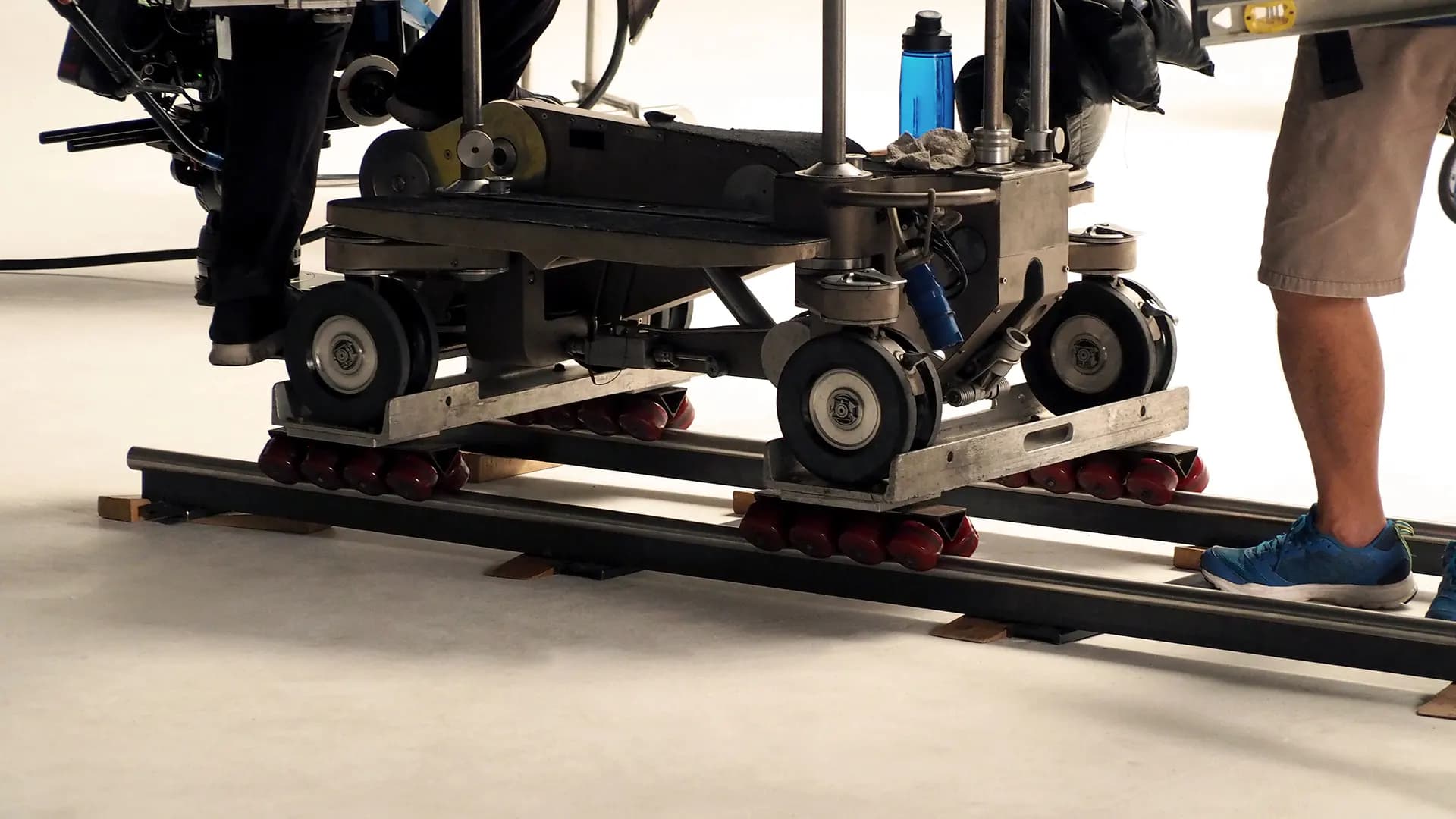
A smooth boom shot is never an accident. It’s a deliberate, mechanical ballet—camera, rig, and operator moving as one. Unlike a tilt, where only the lens pivots, a boom shot moves the entire camera up or down, demanding precise coordination and robust support gear (StudioBinder, 2023). The foundation is a stable base: whether you’re running a full-sized crane, a compact jib, or a C-stand rig for tabletop work, lock in your footprint before the camera leaves the ground.
Essential Gear for Boom Shot Camera Movement
For commercial and narrative work, I’ll reach for a jib or a small crane—anything that allows controlled vertical travel. Counterweights are non-negotiable. If you’re improvising with a C-stand, spread the legs wide, largest leg facing the boom arm, and use sandbags—15-20 pounds on the high leg, another 10-15 at the base—to keep the entire setup grounded (Waivio, 2023). Quick-release plates speed up camera swaps and minimize downtime. For more on gear selection, see our guide on camera gear for filmmakers.
Filming Techniques and Camera Stabilization for Boom Shots
Before rolling, calibrate the rig—balance the camera, check cable runs, and test for drift. Operate with slow, even pressure; let the counterweights do the heavy lifting. Eyes on the monitor, but feel the rig through your hands. Resistance or sudden shifts signal trouble—stop, adjust, repeat. For extra stabilization, add a fluid head and keep your movement arcs clean. These techniques echo the fundamentals in our shot execution tips.
Troubleshooting Boom Shot Camera Issues
If you’re fighting bounce or sway, check your counterweights and rig tension. Any flex in the arm or loose hardware will amplify shake. Communicate with your crew—especially grips and ACs—so everyone anticipates the shot and stays clear of moving parts. Safety isn’t optional; a dropped camera or swinging counterweight can end a shoot. If balance issues persist, strip the rig, rebuild, and don’t rush—smooth boom shots are built on patience and precision.
Boom Shot vs. Other Vertical Camera Movements
Boom Shot vs. Pedestal and Tilt: Key Differences
The distinction between a boom shot and other vertical camera movements is more than mechanical—it's about intent and control. A boom shot, executed with a crane or jib, physically lifts the camera through space, creating a dynamic sense of elevation or descent. In contrast, a pedestal shot moves the camera up or down on a fixed axis, typically with a tripod or pedestal base. The camera’s orientation remains constant, yielding a precise, almost clinical rise or fall. Tilt shots, meanwhile, pivot the camera vertically from a fixed point, changing the angle of view but not the camera’s physical position. This produces a shift in perspective rather than a traversal through space.
Choosing the Right Vertical Camera Movement
Each movement has its moment. The boom shot is the go-to when you want to immerse the viewer, reveal scale, or transition between planes in a single, fluid motion. It’s unmatched for dramatic reveals or sweeping transitions—think of the classic crane-out at the end of a commercial, pulling up and away to contextualize the story. Pedestal shots suit controlled environments: product demos, interviews, or any scenario demanding subtle vertical movement without spatial drift. Tilt shots excel at drawing attention, guiding the eye from detail to detail, but they lack the spatial dynamism of a true boom or pedestal move.
Creative Trade-Offs: Boom Shot vs. Alternatives
Every choice has consequences. Boom shots deliver grandeur and movement, but at the cost of time, crew, and equipment. They demand planning—rigging a crane or jib isn’t quick, and the footprint impacts set logistics. Pedestal shots are faster to set up, less intrusive, and cost-effective, but their visual impact is limited. Tilt shots require minimal gear and crew, but risk feeling static if overused. Drones offer vertical movement too, but their flight path is less precise, and they introduce noise and regulatory hurdles—best reserved for outdoor or large-scale shoots.
The decision isn’t just technical; it’s creative. Boom shot vs other camera movements is a question of narrative ambition, production realities, and the visual language you want to speak. The right move is the one that serves the story—and survives the schedule.

Common Misconceptions About Boom Shot Camera Movement
Debunking Boom Shot Camera Movement Myths
Boom shot camera movement sits at the intersection of technical execution and creative intent. Yet, it’s surrounded by persistent filmmaking myths that mislead both clients and emerging filmmakers. Let’s set the record straight: boom shots are not just a flex for big-budget productions, nor are they always about spectacle. Their real power lies in subtlety and storytelling precision.
Are Boom Shots Only for Big Productions?
One of the most common shot misconceptions is that boom shots require massive budgets and Hollywood-scale equipment. In reality, camera movement basics have evolved. Compact jibs, sliders, and even stabilized handheld rigs now make vertical movement accessible on commercial shoots, branded content, and indie films. The creative value isn’t limited by gear—it’s unlocked by intention and planning.
Boom Shot vs. Other Vertical Movements: Clearing Confusion
Not every vertical camera move qualifies as a boom shot. This is a technical distinction that often gets blurred. A true boom shot involves a controlled, vertical lift of the camera—traditionally using a crane or jib—while maintaining a fixed axis. Tilting up from a tripod or using a gimbal for a rising shot might mimic the effect, but they aren’t the same in terms of movement mechanics or visual impact. Understanding these boundaries is foundational for anyone serious about camera movement basics.
Another misconception: boom shots are inherently dramatic. While they can deliver sweeping reveals or grand entrances, the best operators know how to use them for restraint. A slow, gentle rise can introduce a character’s vulnerability or reveal a setting’s scale without shouting for attention. The craft lies in matching movement to narrative, not defaulting to spectacle.
For creative leads and marketers, recognizing these nuances isn’t just academic. It’s practical knowledge that shapes pitches, budgets, and expectations on set. For a deeper dive into related shot misconceptions, see our guide on filmmaking myths debunked. If you want to master the fundamentals, start with our breakdown of camera movement basics. The boom shot remains a tool—its impact depends entirely on how and why you use it.
Practical Tips for Low-Budget Boom Shot Camera Movement
The low-budget boom shot remains a staple of indie production, not because it’s easy, but because it’s a shortcut to cinematic scale. When budgets are tight, the right camera movement can elevate a scene well beyond its means. The trick is to sidestep the expectation of high-end gear and focus on resourcefulness—both in kit and in crew.
How to Achieve Boom Shot Camera Movement on a Budget
Start with intent. Ask what the boom shot is doing for your story. If it’s about revealing space or shifting perspective, you don’t need a massive crane. A simple ladder, a sturdy staircase, or even a pickup truck bed can provide the elevation you need. Scout your location for natural verticals—balconies, loading docks, playground structures. They’re free, and they don’t eat into your day rate.
DIY Solutions for Indie Filmmakers
Building a DIY camera rig isn’t about cutting corners; it’s about engineering what you need. Lightweight jibs made from aluminum poles or painter’s poles can be rigged with a fluid head and counterweights. If you’re shooting with DSLRs or mirrorless bodies, the load is manageable. Sandbags and gaffer’s tape become your insurance policy. Practice the move before rolling—DIY rigs demand rehearsal.
Low-Cost Gear for Vertical Camera Movements
Affordable filmmaking isn’t synonymous with poor quality. Many rental houses offer compact jibs or monopod-based boom systems at a fraction of the price of full-size cranes. Look for used gear on resale platforms—older Glidecams or Steadicam Solo rigs can double as vertical movement tools in a pinch. If you’re hiring, find operators who are comfortable with improvisation and minimal setups.
- Leverage small, agile crews—one operator and one spotter can execute most low-budget boom shots efficiently.
- Maximize production value by blocking action to suit your available movement, not the other way around.
- Stay flexible—sometimes the best shot comes from adapting to the constraints, not fighting them.
The bottom line: low-budget boom shot techniques are less about gear, more about vision and adaptability. For more budget filmmaking tips and DIY camera techniques, keep refining your on-set problem-solving. That’s where the real production value lives.
Integrating Boom Shot Camera Movement into Modern Video Workflows
The boom shot camera movement has always signaled ambition—a vertical sweep that elevates a scene both literally and emotionally. In today’s fragmented media landscape, its role has evolved but not diminished. Whether you’re framing a six-second social cut or orchestrating a hero shot for a global campaign, the boom shot remains a flexible tool in the modern cinematographer’s kit. The challenge is integrating it into a video production workflow that demands speed, adaptability, and cross-platform consistency.
Integrating Boom Shots into Modern Video Production
Modern cinematography is hybrid by necessity. For social and branded content, boom shots must be designed for immediacy and impact—often tighter, faster, and with a clear narrative purpose. In commercial work, the same move might be drawn out, with more choreography and layered blocking. The principle is the same: use the boom shot to punctuate, reveal, or transition, but tailor the execution to the platform and audience.
Workflow Tips for Seamless Camera Movements
Successful shot integration starts in pre-production. Storyboards and shot lists should flag where a boom shot adds value, not just spectacle. On set, coordination between camera, grip, and lighting is non-negotiable—especially when the shot needs to dovetail with gimbal or drone footage. In post, editors must respect the rhythm of the boom shot, allowing its movement to breathe or compress as dictated by the cut. Consistency across deliverables is a discipline, not an afterthought.
Combining Boom Shots with New Technologies
The line between traditional and emerging techniques is now blurred. It’s common to blend boom shots with drone ascents or gimbal transitions within a single sequence. The key is narrative logic: every movement must serve the story and maintain visual flow. Hybrid workflows demand technical fluency—matching color, movement speed, and camera profiles—so the audience experiences a seamless journey, not a patchwork of tricks.
Integrating boom shot camera movement into modern video production isn’t about nostalgia. It’s about using a classic tool with precision, adapting it to the realities of today’s fast, multi-format workflows. When deployed thoughtfully, the boom shot still lifts a project above the ordinary—no matter the screen or the schedule.
Conclusion
Boom shots are more than a staple of filmmaking terminology; they are a fundamental tool for directors and cinematographers seeking to elevate visual storytelling. Their presence on set signals a commitment to dynamic movement and layered composition—qualities that separate a functional frame from a memorable one. Whether sweeping across a set to reveal scale or rising above a scene to reshape perspective, the boom shot is a deliberate choice that shapes narrative impact.
Technically, executing a boom shot demands precision and collaboration. The choreography between camera operator, grip, and talent must be seamless. The rig itself—whether a classic crane, a modern jib, or a remote head—sets physical boundaries that the creative team must respect and exploit. Every move is calculated, yet the best boom shots feel effortless, hiding the complexity beneath a smooth ascent or descent. This duality is where the craft lives: in making the technical invisible so the story feels inevitable.
Creatively, boom shots are versatile. They serve as scene punctuation, emotional amplifiers, or narrative transitions. In commercials, they can transform a product reveal into an event. In branded content, they connect environments and characters in a single, fluid gesture. In narrative film, they often signal a turning point or shift in tone. The choice to use a boom shot is never arbitrary—it is always in service of the scene’s intention, whether that’s awe, intimacy, or revelation.
Across genres and budgets, boom shots remain a defining element of advanced cinematography techniques. They demand respect for their technical rigour and creative potential. For filmmakers fluent in the language of camera movements, the boom shot is both a challenge and an opportunity—a way to move the audience, literally and emotionally, through space and story. In the end, it’s not just about moving the camera; it’s about moving the viewer.
FAQs
What is a boom shot?
A boom shot is a camera movement where the camera physically rises or descends vertically, usually via a mechanical arm or jib. Unlike a simple tilt, the camera’s position changes in space, creating a dynamic sense of elevation or descent. This movement can reveal, conceal, or reframe elements within a scene, adding visual drama.
How to use a boom shot in film?
Use a boom shot to introduce scale, shift perspective, or guide the viewer’s attention. It’s most effective when motivated by story beats—revealing a location, tracking a character’s emotional shift, or punctuating a narrative moment. Precision in blocking and timing is critical; a well-executed boom shot feels purposeful, not ornamental.
What are examples of boom shots in movies?
Classic boom shots include the opening of “Touch of Evil,” the rising reveal in “The Shawshank Redemption,” and the descent into the trenches in “1917.” Each uses the vertical movement to establish geography, heighten emotion, or immerse the audience in the environment.
What is the difference between a boom shot and a crane shot?
A boom shot refers specifically to vertical camera movement, typically on a jib or boom arm. A crane shot encompasses a broader range of motion—vertical, horizontal, or even arcing—using a larger, often motorized rig. All crane shots can include boom moves, but not all boom shots are crane shots.
What are common misconceptions about boom shots?
Many assume boom shots are inherently expensive or only suitable for spectacle. In reality, their effectiveness depends on intent, not budget or scale. Another myth: boom shots must always be grand. Subtle vertical moves can be just as impactful when used with restraint and purpose.
How can I achieve a low-budget boom shot?
Resourceful filmmakers use monopods, handheld gimbals, or DIY counterweight rigs to mimic boom shots. The key is smooth, controlled movement—test different setups, rehearse blocking, and prioritize safety. With careful planning, you can achieve convincing vertical motion without high-end gear.
How do boom shots impact storytelling in film?
Boom shots shape audience perception by controlling what’s revealed and when. They can elevate tension, introduce scale, or underscore character isolation. Used thoughtfully, they transform routine coverage into visual storytelling, making the camera an active participant in the narrative.
.webp)
Creative Collaboration Platform: The Backbone of Modern Creative WorkWhat is a creative collaboration platform?Clapboard defines a creative collaboration platform as the operational core for today’s distributed creative teams. This is not a collection of digital collaboration tools stitched together; Clapboard’s system

Understanding the Creative Production MarketplaceWhat is a Creative Production Marketplace?Clapboard defines a creative production marketplace as a structured ecosystem where brands, agencies, and production talent converge to execute video, advertising, and branded content at scale. Unlike the legacy agency or freelanREAD FULL ARTICLE
The Urgent Need for a Creative Production Operating SystemWhy Traditional Creative Production Models Break DownClapboard sees the creative production landscape shifting under pressure. Content velocity is no longer a buzzword—it’s a mandate. Modern advertising demands relentless output across dozens of channels, each wREAD FULL ARTICLE

JOIN THE NEWSLETTER.
Content Production insights, videos, books, and freebies, delivered to your inbox weekly


LEAVE A COMMENT
Your email address will not be published.