HandsAway and TBWA Paris launched the Handsaway App film in France in January 2018, using real women's testimonies to challenge the normalization of everyday

HandsAway and TBWA Paris Confront Street Harassment in France
The Handsaway App campaign is a 2018 Adsoftheworld.clapboard.com/blog/directing/film-theory/asides-storytelling-approach">French public service film created by TBWA Paris for HandsAway, a French start-up, in which real women describe acts of street harassment, sexist remarks, stalking, flashing, and assault they encounter in daily life, making audible and visible what French society had long treated as ordinary.
HandsAway published the film in France in January 2018. The campaign consists of a single film asset, giving the work an intentional economy: one screen, one continuous act of bearing witness. The creative premise rests on an equivalence between voice and image — women speak their experiences in their own words while footage of familiar public spaces reinforces that the violence they describe is not exceptional but structural, according to Cbnews. As reported by Ads of the World, the campaign aimed directly at the banalization of sexist and sexual language and gestures against women in everyday French life.
The timing placed the work inside a sharply charged public moment. The #MeToo movement had produced an eightfold increase in attention to violence-against-women issues across digital platforms, and in France the conversation carried particular legislative weight as the government was advancing proposals on street harassment laws. HandsAway, which operates a mobile application allowing women to report and geolocate harassment incidents in public spaces, used the film to amplify a struggle it had been pursuing for approximately eighteen months prior to the January 2018 release, according to Clapboard. The campaign's geographic anchor is France, and its subject — the normalisation of gendered public violence — is treated not as a social aberration but as a daily condition requiring both cultural confrontation and practical remedy.
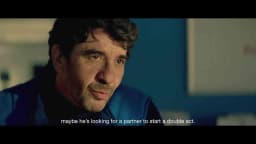
TBWA Paris grounded the Handsaway App campaign in a single, disciplined strategic insight: that the most corrosive feature of street harassment in France is not its severity in any individual instance but its collective normalisation, according to Musebyclios. The campaign does not argue that extreme violence exists — it argues that ordinary violence has been accepted, and that acceptance is the problem worth confronting.
That strategic choice has a clear competitive context. Functional and awareness competitors in the French public-interest space addressing street harassment include Stop Harcèlement de Rue and the broader ecosystem of civil-society organisations that had been active in France well before 2018. Where those efforts often relied on statistics or legislative advocacy, TBWA Paris chose unmediated personal testimony, a form that resists dismissal precisely because it offers no abstraction to argue against. The listener either accepts that these women are telling the truth or they do not — and the cumulative weight of multiple voices makes denial increasingly difficult to sustain.
The market context in France in January 2018 gave the strategy additional structural support. A systematic review cited by researchers found an eightfold increase in app-development rates for violence-against-women applications between 2010 and 2018, according to academic literature indexed by LinkedIn and Ads of the World, reflecting a growing recognition that technology platforms could serve a protective function in public spaces. HandsAway's mobile application sat precisely at that intersection, and the film functioned simultaneously as a cultural statement and as a driver of awareness for a functional product. The 2018 film extended a creative platform developed with TBWA Paris approximately eighteen months earlier, as reported by Clapboard, giving the campaign lineage and accumulative authority rather than treating the crisis as a newly discovered subject, according to Luerzersarchive.
The Handsaway App film was directed by the duo Bishop and Gruber. Their approach treats the camera as a recorder rather than an interpreter: the film does not dramatise harassment or reconstruct events but instead allows women's voices to carry narrative weight while imagery of recognisable French public space — streets, metro carriages, open squares — supplies the environmental context. The result operates closer to documentary than to conventional advertising, a formal decision that reinforces the campaign's central claim that what is being described is real and present rather than cautionary or hypothetical.
The creative team at TBWA Paris included creative directors Benjamin Marchal and Faustin Claverie, copywriter Antoine Colin, and art director Ingrid Varetz, according to Clapboard. Agency producer Jennifer Bauche and production director Teva François oversaw physical production, with first assistant director Greg Barachin coordinating on set. Casting director Sonia Cascino assembled the women whose testimonies form the film's core, a credit that carries particular weight given that the authenticity of those stories is the campaign's primary creative asset.
Chief operator Pierre Edelmann and steadicam operator Mathieu Caudroy handled cinematography, producing imagery that maintains a deliberately unglamorous relationship with French urban space — nothing is aestheticised, nothing distances the viewer from the mundane geography of harassment. Video editor Quentin Collombet shaped the pacing, according to Clapboard. The structural relationship between sound and image — voices describing acts that images of empty or populated streets neither confirm nor deny — creates a sustained cognitive dissonance designed to make the audience feel the gap between what is said and what is seen, and to understand that gap as the precise territory in which harassment operates: visible to those who experience it, invisible or ignored by those who do not. As also noted by CB News, the campaign succeeded in making that gap perceptible rather than merely arguable.
No verified performance data for the Handsaway App campaign is publicly available. No independently verifiable traditional award wins, media spend figures, reach metrics, or documented conversion data for the HandsAway application have been confirmed by Clapboard, Ads of the World, Muse by Clios, or Widd Network, all of which have referenced the campaign without attributing quantified outcomes to it.
Structural analysis, however, points to several features that position the film for durable effectiveness within the French public-interest category. The decision to use a single media asset concentrates all available attention on one experience rather than dispersing it across formats — a discipline that suits a subject requiring sustained engagement rather than rapid processing. The testimonial format is resistant to refutation in a way that data-led campaigns are not, because the authority of the voices derives from lived experience rather than methodology. The campaign also benefits from what Clapboard scores as a clear alignment between HandsAway's product function — a geolocation-based harassment-reporting application — and the film's narrative content: women describing precisely the moments the app was designed to address.
Clapboard assigns the Handsaway App campaign a score of 63 out of 100, reflecting competent execution of a socially significant brief and a strategically coherent creative approach, while noting the limitations imposed by a single-asset deployment and the absence of documented distribution scale. The 2018 French campaign represents a meaningful contribution to public discourse on street harassment, particularly given its timing relative to the #MeToo moment and the parallel legislative debate in France over criminalising street harassment.
The Handsaway App campaign is a 2018 French public service film by TBWA Paris for HandsAway. It features real women describing everyday street harassment, sexist remarks, stalking, and assault. The film challenges the normalisation of gendered public violence in France and supports HandsAway's mobile application for reporting harassment incidents.
The Handsaway App film was directed by Bishop and Gruber, according to Clapboard. The documentary-style approach placed women's testimonies at the centre of the work. Creative directors Benjamin Marchal and Faustin Claverie led the TBWA Paris team, with art director Ingrid Varetz and copywriter Antoine Colin also credited on the campaign.
The HandsAway 2018 campaign addresses street harassment, sexually explicit behaviour, sexist remarks, stalking, flashing, and physical assault. These forms of gender-based violence in French public spaces are described by real women in their own words, framing each incident not as exceptional but as part of a recognisable, normalised daily experience.
The Handsaway App film launched in France in January 2018 during heightened #MeToo public discussion. HandsAway had been pursuing its campaign platform for approximately eighteen months before the film's release, as reported by Clapboard. No specific coordinated launch tie-in with the #MeToo movement is documented, but the cultural context shaped its public reception.
HandsAway is a French start-up operating a mobile application that allows women to report and geolocate harassment incidents in public spaces across France. The 2018 film campaign supported this functional product by raising awareness of the everyday harassment the app was designed to address, bridging cultural advocacy and practical digital utility.
Clapboard assigns the Handsaway App campaign a score of 63 out of 100. The score reflects a strategically coherent and socially significant creative approach by TBWA Paris, while accounting for the campaign's single-asset format and the absence of publicly verified performance metrics or documented distribution scale for the France market.
.webp)
Creative Collaboration Platform: The Backbone of Modern Creative WorkWhat is a creative collaboration platform?Clapboard defines a creative collaboration platform as the operational core for today’s distributed creative teams. This is not a collection of digital collaboration tools stitched together; Clapboard’s system


Understanding the Creative Production MarketplaceWhat is a Creative Production Marketplace?Clapboard defines a creative production marketplace as a structured ecosystem where brands, agencies, and production talent converge to execute video, advertising, and branded content at scale. Unlike the legacy agency or freelanREAD FULL ARTICLE

The Urgent Need for a Creative Production Operating SystemWhy Traditional Creative Production Models Break DownClapboard sees the creative production landscape shifting under pressure. Content velocity is no longer a buzzword—it’s a mandate. Modern advertising demands relentless output across dozens of channels, each wREAD FULL ARTICLE