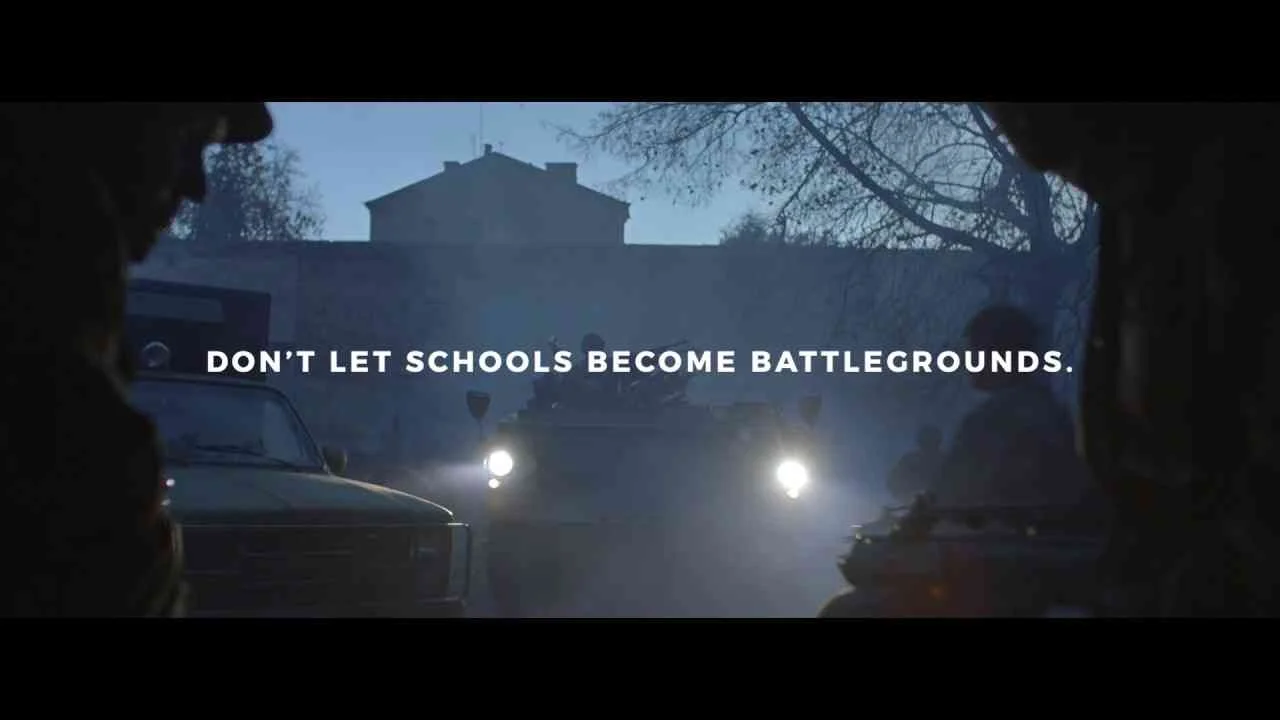
#ProtectSchools - Human Rights Watch | Clapboard Ad Archive
#ProtectSchools, launched by Human Rights Watch in partnership with BETC in France in 2016, was a rigorously conceptualized campaign that reframed the issue of militarized attacks on education through the lens of powerful symbolism rather than direct reportage, using film to deliver a sober call to action within the public service domain. Confronted with the bleak reality that schools in conflict zones are routinely invaded, requisitioned, or destroyed by armed forces, the creative solution from BETC elected not to dramatize violence literally but instead to transform the everyday iconography of school life — the classroom, the sports field — into evocative metaphors for lost innocence and violated sanctuary. This approach, which aligns directly with what Clapboard’s taxonomy classifies as FORMAT#3—Symbolize the Problem, leverages analogy as its driving force, allowing viewers to viscerally process the scale of the crisis without the mediation of graphic violence. Instead of crafting an individual child’s or teacher’s story, the campaign escalates the issue to the scale of a policy imperative, drawing clear attention to the Safe Schools Declaration, a multilateral commitment already adopted by 56 countries including a significant swathe of EU, NATO, and La Francophonie members, as well as by frontline nations most affected by these acts such as Afghanistan, Central African Republic, Democratic Republic of Congo, Somalia, South Sudan, and Sudan. By avoiding direct depiction of trauma and instead recoding familiar educational spaces as proxies for conflict, BETC’s work for Human Rights Watch positions the safety of schools and the right to education as matters of urgent international concern, not of distant tragedy. The campaign’s precise messaging — that sports fields become battlefields, classrooms become munitions rooms — relies on the kind of symbolic compression that is rapidly shareable and sharply memorable, supporting Human Rights Watch’s advocacy by directing viewers towards policy engagement through their digital platform. This technique ensures that the message remains accessible yet powerfully unsettling, facilitating both public awareness and pragmatic activism by policymakers and communities. In a market category often dominated by issue fatigue and procedural messaging, this campaign sought to innovate the advocacy genre by recasting the problem space visually and linguistically. The campaign earns 63/100 in Clapboard’s global creative archive. For an industry that too often defaults to visual literalism or spectacle, this work underlines the communicative potency of metaphor when tasked with driving both empathy and collective policy action.









.webp)