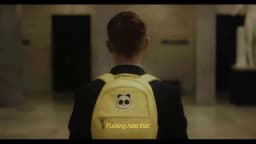
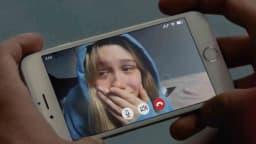
Sane Seven's Islamophobia Social Campaign placed actors in an airport terminal to expose how media narratives fuel anti-Muslim prejudice across the United

How Sane Seven Used a Social Experiment to Challenge Islamophobia in Britain
Sane Seven's Islamophobia Social Campaign, published in the United Kingdom in November 2019, is a documentary and social-experiment film that stages live encounters between actors portraying Islamophobic members of the public and a Muslim subject in an airport terminal, in order to expose how media narratives distort public attitudes toward Islam.
The campaign operates under two related titles. The umbrella project carries the provocative name 'Jihadist Killers On Our Streets,' a phrase deliberately drawn from the inflammatory register of tabloid headlines, while its central film is titled 'Terrorists In The Terminal.' That deliberate mirroring of sensationalist language is central to the campaign's argument: the words that media organisations choose to describe Muslim individuals and communities have measurable consequences for how ordinary people behave toward them in public spaces. The work is classified across the public interest and agency self-promotion categories, signalling Sane Seven's dual ambition — to contribute meaningfully to civic discourse while demonstrating the studio's creative and social conscience to prospective collaborators.
Sane Seven, a London-based creative studio operating since June 2014 according to saneseven.com, developed the campaign collaboratively with actors, a director of photography, a composer, and institutional partners across the United Kingdom. The campaign encompasses three media assets and was submitted to the industry archive by Marius Janciauskas of Sane Seven, whose creative direction shapes the project's documentary sensibility. In the United Kingdom, where community tensions around Islam and media representation had intensified through the latter half of the 2010s, the terminal setting — a site historically associated with security anxiety — carries deliberate symbolic weight, transforming a space of heightened public vigilance into a stage for social reflection.
The United Kingdom provided a charged backdrop for the Islamophobia Social Campaign in 2019. Tell MAMA, the UK's leading independent monitoring service for anti-Muslim hate incidents, reported a sustained and documented rise in Islamophobic incidents across Britain in the years leading up to the campaign's launch, with surges frequently correlating with periods of intensive tabloid and broadcast coverage of terrorism. The campaign's strategic premise — that media language actively shapes hostile public behaviour — is directly supported by Tell MAMA's longitudinal reporting, which consistently links spikes in street-level Islamophobia to specific news cycles according to tellmamauk.org.
The Community Security Trust, which monitors hate crime in the United Kingdom, similarly documented rising hostility directed at Muslim communities during this period, providing an independently verified evidentiary foundation for the campaign's central argument, as reported by Cst Org Uk. Against this landscape, Sane Seven chose not to produce a conventional awareness advertisement but instead to construct a social experiment — a format that generates its own documentary evidence and sidesteps the credibility gap that polished commercial production can create when addressing lived prejudice.
In the United Kingdom, comparable public-interest work addressing Islamophobia has been produced by organisations including MEND, the Muslim Engagement and Development body, whose community campaigns have focused on media literacy and political representation according to Mend Org Uk. The Parliamentary inquiry into Islamophobia, whose findings were published by Committees Parliament Uk, established a formal governmental acknowledgement that anti-Muslim prejudice constituted a serious and measurable social harm in Britain — lending institutional legitimacy to independent creative interventions like the one Sane Seven undertook. The agency's decision to frame its campaign as a social experiment rather than a polemic aligns with a broader strategic insight: audiences in the United Kingdom are more likely to engage with demonstrated evidence than with assertion.
Ferdia de Buitléar serves as director of photography on 'Terrorists In The Terminal,' bringing the observational visual grammar of documentary filmmaking to the campaign's staged encounters. De Buitléar's company Purple Crew provided the production equipment, according to the campaign's own credits as documented at saneseven.com, ensuring that the look and feel of the film remains consistent with the raw, unmediated aesthetic that social-experiment formats demand. The camera work prioritises reaction and proximity over compositional polish, a deliberate craft choice that reinforces the campaign's claim to documentary authenticity.
The scenario was constructed with care for ethical as well as dramatic coherence. Actors Keith Barber, Eric James Dean, Brian Shortall, Karen Chazen, and Anthony Woolley portrayed Islamophobic members of the public, playing, as the campaign's own description notes, 'unpleasant roles' that required them to perform prejudice credibly enough to provoke genuine public response. Hassan Mushaid served as the face of the campaign, embodying the Muslim subject at the centre of each encounter. The casting of real actors in structured public situations — rather than hidden-camera footage of actual strangers — places the work in the tradition of controlled social experiment rather than covert observation, a distinction with both ethical and legal implications that the production navigated through its collaboration with Collective Encounters and producer Abi Horsfield, who organised the performer logistics according to saneseven.com.
Sam Jones composed the campaign's score, providing an audio layer that guides emotional tone without overwhelming the documentary register. Heritage Group and Crowne Plaza provided the aircraft and terminal location respectively, grounding the experiment in a recognisable and symbolically loaded environment. The airport, as a site of security theatre and heightened scrutiny of Muslim travellers in the United Kingdom, transforms the location itself into an argument. Production credits for this campaign are fully documented at saneseven.com in contrast to many independent public-interest productions of comparable scale.
The Islamophobia Social Campaign earned a Clapboard Score of 63 out of 100, reflecting a project whose conceptual ambition and social relevance are not yet matched by documented reach or measurable behavioural impact. No verified sales lift, donation results, or independently audited audience-reach figures are publicly available for this campaign, and no entries or shortlists have been confirmed at Cannes Lions, the D&AD Awards, Clio Awards, The One Show, Effie Awards, Webby Awards, or WARC Awards.
Archive performance data available via clapboard.com records 642 views, 6 likes, and no comments for the campaign's primary listing — figures that indicate limited organic distribution beyond the production and creative community that initially encountered the work. For a public-interest campaign whose stated objective is to shift attitudes across the United Kingdom at scale, these numbers represent a significant gap between creative intent and demonstrable reach.
Structurally, however, the campaign exhibits several properties that independent research consistently associates with effective attitude-change communication. The social-experiment format, as noted in public-interest communications literature reviewed by bodies including the UK's Interfaith Network according to Interfaith Org Uk, tends to generate higher credibility responses than scripted advertising because it presents consequences rather than claims. The airport setting amplifies emotional stakes. The deliberate use of inflammatory language in the campaign's title functions as a disruptive hook designed to arrest attention before subverting expectation. Whether these structural strengths translated into measurable shifts in Islamophobic attitudes among United Kingdom audiences in 2019 remains unverified by any publicly available source.
'Jihadist Killers On Our Streets' is a 2019 United Kingdom public-interest film campaign created by London agency Sane Seven. Its central film, 'Terrorists In The Terminal,' uses a documentary social-experiment format to expose how media language shapes anti-Muslim prejudice, staging actor-led encounters in an airport terminal setting to prompt public reflection on Islamophobia.
Sane Seven, a London-based creative studio, produced the campaign. Marius Janciauskas submitted the work to the industry archive. Director of photography Ferdia de Buitléar shot the film, Sam Jones composed the score, and Collective Encounters supported actor coordination, with Hassan Mushaid serving as the face of the Islamophobia Social Campaign throughout.
The airport terminal is a site historically associated with heightened security scrutiny of Muslim travellers in the United Kingdom. Sane Seven selected the location to amplify the social experiment's emotional stakes, using a space already charged with post-9/11 anxiety to make the campaign's argument about media-driven prejudice immediately legible to United Kingdom audiences.
No verified awards for this campaign exist. A review of Cannes Lions, D&AD, Clio Awards, The One Show, Effie Awards, Webby Awards, and WARC Awards records confirms no shortlists or wins attributed to Sane Seven's Islamophobia Social Campaign or 'Terrorists In The Terminal' from its 2019 United Kingdom release.
The Islamophobia Social Campaign received a Clapboard Score of 63 out of 100. The score reflects strong conceptual intent and relevant social context in the United Kingdom but is constrained by limited documented reach — archive data records 642 views — and the absence of independently verified audience-impact or attitude-change data for the 2019 campaign.
Tell MAMA, the UK's independent anti-Muslim hate monitoring service, documented rising Islamophobic incidents correlating with media coverage of terrorism, according to tellmamauk.org. The Community Security Trust reported similar trends, per cst.org.uk. Sane Seven's 2019 campaign directly responds to this evidenced pattern, using documentary filmmaking to connect media language to real public behaviour.
.webp)
Creative Collaboration Platform: The Backbone of Modern Creative WorkWhat is a creative collaboration platform?Clapboard defines a creative collaboration platform as the operational core for today’s distributed creative teams. This is not a collection of digital collaboration tools stitched together; Clapboard’s system


Understanding the Creative Production MarketplaceWhat is a Creative Production Marketplace?Clapboard defines a creative production marketplace as a structured ecosystem where brands, agencies, and production talent converge to execute video, advertising, and branded content at scale. Unlike the legacy agency or freelanREAD FULL ARTICLE

The Urgent Need for a Creative Production Operating SystemWhy Traditional Creative Production Models Break DownClapboard sees the creative production landscape shifting under pressure. Content velocity is no longer a buzzword—it’s a mandate. Modern advertising demands relentless output across dozens of channels, each wREAD FULL ARTICLE