

Postmodernism in Film: Principles, Practice, and Evolving Impact
Explore postmodernism in film with clear definitions, practitioner insights, and practical guidance—understand its origins, traits, and evolving impact on cinema.
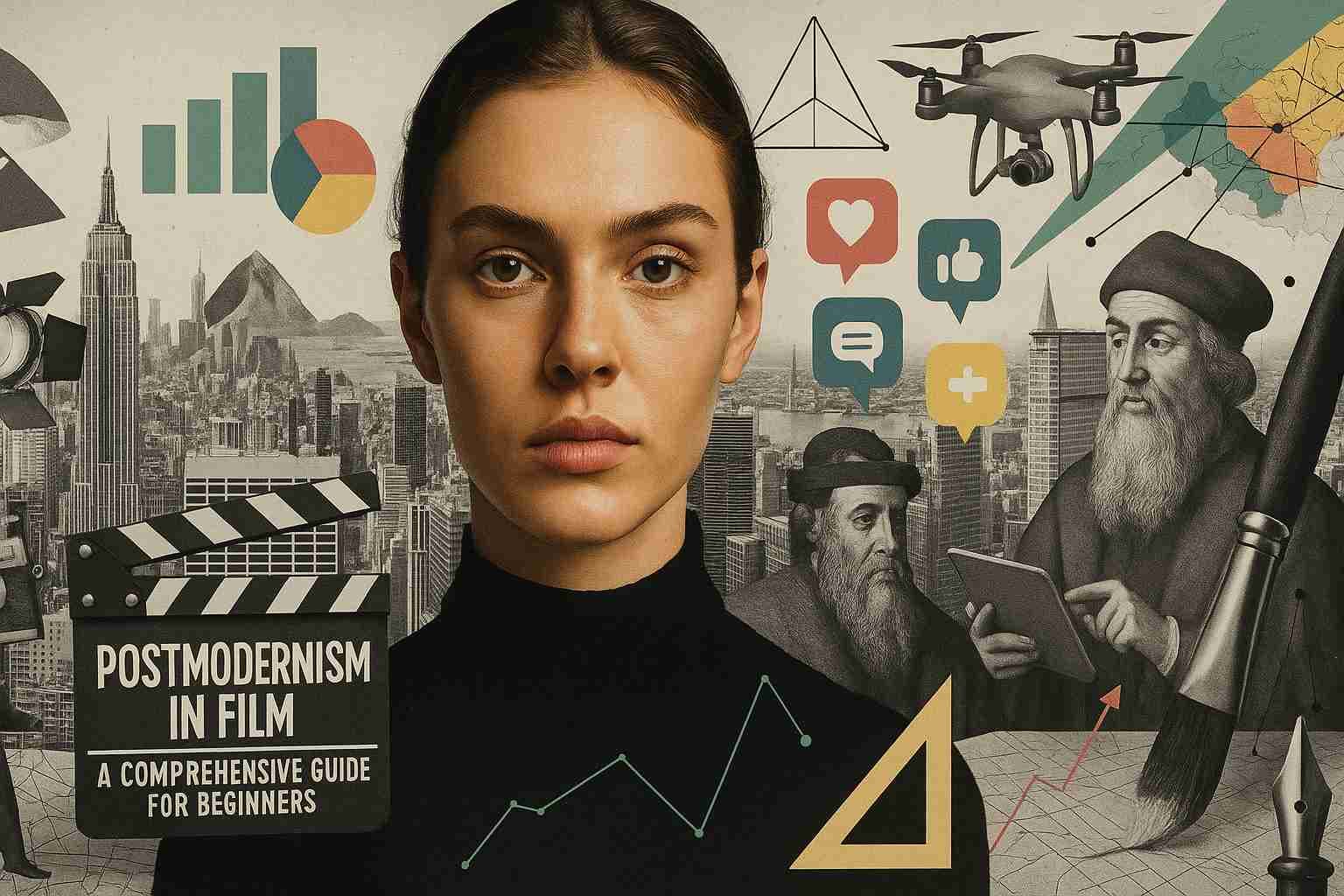

Varun Katyal | Founder, Clapboard
Varun Katyal is the Founder & CEO of Clapboard and a former Creative Director at Ogilvy, with 15+ years of experience across advertising, branded content, and film production. He built Clapboard after seeing firsthand that the industry’s traditional ways of sourcing talent, structuring teams, and delivering creative work were no longer built for the volume, velocity, and complexity of modern content. Clapboard is his answer — a video-first creative operating system that brings together a curated talent marketplace, managed production services, and an AI- and automation-powered layer into a single ecosystem for advertising, branded content, and film. It is designed for a market where brands need content at a scale, speed, and level of specialization that legacy agencies and generic freelance platforms were never built to deliver. The thinking, frameworks, and editorial perspective behind this blog are shaped by Varun’s experience across both the agency world and the emerging platform-led future of creative production. LinkedIn: https://www.linkedin.com/in/varun-katyal-clapboard/
How Postmodernism in Film Challenges Traditional Storytelling How postmodernism in film subverts cla...
What is Postmodernism in Film? Breaking Down the Basics Defining postmodernism in film for beginners...
Irony, Pastiche, and Hyperreality: Key Traits of Postmodern Films Irony as a narrative device in pos...
The Evolution of Postmodernism in Film: From Early Influences to Contemporary Impact Early milestone...
Postmodernism in Film vs. Modernism: Contrasts and Overlaps Key differences between postmodernism an...
Misconceptions About Postmodernism in Film: What Most Viewers Get Wrong Common myths about postmoder...
When to Use Postmodern Techniques in Filmmaking: A Creator’s Perspective Deciding when to use postmo...
Postmodernism in Film and the Digital Age: New Tools, New Challenges Postmodernism in film and digit...
The Future of Postmodernism in Film: Where Do We Go From Here? The future of postmodernism in film i...
Conclusion Postmodernism in film is not a phase or a fleeting aesthetic; it is a structural shift th...
FAQs What is postmodernism in film? Postmodernism in film is a movement that rejects singular meanin...
How Postmodernism in Film Challenges Traditional Storytelling
How postmodernism in film subverts classic plot structures
Postmodernism in film operates as a deliberate act of narrative subversion in movies, refusing to honor the tidy arcs and clear causality that defined classical storytelling. Where pre-postmodern films often favored linear progression—setup, conflict, resolution—postmodern cinema is more interested in rupturing that sense of narrative inevitability. It’s not just about breaking the rules for effect; it’s about exposing the artifice of those rules. The audience is made aware that what they’re watching is constructed, not inevitable. This dismantling of the “invisible hand” of story both destabilizes audience expectations and invites a more active, critical engagement with the text.
Films that embrace postmodernism rarely offer a single, authoritative point of view. Instead, they present a mosaic of perspectives, often contradicting or undermining one another. The result is a refusal to provide closure or moral certainty. The viewer is left to navigate ambiguity, forced to question not just what happens, but how meaning itself is produced. This is narrative subversion in movies at its most radical: the story no longer serves as a vessel for truth, but as a site of contestation.
Non-linear narratives and audience perception
Non-linear storytelling is a hallmark of postmodern cinema. These films fracture time, presenting events out of sequence or looping back on themselves. The aim isn’t confusion for its own sake, but a reconfiguration of how stories can be experienced and understood. By disrupting chronology, filmmakers foreground the constructed nature of narrative, making the viewer acutely aware of the choices involved in storytelling. This approach can be seen in films that play with memory, unreliable narrators, or recursive structures—each device challenging the idea that stories must unfold in a single, forward-moving line.
For the audience, non-linear storytelling demands a different kind of attention. Rather than passively absorbing a predetermined sequence, viewers must piece together meaning, often re-evaluating earlier scenes in light of later revelations. This fragmentation is not simply a stylistic flourish; it’s a structural challenge to the notion of narrative as a transparent window onto reality. The process of interpretation becomes as important as the story itself, making the act of viewing a form of authorship.
Blurring genres: postmodern approaches to film categories
Deconstructing genres is another key strategy of postmodernism in film. Where traditional films operated within established genre boundaries—western, noir, romance—postmodern works delight in hybridization and pastiche. Genre-bending films refuse to settle, mixing tropes and tones until the categories themselves lose their authority. The result is a cinema that resists easy classification, inviting audiences to question the very purpose of genre as an organizing principle.
This blurring of genres isn’t just playful; it’s a critique of the assumptions that underlie genre conventions. By juxtaposing elements that would traditionally be kept apart, postmodern films expose the limitations and artificiality of genre itself. The audience is left without the comfort of familiar signposts, forced to engage with each film on its own, often contradictory, terms. In this way, postmodernism doesn’t just expand what cinema can be—it interrogates the structures that once defined it.
For marketers and creative leaders, understanding these postmodern strategies is essential. The shift toward ambiguity, fragmentation, and genre fluidity is not a passing trend, but a reflection of deeper cultural currents. As audiences grow more sophisticated and less tolerant of formula, the grammar of cinema—and the expectations that shape it—will continue to evolve. For those shaping the future of narrative techniques in cinema, the lessons of postmodern
What is Postmodernism in Film? Breaking Down the Basics
Defining postmodernism in film for beginners
Postmodernism in film is less a strict school and more a sensibility—a way of seeing, constructing, and interpreting moving images that resists easy categorization. At its core, postmodernism in film involves a deliberate questioning of traditional narratives, genres, and the very nature of cinematic truth. It is defined by its skepticism toward grand narratives and fixed meanings, favoring instead irony, fragmentation, and self-referentiality. Unlike the classical or modernist approaches that sought coherence or artistic purity, postmodern cinema thrives on ambiguity, pastiche, and playful subversion. For creators and audiences alike, this means films that invite active interpretation and challenge the boundaries of what cinema can be.
Key philosophical roots of postmodern cinema
The origins of postmodernism in cinema are inseparable from broader intellectual shifts in the late 20th century. Philosophers like Jean-François Lyotard and Jacques Derrida questioned the existence of universal truths, proposing instead that reality is constructed from multiple, often conflicting perspectives. As these ideas migrated from philosophy to art and media, filmmakers began to experiment with narrative structure, genre conventions, and the relationship between fiction and reality. Postmodern film theory draws on these roots, treating the film text not as a window onto the world, but as a construct—one that can be deconstructed, remixed, or even mocked from within.
Core features of postmodernism in film
Several features distinguish postmodern cinema from earlier movements. First is intertextuality: films openly referencing, quoting, or reworking other films and media. Second is genre blending or pastiche—mixing styles, tones, and conventions in ways that defy neat classification. Third is self-reflexivity: films that acknowledge their own artifice, often breaking the fourth wall or drawing attention to the filmmaking process itself. Finally, postmodern films frequently deploy irony and parody, not simply for comedic effect but to question the sincerity and authority of traditional storytelling. These devices are not just stylistic flourishes; they are structural choices that reflect a deeper uncertainty about meaning and authorship in contemporary culture.
Why postmodernism matters to modern filmmakers
Postmodernism in film is not a relic of the late 20th century—it is a living, evolving force that shapes how stories are told today. For filmmakers, engaging with postmodern techniques is a way to speak directly to audiences who are visually literate, media-savvy, and accustomed to decoding layers of reference and irony. For critics and scholars, postmodernism offers a framework for understanding how cinema responds to—and shapes—broader cultural anxieties about authenticity, originality, and identity. In an era where content is abundant and meaning is contested, postmodern film theory remains a vital tool for both making sense of the screen and pushing its boundaries.
Understanding the definition of postmodernism in film is not just an academic exercise. It’s a practical lens for navigating the hybrid, self-aware, and ever-evolving landscape of contemporary cinema. Whether you’re crafting a campaign, developing a narrative, or simply watching with intent, the postmodern impulse is impossible to ignore.
Irony, Pastiche, and Hyperreality: Key Traits of Postmodern Films
Irony as a narrative device in postmodern movies
The traits of postmodernism in film are inseparable from irony. In postmodern cinema, irony isn’t a garnish—it’s structural. These films deploy irony in all its forms, from the sly wink of dramatic irony to the more philosophical Socratic kind. The result is a tone that refuses to settle into sincerity. Instead, postmodern films often view the world with a kind of detached amusement, substituting earnestness with sarcasm, genre subversion, and dark humor (StudioBinder, 2024). This irony is not simply about mocking; it’s about destabilizing certainty. The audience is constantly reminded that what they’re watching is a construct, that the film is aware of itself as artifice. This self-awareness is not accidental but engineered, creating a dynamic where viewers are both inside the story and outside, observing the mechanics of storytelling itself.
Understanding pastiche in postmodern cinema
If irony is the backbone, pastiche is the skin—an eclectic patchwork of homage, genre-mixing, and direct visual references. Pastiche in movies is more than imitation; it’s a deliberate act of collage. Postmodern filmmakers blend disparate styles and genres, sometimes reverently, sometimes irreverently, but always with a knowing hand. This allows for playful cross-pollination: a noir detective might wander into a musical number, or a Western might suddenly quote science fiction. The effect is a filmic world where boundaries are porous and meanings are layered. Pastiche enables filmmakers to reference other cinematic traditions without strict allegiance, often undercutting tension with humor or exposing the artificiality of genre conventions (WFCN Cinecyclopedia, 2024). The audience is invited to recognize the seams, to see the film both as a singular experience and as a conversation with everything that came before.
Hyperreality: When films blur fiction and reality
Hyperreality in film is the logical extension of irony and pastiche—a state where the distinction between simulation and reality collapses. Postmodern cinema leans into this collapse, constructing worlds where dreams, hallucinations, and shifting identities are as real as the diegetic “facts.” Hyperreality isn’t just about visual effects or digital trickery. It’s about narrative logic that prioritizes perception over objective truth. Films like The Matrix don’t just show simulation; they force viewers to question the very possibility of an unmediated reality. In this context, the audience’s relationship to the image becomes unstable. Are we watching a representation, or are we inside a simulation that feels more real than reality itself? This is not mere spectacle—it’s a challenge to the viewer’s sense of certainty and control.
Layered narratives and multi-meaning storytelling
What unites irony, pastiche, and hyperreality as traits of postmodernism in film is their capacity to create layered, multi-meaning narratives. These films rarely offer a single, authoritative reading. Instead, they encourage the viewer to oscillate between perspectives, to hold contradictory meanings in tension. The result is a cinema that is both playful and critical, one that acknowledges the impossibility of pure originality while still finding new forms of expression. For creative leaders and marketers, the lesson is clear: in a postmodern landscape, audiences are not passive recipients—they are active interpreters, attuned to nuance, intertext, and the pleasures of ambiguity. Postmodern film doesn’t simply reflect a fragmented culture; it invites us to navigate and make sense of that fragmentation, one ironic gesture, one pastiche, and one hyperreal image at a time.
The Evolution of Postmodernism in Film: From Early Influences to Contemporary Impact
Early milestones in postmodern film history
The evolution of postmodernism in film is inseparable from the broader history of cinematic movements, but its emergence is marked by a decisive break from the certainties of modernism. While traces of postmodern sensibility can be found in earlier works, the 1980s represent a clear inflection point. Filmmakers began to reject fixed meaning, linear reality, and the authority of traditional storytelling. Instead, they embraced self-aware, ironic, and referential approaches, often playing with genre conventions and audience expectations (How to Film School, 2024). This was not a subtle shift. It was an overt challenge to the assumption that film should present a singular, coherent reality.
Key early postmodern films, such as Blade Runner (1982), signaled this new direction. Scott’s film fused noir and science fiction, blurred the boundaries between disparate styles and eras, and deconstructed its own genre conventions. The result was a self-reflexive product that made viewers acutely aware of the film’s constructed nature (Wikipedia - Postmodernist film, 2024). This was not mere pastiche for its own sake, but a deliberate foregrounding of artifice as a tool for both critique and play. Other early postmodern films—ranging from the anarchic genre collisions of Alex Cox to the stylized excesses of Brian De Palma—further established the movement’s DNA.
Transitioning from modernism to postmodernism in cinema
The transition from modernism to postmodernism in cinema is not just a matter of style but of worldview. Modernist filmmakers interrogated reality, often through fragmentation or alienation, but still sought underlying truths. Postmodernists, by contrast, questioned whether such truths existed—or mattered. The camera became less a window onto the world and more a mirror reflecting the medium itself. Homage and pastiche, once the province of cinephiles, became central techniques. Meta-reference and self-reflexivity—films about films, stories about storytelling—moved from the margins to the mainstream. This shift paralleled broader changes in culture: the rise of mass media, the proliferation of images, and a growing skepticism toward grand narratives.
Three essential characteristics distinguish postmodern film from its predecessors: the extensive use of homage or pastiche; a self-consciousness that emphasizes how images relate to other media rather than external reality; and the deliberate exposure of the film’s artifice (Wikipedia - Postmodernist film, 2024). This approach is not simply aesthetic; it is philosophical, reflecting a world where meaning is constructed, contested, and always in flux.
Postmodernism in contemporary film culture
The contemporary impact of postmodernism in film is both pervasive and paradoxical. What began as a challenge to cinematic orthodoxy has, over the past four decades, become a lingua franca for both mainstream and independent filmmakers. Today’s audiences are fluent in irony, intertextuality, and genre subversion. Digital technology has accelerated this evolution, enabling new forms of pastiche, mashup, and meta-narrative. Streaming platforms, algorithmic curation, and participatory fan cultures have further blurred the boundaries between creator and consumer, original and derivative.
Yet, if the early postmodern films were marked by a sense of rebellion, many modern postmodern filmmakers operate within a system that rewards self-reference and genre play as commercial strategies. The difference is subtle but significant: what was once subversive is now expected. Still, the movement’s core impulse—to question, to remix, to foreground the
Postmodernism in Film vs. Modernism: Contrasts and Overlaps
Key differences between postmodernism and modernism in film
The debate around postmodernism in film vs modernism is more than academic hair-splitting; it’s a live current that shapes how stories are told and received. Modernism in cinema is defined by its faith in progress, form, and the power of the auteur. Modernist films interrogate reality, often through fragmented narratives, subjective viewpoints, and a self-conscious approach to cinematic form. The audience is expected to engage, interpret, and sometimes struggle with ambiguity. Modernism’s core is sincerity—an earnest attempt to search for meaning, even if that meaning is elusive.
Postmodernist films, by contrast, are suspicious of grand narratives and stable meaning. They trade in irony, pastiche, and self-referentiality. Where modernism seeks depth, postmodernism often skims the surface, layering references and genres until the notion of a singular, authoritative reading collapses. The differences between modernist and postmodernist films are not just stylistic; they’re philosophical. Modernist cinema asks, “What is real?” Postmodern film theory responds, “Does it matter?”
How modernist cinema paved the way for postmodern narratives
Modernism in cinema cracked open the formal and narrative constraints of classical filmmaking. By foregrounding subjectivity and challenging linear storytelling, modernists made it possible for later filmmakers to question not only how stories are told, but why. The experimental structures, jump cuts, and temporal distortions of modernist works set a precedent for the playful, recursive, and often chaotic forms that define postmodern film. In a sense, postmodernism is modernism’s unruly offspring—less concerned with forging new truths, more interested in remixing what’s already there.
For filmmakers, this transition is more than a historical footnote. It’s a toolkit. Modernist techniques—long takes, ambiguous endings, direct address—remain potent, but postmodernism expands the palette: genre-mashing, intertextuality, even a willingness to break the fourth wall not as provocation, but as acknowledgment of the audience’s complicity. The evolution from modernism to postmodernism in film is not a clean break, but a continuum.
When do films blur the line between modernism and postmodernism?
Some films resist easy classification. They borrow the introspective gaze of modernism while indulging in postmodern playfulness. These works operate in the in-between—using self-awareness not to mock, but to reflect on the act of creation itself. The distinction, then, is less about strict boundaries and more about emphasis: is the film searching for meaning, or deconstructing the search? Is it inviting the audience to participate in the quest, or to question the premise of questing altogether?
For audiences and creators alike, understanding the differences between modernist and postmodernist films sharpens both appreciation and intent. Modernism in film demands engagement and rewards curiosity; postmodernism invites skepticism and rewards recognition. The overlap between the two is where some of the most vital cinema emerges—films that are as structurally inventive as they are culturally aware. For the practitioner, knowing where a project sits on this spectrum is not an academic exercise, but a strategic and creative choice.
Misconceptions About Postmodernism in Film: What Most Viewers Get Wrong
Common myths about postmodernism in film
The most persistent misconceptions about postmodernism in film stem from an overemphasis on surface-level traits. Too often, viewers and even some critics equate postmodern cinema with a chaotic jumble of references, irony, and broken narrative rules. This reductionist view flattens the complexity of postmodern approaches, mistaking stylistic play for a lack of substance. The result: a persistent belief that postmodern films are self-indulgent or incoherent by design. But this is a myth. The best postmodern works are not exercises in randomness; they are deliberate, structured responses to the history and language of cinema itself.
Is postmodern cinema just about rule-breaking?
One of the most common myths about postmodern cinema is that its main purpose is to reject or subvert traditional storytelling rules. This is an oversimplification. Postmodern filmmakers are not rebels without a cause; their departures from convention are rarely arbitrary. Instead, these choices reflect a critical engagement with genre, narrative, and audience expectation. Consider the difference between a film that breaks the fourth wall to provoke thought, and one that does so merely to appear clever. The former interrogates the act of spectatorship; the latter risks empty posturing. In postmodern film criticism, the distinction between genuine critique and superficial style is crucial.
Understanding the depth of postmodern film techniques
Another misconception: that postmodernism is synonymous with irony, parody, or a lack of sincerity. While these elements are often present, they are not the whole story. Thoughtful postmodern films deploy these techniques to explore questions of identity, authenticity, and cultural memory. The layering of homage, pastiche, or genre-blending is purposeful. It can invite viewers to interrogate their own assumptions about storytelling, authorship, and meaning. For those interested in understanding postmodernism, the challenge is to look beyond the obvious flourishes and examine how these films construct their arguments—sometimes through contradiction, sometimes through playful ambiguity, but always with intent.
How to identify thoughtful postmodern techniques in movies
Spotting genuine postmodernism in film requires more than recognizing a nonlinear plot or a knowing wink to the camera. Look for works that use these devices to question the very nature of cinema or the reliability of narrative. Films that blur the line between fiction and reality, that remix genres with purpose, or that foreground the act of storytelling itself are often engaging in a deeper dialogue. They are not simply breaking rules for shock value. Instead, they are inviting the audience to participate in a conversation about what film can be. This is a far cry from the myths about postmodern cinema as hollow or directionless. When viewed through a more nuanced lens, the so-called confusion of postmodernism becomes a tool for reflection, not a symptom of creative exhaustion.
For creative leaders and marketers, recognizing these distinctions is essential. The field is crowded with imitations—films that mimic the surface but miss the point. True postmodern cinema is a critical practice, not a style guide. Understanding the difference is the first step in separating film myths debunked from genuine artistic innovation. The conversation isn’t about whether postmodernism is valid, but whether we’re equipped to read it on its own terms.
When to Use Postmodern Techniques in Filmmaking: A Creator’s Perspective
Deciding when to use postmodern techniques in your film
For filmmakers, using postmodernism in film is rarely a default—it’s a considered choice. Postmodern filmmaking strategies work best when the story itself resists simple telling, or when the subject matter demands a layered, self-aware approach. If your narrative interrogates reality, identity, or the act of storytelling itself, postmodern elements can amplify meaning rather than distract. The technique should emerge from the material, not be imposed for novelty’s sake. Ask: does the story benefit from fragmentation, irony, or intertextuality, or does it risk losing its core in the process?
Creative trade-offs in postmodern filmmaking
Incorporating postmodern elements means accepting a set of creative trade-offs. On one hand, pastiche, nonlinearity, and meta-commentary can invigorate familiar genres or disrupt audience complacency. On the other, these same strategies can erode emotional investment or narrative coherence if deployed carelessly. The most effective creative film direction leverages postmodernism to serve—not overshadow—the story’s intent. When the audience senses that style is in dialogue with substance, not at its expense, postmodern tools become assets rather than liabilities.
Audience reactions to postmodern storytelling
Audience literacy is a moving target. Some viewers welcome the playful ambiguity of postmodern work, finding pleasure in recognizing references and deciphering fractured structures. Others may disengage if they feel the film is talking over them or mocking convention for its own sake. The filmmaker’s responsibility is to calibrate: Who is this film for? What assumptions do they bring? Is the use of postmodernism an invitation or a barrier? The answer shapes everything from editing rhythm to the density of allusions.
The risks of using postmodernism in film are real: alienation, misinterpretation, or accusations of style over substance. But the rewards—fresh perspective, intellectual engagement, cultural resonance—are equally tangible when these techniques are anchored in purpose. Ultimately, postmodern filmmaking strategies are most powerful when they’re not just clever, but necessary. They should challenge both creator and audience to reconsider what film can do, without losing sight of why the story matters in the first place.
For creators, the decision to embrace postmodernism is less about chasing trends and more about serving the work. When deployed with intention and a clear-eyed sense of audience, incorporating postmodern elements can open new creative and commercial possibilities. The craft lies in knowing when to break the rules—and when to let the story breathe within them.
Postmodernism in Film and the Digital Age: New Tools, New Challenges
Postmodernism in film and digital media has always thrived on contradiction—celebrating fragmentation, irony, and the collapse of boundaries between high and low culture. But the digital age has not just accelerated these tendencies; it has redefined their possibilities and exposed their limits. The toolkit of the postmodern filmmaker now includes not only nonlinear editing and green screens, but also algorithm-driven distribution, meme logic, and the ever-churning feedback loop of online culture and film.
The impact of digital tools on postmodern film
Digital filmmaking trends have democratized access to the means of production, but they have also created a landscape where the line between homage, pastiche, and outright replication is blurred further than ever. Digital editing and CGI allow for realities to be bent and reassembled with ease—consider the hyperreal landscapes of contemporary blockbusters or the seamless genre-blending of streaming originals. The technical boundaries that once constrained cinematic play are now almost entirely gone. This has enabled a new kind of postmodern cinema, one where narrative coherence is optional and visual invention is boundless. Yet, the risk is that technical novelty can become a substitute for substance, and digital excess can drown out critical intent.
Online remix culture and its effect on cinema
The internet’s remix culture is arguably postmodernism’s most potent accelerant. Intertextuality, once the province of the cinephile or the academic, is now a lingua franca—memes, mashups, and fan edits circulate at a scale and speed that dwarf anything seen in the analog era. Films are no longer static texts but living documents, endlessly reinterpreted and recontextualized by audiences. This has profound implications for both creators and viewers. For filmmakers, the challenge is to craft works that can withstand—and even invite—this perpetual reinterpretation. For audiences, the act of watching is no longer passive; it is participatory, recursive, and often communal, shaped by the platforms and subcultures that mediate the experience.
Navigating originality in a digital postmodern landscape
With every tool and trope available at the click of a mouse, the question of authenticity in postmodern cinema becomes more urgent. Technology in postmodern cinema has made it easier than ever to reference, remix, and appropriate, but it has also made it harder to claim originality. The saturation of content and the ubiquity of digital filmmaking have created a paradox: genuine innovation is both more possible and more elusive. Audiences, now hyper-literate in the codes of cinema and online culture, are quick to detect derivative gestures. The challenge is not just to surprise, but to resonate—to find meaning amid the noise, and to use the tools of the digital age to interrogate, rather than merely reproduce, the postmodern condition.
The digital era has not replaced postmodernism in film and digital media; it has refracted it, multiplying its forms and complicating its stakes. For practitioners and leaders navigating this terrain, the imperative is clear: leverage the new, but interrogate its purpose. The future of postmodern cinema will be shaped not by the novelty of its tools, but by the clarity of its intent.
The Future of Postmodernism in Film: Where Do We Go From Here?
The future of postmodernism in film is neither a simple continuation nor a clean break. The landscape is shifting, but not in ways that render postmodernism obsolete; rather, it’s being absorbed, retooled, and interrogated by new creative forces. As the cultural and technological ground moves beneath filmmakers’ feet, the question is less whether postmodernism will survive, and more how it will mutate.
Will postmodernism remain influential in future films?
Postmodernism’s DNA is so deeply embedded in contemporary cinema that its disappearance is unlikely. The reflexivity, irony, and genre play that defined the movement now feel almost foundational to how stories are told on screen. Yet there’s a growing sense, especially among emerging film trends, that postmodernism’s self-referential detachment has reached saturation. Audiences and creators alike are searching for something beyond the endless remix—a hunger for sincerity, complexity, and new emotional registers.
New storytelling trends inspired by postmodern cinema
We are witnessing the rise of metamodernism—a term that signals a shift from postmodern irony to oscillations between sincerity and knowingness. Next-generation cinema doesn’t reject postmodern storytelling, but reframes it. Films toggle between earnestness and playfulness, often within the same sequence. This is visible in the way some auteurs blend authentic emotional stakes with overtly constructed realities, refusing to settle for either pure cynicism or naïve optimism. The lines between homage, pastiche, and genuine innovation blur further, as digital-native filmmakers remix not just genres, but the very logic of narrative itself.
How emerging filmmakers are redefining postmodernism
New voices in film are less interested in referencing the canon for its own sake, and more focused on using postmodern tools to interrogate identity, power, and perception. The next wave is global, digitally fluent, and unburdened by reverence. For them, postmodernism is a toolkit—fragmentation, intertextuality, unreliable narration—deployed in service of urgent contemporary questions. This is especially evident in hybrid genres, where documentary bleeds into fiction, or in interactive and nonlinear storytelling that challenges the viewer’s role. The future of postmodernism in film will be written by those who see it as a means, not an end.
Predictions for the evolution of postmodern film aesthetics and narratives
Looking ahead, expect postmodern aesthetics to become less about surface play and more about structural experimentation. The next-generation cinema will likely leverage emerging film trends—AI-driven narratives, immersive formats, participatory experiences—to probe what it means to make and consume stories in a hyper-mediated world. Postmodern techniques will persist, but they’ll be reframed by new ethical and cultural imperatives. If the last era was about deconstructing meaning, the next may be about reconstructing it, piece by self-aware piece.
In short, postmodernism isn’t dead—it’s evolving. Its future lies in the hands of filmmakers who recognize its limitations and possibilities, and who are willing to push the conversation forward. The challenge, and the opportunity, is to create films that are not just clever, but consequential—a new synthesis that will define the future of filmmaking.
Conclusion
Postmodernism in film is not a phase or a fleeting aesthetic; it is a structural shift that continues to shape the language of cinema. At its core, postmodern film theory interrogates the boundaries of narrative, authorship, and meaning. It does so by embracing fragmentation, self-reflexivity, and intertextuality—tools that have become second nature to both filmmakers and audiences in the digital era. The evolution of postmodernism in film is inseparable from the broader currents of cultural change, but it is also uniquely cinematic: it leverages the medium’s capacity to layer, remix, and subvert form in ways that linear storytelling cannot.
Digital technology has accelerated this evolution. The proliferation of nonlinear editing, accessible visual effects, and global distribution channels has democratized the means of production and, with it, the postmodern impulse. Today’s filmmakers operate in a landscape where pastiche, irony, and genre play are not only accepted but expected. The boundaries between homage and parody, sincerity and cynicism, have blurred further. Yet, these are not simply stylistic flourishes—they are responses to a world saturated with images, references, and histories. The digital environment amplifies postmodernism’s core logic: that meaning is constructed, provisional, and always in dialogue with what came before.
Yet, the ongoing relevance of postmodernism in contemporary cinema is often misunderstood. One of the most persistent misconceptions about postmodernism in film is that it represents an absence of meaning or a retreat into nihilism. In practice, postmodern films frequently ask more of their audiences, not less. They demand fluency in cinematic movements explained, an awareness of narrative techniques in cinema, and a willingness to engage with ambiguity. The playfulness and self-awareness that define postmodern works are not evasions of substance but invitations to interrogate how stories are built and why they matter.
Understanding postmodernism’s influence is essential for anyone navigating the current creative landscape. Its principles—irony, hybridity, intertextuality—are now embedded in the DNA of contemporary film, shaping everything from blockbuster franchises to experimental shorts. As digital platforms continue to evolve, the dialogue between tradition and innovation will only intensify. Postmodernism is not a closed chapter; it is an ongoing conversation. Its legacy is not just in what films say, but in how they teach us to read—and reread—the moving image.
FAQs
What is postmodernism in film?
Postmodernism in film is a movement that rejects singular meaning and linear storytelling. It thrives on ambiguity, fragmentation, and self-awareness. Rather than adhering to one style or message, postmodern cinema borrows from multiple sources, often blending genres, referencing pop culture, and challenging the viewer’s expectation of what a film should be.
How does postmodernism challenge traditional storytelling in movies?
Postmodernism disrupts traditional storytelling by breaking the “rules” of narrative. It often abandons clear cause-and-effect, employs non-linear timelines, and foregrounds artifice. The result is a film that calls attention to its own construction, inviting audiences to question reality, authorship, and the very nature of narrative itself.
What are the key traits of postmodern films?
Key traits include irony, where the film comments on itself or its genre; pastiche, which involves blending styles and references without clear hierarchy; and hyperreality, where the boundary between fiction and reality blurs. Intertextuality, playful homage, and a sense of knowing detachment are also hallmarks.
How has postmodernism evolved in film over time?
Postmodernism in film emerged in the late 20th century, influenced by shifts in culture and technology. Early works were marked by overt parody and pastiche. Today, postmodern elements are more integrated, with filmmakers using them to interrogate identity, history, and media itself in increasingly sophisticated ways.
What are the differences between postmodernism and modernism in film?
Modernist films pursue meaning through innovation and introspection, often seeking truth or authenticity. Postmodernism, by contrast, questions the existence of any singular truth. It embraces plurality, fragmentation, and the collapse of boundaries between high and low culture, often with a sense of irony or play.
What misconceptions do people have about postmodernism in film?
A common misconception is that postmodernism equals randomness or lack of substance. In reality, postmodern films are often highly structured, using complexity and reference not as empty gestures but as commentary. Another myth is that postmodernism is inherently cynical; many works use it to provoke reflection, not just to mock.
How can filmmakers effectively use postmodern techniques?
Filmmakers should approach postmodern techniques with intention. Irony, pastiche, and self-reference are most effective when they serve a purpose—whether to critique, subvert, or celebrate. The key is clarity of vision: use postmodern tools to deepen meaning, not to distract from it.
Blog Keywords
.webp)
Creative Collaboration Platform: The Backbone of Modern Creative WorkWhat is a creative collaboration platform?Clapboard defines a creative collaboration platform as the operational core for today’s distributed creative teams. This is not a collection of digital collaboration tools stitched together; Clapboard’s system

Understanding the Creative Production MarketplaceWhat is a Creative Production Marketplace?Clapboard defines a creative production marketplace as a structured ecosystem where brands, agencies, and production talent converge to execute video, advertising, and branded content at scale. Unlike the legacy agency or freelanREAD FULL ARTICLE
The Urgent Need for a Creative Production Operating SystemWhy Traditional Creative Production Models Break DownClapboard sees the creative production landscape shifting under pressure. Content velocity is no longer a buzzword—it’s a mandate. Modern advertising demands relentless output across dozens of channels, each wREAD FULL ARTICLE
If you are a deep practitioner of the media capabilities of the 2026 world, then you would be aware that a brand needs about 20,000 unique pieces of content per year for different demographics, psychographics etc.
That's 19,900 more than what most big brands actually put out. And if you understand how the Googles, Facebooks, Snapchats and Instagrams work, then you would know that your creative teams will have to deliver a lot more video centric content to fill the pipes of media distribution than they currently are doing.
That's why we've created Clapboard - to produce quality video content at a low enough cost. Quality being contextual to the social media platform, not necessarily high production, thus delivering the best bang for your every buck
JOIN THE NEWSLETTER.
Content Production insights, videos, books, and freebies, delivered to your inbox weekly


LEAVE A COMMENT
Your email address will not be published.