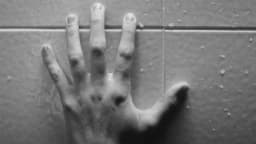
Special Olympics and VMLY&R Mexico launched The Same Blood in April 2019, a short film using a judo narrative to reframe perceptions of intellectual disability

Special Olympics Reframes Intellectual Disability Through a Judo Story
The Same Blood is a 2019 public interest film created by VMLY&R Mexico for Special Olympics Latin America, released in Mexico in April 2019, that follows a boy training in judo inspired by his father before revealing that the father is a Special Olympics athlete with an intellectual disability.
The campaign launched on April 9, 2019, timed to the International Day of Sport for Development and Peace, as reported by LBBOnline. That timing was deliberate. Special Olympics Latin America used the occasion to reframe intellectual disability not as a limitation to be overcome but as a source of inspiration — positioning the organisation's athletes as role models rather than recipients of charity. The film carries a single media asset and was classified under the public interest industry category, per Ads of the World.
In Mexico, and across the broader Latin American market the campaign addressed, the Revolución de la Inclusión — Special Olympics' Inclusion Revolution — had become the organisation's defining strategic posture since its 50th anniversary in 2018, according to specialolympics.org. That mission explicitly targeted children, teenagers, and young adults as its primary audience, shifting the organisation's communication away from event-centred fundraising and toward cultural norm change. The Same Blood sits squarely inside that repositioning. By placing a father with an intellectual disability at the emotional centre of a judo narrative, the film invites its audience to experience inclusion as a lived, ordinary reality rather than an institutional aspiration. Clapboard Score: 63/100.
Special Olympics Latin America entered the 2019 campaign cycle with a clear strategic shift already underway. The organisation had moved its global marketing posture away from sports-charity framing toward cultural inclusion, per specialolympics.org, and The Same Blood represents the Mexican execution of that broader directive in the public interest space.
The creative strategy rests on a structural misdirection. The film presents a conventional sports-inspiration narrative — a child learning judo, motivated by a parent — and withholds the reveal that the father is a Special Olympics athlete until the emotional peak. This mechanism does more than generate surprise. It forces the viewer to retrospectively reinterpret everything they have already accepted as normal, which is precisely the point of the Revolución de la Inclusión framework. The campaign does not argue for inclusion; it demonstrates how effortlessly a person with an intellectual disability can occupy the role of hero, mentor, and father without the audience initially registering anything unusual.
In the competitive landscape of public interest advertising in Mexico, campaigns addressing disability have historically leaned on pathos and visible difference. Rival organisations operating in the Latin American nonprofit and social advocacy space have tended to foreground the disability itself as the subject of the narrative. VMLY&R Mexico's approach inverts that convention entirely, making the disability secondary to the human relationship. The agency's prior lineage with Special Olympics in Mexico — an earlier campaign titled I Am Your Fan was published in Mexico in May 2016 by the related agency Y&R, per Ads of the World — suggests an accumulated understanding of how Mexican audiences respond to sport as a vehicle for emotional storytelling. The Same Blood extends and sharpens that understanding.
The Same Blood was directed by Carlos Hari Sama and produced by Mexico-based production company Catatonia, as credited across shots.net, LBBOnline, and Ads of the World. The film's effectiveness depends almost entirely on tonal discipline: the reveal only works if everything before it is shot and performed with complete sincerity, and Sama's direction holds that register throughout.
The creative team at VMLY&R Mexico was led by Chief Creative Officer Alexis Ospina and General Creative Director Luis Madruga Enriquez, who also served as Art Director, per LBBOnline and adruby.com. Rodrigo Casas acted as Creative Director and Copywriter, with Ulises Mejía as additional Copywriter. Agency Producer Violeta López oversaw production, and Account Director María Valentina Herrera managed the client relationship. On the client side, Iael Bielorai served as Branding and Communications Manager for Special Olympics Latin America, according to shots.net. The global creative oversight came from VMLY&R's Global Chief Creative Officer Debbi Vandeven, as documented by LBBOnline.
The film's production grammar — naturalistic lighting, unforced performance, the unhurried rhythm of a child learning a physical skill — deliberately refuses the aesthetic of a public service announcement. There are no statistics on screen, no institutional voiceover, no direct address to the camera. The creative choice to let the story behave like a short documentary until the final beat is what makes the Revolución de la Inclusión argument land without argument. The judo setting also carries specific resonance: a discipline built on the principle that a smaller, weaker opponent can redirect greater force, which mirrors the campaign's own rhetorical strategy of using assumption against itself.

No verified performance data for The Same Blood is publicly available in terms of view counts, reach figures, or conversion metrics. What is documented is the campaign's reception within the advertising industry.
The film was shortlisted at the Gerety Awards 2019 in the TV and Cinema category, as reported by geretyawards.com. The Gerety Awards, which evaluate work through an all-female jury, represent one of the more internationally recognised platforms for public interest and craft-driven advertising, and a shortlist placement signals that the campaign's creative mechanism was read as genuinely distinctive rather than formulaic. LBBOnline published positive editorial coverage on April 9, 2019, at the time of launch, emphasising the film's narrative approach to inclusion, per Little Black Book.
Structurally, the campaign's effectiveness can be assessed through its design logic. The single-asset approach concentrates the creative investment entirely in one film, which is appropriate for a public interest brief where earned media and organic sharing carry more weight than paid distribution volume. The reveal mechanism is replayable — a viewer who shares the film is also sharing the experience of being surprised, which extends the campaign's reach through social endorsement rather than media spend. In the context of Special Olympics Latin America's Inclusion Revolution mission, as described by specialolympics.org, The Same Blood functions as a proof of concept: inclusion can be shown rather than argued, and a father with an intellectual disability can be the hero of an ordinary story without qualification or explanation.
The Same Blood is a 2019 public interest film created by VMLY&R Mexico for Special Olympics Latin America. Released in Mexico in April 2019, it follows a boy training in judo, revealing that his father and source of inspiration is a Special Olympics athlete with an intellectual disability, as documented by Ads of the World and LBBOnline.
The Same Blood was directed by Carlos Hari Sama and produced by Mexican production company Catatonia. The creative team was led by VMLY&R Mexico Chief Creative Officer Alexis Ospina, with Creative Director and Copywriter Rodrigo Casas. Global creative oversight was provided by VMLY&R Global Chief Creative Officer Debbi Vandeven, per LBBOnline and shots.net.
Special Olympics Latin America released The Same Blood on April 9, 2019, timed to the International Day of Sport for Development and Peace, as reported by LBBOnline. The date aligned the campaign's message about inclusion in sport with a globally recognised occasion, amplifying its relevance in Mexico and across the Latin American market.
The Same Blood received a shortlist at the Gerety Awards 2019 in the TV and Cinema category, according to geretyawards.com. The Gerety Awards evaluate advertising through an all-female jury and represent a recognised platform for public interest and craft-driven work. No other verified award results for the campaign are publicly documented.
The Same Blood was created inside Special Olympics' Revolución de la Inclusión framework, introduced for the organisation's 50th anniversary in 2018, per specialolympics.org. That strategy shifted communication away from charity-event framing toward cultural norm change, targeting younger audiences. The film's narrative — a disabled father as an ordinary hero — is a direct creative expression of that mission.
VMLY&R Mexico built The Same Blood around structural misdirection. The film presents a conventional sports-inspiration narrative before revealing the father is a Special Olympics athlete, forcing viewers to reinterpret what they assumed was ordinary. This approach, documented by LBBOnline and shots.net, argues for inclusion by demonstrating it rather than stating it.
.webp)
Creative Collaboration Platform: The Backbone of Modern Creative WorkWhat is a creative collaboration platform?Clapboard defines a creative collaboration platform as the operational core for today’s distributed creative teams. This is not a collection of digital collaboration tools stitched together; Clapboard’s system


Understanding the Creative Production MarketplaceWhat is a Creative Production Marketplace?Clapboard defines a creative production marketplace as a structured ecosystem where brands, agencies, and production talent converge to execute video, advertising, and branded content at scale. Unlike the legacy agency or freelanREAD FULL ARTICLE

The Urgent Need for a Creative Production Operating SystemWhy Traditional Creative Production Models Break DownClapboard sees the creative production landscape shifting under pressure. Content velocity is no longer a buzzword—it’s a mandate. Modern advertising demands relentless output across dozens of channels, each wREAD FULL ARTICLE