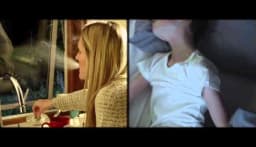
Fondation Française pour la Recherche sur l'Épilepsie launched Cashépilepsie in France, a hidden camera social experiment by Serviceplan that won Gold at

Fondation Française pour la Recherche sur l'Épilepsie Turns a Fake Shop Into an Epilepsy Wake-Up Call
Cashépilepsie is a 2019 French public service campaign created by Serviceplan for the Fondation Française pour la Recherche sur l'Épilepsie, in which a fake Paris second-hand shop stocked with deliberately damaged household objects was used to confront unsuspecting visitors with the hidden physical and social costs of living with epilepsy.
The campaign launched its real-world activation on 30 January 2019, according to fondation-epilepsie.fr, with the false shop operating in Paris for three days ahead of International Epilepsy Day on 11 February 2019. More than 40 unsuspecting visitors participated in the hidden camera activation, as documented by fondation-epilepsie.fr. Each broken object on sale carried a discounted price tag, and the campaign's tagline — "Des vies brisées à prix cassés," meaning broken lives at knockdown prices — made the metaphor explicit the moment visitors were told what the damaged goods actually represented.
The film produced from the hidden camera footage became the campaign's primary media asset, transforming a three-day Paris pop-up installation into a documentary-style piece of public interest content distributed across digital channels. In France, where epilepsy awareness has historically struggled to command mainstream attention, the Fondation Française pour la Recherche sur l'Épilepsie deliberately chose to communicate, as described on fondation-epilepsie.fr, in a way that was markedly different from conventional charity appeals. The campaign was officially published in March 2019, per Clapboard's editorial records, positioning it as a Purple Day-adjacent contribution to the broader international epilepsy conversation. Clapboard rates Cashépilepsie 72 out of 100, reflecting a campaign that is structurally inventive and emotionally coherent, if limited in scale by the nature of its single-asset format.
The Fondation Française pour la Recherche sur l'Épilepsie identified a fundamental communication problem in France. Epilepsy affects a substantial portion of the population, yet public understanding of its daily consequences — the physical dangers, the social stigma, the economic disruption to people's lives — remains shallow. Rather than produce a conventional charity film built around medical statistics or patient testimony, Serviceplan engineered a situation in which ordinary Parisian consumers would encounter the consequences of epilepsy directly, without forewarning.
The social experiment format carries particular strategic weight in the French public interest landscape. By operating a genuine-looking second-hand shop, the campaign bypassed the psychological distance that separates audiences from traditional awareness advertising. Visitors who entered Cashépilepsie's Paris location were not passive viewers; they were participants, handling objects that bore the visible marks of seizure-related accidents. The reveal — that each broken item represented the kind of damage an epileptic episode can cause to a person's home and body — was designed to produce an emotional response grounded in personal experience rather than abstract sympathy.
In France, the public charity and health awareness sector is competitive for media attention, with major foundations and public health bodies including the Ligue Française contre l'Épilepsie also active in the epilepsy space. The FFRE's decision, as documented by fondation-epilepsie.fr, to pursue a disruptive, experiential approach in 2019 represented a clear strategic departure from its prior communications. The campaign was timed to align with International Epilepsy Day on 11 February 2019, capitalising on the global Purple Day framework to extend the reach of a locally produced activation beyond France's borders through its documentary film format.
Cashépilepsie was produced by Baghera Films for Serviceplan France, according to fondation-epilepsie.fr. The creative team was led by Creative Director Daniel Perez, with Art Director David Leliard shaping the visual identity of both the physical installation and the resulting film. Editors and designers Chloé Rosiaux and Damien Lebreuilly were responsible for assembling the hidden camera footage into the campaign's single documentary-style film asset, a task that required them to construct a coherent emotional arc from unscripted reactions captured across three days of real public interaction.
The physical design of the Cashépilepsie shop demanded a precise calibration of authenticity. The installation had to read convincingly as a genuine Paris second-hand store to ensure that the more than 40 visitors who participated, as recorded by fondation-epilepsie.fr, entered the space without suspicion. Every broken object — cracked crockery, shattered glass, damaged appliances — was selected and displayed to suggest ordinary domestic wear, concealing until the moment of reveal that each item told a specific story about the physical hazards of living with uncontrolled epilepsy.
The hidden camera methodology anchors the film in the documentary tradition, giving the resulting footage a rawness that scripted public service advertising rarely achieves. Advertiser management was handled by Emmanuelle Roubertie, with agency managers Benjamin Chevrier and Hélène Jamin overseeing the campaign's coordination between Serviceplan and the Fondation Française pour la Recherche sur l'Épilepsie, according to fondation-epilepsie.fr. The decision to treat the film as the primary deliverable — rather than the pop-up itself — reflects a sophisticated understanding of how experiential activations generate lasting media value in the French public interest sector through shareable documentary content.

No verified independent performance data for the Cashépilepsie campaign — including view counts, reach figures, or donation uplift — is publicly available. Campaign effectiveness must therefore be assessed through its awards record and structural design, both of which offer meaningful signals about the work's standing in the French and international advertising community.
The campaign's recognition across multiple award bodies is extensive and spans different creative disciplines. Cashépilepsie received a Gold at Eurobest in Public Relations in the Healthcare category in 2019, as recorded by lareclame.fr, alongside a Finalist citation at Eurobest in Media for Events and Stunts the same year. The Epica Awards granted the campaign a Silver in Corporate Image and a Bronze in Media Innovation in Traditional Media in 2019, per lareclame.fr. At the Clio Awards, the campaign earned a Silver in Public Relations in the Cause Related category in 2019, also per lareclame.fr. In France specifically, the campaign received a Gold at the Empreintes Awards in the Campagne Grand Public category for public organisations in 2020, as documented by lareclame.fr, along with a Silver at the Club des AD and the Prix de la rédaction at the Grand Prix Stratégies de l'Innovation Media in the Assistants vocaux category in 2019. This breadth of recognition — crossing public relations, media innovation, and creative craft juries — indicates that Cashépilepsie was assessed as genuinely effective across multiple dimensions of campaign construction, not only as a creative concept. For a single-asset, single-market epilepsy awareness campaign produced in France, that award portfolio is a substantive indicator of structural and cultural impact.
Cashépilepsie is a 2019 French public service campaign created by Serviceplan for the Fondation Française pour la Recherche sur l'Épilepsie. It used a fake Paris second-hand shop stocked with broken objects and hidden cameras to confront visitors with the real consequences of epilepsy, producing a documentary film from the footage.
Serviceplan France created Cashépilepsie for the Fondation Française pour la Recherche sur l'Épilepsie. Creative Director Daniel Perez and Art Director David Leliard led the creative work, with production handled by Baghera Films, according to fondation-epilepsie.fr.
The Cashépilepsie activation launched on 30 January 2019 in Paris, with the fake shop operating for three days. It was timed to align with International Epilepsy Day on 11 February 2019, according to fondation-epilepsie.fr, and was officially published in March 2019.
Cashépilepsie won Gold at Eurobest in Public Relations in the Healthcare category in 2019 and Silver at the Clio Awards in Public Relations in the Cause Related category in 2019, per lareclame.fr. It also received a Eurobest Finalist citation in Media for Events and Stunts.
Cashépilepsie was deliberately timed to International Epilepsy Day on 11 February 2019, situating it within the global epilepsy awareness calendar that includes Purple Day. The campaign extended a locally produced Paris activation into the broader international epilepsy conversation through its documentary film format.
Clapboard rates Cashépilepsie 72 out of 100. The score reflects a campaign that is structurally inventive and emotionally coherent, with a strong awards record spanning Eurobest, the Clio Awards, and the Epica Awards, offset by its single-asset, limited-scale format.
.webp)
Creative Collaboration Platform: The Backbone of Modern Creative WorkWhat is a creative collaboration platform?Clapboard defines a creative collaboration platform as the operational core for today’s distributed creative teams. This is not a collection of digital collaboration tools stitched together; Clapboard’s system


Understanding the Creative Production MarketplaceWhat is a Creative Production Marketplace?Clapboard defines a creative production marketplace as a structured ecosystem where brands, agencies, and production talent converge to execute video, advertising, and branded content at scale. Unlike the legacy agency or freelanREAD FULL ARTICLE

The Urgent Need for a Creative Production Operating SystemWhy Traditional Creative Production Models Break DownClapboard sees the creative production landscape shifting under pressure. Content velocity is no longer a buzzword—it’s a mandate. Modern advertising demands relentless output across dozens of channels, each wREAD FULL ARTICLE