



Varun Katyal | Founder, Clapboard
Varun Katyal is the Founder & CEO of Clapboard and a former Creative Director at Ogilvy, with 15+ years of experience across advertising, branded content, and film production. He built Clapboard after seeing firsthand that the industry’s traditional ways of sourcing talent, structuring teams, and delivering creative work were no longer built for the volume, velocity, and complexity of modern content. Clapboard is his answer — a video-first creative operating system that brings together a curated talent marketplace, managed production services, and an AI- and automation-powered layer into a single ecosystem for advertising, branded content, and film. It is designed for a market where brands need content at a scale, speed, and level of specialization that legacy agencies and generic freelance platforms were never built to deliver. The thinking, frameworks, and editorial perspective behind this blog are shaped by Varun’s experience across both the agency world and the emerging platform-led future of creative production. LinkedIn: https://www.linkedin.com/in/varun-katyal-clapboard/
Defining Features of the French New Wave Film Movement
What are the signature techniques of the French New Wave?
The French New Wave film movement is not simply a chapter in cinema history—it is a blueprint for creative disruption. Its directors, many of whom were critics first, set out to upend the formalities of postwar filmmaking with a toolkit that championed immediacy, subjectivity, and self-awareness. At the core were French New Wave techniques that privileged process over polish: handheld cameras, available light, and improvised dialogue. These choices were not mere aesthetic gestures; they were acts of resistance against studio artifice, designed to bring the audience closer to the pulse of lived experience.
Jump cuts—most famously in Godard’s “Breathless”—fractured time and space, reminding viewers that what they saw was constructed, not inevitable. Editing became a creative act, not a hidden seam. The camera, liberated from its tripod, followed characters through real city streets, capturing the unpredictability of public life. This documentary-like realism was a deliberate rejection of the stage-bound, overproduced films that dominated the era.
How did French New Wave films break cinematic rules?
Narrative experimentation was as fundamental as visual innovation. The French New Wave film movement dismantled the tyranny of linear storytelling. Films like Truffaut’s “The 400 Blows” or Resnais’s “Hiroshima mon amour” unfold in fragments, flashes, and recollections. Time becomes elastic, memory and present tense blur. The result is a narrative style that privileges feeling over chronology, and character over plot. Stories are often unresolved, elliptical—mirroring the ambiguity of real life rather than the certainty of genre convention.
Dialogue, too, was transformed. Instead of rehearsed exchanges, directors encouraged improvisation and overlapping speech. This looseness allowed for moments of surprising intimacy, where character psychology took precedence over exposition. The effect: a new kind of authenticity, one that felt both spontaneous and deeply considered.
Visual trademarks of the movement
Visually, the French New Wave’s innovative filmmaking is defined by its rawness and immediacy. Location shooting was not just a logistical necessity—it was a philosophical stance. By taking cameras into the streets of Paris or the sun-bleached south, filmmakers embedded their stories in the rhythms of actual life. Natural light was favored over studio rigs, not just for realism but for the unpredictable textures it brought to the frame.
The movement’s visual lexicon is unmistakable: direct address to camera, sudden zooms, and abrupt cuts that jolt the viewer out of passive consumption. These were not just stylistic flourishes—they were signals that the film was aware of its own artifice, and that the audience was a collaborator in meaning-making. In this way, the French New Wave anticipated later developments in film style analysis and cinematic techniques, laying the groundwork for generations of directors who saw rules as starting points, not boundaries.
What endures is not just a collection of stylistic signatures, but a philosophy: cinema as an act of questioning, a refusal to accept the given shape of narrative or image. The French New Wave film movement remains, above all, a challenge to complacency—a reminder that innovation begins with the courage to break form.
What Sparked the French New Wave Film Movement?
The French New Wave film movement wasn’t born from a single moment of rebellion. It was the product of a cultural and creative pressure cooker, simmering in postwar France. In the late 1950s, the country was still reckoning with the aftermath of occupation and liberation. The old guard of French cinema—what critics labeled the “Tradition of Quality”—felt increasingly stale to a generation hungry for authenticity, immediacy, and personal vision. The origins of French New Wave are inseparable from this restless climate, where dissatisfaction with inherited forms met a society in transition.
What led to the French New Wave film movement?
At its core, the French New Wave was a cinematic revolution against convention. Young filmmakers—many of whom began as critics—looked at the polished, literary adaptations dominating French screens and saw artifice. They wanted films that felt alive, urgent, and true to their own experience. The movement’s architects, including Jean-Luc Godard, François Truffaut, and Agnès Varda, rejected the commercial studio system and the rigid hierarchies that defined it. They were more interested in what cinema could become than in what it had been.
How did postwar France shape cinematic innovation?
Postwar French cinema was shaped by scarcity and opportunity. Film stock was limited, and resources were tight, but the hunger for new stories was palpable. The country’s intellectual climate, marked by existentialist thought and a questioning of authority, bled into the work of these emerging filmmakers. They shot on location, used handheld cameras, and worked with non-professional actors—not out of necessity alone, but as a deliberate break from studio-bound artifice. This approach mirrored the broader cultural impulse to interrogate received wisdom and embrace the uncertainty of the present.
The role of film critics in launching the New Wave
Cahiers du Cinéma, the influential film journal, was more than a publication—it was an incubator for the movement. Its writers, including Truffaut and Godard, didn’t just review films; they dissected the language of cinema itself. Their criticism articulated a new way of seeing, one that privileged the director as auteur and argued for film as a personal expression. This intellectual groundwork provided both the rationale and the community for a new generation to pick up cameras and challenge the status quo.
Ultimately, the French New Wave film movement was less a coordinated campaign than a convergence of dissatisfaction, intellectual ferment, and creative ambition. Its origins lie in the collision between postwar uncertainty and a refusal to accept cinematic complacency. The legacy is a reminder that innovation often emerges not from comfort, but from the friction between worlds in transition. For anyone tracing the history of film movements or the evolution of cinema, the New Wave stands as proof that the most lasting revolutions begin with a question: what if film could be different?
The Auteur Theory and Its Impact on Cinema
What is auteur theory in cinema?
The auteur theory, a cornerstone of modern film discourse, posits that the director is the primary creative force behind a film—its true "author." This concept emerged as a direct response to the impersonal, industrialized studio system that dominated mid-20th-century filmmaking. Rather than viewing films as collective products shaped by committees and commercial mandates, auteur theory asserts that a director’s vision, sensibility, and recurring themes are legible across their body of work. The result is a filmmaking philosophy that values personal signature over formula, and creative control over conformity.
The roots of auteur theory are inseparable from the intellectual ferment of postwar France. Critics at Cahiers du cinéma, under the editorial guidance of André Bazin, championed "la politique des auteurs"—the policy of authors—arguing that cinema should be a medium for personal artistic expression. This stance was not a rejection of collaboration, but a recognition that the director’s vision could unify and elevate the disparate elements of production into something distinct and resonant.
How did French New Wave directors assert creative control?
The French New Wave’s arrival in the late 1950s was both a theoretical and practical revolution. Directors like François Truffaut and Jean-Luc Godard, many of whom began as critics, took auteur theory from the page to the screen. Truffaut’s 1954 essay "Une certaine tendance du cinéma français" lambasted the prevailing French cinema for its literary adaptations and lack of imagination, calling for a cinema defined by directorial voice and risk-taking (Wikipedia - French New Wave, 2024).
New Wave filmmakers rejected studio-driven formulas. They embraced handheld cameras, location shooting, improvisation, and jump cuts—techniques that foregrounded the director’s philosophy and style. The films themselves became manifestos: Godard’s "Breathless" and Truffaut’s "The 400 Blows" are not just stories, but demonstrations of how a director’s vision can rewire cinematic language. Creative control was not merely a matter of credit, but of process and product. The director’s vision determined everything from narrative structure to the rhythm of the edit, making each film a reflection of its maker’s sensibility (Steemit - The French New Wave And Its Influence On Contemporary Filmmaking, 2017).
The legacy of auteur-driven filmmaking
The ripple effects of the auteur theory extend far beyond the French New Wave. Its influence reshaped global filmmaking, inspiring new waves in countries as diverse as the United States, Japan, and Iran. The director-driven films of the American New Hollywood era—think Coppola, Scorsese, Altman—owed a direct debt to the New Wave’s assertion of creative control. Auteur theory also laid the groundwork for the contemporary valorization of the "visionary director," a figure who can attract financing and audiences on the strength of their name alone.
Yet the theory’s legacy is not without complexity. The elevation of the director’s vision has sometimes overshadowed the collaborative reality of film production. Still, auteur theory remains a vital lens for understanding how filmmaking philosophies evolve and why certain films bear the unmistakable imprint of their creators. Today, as platforms and technologies multiply, the tension between personal authorship and industrial process remains unresolved—but the auteur’s shadow persists, shaping how we judge, remember, and aspire to make films.
Breaking Away from Hollywood: The French New Wave’s Rejection of Convention
How did the French New Wave challenge Hollywood?
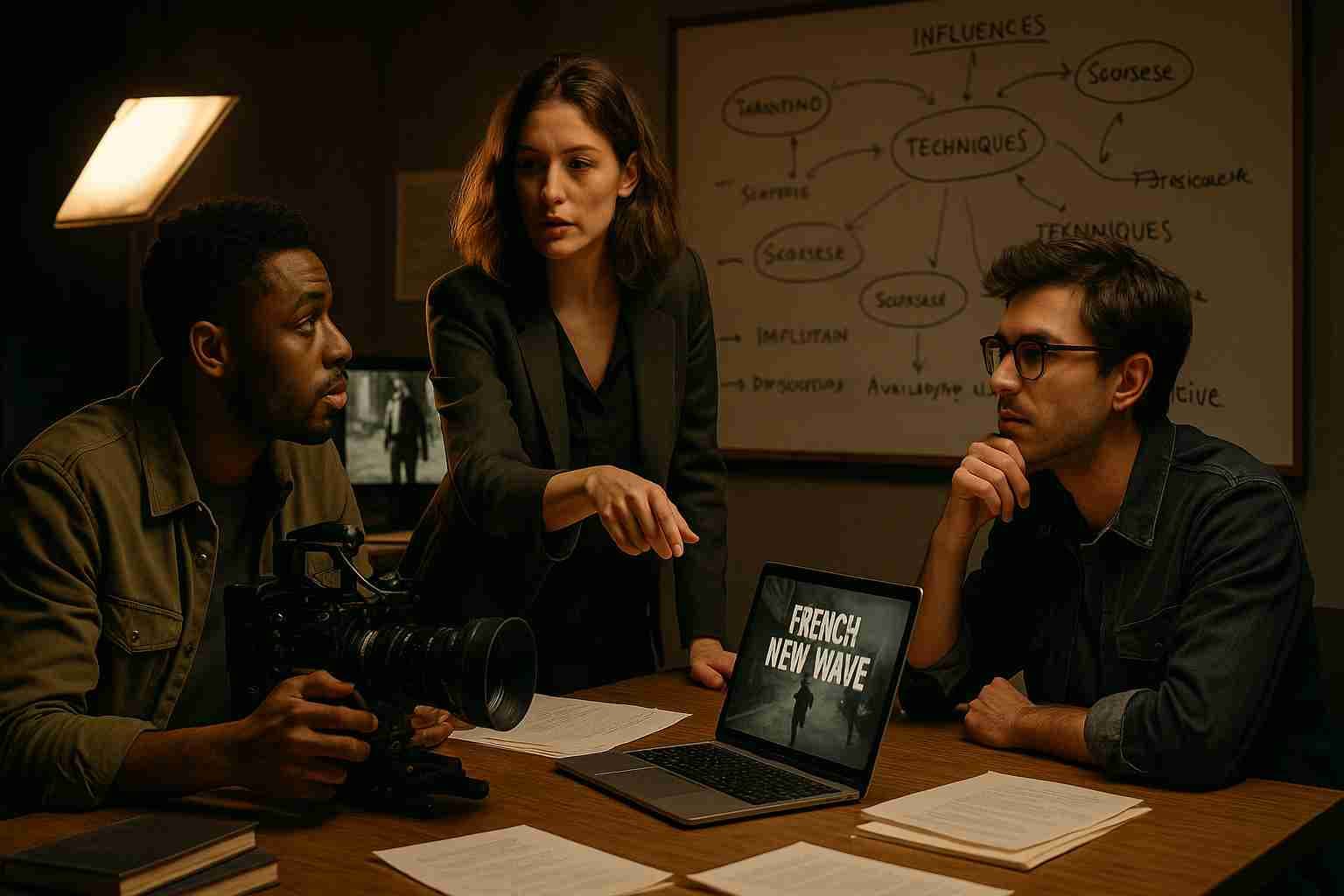
The French New Wave film movement emerged as a direct counterpoint to Hollywood’s well-oiled narrative machinery. Where Hollywood prized continuity, polish, and predictable arcs, the New Wave splintered narrative certainty. Directors like Godard and Truffaut saw the American studio system as both inspiration and foil—admiring its technical prowess but refusing its formulaic comfort. Their films didn’t just tell stories differently; they questioned why stories needed to be told a certain way at all. This was not mere contrarianism. It was a conscious break from a cinema that had become, in their eyes, a closed loop of repetition. The result was cinema stripped of artifice: stories that ended abruptly, characters who broke the fourth wall, and a camera that roamed the streets rather than gliding on a dolly through a built set.
The independent spirit of French New Wave filmmakers
At its core, the French New Wave was a movement of cinematic rebellion. These filmmakers rejected the French “tradition of quality”—the so-called “cinéma de papa”—which was defined by high-budget literary adaptations and the rigid hierarchy of the studio system. Instead, they championed the director as auteur, shaping every frame with personal vision and subverting inherited norms (The Film Stage, 2015). This autonomy was not just aesthetic, but economic and practical. Budgets were shoestring. Crews were skeletal. The city itself became a set, and the unpredictable rhythms of real life bled into every scene. The movement’s independent filmmaking spirit was so pronounced that François Truffaut himself credited the low-budget American film “Little Fugitive” as the spark that showed French directors how to seize creative control and bypass the machinery of established studios (No Film School, 2023). The result was a blueprint for independent cinema that reverberates through film history.
Differences in storytelling and production methods
The Hollywood vs French New Wave contrast is most visible in the granular choices of production and storytelling. Hollywood’s golden age was defined by star power, studio lots, and scripts ironed flat in the writers’ room. In contrast, New Wave filmmakers often used non-professional actors, favoring authenticity over celebrity. Scenes unfolded in real apartments, on crowded boulevards, or in smoky cafés, with natural light and handheld cameras capturing the world as it was, not as it was dressed to appear. Scripts were loose, sometimes sketched only in outline, allowing actors to improvise and moments to evolve organically. Editing, too, was liberated—jump cuts, ellipses, and abrupt transitions became signatures, not mistakes to be airbrushed away. The effect was a new cinematic language: restless, immediate, and alive to the possibility of surprise.
- Improvisation and spontaneity: The French New Wave embraced uncertainty, letting films breathe and stumble like real life. This was not just an aesthetic choice, but a philosophical stance against the predictability of studio fare.
- On-location shooting: The city of Paris—and later, other urban spaces—became a living character. The unpredictability of shooting in public spaces injected a raw energy that no soundstage could replicate.
- Non-professional actors: These performers brought a lack of polish that underscored the movement’s commitment to realism and emotional honesty.
- Experimental editing: Techniques like the jump cut fractured time and space, reminding audiences that film is an artifice, not a seamless window onto reality.
In breaking from Hollywood, the French New
Pioneering Techniques That Changed Filmmaking Forever
What technical innovations did the French New Wave pioneer?
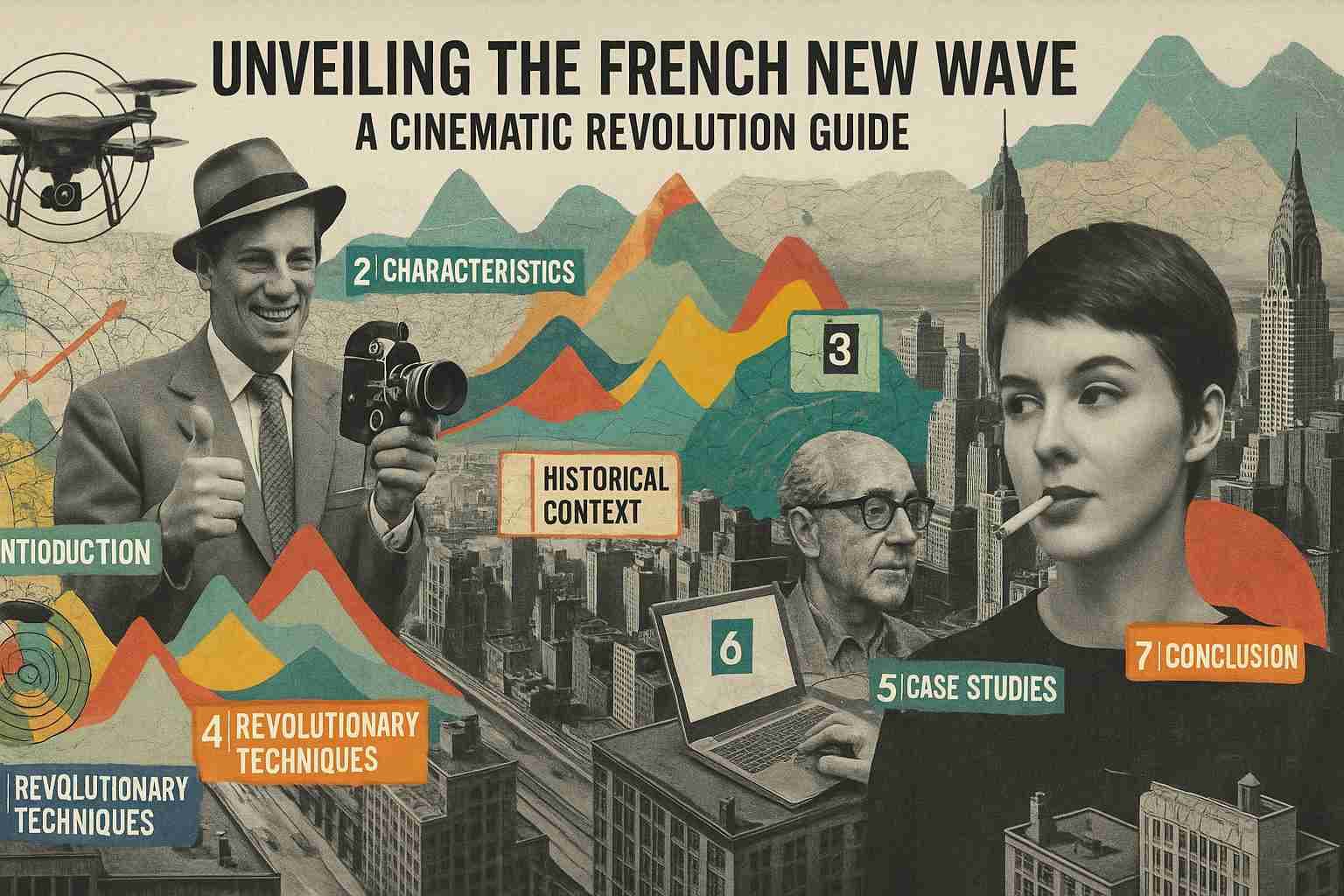
The French New Wave’s legacy is inseparable from its embrace of innovative filmmaking techniques. At a time when studio-bound productions dominated global cinema, New Wave directors like Godard, Truffaut, and Varda dismantled conventions with a toolkit that was as much philosophical as it was technical. They favored lightweight, handheld cameras—tools that liberated filmmakers from the rigidity of tripods and soundstages. This portability enabled shooting on real streets, in real apartments, with real people passing by. The result was a visual immediacy that felt lived-in and unpredictable, a stark contrast to the polished artifice of traditional studio films. Available light replaced elaborate rigging, forcing cinematographers to adapt, improvise, and trust the authenticity of the moment.
How did editing evolve with the New Wave?
Editing underwent a radical transformation under the New Wave’s influence. The jump cut—once considered a mistake—became a deliberate stylistic weapon. Godard’s “Breathless” didn’t just break the rules; it rewrote them. Scenes fractured time and space, propelling narratives forward with a jolt that mirrored the restless energy of postwar youth. Fragmented editing wasn’t an affectation; it was a statement. It demanded the audience’s attention, refusing to spoon-feed continuity or closure. This approach forced viewers to engage with the film’s construction, making them complicit in the act of meaning-making. The long take, too, found new life—not as a display of technical bravado, but as a way to preserve the integrity of a moment, letting reality unfold without interference.
Lasting impacts on film production techniques
The New Wave’s technical experiments weren’t just stylistic flourishes; they were acts of rebellion against cinematic orthodoxy. Direct sound recording—using the ambient noise of Parisian cafés or the echo of footsteps in narrow alleys—brought a tactile realism that studio dubbing could never replicate. On-location shooting blurred the line between fiction and documentary, collapsing the distance between filmmaker and subject. These methods democratized filmmaking, lowering barriers to entry and making the medium more accessible to outsiders and iconoclasts alike.
The influence of these innovative filmmaking techniques is visible in every generation that followed. American independent cinema, the Dogme 95 movement, and even contemporary digital creators owe a debt to the French New Wave’s willingness to experiment and disrupt. The movement’s insistence on authenticity, spontaneity, and direct engagement with the world remains instructive for any creative leader seeking to push boundaries today. Techniques like jump cuts, handheld cameras, and long takes are now part of the global cinematic vocabulary—reminders that true innovation often means breaking what came before, not just refining it.
For those who study both the art and the craft, the New Wave’s legacy is a blueprint: embrace risk, value immediacy, and never let convention dictate possibility. The revolution wasn’t just technical—it was a reimagining of what cinema could be, and what it still can become. For a deeper dive into the evolution of editing techniques in film or the ongoing story of cinematography innovations, the New Wave remains an essential chapter.
Influential Figures of the French New Wave Film Movement
Who were the most influential French New Wave directors?
The French New Wave film movement was not the product of a single auteur, but a constellation of fiercely independent voices. Jean-Luc Godard and François Truffaut, often cited as the movement’s twin pillars, were joined by Claude Chabrol, Agnès Varda, Éric Rohmer, and Jacques Rivette—each bringing a distinct sensibility that expanded the movement’s boundaries. Their backgrounds varied: Godard and Truffaut began as critics at Cahiers du Cinéma, Varda emerged from photography, Chabrol from literary studies, Rohmer from teaching, and Rivette from theater. This diversity of origin fed directly into the films themselves, ensuring the New Wave was never monolithic.
Landmark films that defined the movement
Signature works from these directors did more than disrupt French cinema—they redefined global cinematic language. Godard’s “Breathless” (1960) exploded conventions with its jump cuts and anti-heroic narrative, while Truffaut’s “The 400 Blows” (1959) offered a deeply personal, semi-autobiographical look at youth and disaffection. Chabrol’s “Le Beau Serge” (1958) is often credited as the first New Wave film, blending psychological realism with social critique. Varda’s “Cléo from 5 to 7” (1962) foregrounded female subjectivity and temporal experimentation. Rohmer’s “My Night at Maud’s” (1969) introduced a new kind of moral and philosophical dialogue, and Rivette’s “Paris Belongs to Us” (1961) layered paranoia and existential inquiry into the city’s fabric. These films didn’t just break rules—they invented new ones, and their influence can be traced from American independent cinema to the digital auteurs of today.
Comparing the visions of Godard and Truffaut
While Godard and Truffaut shared roots in cinephilia, their approaches diverged sharply. Godard’s films were restless, politically charged, and formally radical. He treated cinema as a laboratory, deconstructing narrative and genre, often foregrounding the apparatus itself. Truffaut, by contrast, was more interested in emotional resonance and character psychology. His style, though innovative, was warmer, anchored in humanism and autobiography. Their friendship and rivalry—marked by collaboration on films like “Breathless” (Truffaut co-wrote the script) and later public disagreements—mirrored the movement’s internal tensions. This push and pull between experimentation and storytelling, polemic and empathy, energized the New Wave and prevented it from calcifying into dogma.
Collaborative and competitive dynamics among directors
The French New Wave film movement thrived on a culture of both camaraderie and competition. Directors appeared in each other’s films, shared crews, and debated fiercely in print and on set. Chabrol’s early support for his peers—he financed Rivette’s first feature—was as crucial as the intellectual sparring between Godard and Truffaut. Varda, often operating slightly outside the Cahiers circle, injected the movement with a feminist and documentary sensibility, broadening its scope. Rohmer and Rivette, more reserved, quietly pushed the boundaries of narrative duration and thematic subtlety. This interplay of mutual influence and individual vision was the engine of the movement’s vitality.
Ultimately, the French New Wave film movement was defined by its iconic directors, but it was the friction—between theory and practice, collaboration and rivalry, style and substance—that ensured its global legacy. Each filmmaker’s signature was unmistakable, yet their collective impact was greater than the sum of
The Enduring Influence of the French New Wave Film Movement on Modern Cinema
How does the French New Wave influence today’s filmmakers?
The French New Wave film movement was never a fixed style—it was a set of provocations, a refusal to accept cinema’s status quo. That spirit persists in modern cinema, where directors continually question inherited forms. The New Wave’s insistence on personal vision and authorship is now a baseline expectation for any filmmaker with serious ambitions. Whether in Paris, Seoul, or Los Angeles, directors cite the movement as a formative influence, not just for its aesthetics but for its attitude: cinema as an act of risk, not compliance.
New Wave techniques in contemporary cinema
Jump cuts, handheld camerawork, direct address, and location shooting—these were once acts of rebellion, now they’re part of the global cinematic lexicon. The “unfinished” look of the New Wave, born of necessity and impatience with studio polish, has become a deliberate stylistic choice for filmmakers chasing immediacy and authenticity. Think of the restless camera in Safdie Brothers films, the narrative fractures in Wong Kar-wai, or the playful breaking of the fourth wall in Greta Gerwig’s work. Each borrows from the New Wave’s toolkit, not as homage but as a living language.
From the 1960s to now: Tracing the movement’s legacy
The legacy of New Wave is most visible in independent and arthouse filmmaking, where budget constraints and creative autonomy echo the original movement’s conditions. But its reach extends further. Hollywood directors—Scorsese, Tarantino, Linklater—have built entire oeuvres on New Wave principles: nonlinear storytelling, character over plot, the blending of high and low culture. Even mainstream blockbusters now absorb these lessons, with fractured timelines, meta-narratives, and a prioritization of directorial voice over studio formula. The New Wave’s DNA is everywhere, often unacknowledged but unmistakable to those who know where to look.
Modern cinema influence: Homages, references, and direct inspiration
Homages to the French New Wave film movement are woven into the fabric of contemporary cinema. Jean-Luc Godard’s irreverence surfaces in music videos and advertising; Agnès Varda’s curiosity about the everyday finds echoes in documentary hybrids and essay films. Directors like Xavier Dolan, Sofia Coppola, and Michel Gondry have openly referenced New Wave motifs—freeze frames, voiceover, narrative digressions—transforming them into personal signatures. For some, the influence is explicit; for others, it’s a matter of sensibility: a belief that film can be playful, political, and poetic at once.
Contemporary filmmakers and the legacy of film movements
The French New Wave’s true legacy is not a checklist of techniques, but a mindset: the conviction that cinema must evolve, that rules are meant for revision. Contemporary filmmakers inherit this restless energy, whether they operate within the system or on its fringes. The movement’s influence endures because it was never just about France or the 1960s—it was about the possibility of cinema itself. Every filmmaker who challenges convention, who stakes out a personal vision, participates in the ongoing conversation the New Wave began. Its impact on modern cinema is not a relic; it is a living, generative force.
Common Misconceptions About the French New Wave Film Movement
Are French New Wave films hard to understand?
The French New Wave film movement is often accused of being impenetrable—an inside joke shared by cinephiles and academics. This myth endures because of the movement’s playful disregard for narrative convention and its willingness to break rules. But complexity is not the same as obscurity. The best New Wave films—think “Breathless” or “The 400 Blows”—are fundamentally clear in their emotional intent. They foreground character, mood, and the rhythms of everyday life. Discontinuity, jump cuts, and narrative fragmentation are not barriers; they are invitations to engage differently. The movement’s core was not to mystify but to democratize, to show that cinema could be as direct and personal as a diary. To mistake unfamiliar form for deliberate opacity is to miss the point: these films want you to see, not to decode.
Myths about New Wave filmmaking
Another persistent misconception is that French New Wave films were amateurish or technically inferior, the result of budget constraints and inexperience. The truth is more nuanced. Many New Wave directors were steeped in film criticism before they ever picked up a camera; their choices were deliberate, not born of necessity. The handheld cameras, natural lighting, and location sound were not cost-cutting measures—they were aesthetic statements. They sought immediacy, authenticity, and a sense of lived reality. The myth of the “accidental masterpiece” underplays the rigorous craft at work. New Wave filmmakers knew exactly what they were doing, and their technical decisions were inseparable from their artistic aims. The movement’s legacy is not one of rough edges, but of creative control wrested from the studio system.
Accessibility of classic French New Wave movies
It’s easy to imagine that the French New Wave film movement was made for an elite audience—Parisians in smoky cafés, debating philosophy. But this is a distortion. The movement’s early champions wanted to break down the barriers between high and low culture. Their films referenced Hollywood, pulp fiction, and pop music, not just art-house tradition. In their own time, New Wave films reached wide audiences in France and abroad. They were as likely to be seen in bustling city cinemas as in university lecture halls. The supposed inaccessibility is a retrospective construction, shaped by decades of film criticism and academic gatekeeping. For contemporary viewers, the films remain vital: their themes—youth, rebellion, alienation, love—are as immediate now as they were then.
Relevance for today’s audiences
Perhaps the most persistent myth is that New Wave films are relics, interesting only as historical artifacts. This view ignores their ongoing influence: on editing, on storytelling, on the very idea of what cinema can be. The French New Wave film movement anticipated the rise of independent filmmaking, the blurring of genre boundaries, and the embrace of personal vision. For marketers, founders, and creative leaders, the lesson is clear—innovation comes from questioning orthodoxy, not from accepting it. The New Wave’s accessibility lies not just in its stories, but in its method: anyone with a camera and a point of view could make something new. The movement’s spirit is not locked in the past; it’s alive wherever creative risk is taken.
Essential French New Wave Films Every Cinephile Should Watch
What are the must-see French New Wave films?
Essential French New Wave films are not simply historical artifacts; they are living blueprints for cinematic reinvention. Selection here is not about box office or nostalgia, but about films that fundamentally altered the grammar of cinema. These are works that challenge conventions, foreground authorship, and remain urgent decades on. For anyone interested in must-watch New Wave movies, these titles are non-negotiable touchstones.
- Breathless (À bout de souffle, 1960) – Jean-Luc Godard
Godard’s debut detonated the rules of editing, narrative, and character. Its jump cuts, street-level improvisation, and existential cool still feel like a manifesto. “Breathless” is the gateway drug: audacious, self-aware, and endlessly referenced. - The 400 Blows (Les Quatre Cents Coups, 1959) – François Truffaut
Truffaut’s semi-autobiographical portrait of adolescent alienation is both intimate and formally radical. The film’s handheld camerawork and ambiguous ending capture the restlessness at the heart of the movement. It’s essential viewing for anyone exploring French cinema classics. - Cléo from 5 to 7 (Cléo de 5 à 7, 1962) – Agnès Varda
Varda’s real-time odyssey through Paris foregrounds female subjectivity and existential dread. Stylistically inventive, it weaves documentary and fiction, making it a touchstone for those interested in the movement’s range beyond its male auteurs. - Jules and Jim (Jules et Jim, 1962) – François Truffaut
This lyrical ménage à trois is a study in emotional volatility and narrative freedom. Its kinetic camera, voiceover, and elliptical storytelling embody the New Wave’s appetite for risk and reinvention. - Hiroshima Mon Amour (1959) – Alain Resnais
Not always grouped with the core New Wave, Resnais’s film is nonetheless indispensable. Its nonlinear structure and poetic script blur memory and reality, expanding the movement’s boundaries into the psychological and political. - Le Mépris (Contempt, 1963) – Jean-Luc Godard
Godard’s meditation on art, commerce, and desire is as visually sumptuous as it is intellectually provocative. “Le Mépris” interrogates the mechanics of filmmaking itself, making it essential for anyone interested in the meta-cinematic ambitions of the New Wave. - La Pointe Courte (1955) – Agnès Varda
Often cited as a precursor to the movement, Varda’s debut fuses neorealism with formal experimentation. Its dual narrative—marital crisis and village life—signals the personal-political interplay that would define much of the New Wave.
Where to start with the French New Wave film movement
For newcomers, “The 400 Blows” and “Breathless” are the obvious entry points—direct, emotionally accessible, and foundational. “Cléo from 5 to 7” offers a different lens, foregrounding female experience and a documentary eye. More seasoned viewers should seek out “Hiroshima Mon Amour” and “Le Mé
Conclusion
The French New Wave stands as one of the most significant ruptures in the history of film movements. Its architects, rejecting the rigidity of established studio systems, redefined what cinema could be: personal, immediate, and intellectually restless. The movement’s legacy is not just a catalogue of influential films but a wholesale reconfiguration of cinematic language. The New Wave’s practitioners—Godard, Truffaut, Varda, and others—demonstrated that film could be as elastic and self-aware as any other art form, dissolving the boundaries between director, story, and audience. This shift enabled a new breed of director-driven films, where authorship and vision became inseparable from the final product.
Innovative filmmaking techniques were not just stylistic flourishes but strategic interventions. Handheld cameras, location shooting, natural lighting, and jump cuts—each was a deliberate response to the constraints and possibilities of the moment. These choices were as much about economic necessity as they were about aesthetic conviction. The result: a visual grammar that felt alive, provisional, and honest. It is a misconception to view the New Wave as mere rebellion or youthful provocation; its core was always a search for authenticity, both in subject and form. The movement’s practitioners were deeply informed by film history, yet unafraid to dismantle and reconstruct its conventions.
The influence of the French New Wave on modern cinema is both direct and diffuse. Its DNA can be traced in the work of directors across continents and decades—those who value experimentation, subjectivity, and a willingness to break rules in pursuit of something truer. The movement’s insistence on the director as auteur reshaped the power dynamics of filmmaking and continues to echo in contemporary creative practice. The legacy of New Wave is not a fixed set of techniques or tropes; it is an attitude, a method, and a provocation to keep questioning what cinema is for and who it serves.
As contemporary filmmakers and creative leaders revisit the innovations of the French New Wave, they encounter not a relic but a living challenge: to push beyond comfort, to interrogate form, and to let the urgency of the moment shape the work. The movement’s greatest contribution may be its refusal to settle—for easy answers, for conventional storytelling, or for passive audiences. That restless spirit remains the true inheritance of the New Wave, and its influence endures in every frame that risks something new.
FAQs
What sparked the French New Wave film movement?
The French New Wave arose in the late 1950s from a convergence of postwar cultural shifts and dissatisfaction with France’s stagnant film industry. Young critics-turned-filmmakers, shaped by a climate of intellectual debate and the influence of Italian Neorealism and American cinema, sought to break free from formulaic studio productions and assert a new cinematic language.
What are the defining features of the French New Wave?
The French New Wave is marked by restless camera work, jump cuts, on-location shooting, and direct sound. Narratives often foreground ambiguity, improvisation, and self-reflexivity. Characters are complex and anti-heroic, while stories frequently blur the lines between fiction and reality, prioritizing personal vision over conventional plot.
How did the auteur theory impact cinema during the French New Wave?
The movement championed the director as auteur—a singular creative force whose personal vision shaped every aspect of a film. This approach elevated the director’s status, making films a direct extension of their worldview, and inspired generations of filmmakers to pursue authorship over committee-driven storytelling.
What techniques did the French New Wave filmmakers pioneer?
French New Wave directors pioneered handheld camerawork, natural lighting, non-linear editing, and breaking the fourth wall. They embraced jump cuts, long takes, and unconventional narrative structures, often using real locations and non-professional actors to achieve immediacy and authenticity.
Who were the influential figures of the French New Wave?
Key figures include Jean-Luc Godard, François Truffaut, Agnès Varda, Claude Chabrol, and Éric Rohmer. Each brought a distinct voice: Godard with radical editing and political engagement, Truffaut with humanist storytelling, Varda with lyrical realism, and Chabrol and Rohmer with incisive explorations of character and society.
How does the French New Wave influence modern cinema?
Modern filmmakers draw from the movement’s emphasis on director-driven storytelling, visual experimentation, and narrative risk-taking. Techniques like handheld shooting, meta-narratives, and the prioritization of personal vision over studio formulas remain central to contemporary independent and art-house filmmaking worldwide.
What are some common misconceptions about the French New Wave?
One misconception is that the movement was anti-structure or purely improvisational; in reality, its innovations were deliberate and grounded in theory. Another is that it was homogenous—French New Wave encompassed diverse styles and philosophies, unified more by spirit than by a single aesthetic or ideology.
.webp)
Creative Collaboration Platform: The Backbone of Modern Creative WorkWhat is a creative collaboration platform?Clapboard defines a creative collaboration platform as the operational core for today’s distributed creative teams. This is not a collection of digital collaboration tools stitched together; Clapboard’s system

Understanding the Creative Production MarketplaceWhat is a Creative Production Marketplace?Clapboard defines a creative production marketplace as a structured ecosystem where brands, agencies, and production talent converge to execute video, advertising, and branded content at scale. Unlike the legacy agency or freelanREAD FULL ARTICLE

The Urgent Need for a Creative Production Operating SystemWhy Traditional Creative Production Models Break DownClapboard sees the creative production landscape shifting under pressure. Content velocity is no longer a buzzword—it’s a mandate. Modern advertising demands relentless output across dozens of channels, each wREAD FULL ARTICLE

JOIN THE NEWSLETTER.
Content Production insights, videos, books, and freebies, delivered to your inbox weekly


LEAVE A COMMENT
Your email address will not be published.