Waste Free Oceans and Jung von Matt created The Ocean Plastic Book in Germany in 2018 — a children's book physically made from recycled ocean plastic to drive

Waste Free Oceans Turned Ocean Plastic Into a Children's Book
The Ocean Plastic Book is a 2018 public interest campaign created in Germany by Waste Free Oceans in partnership with Jung von Matt, in which a children's book about marine plastic pollution was physically manufactured from recycled ocean waste, making the object itself the most direct expression of its environmental argument.
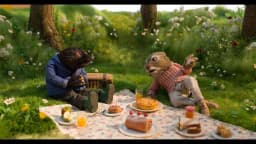
The campaign launched in April 2018 in Germany and centres on a children's book whose pages and cover were produced entirely from recovered ocean plastic. The narrative follows a young protagonist named Pippa, who discovers that plastic pollution prevents sea animals from swimming freely and takes action to help them, according to Design Week. The illustrator was Welsh artist Chervelle Fryer, whose visual language was designed to make the subject accessible to young readers, as reported by Design Week. The material journey of the book's physical form is equally deliberate: Waste Free Oceans collected plastic from ocean locations around the world, and Japanese materials company Teijin then processed that plastic into pellets and subsequently into fibres, which were used to create water-resistant and tear-resistant pages and cover, as reported by Design Week.
The campaign's distribution strategy reinforced its public interest objectives. In April 2018, the first edition of the book was being sent to politicians and other public figures in Germany and beyond, according to Design Week, positioning the object as both an advocacy artefact and a proof of concept for circular material use. A second edition was planned for wider availability through online registration, with an initial run intended for school distribution, as reported by horizont.net. The film medium component of the campaign documented the production process and the story behind Pippa's world, adding a documentary dimension that extended the project's reach beyond the physical book itself. The Clapboard Score for The Ocean Plastic Book is 71 out of 100.
Waste Free Oceans grounded The Ocean Plastic Book in a strategic insight that distinguishes it from conventional public service advertising. Rather than using imagery or statistics to communicate the scale of marine plastic pollution, the campaign made recovered ocean waste the primary raw material, collapsing the distance between the problem and the communication about it. Bernard Merkx, CEO of Waste Free Oceans, stated in Design Week: "Instead of extracting more natural resources, we wanted to lead to a change with what's not only freely available, but what's doing harm right now."
The strategic timing of the campaign in Germany in April 2018 was significant. The European Commission had proposed restrictions on ten common single-use plastic products in May 2018, and those products were estimated to account for approximately seventy percent of litter in EU waters, according to the European Commission's own published proposals. That legislative moment gave the campaign's arrival in Germany an immediate policy context, positioning Waste Free Oceans as an actor within a live public debate rather than outside it. In the same period, National Geographic launched its global Planet or Plastic? initiative in June 2018 as a multiyear public-awareness effort, according to National Geographic, illustrating that the marine-plastic advocacy space was becoming increasingly competitive for public and institutional attention.
Against that backdrop, Jung von Matt's decision to work with Teijin's material science capabilities gave the campaign a competitive advantage that image-led campaigns from organisations such as WWF's ocean advocacy work could not replicate: a tangible, circularity-demonstrating object that a politician, teacher, or child could hold. The public interest strategy also targeted multiple audiences simultaneously — children through narrative, adults through distribution to institutions, and legislators through direct gifting — giving the campaign structural efficiency that a single-medium approach would not have achieved.
The Ocean Plastic Book's creative execution operates on two registers simultaneously: the film that documents its making, and the physical object that is the campaign's most irreducible creative statement. The film component was directed by Thilo Gundelach, with Filmakademie Baden-Württemberg collaborating on production, and photography was handled by Luisa Hanika, according to Clapboard's production records.
The production process itself was treated as a narrative asset. Design Week reported in detail on the material journey: ocean plastic collected by Waste Free Oceans was shredded into pellets, converted into fibres by Teijin, and manufactured into pages and a cover that are both water-resistant and tear-resistant — properties that make the book durable enough to be passed between children and classrooms without degrading. That functional durability was not incidental; it was a deliberate creative argument that ocean plastic, properly processed, can have a second life with genuine utility, as reported by Design Week.
Welsh illustrator Chervelle Fryer's visual contribution is integral to the campaign's creative coherence. According to Design Week, Fryer's illustrations gave Pippa's story warmth and accessibility, ensuring that the environmental subject matter did not overwhelm the book's primary audience of young readers. The character of Pippa — a girl who witnesses and then acts on the harm plastic causes to sea animals — reflects a storytelling structure common to effective public interest children's media: the child as agent rather than bystander. The documentary approach of the accompanying film, produced with Filmakademie Baden-Württemberg, extended the creative logic by showing the transformation from pollution to product, making the manufacturing process itself a form of social experiment that audiences could witness. horizont.net praised the project as a clever creative idea, highlighting the collaboration between Jung von Matt, Waste Free Oceans, and Teijin as its defining creative strength, as reported by horizont.net.
No verified performance data for The Ocean Plastic Book is publicly available in terms of reach figures, distribution volume, or measurable attitude change. The campaign's impact must therefore be assessed through its structural design and the quality of institutional attention it attracted.
Bernard Merkx articulated the intended legacy directly in Design Week: "With the Ocean Plastic Book, we turned harmful ocean plastic into a force for good that can be passed on for generations to come." That framing points to a campaign whose success metric was durability of influence rather than short-term impressions — a legitimate and increasingly recognised standard in public interest communications. The decision to send the book directly to politicians in Germany in April 2018, at the precise moment the European Commission was formulating single-use plastics policy, suggests a lobbying-adjacent distribution logic that could amplify policy relevance beyond what conventional advertising reach would achieve.
Coverage in horizont.net, Design Week, and contagious.com collectively indicate that the campaign achieved meaningful trade and advocacy press penetration in Germany and internationally — a credible proxy for influence in the public interest category, where earned media and institutional adoption often matter more than paid reach. The collaboration between Jung von Matt, Teijin, and Waste Free Oceans also demonstrated a replicable model of circular creative production that the design and advertising industries could point to as evidence that material ethics and creative quality are compatible. The Clapboard Score of 71 out of 100 reflects the campaign's conceptual strength and production ambition, moderated by the absence of independently verified outcome data.
The Ocean Plastic Book is a 2018 public interest campaign created in Germany by Waste Free Oceans and Jung von Matt. It is a children's book physically manufactured from recycled ocean plastic, following a character named Pippa who discovers marine animals harmed by plastic pollution. Teijin processed the recovered plastic into the book's water-resistant pages and cover.
Jung von Matt created The Ocean Plastic Book for Waste Free Oceans in Germany. The campaign was published in April 2018. The film component was directed by Thilo Gundelach, with Filmakademie Baden-Württemberg collaborating on production and Luisa Hanika serving as photographer, according to production records.
Waste Free Oceans collected plastic from ocean locations worldwide. Japanese materials company Teijin then processed that plastic into pellets and converted them into fibres, which were used to manufacture the book's water-resistant and tear-resistant pages and cover, as reported by Design Week. Welsh illustrator Chervelle Fryer created the book's illustrations.
The Ocean Plastic Book targeted multiple audiences simultaneously. Children were reached through Pippa's narrative, while the first edition was sent directly to politicians and public figures in Germany in April 2018, according to Design Week. A second edition was planned for school distribution and wider public access through online registration, per horizont.net.
The Ocean Plastic Book used recovered ocean plastic as its primary manufacturing material, making the object itself the campaign's central argument. Unlike image-led campaigns from organisations such as WWF's ocean advocacy work or National Geographic's Planet or Plastic? initiative, it produced a tangible, circular-economy artefact that politicians, teachers, and children could physically hold and use.
The Ocean Plastic Book received a Clapboard Score of 71 out of 100. The score reflects the campaign's strong conceptual foundation and production ambition — transforming recycled ocean waste into a functional children's book — moderated by the absence of independently verified audience reach or outcome data for the 2018 Germany campaign.
.webp)
Creative Collaboration Platform: The Backbone of Modern Creative WorkWhat is a creative collaboration platform?Clapboard defines a creative collaboration platform as the operational core for today’s distributed creative teams. This is not a collection of digital collaboration tools stitched together; Clapboard’s system


Understanding the Creative Production MarketplaceWhat is a Creative Production Marketplace?Clapboard defines a creative production marketplace as a structured ecosystem where brands, agencies, and production talent converge to execute video, advertising, and branded content at scale. Unlike the legacy agency or freelanREAD FULL ARTICLE

The Urgent Need for a Creative Production Operating SystemWhy Traditional Creative Production Models Break DownClapboard sees the creative production landscape shifting under pressure. Content velocity is no longer a buzzword—it’s a mandate. Modern advertising demands relentless output across dozens of channels, each wREAD FULL ARTICLE