 ARCHIVE
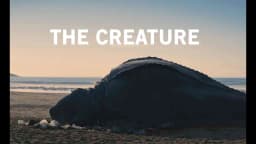
Surfers Against Sewage Brings a Sea Creature Ashore to Fight Plastic Pollution
How Surfers Against Sewage Used an Imaginary Sea Creature to Make Plastic Pollution Real Surfers...
Greenpeace Turns Corporate Law Into a Comedy Argument
Greenpeace's 'It's Not Business, It's Personal' is a short comedy film produced by Don't Panic London and released in the United Kingdom on 18 January 2018, which uses the fictional premise of an ordinary person receiving the legal privileges normally extended to corporations to argue that corporate accountability is fundamentally broken.
The campaign launched in direct connection with the World Economic Forum in Davos, according to greenpeace.org, positioning it as a timely intervention in the global conversation about corporate power and responsibility. Rather than producing a conventional public service film or a documentary exposé, Greenpeace and Don't Panic chose comedy as their primary register — a deliberate strategic choice designed to make a dense legal and political argument legible to a broad general audience in the United Kingdom. The film belongs to the public interest sector and was classified under the public interest industry category, reflecting its function as advocacy communication rather than commercial promotion.
The campaign's central device is a social experiment framed as fiction. A natural person — a relatable individual — is granted the same legal status and privileges that corporations routinely enjoy under law. By walking this character through the logical consequences of that status, the film makes visible the asymmetry between corporate power and individual accountability. The approach is closer to a scripted comedy sketch than a traditional environmental documentary, and that formal choice is inseparable from the campaign's argument. Greenpeace's objective was to support its corporate-accountability report and to reach audiences who might resist a more earnest or polemical tone. In the United Kingdom, where public trust in large institutions was already under sustained pressure in 2018, the satirical frame gave the message both accessibility and edge.
Don't Panic London anchored the campaign's release to a specific political moment. The timing of the film's launch on 18 January 2018 was not incidental — greenpeace.org confirms it was connected to the World Economic Forum in Davos, ensuring the campaign entered news cycles already primed to discuss the relationship between global corporations and democratic accountability. This kind of calendar-driven placement is a proven tactic in public interest campaigning, where earned media reach can far exceed paid distribution budgets.
The strategic rationale rests on a durable insight: abstract legal arguments about corporate personhood do not move general audiences, but human stories do. By translating the concept of corporate legal privilege into the experience of a single fictional individual, Don't Panic made the argument emotionally immediate. The social experiment format — a staple of viral documentary and comedy content in the United Kingdom during this period — gave the film a familiar structural grammar that lowered the barrier to engagement.
In the broader environment and ecosystems advocacy space, Greenpeace competes for public attention alongside organisations including WWF and Friends of the Earth, both of which were active in the United Kingdom in 2018 with their own awareness campaigns. What distinguished Greenpeace's approach here was the decision to address corporate law rather than a specific environmental crisis, widening the campaign's relevance beyond the charity's traditional supporter base. Western Europe's advertising and related-services market was reported at $213.2 billion in 2018, representing a significant share of global activity, according to profound.com — context that underscores how much paid-media noise a no-budget public interest film must cut through to register. Comedy, in this environment, is not a soft choice; it is a competitive one.
Alistair Griggs plays Tony, the on-screen talent at the centre of the 2018 film, according to adruby.com. Tony functions as a surrogate for every ordinary citizen who has never had occasion to think about corporate legal personhood — and the film's comedy derives from watching him navigate privileges that are simultaneously absurd in a human context and entirely routine in a corporate one. The casting of a naturalistic, non-celebrity performer reinforces the social experiment register: the audience is invited to see themselves in Tony rather than in a spokesperson.
The production was overseen by Don't Panic London, with Joe Wade serving as managing director and Thyme Mor as project manager, according to adruby.com. The creative lead on the project is documented in production records held by adruby.com. The film's format — a short comedy structured around a single high-concept premise — reflects Don't Panic's established practice of building public interest content that travels organically through social platforms. The agency has a track record of producing politically engaged comedy for advocacy clients in the United Kingdom, and the formal choices made here are consistent with that body of work.
The production does not employ the visual grammar of a conventional environmental documentary: there are no sweeping ecosystem shots, no urgent narration over footage of ecological damage. Instead, the film operates entirely within the register of scripted comedy, using performance, dialogue, and situational irony to carry the argument. This restraint is itself a craft decision. By refusing the aesthetic of crisis communication, the campaign signals confidence in its audience's ability to draw the political inference without being directed toward it. The result is a piece of public interest filmmaking that prioritises persuasion through wit over persuasion through alarm.
No verified performance data for 'It's Not Business, It's Personal' is publicly available. No awards are documented in publicly accessible records for this campaign. Clapboard assigns this campaign a score of 70 out of 100, reflecting strong strategic and creative coherence against a backdrop of limited documented reach evidence.
The structural case for the campaign's effectiveness is nonetheless substantive. The Davos timing, confirmed by greenpeace.org, gave the film a news peg that maximised the probability of earned media pickup in the United Kingdom and internationally. The comedy format reduced friction for audiences who would disengage from didactic environmental communication, and the social experiment premise is inherently shareable — it invites viewers to imagine themselves in Tony's position and to relay that thought experiment to others.
The campaign's decision to address corporate legal privilege rather than a single ecosystem crisis also gave it unusual longevity as an argument. Where a film tied to a specific environmental event ages with the news cycle, a film about structural corporate power remains relevant as long as the underlying legal asymmetry persists. In the United Kingdom in 2018, parliamentary scrutiny of corporate accountability was an active political concern, as documented by Committees Parliament Uk, which means the film's argument landed in a receptive domestic environment. The absence of verified metrics does not diminish the intelligence of these structural choices; it simply leaves their precise impact unmeasured.
Greenpeace's 'It's Not Business, It's Personal' is a short comedy film released in the United Kingdom in January 2018. It uses the fictional premise of an ordinary person receiving corporate legal privileges to argue that corporations hold disproportionate power without equivalent personal accountability, supporting Greenpeace's broader corporate-accountability report.
Don't Panic London created the film for Greenpeace. According to adruby.com, Joe Wade served as managing director and Thyme Mor as project manager on the production. The campaign was published in the United Kingdom in January 2018 and timed to coincide with the World Economic Forum in Davos, according to greenpeace.org.
Greenpeace timed the film's release to coincide with the World Economic Forum in Davos in January 2018, according to greenpeace.org. The forum focuses global media attention on corporate power and economic governance, giving a public interest campaign about corporate legal privilege a highly relevant news context and maximising its chances of earned media coverage.
Alistair Griggs plays Tony, the central character in the 2018 film, according to adruby.com. Tony is an ordinary individual granted the legal privileges normally reserved for corporations, and the comedy of the film derives from watching him navigate those privileges in a recognisably human context.
Clapboard assigns 'It's Not Business, It's Personal' a score of 70 out of 100. The score reflects strong strategic coherence — including precise Davos timing and a shareable comedy format — alongside limited publicly documented performance data, leaving the campaign's precise real-world reach unverified.
Don't Panic London avoided the visual and tonal grammar of crisis-driven environmental documentary. The 2018 film uses scripted comedy and a social experiment structure instead, making a legal argument about corporate accountability accessible to audiences in the United Kingdom who might disengage from more conventional, alarm-based public interest communication.
.webp)
Creative Collaboration Platform: The Backbone of Modern Creative WorkWhat is a creative collaboration platform?Clapboard defines a creative collaboration platform as the operational core for today’s distributed creative teams. This is not a collection of digital collaboration tools stitched together; Clapboard’s system


Understanding the Creative Production MarketplaceWhat is a Creative Production Marketplace?Clapboard defines a creative production marketplace as a structured ecosystem where brands, agencies, and production talent converge to execute video, advertising, and branded content at scale. Unlike the legacy agency or freelanREAD FULL ARTICLE

The Urgent Need for a Creative Production Operating SystemWhy Traditional Creative Production Models Break DownClapboard sees the creative production landscape shifting under pressure. Content velocity is no longer a buzzword—it’s a mandate. Modern advertising demands relentless output across dozens of channels, each wREAD FULL ARTICLE