Ecologists Without Borders and Futura DDB launched The Cleanest Font In The World in Slovenia in 2018, transforming volunteer-collected litter into a free,

Ecologists Without Borders Turns Slovenian Litter Into a Living Typeface
The Cleanest Font In The World is a 2018 public interest campaign created by Futura DDB, Ljubljana, for Ecologists Without Borders, in which volunteers physically arranged litter collected from Slovenian nature into typographic characters that were then vectorized into a free, downloadable typeface distributed to NGOs and individuals worldwide.
Futura DDB launched the campaign on 15 September 2018, timed precisely to World Cleanup Day — a globally coordinated environmental action that gave the Slovenian activation international resonance from the moment of release. The strategic alignment was deliberate: by anchoring the creative work to an established civic calendar date, the agency amplified the campaign's reach without additional media spend. In Slovenia, the concept moved from social experiment to cultural artefact within weeks of launch.
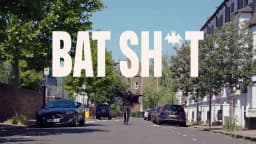
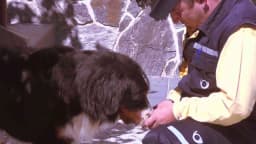
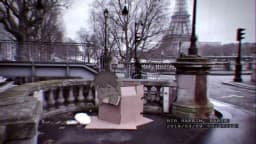
The campaign's central mechanic was transparent and participatory. Volunteers scoured Slovenian landscapes and urban environments, collecting discarded cans, batteries, bottles, tires, helmets, clothing, furniture, and other debris. That material was then arranged by hand into the letters of the Slovenian alphabet and photographed to form the basis of a fully functional typeface. The resulting font was made freely available online, positioning the deliverable not as an advertising asset but as a public communications tool — one that carried the environmental message embedded in its very construction.
Ecologists Without Borders, the Slovenian non-governmental organisation behind the initiative, used the campaign to advance its core mission of promoting responsible behaviour toward nature and proper waste management. The free distribution model ensured that any NGO or private individual choosing to use the font became, implicitly, an extension of that mission. In the words of Urša Zgojznik, President of Ecologists Without Borders, as published in Branding News on 27 September 2018: "We want to encourage people to learn and understand the importance of the right behaviour towards nature and proper waste management." The Cleanest Font In The World earns a Clapboard Score of 79 out of 100.
Futura DDB identified a core tension at the heart of environmental communication in Slovenia and beyond: audiences are broadly aware of waste pollution yet remain emotionally disengaged from it. Standard public service announcements naming the problem rarely generate sustained attention or behaviour change. The agency's response was to make waste itself the medium, transforming an abstract environmental argument into a tangible, usable creative object.
The decision to produce a typeface rather than a poster, film, or billboard was strategically significant. A font is a functional tool. Designers, journalists, NGOs, and private individuals can download and deploy it, each use generating a new impression without further media expenditure. According to Glypho.it, which documented the typeface's distribution, the font was made freely available to anyone online — a distribution model that effectively converted every future user into a passive advocate for the campaign's environmental message.
In Slovenia, public engagement with environmental causes had been growing steadily through the late 2010s, consistent with broader Central European trends in civic participation around sustainability. World Cleanup Day, which in 2018 mobilised participants across numerous countries according to the event's own organisers, gave the campaign an immediate, credible community context that no manufactured activation could replicate.
Within the public service category, campaigns such as WWF's long-running conservation work and Greenpeace's direct-action creative set a competitive benchmark for emotional provocation. Futura DDB chose a different axis of differentiation: utility over outrage. Rather than confronting audiences with imagery of environmental damage, the campaign invited participation and offered something genuinely usable in return. As reported by Creative Bloq, which covered the typeface upon release, the concept attracted international design community attention precisely because it sat at the intersection of craft, activism, and practicality — a rare position for a public interest campaign from a small market like Slovenia.
Creative Director Robert Bohinec led the Futura DDB team that translated a participatory social experiment into a coherent typographic system. The production challenge was considerable: waste objects are irregular, weather-affected, and resistant to the geometric consistency that functional typeface design requires. The creative team's solution was to embrace that irregularity as the aesthetic signature of the work rather than a problem to be solved.
Art Directors Maruša Koželj and Ana Kogovšek oversaw the physical construction of each letterform, coordinating with volunteers on location in Slovenia to ensure that the arrangements were both photographically legible and typographically functional. Designer Miha Avsenik then translated the photographed characters into a vectorized digital typeface — the step that converted a one-day social experiment into a permanent, distributable asset. According to campaignsoftheworld.com, which documented the production approach, the typeface covered the Slovenian alphabet in full, with the characters Q, W, X, and Y absent, consistent with their limited use in the Slovenian language, as noted by Glypho.it and designerinaction.de.
The materials themselves carried communicative weight. Cans, batteries, bottles, tires, helmets, clothing, and furniture — objects whose presence in natural environments signals negligence and civic failure — were repurposed as the raw material of language. The irony was intentional and legible: the dirtiest objects in the Slovenian landscape became the components of what the campaign named the cleanest font in the world. According to Creative Bloq, the visual contrast between the detritus and the clean typographic output was the primary driver of the concept's international shareability.
The campaign produced a single core media asset, as documented by Clapboard, but that economy of output was a creative strength rather than a limitation. One font, freely downloadable and indefinitely reproducible, carried the entire strategic and emotional argument of the campaign forward in perpetuity.
No verified performance data for The Cleanest Font In The World is publicly available in terms of download volumes, media reach, or measurable behaviour change metrics. What the public record does document is the campaign's reception within the creative industry and its distribution footprint.
The campaign received a Golden Sempl award, as reported by media-marketing.com, which covers advertising industry recognition across the former Yugoslav markets. The Golden Sempl is among the most significant creative accolades in the Slovenian and regional advertising landscape, and its award to this campaign in the public interest category confirms peer recognition of the concept's originality and execution. The campaign was also documented by adfinternational.org among notable public service creative work from the region.
Structurally, the campaign's effectiveness rests on several self-reinforcing mechanisms. The free distribution model ensures ongoing exposure without ongoing investment. The alignment with World Cleanup Day on 15 September 2018 gave the Slovenian work a global news peg. The typeface's documentation on international design platforms including Creative Bloq, designerinaction.de, and Glypho.it extended the campaign's geographic footprint well beyond Slovenia. According to campaignsoftheworld.com, which archived the work, the concept attracted sustained attention from the global design community — a secondary audience that amplifies public interest messaging into professional creative networks.
The campaign's documentary quality — rooted in a real social experiment conducted by real volunteers in real Slovenian environments — gave it an authenticity that produced and staged campaigns in the public service category rarely achieve. That authenticity, more than any individual metric, is the structural foundation of its lasting resonance.
The Cleanest Font In The World is a 2018 public interest campaign created by Futura DDB, Ljubljana, for Ecologists Without Borders in Slovenia. Volunteers collected litter from Slovenian nature, arranged it into letters of the Slovenian alphabet, and the characters were vectorized into a free, downloadable typeface available to NGOs and individuals worldwide.
Futura DDB, based in Ljubljana, Slovenia, created the campaign. The agency is part of the DDB Worldwide network. Creative Director Robert Bohinec led the team, which included Art Directors Maruša Koželj and Ana Kogovšek and Designer Miha Avsenik, as documented by campaignsoftheworld.com and goldendrum.com.
The campaign launched on 15 September 2018, timed to coincide with World Cleanup Day. The date gave the Slovenian activation a globally recognised environmental context, extending its reach beyond Slovenia without additional media spend. The alignment was a deliberate strategic choice by Futura DDB to maximise earned-media amplification from launch.
Volunteers collected cans, batteries, bottles, tires, helmets, clothing, furniture, and other discarded objects from Slovenian natural environments. Those materials were physically arranged into letterforms and photographed. Designer Miha Avsenik then vectorized the characters into a functional typeface, as documented by Glypho.it and designerinaction.de.
The campaign won a Golden Sempl award, as reported by media-marketing.com. The Golden Sempl is a leading creative industry accolade in the Slovenian and regional advertising market. The campaign was also recognised and documented by adfinternational.org among notable public interest creative work from the Central European region.
The typeface covers the Slovenian alphabet, which does not natively use Q, W, X, or Y. Those four characters are therefore absent from the font. Glypho.it and designerinaction.de both noted this omission when documenting the typeface, confirming it reflects standard Slovenian orthographic practice rather than a production gap.
.webp)
Creative Collaboration Platform: The Backbone of Modern Creative WorkWhat is a creative collaboration platform?Clapboard defines a creative collaboration platform as the operational core for today’s distributed creative teams. This is not a collection of digital collaboration tools stitched together; Clapboard’s system


Understanding the Creative Production MarketplaceWhat is a Creative Production Marketplace?Clapboard defines a creative production marketplace as a structured ecosystem where brands, agencies, and production talent converge to execute video, advertising, and branded content at scale. Unlike the legacy agency or freelanREAD FULL ARTICLE

The Urgent Need for a Creative Production Operating SystemWhy Traditional Creative Production Models Break DownClapboard sees the creative production landscape shifting under pressure. Content velocity is no longer a buzzword—it’s a mandate. Modern advertising demands relentless output across dozens of channels, each wREAD FULL ARTICLE