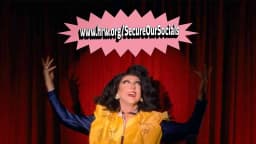
Reporters Without Borders and Serviceplan Hamburg reconstructed fonts from nine banned newspapers across seven countries, running them in German national press

Reporters Without Borders Turns Banned Newspaper Fonts Into a Press Freedom Statement
Fonts for Freedom is a 2019 public interest campaign created by Serviceplan Campaign Hamburg for Reporters Without Borders Germany, in which the house typefaces of nine newspapers banned or shut down across seven countries were reconstructed and distributed to major German publications, transforming the act of typesetting into a direct statement against press censorship.
The campaign ran from September to December 2018, with its case study published and formally submitted in February 2019. The concept is precise in its logic: if a newspaper has been silenced, its typeface — the visual fingerprint of its editorial identity — can still speak. Serviceplan reconstructed the fonts of publications suppressed in Turkey, Azerbaijan, Vietnam, Cambodia, Tanzania, Hungary, and Russia, according to sources including adsoftheworld.com and The One Club. These were not approximations or stylistic references. They were forensic recreations of masthead and body typography belonging to institutions that had been forced to close.
In Germany, four of the country's most widely read newspapers — Süddeutsche Zeitung, Die Welt, taz, and Augsburger Allgemeine — agreed to set their title and media pages using these reconstructed fonts, as documented by house-of-communication.com. The effect was immediate and legible: readers encountered familiar-looking mastheads rendered in the letterforms of censored foreign press, a quiet collision of solidarity and provocation. The campaign extended beyond print, distributing the fonts through billboards, posters, online banners, and a dedicated digital tool that allowed supporters to create typeset statements or make donations directly to Reporters Without Borders. The campaign's geographic anchor is Germany, and its audience was the German reading public — a market with a deep tradition of press literacy and constitutional protections for freedom of expression that make the subject of state censorship elsewhere particularly resonant.
Reporters Without Borders operates as an advocacy organisation whose entire mission depends on making abstract violations feel concrete. The closure of more than 140 media organisations in 2018 alone, as reported by adsoftheworld.com, provided the campaign's central statistical weight — a number large enough to signal systemic suppression rather than isolated incidents. Serviceplan's strategic response was to find a medium that could carry that argument without requiring explanation: typography.
The insight is elegant. Typefaces are proprietary identities. They belong to the publications that commission or adopt them, and they carry the editorial character of those outlets in every headline, every caption, every dateline. When a newspaper is banned, its font becomes an orphan — still technically extant but stripped of its institutional home. Serviceplan recognised that redistributing those fonts through still-functioning German newspapers would create a form of proxy publication: the banned outlet's visual voice, printed in the pages of a free press, read by audiences in a country where press freedom is constitutionally protected under Article 5 of the Basic Law.
In Germany, the broader context of press freedom advocacy gives this campaign particular strategic purchase. Reporters Without Borders publishes its annual World Press Freedom Index, which consistently ranks Germany among the top thirty countries globally for press freedom, making German audiences both a receptive and a symbolically appropriate target for a campaign about censorship abroad. Competitors in the public interest communications space — including Amnesty International Germany and Human Rights Watch — have historically relied on documentary imagery and testimony-led advertising. Fonts for Freedom diverges from that approach entirely, substituting visual forensics for emotional witness. The campaign uses a craft object — the typeface — as both medium and message, a strategic move that allowed it to appear inside editorial environments rather than as external advertising, lending it credibility that paid placement alone cannot manufacture.
Type designers Anja Meiners and Ralph du Carrois led the typographic reconstruction at the centre of Fonts for Freedom, according to luerzersarchive.com and red-dot.org. Their task was not design in the conventional sense but forensic revival: working from surviving specimens of each banned newspaper's typography to rebuild functional, distributable font files that could be set in live editorial contexts. Nine newspapers across seven countries yielded nine distinct typefaces, each carrying the specific proportions, stroke weights, and editorial conventions of its origin publication.
The creative leadership at Serviceplan Campaign Hamburg brought a rigorous conceptual discipline to the execution. Global Chief Creative Officer Alexander Schill, Creative Director for Art Sön Becker, and Creative Director for Copy Eduard Hörner shaped the campaign's overall direction, with art direction handled by Sarah Gstrein, Mojca Zavolovsek, and Tammy Jajes, and copywriting by Henrik Claus, as credited across house-of-communication.com and luerzersarchive.com. Digital production was handled by Plan.Net Munich, extending the campaign's reach from print into a functional online tool that made the reconstructed fonts downloadable and usable by the public.
The decision to place the campaign inside the editorial pages of Süddeutsche Zeitung, Die Welt, taz, and Augsburger Allgemeine rather than in standard advertising positions was itself a creative act. It meant that the reconstructed fonts were read as journalism before they were read as advocacy — a sequencing that changed the nature of the encounter. Readers did not choose to engage with an advertisement; they encountered a foreign newspaper's typographic identity embedded in their own daily press, a subtle displacement that made the argument about censorship structural rather than rhetorical. Distributed additionally across billboards, posters, and banners in Germany, the campaign maintained visual consistency across contexts while adapting its medium to its environment.
No verified performance data for Fonts for Freedom — including reach figures, donation uplift, or download volumes — is publicly available. What the public record does confirm is an unusually broad sweep of international creative recognition for a public interest campaign originating in Germany.
The campaign received a shortlist in the Design category at Cannes Lions 2019, as recorded by oneclub.org. At D&AD 2019, it earned an In Book distinction in the Integrated category for Innovative Use of Media, according to the same source. The One Show awarded Fonts for Freedom three Merit distinctions across Publishing and Newspaper Campaign, Typography and Typeface Design, and Craft — Typography, as documented by oneclub.org. At the New York Festivals 2019, the campaign received one Silver and two Bronze awards across Typography, Positive World Impact: Public Service, and Public Relations: Best Use, per moytsa.com, alongside a finalist certificate in the Social and Environmental Good: Charity and Non-Profit Video category. The Red Dot Design Award recognised the campaign as a Red Dot Winner in the Brands and Communication Design category, as listed by red-dot.org.
Structurally, the campaign's effectiveness resides in its ability to operate simultaneously as journalism, design artefact, and advocacy tool — three registers that most public interest campaigns cannot occupy at once. The Clapboard Score of 69 out of 100 reflects a campaign of strong conceptual and craft integrity whose documented public impact remains limited by the absence of published performance metrics. In Germany's competitive public interest communications landscape, Fonts for Freedom stands as a distinctive example of medium-as-message thinking applied with typographic precision.
Fonts for Freedom is a 2019 public interest campaign by Reporters Without Borders Germany and Serviceplan Campaign Hamburg. It reconstructed the typefaces of nine newspapers banned across seven countries and distributed them to major German publications including Süddeutsche Zeitung and Die Welt, making censored press visible inside a free press.
Serviceplan Campaign Hamburg created Fonts for Freedom for Reporters Without Borders Germany. Global Chief Creative Officer Alexander Schill led the creative direction, supported by Creative Directors Sön Becker and Eduard Hörner, with type reconstruction carried out by designers Anja Meiners and Ralph du Carrois, as credited by luerzersarchive.com and house-of-communication.com.
Fonts for Freedom reconstructed typefaces from nine newspapers suppressed in Turkey, Azerbaijan, Vietnam, Cambodia, Tanzania, Hungary, and Russia, according to adsoftheworld.com. These fonts were then used editorially by German newspapers, giving silenced publications a visible presence inside one of Europe's most widely read national press markets.
Fonts for Freedom received a Cannes Lions Design shortlist, a D&AD In Book distinction for Innovative Use of Media, and three One Show Merit awards covering newspaper campaigns, typeface design, and craft typography in 2019, per oneclub.org. The Red Dot Design Award also named it a winner in Brands and Communication Design, as listed by red-dot.org.
Serviceplan distributed the reconstructed fonts through editorial placements in Süddeutsche Zeitung, Die Welt, taz, and Augsburger Allgemeine, as documented by house-of-communication.com. The campaign also used billboards, posters, and an online tool allowing supporters in Germany to set typographic statements using the banned newspapers' fonts and donate to Reporters Without Borders.
The campaign responded to the closure of more than 140 media organisations in 2018, as reported by adsoftheworld.com. Serviceplan's strategy used typefaces — the proprietary visual identities of banned newspapers — as a medium that could enter functioning German editorial environments, making censorship tangible to readers without relying on conventional documentary or testimony-led advocacy formats.
.webp)
Creative Collaboration Platform: The Backbone of Modern Creative WorkWhat is a creative collaboration platform?Clapboard defines a creative collaboration platform as the operational core for today’s distributed creative teams. This is not a collection of digital collaboration tools stitched together; Clapboard’s system


Understanding the Creative Production MarketplaceWhat is a Creative Production Marketplace?Clapboard defines a creative production marketplace as a structured ecosystem where brands, agencies, and production talent converge to execute video, advertising, and branded content at scale. Unlike the legacy agency or freelanREAD FULL ARTICLE

The Urgent Need for a Creative Production Operating SystemWhy Traditional Creative Production Models Break DownClapboard sees the creative production landscape shifting under pressure. Content velocity is no longer a buzzword—it’s a mandate. Modern advertising demands relentless output across dozens of channels, each wREAD FULL ARTICLE