Sumatran Orangutan Society's Concrete Jungle film, created by Don't Panic in 2018, raised £870,000 from 42 countries to restore a former palm-oil plantation in

Sumatran Orangutan Society Reclaims the Jungle With Concrete Jungle
Concrete Jungle is a 2018 animated fundraising film created by Don't Panic for the Sumatran Orangutan Society, launched in the United Kingdom in August 2018 to raise £870,000 for the charity's Rainforest Home Appeal — a campaign to purchase and restore an 890-acre former palm-oil plantation in Sumatra to functioning rainforest.
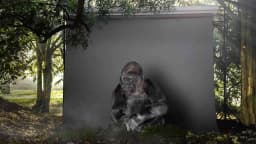
The Sumatran Orangutan Society anchored the campaign around a deceptively simple creative premise. Beloved characters from Disney's The Jungle Book — King Louie, Baloo, and Bagheera — are depicted displaced from their natural habitat and stranded in a grey, unwelcoming urban environment. The visual metaphor translated a distant ecological crisis into something emotionally immediate for audiences in the United Kingdom and beyond. Rather than leading with statistics about deforestation or species decline, the film chose allegory, allowing widely recognised characters to carry the weight of a genuinely urgent conservation message.
In the United Kingdom, where public interest in environmental causes has grown considerably throughout the late 2010s, the campaign arrived at a moment of heightened awareness around palm oil and habitat destruction. Don't Panic, a London-based agency known for purpose-driven creative work, built the film as the centrepiece of a broader digital fundraising effort designed to reach audiences across social media platforms. The single film asset served as both an emotional appeal and a direct call to action, directing viewers to donate to the Rainforest Home Appeal. The campaign's ambition was precise: reach the £870,000 target needed to secure the land before it could be lost to continued agricultural exploitation. According to campaignlive.co.uk, that target was met in full, with donations arriving from 42 countries, demonstrating that a campaign conceived in the United Kingdom could mobilise a genuinely global donor base.
The Sumatran Orangutan Society operates in a crowded space of environmental nonprofit advertising. In the United Kingdom, charities competing for donor attention include major organisations such as WWF and Greenpeace, both of which command significantly larger media budgets and broader public recognition. Against that competitive backdrop, Don't Panic's strategic decision to anchor Concrete Jungle in popular culture rather than scientific fact represents a considered and deliberate departure from category convention.
The insight driving the campaign was straightforward: audiences in the United Kingdom and elsewhere are emotionally connected to the characters of The Jungle Book in ways they are not connected to abstract orangutan population figures. Deforestation data, however alarming, rarely converts passive concern into active donation behaviour. By contrast, watching King Louie, Baloo, and Bagheera navigate an indifferent concrete cityscape triggers an immediate sense of displacement and loss that bypasses intellectual resistance. The film's public interest framing asks viewers not to process a statistic but to feel a consequence.
According to dontpaniclondon.com, the campaign was produced specifically to support the Rainforest Home Appeal, a defined fundraising initiative with a fixed monetary target attached to a tangible land purchase. That specificity is itself a strategic asset. Donors in the United Kingdom and across international markets respond more reliably when they understand precisely what their contribution secures. The 890-acre former palm-oil plantation gave the campaign a concrete, communicable outcome — the kind of clarity that differentiates a fundraising campaign from a general awareness effort. In the broader context of United Kingdom public service advertising, Concrete Jungle exemplifies the shift toward narrative-led, digitally distributed charity communications that treat a single film as a complete fundraising engine rather than a support asset within a larger media buy.
Director Louis Thomas led the creative execution of Concrete Jungle, working with production company Eddy to realise an animated world that placed recognisable Disney characters into a photorealistic urban environment. The tonal contrast between the warmth of The Jungle Book's aesthetic and the cold geometry of a modern city is the film's primary visual argument, and its effectiveness depends entirely on the precision of that juxtaposition.
The animation team assembled for the project was substantial. Lead Animator Vincent Garcia headed a crew that included Senior Animators Olivier Lescot, Jérôme Pradet, and Dorian Lee, alongside Junior Animators Mathilde Loubes, Martin Hur, Alix Arrault, and Ines Scheiber, among others, as documented by dontpaniclondon.com. Production Manager Joël Ravon and Line Producer Charles-Philippe Bowles oversaw the logistical architecture of a production that required the kind of character fidelity capable of sustaining emotional investment in familiar figures across a new and unfamiliar context. The scale of the animation department signals that Don't Panic and Eddy treated this as a premium production, not a low-budget charity film.
On the agency side, Creative Lead George McCallum shaped the conceptual direction, supported by Creatives Jake Moss and Alice Dowdall, with Head of Engagement Ellie Moore and Account Director Liz Hvide MacLeod overseeing the campaign's strategic and client dimensions, according to dontpaniclondon.com. Managing Director Joe Wade provided executive oversight. The decision to use animation rather than live-action documentary footage was itself a creative argument: by working within an established fictional universe, the film could sidestep the visual fatigue that often accompanies conventional wildlife charity communications in the United Kingdom market. The result is a piece of public interest filmmaking that operates simultaneously as entertainment and as a fundraising instrument, with the two functions reinforcing rather than compromising each other.
No independently audited campaign performance report for Concrete Jungle is publicly available beyond the figures reported by campaignlive.co.uk and dontpaniclondon.com. Those figures are, however, significant. The Sumatran Orangutan Society's Rainforest Home Appeal reached its full £870,000 fundraising target, with donations received from 42 countries, according to campaignlive.co.uk. That outcome confirms that a campaign conceived and launched in the United Kingdom successfully activated an international donor base through digital distribution alone.
According to campaignlive.co.uk, the film generated more than 1 million views across Facebook, Instagram, and Twitter by March 2019. The Sumatran Orangutan Society's Instagram following increased by approximately 10,000 followers as a direct result of the campaign, per the same source. In 2019, the campaign was recognised with the Best Fundraising Campaign award at the Campaign for Good Awards, as reported by campaignlive.co.uk — an accolade that provides independent validation of the work's effectiveness within the United Kingdom charity communications sector.
Clapboard rates Concrete Jungle at 66 out of 100. That score reflects a campaign that achieves its primary objective with considerable craft and strategic clarity, while remaining a single-asset execution without the layered channel architecture or measurable long-term brand impact that would push a score higher. The film is structurally effective precisely because its creative ambition and fundraising function are fully aligned. For a public interest campaign with a defined target and a fixed land-purchase outcome, the absence of that broader architecture is a reasonable trade-off, not a failure.
Concrete Jungle is a 2018 animated fundraising film made by Don't Panic for the Sumatran Orangutan Society in the United Kingdom. It depicted Jungle Book characters displaced into a city to raise £870,000 for the Rainforest Home Appeal, a drive to purchase and restore an 890-acre former palm-oil plantation in Sumatra.
The Rainforest Home Appeal reached its full £870,000 target. According to campaignlive.co.uk, donations came from 42 countries, demonstrating that this United Kingdom-originated campaign successfully mobilised an international donor base through digital channels including Facebook, Instagram, and Twitter.
Don't Panic, a London-based agency, created Concrete Jungle. Director Louis Thomas led production through company Eddy. Creative Lead George McCallum, Creatives Jake Moss and Alice Dowdall, and Managing Director Joe Wade all contributed, as documented by dontpaniclondon.com.
Concrete Jungle won Best Fundraising Campaign at the Campaign for Good Awards in 2019, according to campaignlive.co.uk. The award recognised the campaign's effectiveness as a public interest fundraising effort launched in the United Kingdom and distributed internationally across social media platforms.
The film received more than 1 million views across Facebook, Instagram, and Twitter by March 2019, according to campaignlive.co.uk. The campaign also increased the Sumatran Orangutan Society's Instagram following by approximately 10,000 followers, per the same source.
Don't Panic used King Louie, Baloo, and Bagheera to create immediate emotional recognition rather than relying on deforestation statistics. Placing familiar characters in a grey urban environment made habitat loss tangible for United Kingdom audiences and converted passive awareness into active donor behaviour.
.webp)
Creative Collaboration Platform: The Backbone of Modern Creative WorkWhat is a creative collaboration platform?Clapboard defines a creative collaboration platform as the operational core for today’s distributed creative teams. This is not a collection of digital collaboration tools stitched together; Clapboard’s system


Understanding the Creative Production MarketplaceWhat is a Creative Production Marketplace?Clapboard defines a creative production marketplace as a structured ecosystem where brands, agencies, and production talent converge to execute video, advertising, and branded content at scale. Unlike the legacy agency or freelanREAD FULL ARTICLE

The Urgent Need for a Creative Production Operating SystemWhy Traditional Creative Production Models Break DownClapboard sees the creative production landscape shifting under pressure. Content velocity is no longer a buzzword—it’s a mandate. Modern advertising demands relentless output across dozens of channels, each wREAD FULL ARTICLE