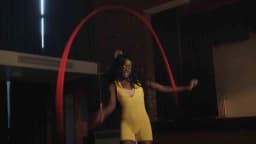
Refuge's 'Hide and Seek' film by BBH London launched in the UK in April 2019, screening before 15-certificate films at 25 Picturehouse cinemas to highlight

Refuge and BBH Turn Hide and Seek Into a Warning About Domestic Abuse
Refuge's 'Hide and Seek' is a 60-second cinema film created by BBH London and launched in the United Kingdom in April 2019, screening before all 15-certificate films across 25 Picturehouse cinema locations to raise awareness of domestic abuse witnessed and experienced by children in the family home.
The campaign carries a single, arresting message: according to the campaign's own documented brief, 90% of domestic abuse occurring in the family home is witnessed and experienced by children. That statistic anchors every creative and strategic decision behind the film, transforming a universally recognised childhood pastime into a vehicle for one of the most urgent public interest conversations in the UK. The choice to place the film in cinemas, ahead of films certificated for audiences aged fifteen and over, reflects a deliberate intention to reach adults at a moment of heightened emotional receptivity in a darkened, communal space.
Sandra Horley, Chief Executive of Refuge, was unequivocal about the campaign's ambition. As reported by The Drum, Horley stated: 'Never before in Refuge's history has such a major campaign been launched,' adding that 'with one in four women experiencing the issue and two women a week being killed by a current or former partner, I have no doubt that the impact of this campaign will save and change many lives.' The campaign's dual objectives — raising both awareness and funds for Refuge — are served by a single film that functions simultaneously as a public service announcement, a piece of documentary-influenced storytelling, and a call to action distributed through an established media partnership with Picturehouse Cinemas. Clapboard Score: 70/100.
Refuge's decision to anchor its 2019 campaign to cinema distribution reflects a considered understanding of where emotional attention is most captive in the United Kingdom. The Picturehouse partnership placed 'Hide and Seek' before all 15-certificate films across 25 UK locations, ensuring the film reached adult audiences in a context stripped of the scrolling distraction that diminishes the impact of social and digital placements.
The strategic depth of the campaign derives from its focus on child witnesses rather than adult survivors alone. This reframing is not cosmetic. The documented campaign message — that 90% of domestic abuse in the family home is witnessed and experienced by children — broadens the moral constituency of concern, implicating not just potential victims but every adult who might see a child at risk. It is a strategy designed to convert passive sympathy into active urgency, moving audiences from awareness to the impulse to donate or seek information.
The scale of the problem the campaign addresses is considerable. According to the Office for National Statistics, 2.4 million adults aged 16 to 74 experienced domestic abuse in England and Wales during the year ending March 2019, equivalent to approximately 5.7% of adults in that age group, as reported by Gov Uk. In the same period, police in England and Wales recorded more than 1.3 million domestic abuse-related incidents and crimes, an increase of over 118,000 from the preceding year, also per gov.uk. The estimated economic and social cost of domestic abuse in England and Wales reached £66.2 billion for 2016 to 2017, including £47.3 billion attributed to victim quality-of-life impacts, according to gov.uk. Against this backdrop, competitors in the domestic abuse awareness space — including Women's Aid, whose 'Together We Can' digital campaigns have sustained long-running public presence, and the Home Office's own public information campaigns — largely operate through digital and broadcast channels. Refuge and BBH's cinema-first model in 2019 represented a deliberate departure from that field.
'Hide and Seek' is directed by Lucy Bridger, as documented by The Drum and Ads of the World. Bridger's approach draws on the grammar of documentary and social experiment filmmaking, a register that lends the 60-second film an authenticity that distinguishes it from conventionally produced public service advertising. The film opens in the familiar, benign territory of a children's game, using the conventions of that game — counting, hiding, searching — to establish an emotional comfort that the narrative then quietly and deliberately dismantles.
The hard-hitting twist described by The Drum's Imogen Watson in her April 23, 2019 review is the mechanism through which the film's central statistic becomes visceral rather than abstract. By grounding the audience in a child's perspective before revealing the domestic context, Bridger ensures that the figure — 90% of domestic abuse witnessed by children in the family home — lands not as data but as lived experience. The documentary-inflected visual language, naturalistic performance, and restrained sound design all serve this strategy, withholding the heightened emotional cues of conventional charity advertising in favour of something closer to observed reality.
The Picturehouse cinema environment further amplifies the creative execution. Screened before 15-certificate films in darkened auditoria across 25 UK locations, the film benefits from the full-screen, full-volume, distraction-free conditions that cinema uniquely provides. The sixty-second duration is precisely calibrated for this context: long enough to construct and subvert the game's emotional arc, short enough to land before the audience can disengage. The combination of Bridger's direction, the social experiment format, and the cinema placement produces a piece of public interest work whose craft serves its cause with unusual discipline.
No independently verified post-campaign performance data — including reach figures, donation uplift, or awareness tracking metrics — for 'Hide and Seek' is publicly available at the time of writing. The absence of published numbers is not unusual for charity cinema campaigns of this scale, where impact is frequently assessed through qualitative and anecdotal evidence rather than disclosed commercial metrics.
What is documentable is the structural effectiveness of the campaign's distribution model. Placement before all 15-certificate films across 25 Picturehouse locations in the United Kingdom created a guaranteed, repeated, captive exposure to an adult audience self-selected for engagement with mature content. Clare Binns, Joint Managing Director of Picturehouse Cinemas, was quoted in The Drum on April 23, 2019, expressing direct enthusiasm for the Refuge partnership, describing herself as 'delighted to have Refuge as our new charity partner' — a statement that signals institutional commitment to the campaign beyond a transactional media placement.
Sandra Horley's public statement, as reported by The Drum, positioned 'Hide and Seek' as the largest campaign in Refuge's organisational history to that point, a claim that implies significant internal resource allocation and strategic priority even in the absence of external metrics. The campaign's Clapboard Score of 70/100 reflects its disciplined creative execution, strategically coherent distribution, and the cultural resonance of its central insight, balanced against the limited public documentation of measurable outcomes. For a public service campaign operating in the domestic abuse awareness category in the United Kingdom, structural reach and emotional impact are legitimate proxies for effectiveness when quantitative data is unavailable.
Refuge's 'Hide and Seek' is a 60-second cinema film created by BBH London and launched in the United Kingdom in April 2019. Directed by Lucy Bridger, it screened before 15-certificate films at 25 Picturehouse locations. Its central message, documented in campaign materials, is that 90% of domestic abuse in the family home is witnessed by children.
Lucy Bridger directed the 'Hide and Seek' film for Refuge and BBH London, as documented by The Drum and Ads of the World. Bridger employed a documentary and social experiment style, grounding the audience in a child's perspective before revealing the domestic abuse context at the film's conclusion.
The campaign screened before all 15-certificate films across 25 Picturehouse cinema locations in the United Kingdom. The media partnership with Picturehouse was confirmed by Clare Binns, Joint Managing Director of Picturehouse Cinemas, who was quoted in The Drum on April 23, 2019, describing her delight at partnering with Refuge.
The campaign's documented central statistic is that 90% of domestic abuse occurring in the family home is witnessed and experienced by children. Separately, according to gov.uk, 2.4 million adults in England and Wales experienced domestic abuse in the year ending March 2019, equivalent to approximately 5.7% of adults aged 16 to 74.
Refuge's stated objectives were to raise both awareness and funds for the organisation. Sandra Horley, Chief Executive of Refuge, described it as the largest campaign in Refuge's history, as reported by The Drum, and stated her conviction that the campaign would save and change lives given the scale of domestic abuse in the United Kingdom.
Refuge's 'Hide and Seek' campaign by BBH London holds a Clapboard Score of 70 out of 100. This reflects disciplined creative execution by director Lucy Bridger, a strategically coherent cinema distribution model through Picturehouse in the United Kingdom, and the cultural weight of the campaign's focus on children witnessing domestic abuse.
.webp)
Creative Collaboration Platform: The Backbone of Modern Creative WorkWhat is a creative collaboration platform?Clapboard defines a creative collaboration platform as the operational core for today’s distributed creative teams. This is not a collection of digital collaboration tools stitched together; Clapboard’s system


Understanding the Creative Production MarketplaceWhat is a Creative Production Marketplace?Clapboard defines a creative production marketplace as a structured ecosystem where brands, agencies, and production talent converge to execute video, advertising, and branded content at scale. Unlike the legacy agency or freelanREAD FULL ARTICLE

The Urgent Need for a Creative Production Operating SystemWhy Traditional Creative Production Models Break DownClapboard sees the creative production landscape shifting under pressure. Content velocity is no longer a buzzword—it’s a mandate. Modern advertising demands relentless output across dozens of channels, each wREAD FULL ARTICLE