



Varun Katyal | Founder, Clapboard
Varun Katyal is the Founder & CEO of Clapboard and a former Creative Director at Ogilvy, with 15+ years of experience across advertising, branded content, and film production. He built Clapboard after seeing firsthand that the industry’s traditional ways of sourcing talent, structuring teams, and delivering creative work were no longer built for the volume, velocity, and complexity of modern content. Clapboard is his answer — a video-first creative operating system that brings together a curated talent marketplace, managed production services, and an AI- and automation-powered layer into a single ecosystem for advertising, branded content, and film. It is designed for a market where brands need content at a scale, speed, and level of specialization that legacy agencies and generic freelance platforms were never built to deliver. The thinking, frameworks, and editorial perspective behind this blog are shaped by Varun’s experience across both the agency world and the emerging platform-led future of creative production. LinkedIn: https://www.linkedin.com/in/varun-katyal-clapboard/
Why User-Generated Content Marketing Works
User-generated content marketing isn’t a trend; it’s a structural shift in how brands earn trust and attention. When consumers see real people—peers, not paid actors—advocating for a product, the authenticity is hard to fake. This is the core of UGC effectiveness: it bypasses the skepticism bred by decades of overproduced advertising. Senior marketers know the metrics—engagement rates, conversion lifts—but the underlying reason for UGC’s impact is psychological. People trust people, not campaigns.
Why consumers trust UGC more than ads
Consumer trust in UGC is grounded in the perception of authenticity. Traditional ads are engineered to persuade; audiences know this and filter accordingly. UGC, by contrast, is organic. It’s unsolicited, unscripted, and feels like a genuine recommendation. This is why trust in marketing is increasingly synonymous with trust in user voices. When a potential buyer sees someone like them sharing a positive experience, the barrier to belief drops. This isn’t about influencer gloss—it’s about relatability at scale.
The role of social proof in user-generated content marketing
Social proof is more than a buzzword; it’s the engine behind UGC impact. Every customer review, unboxing video, or testimonial becomes a micro-endorsement, compounding influence across channels. In crowded categories, this aggregation of peer validation shifts perception faster than any single campaign can. UGC effectiveness lies in its ability to create a multiplier effect: one post sparks another, and soon a brand’s credibility is crowdsourced. Senior marketers understand that no budget can buy the weight of authentic peer recommendation.
Building brand loyalty with authentic content
Brands that harness UGC don’t just win short-term attention—they build long-term loyalty. When customers see their content featured, they become invested in the brand’s story. This fosters a sense of community and belonging, turning passive buyers into active advocates. It’s a virtuous cycle: authentic content drives engagement, engagement fosters loyalty, and loyalty fuels further UGC creation. The result is a self-sustaining ecosystem that resists the ad fatigue plaguing traditional campaigns.
- Ad fatigue and skepticism: UGC sidesteps both. Audiences, bombarded by polished creatives, now tune out anything that feels too perfect. UGC’s rawness cuts through, re-engaging those who’ve grown numb to brand messaging.
- Community as a business asset: UGC doesn’t just market products—it builds tribes. When people see their peers participate, it signals that the brand is worth joining. This is how loyalty is scaled without discounting value or diluting positioning.
For senior marketers, the mandate is clear: orchestrate environments where user voices can be amplified, not choreograph every narrative. UGC best practices aren’t about ceding control; they’re about leveraging the credibility and reach that only real customers can provide. In a landscape defined by skepticism and choice, user-generated content marketing remains one of the few levers that delivers both trust and performance at scale.
Understanding User-Generated Content Marketing
User-generated content marketing is not a trend; it’s a recalibration of who owns the narrative. At its core, user-generated content marketing leverages assets—photos, videos, reviews, testimonials—created by real customers, not agencies or in-house teams. This approach shifts the spotlight from polished brand messaging to authentic, unscripted peer voices. For senior marketers and creative leaders, the distinction is clear: UGC isn’t just another tactic in the content marketing strategies toolkit. It’s a structural change in how trust and influence are built online.
What qualifies as user-generated content?
The UGC definition is straightforward but often misunderstood. What is user-generated content? It’s any material produced and published by individuals outside the brand’s payroll—customers, fans, or employees—shared on platforms the brand does not fully control. This includes product reviews, unboxing videos, social media posts, forum threads, and even branded hashtag campaigns. The unifying factor is origin: the content comes from people with lived experience of the product or service, not from a creative brief.
How user-generated content marketing differs from traditional approaches
Traditional brand content is engineered for consistency, control, and message discipline. UGC marketing, by contrast, thrives on variability and perceived honesty. The production values may be lower, but the impact is higher—audiences trust peer recommendations far more than brand proclamations. This isn’t about replacing high-quality creative; it’s about integrating real voices to accelerate consideration and drive action. UGC also scales differently: brands can source thousands of assets across markets without ballooning production budgets, making it a pragmatic choice for performance-driven teams.
The psychology behind UGC’s influence
UGC works because it’s anchored in authenticity and peer validation. People are wired to trust the experiences of others, especially when the content feels unfiltered. This psychological lever—social proof—short-circuits skepticism and increases conversion rates. The best UGC isn’t the most beautiful; it’s the most believable. That’s why user-generated content marketing has become a cornerstone in digital marketing, outpacing traditional testimonials and scripted endorsements.
Technology and the scalability of UGC marketing
Platforms and tools have made it easier than ever to source, curate, and distribute UGC at scale. From automated rights management to AI-driven moderation, technology removes friction from the process. Brands no longer rely on organic submissions alone—they actively solicit, incentivize, and deploy UGC across channels. This operational shift turns UGC from a passive byproduct into a proactive growth lever, especially when integrated with broader content marketing strategies. The result: a content ecosystem that’s more agile, credible, and commercially effective.
UGC marketing is not about ceding control; it’s about orchestrating influence. For leaders who care about effectiveness over aesthetics, understanding and deploying user-generated content is now table stakes. Ignore it, and you’re playing last year’s game.
Crafting a Winning UGC Marketing Strategy
How to set objectives for user-generated content marketing
A user-generated content marketing strategy starts with ruthless clarity on objectives. Are you chasing awareness, engagement, conversion, or community growth? Each goal dictates different creative asks and measurement frameworks. Set KPIs that are quantifiable and directly tied to business impact—think conversion rate uplift, cost per acquisition, or net new contributors. Don’t default to vanity metrics. UGC’s real power emerges when you track outcomes that matter to the P&L, not just the social team’s dashboard.
Campaigns with user-generated content see a 29% boost in web conversions, but only when the content is aligned with a clear call to action and a defined audience journey (American Marketing Association, 2024). This isn’t about collecting content for content’s sake. It’s about using UGC to accelerate a specific commercial result.
Choosing the right channels for UGC campaigns
Channel selection is strategic, not incidental. Start by mapping your audience’s digital behaviour. Where do they naturally create and share content? TikTok, Instagram, and YouTube each offer distinct creative languages and distribution mechanics. Don’t dilute your efforts by spreading too thin—prioritise platforms where user creativity and your brand objectives intersect.
Distribution planning also means thinking beyond organic reach. Paid amplification can turn high-performing UGC into scalable assets, driving incremental value. In fact, paid content combined with UGC has been shown to boost conversion rates by 28% (Grand View Research, 2023). The lesson: treat distribution as an integral part of UGC campaign planning, not a bolt-on.
Encouraging participation without losing brand coherence
The tension between brand control and creative freedom is where most UGC marketing plans stumble. You want authentic contributions, but you can’t afford to let the brand narrative fragment. The solution: architect prompts, contests, or incentives with precision. Give users a clear brief—what to create, why it matters, and how it will be used—while leaving room for their voice and context. The best prompts are open enough to invite creativity but structured enough to keep submissions on-message.
Incentives don’t always mean cash or prizes. Recognition, features on official channels, or access to exclusive experiences can be more effective for building a UGC community that feels invested. But participation drops if users sense their contributions vanish into a void. Close the loop: showcase standout UGC, acknowledge creators, and integrate their work visibly into your broader campaign strategy.
Maintaining a consistent brand voice while embracing user diversity
A successful user-generated content marketing strategy is not a free-for-all. Consistency comes from clear guardrails: tone guidelines, visual templates, and approval workflows that maintain brand integrity without suffocating user input. The art is in curation, not censorship. Feature a range of voices and formats, but ensure every piece ladders back to your core narrative.
Ultimately, building a UGC community is about sustainable engagement, not one-off stunts. When contributors see their input valued and their stories amplified, you unlock a flywheel of advocacy that outperforms traditional branded content on both cost and effectiveness (Backlinko, 2026). For senior marketers, the challenge is to design systems that scale this dynamic without sacrificing control or coherence.

Unlocking Value: Benefits and Trade-offs of UGC Marketing
The benefits of user-generated content marketing are real, but so are the trade-offs. UGC promises reach, authenticity, and cost efficiency, but it doesn’t hand brands a free pass to effortless growth. Senior marketers know the game: it’s about extracting value without losing control or exposing the business to unnecessary risk.
Calculating the ROI of UGC marketing
UGC’s economics are compelling. Sourcing content from real customers slashes production costs and accelerates output, especially across multi-market campaigns. But the real story is performance. UGC is five times more likely to convert than brand-created content, with 85% of consumers finding it more authentic and influential (Bazaarvoice, 2024). Ads featuring UGC deliver four times higher click-through rates and 50% lower cost-per-click than traditional ads (Archive, 2026). For brands under pressure to prove marketing ROI, these numbers are hard to ignore.
There’s also a compounding effect: UGC drives organic engagement, which in turn amplifies reach and lowers paid media dependence. Including UGC on product pages, for example, can increase conversions by an average of 29%. The result is a flywheel—more content, more engagement, more data, more revenue.
Common pitfalls in user-generated content campaigns
But UGC isn’t a silver bullet. The same openness that fuels authenticity also exposes brands to inconsistency and quality drift. When anyone can create content, not all of it will land on-message or on-brand. This is where many campaigns falter: without clear curation, UGC can dilute brand equity, introduce off-brand messaging, or even create reputational headaches.
Resource allocation is another overlooked cost. Moderation, curation, and community management aren’t optional—they’re essential. Brands that treat UGC as a shortcut to “free” content often underestimate the investment needed to filter, approve, and sometimes remediate submissions. Fail to plan for this, and UGC can become a liability, not an asset.
Managing risk while scaling UGC
As UGC volume scales, so does exposure to legal and reputational risk. Copyright infringement, privacy breaches, and offensive content aren’t hypothetical—they’re operational realities. Effective UGC programs build in rigorous rights management, clear terms of use, and proactive moderation. This isn’t just hygiene; it’s risk mitigation at scale. For a deeper dive, see our guide on managing UGC risks.
At the same time, brands must strike a balance between control and participation. Overly restrictive guidelines can stifle the very creativity and authenticity that make UGC effective. The solution isn’t blanket approval or rejection—it’s intelligent curation, aligned with brand strategy and legal compliance. The brands that get this right don’t just avoid risk; they unlock a defensible, scalable advantage.
Balancing UGC pros and cons for business impact
The UGC pros and cons equation is ultimately a business decision. UGC can unlock cost savings, drive organic reach, and deliver measurable performance gains. But it demands disciplined management, clear standards, and a willingness to invest in curation and community. The brands that treat UGC as a strategic asset—rather than a tactical afterthought—are the ones that realise its full potential and avoid the common traps.
For leaders focused on sustainable marketing ROI, UGC is neither a panacea nor a passing fad. It’s a lever—powerful when pulled with precision, risky when left unchecked. The value is there, but only if you’re prepared to manage the trade-offs with the same rigour you’d apply to any other core
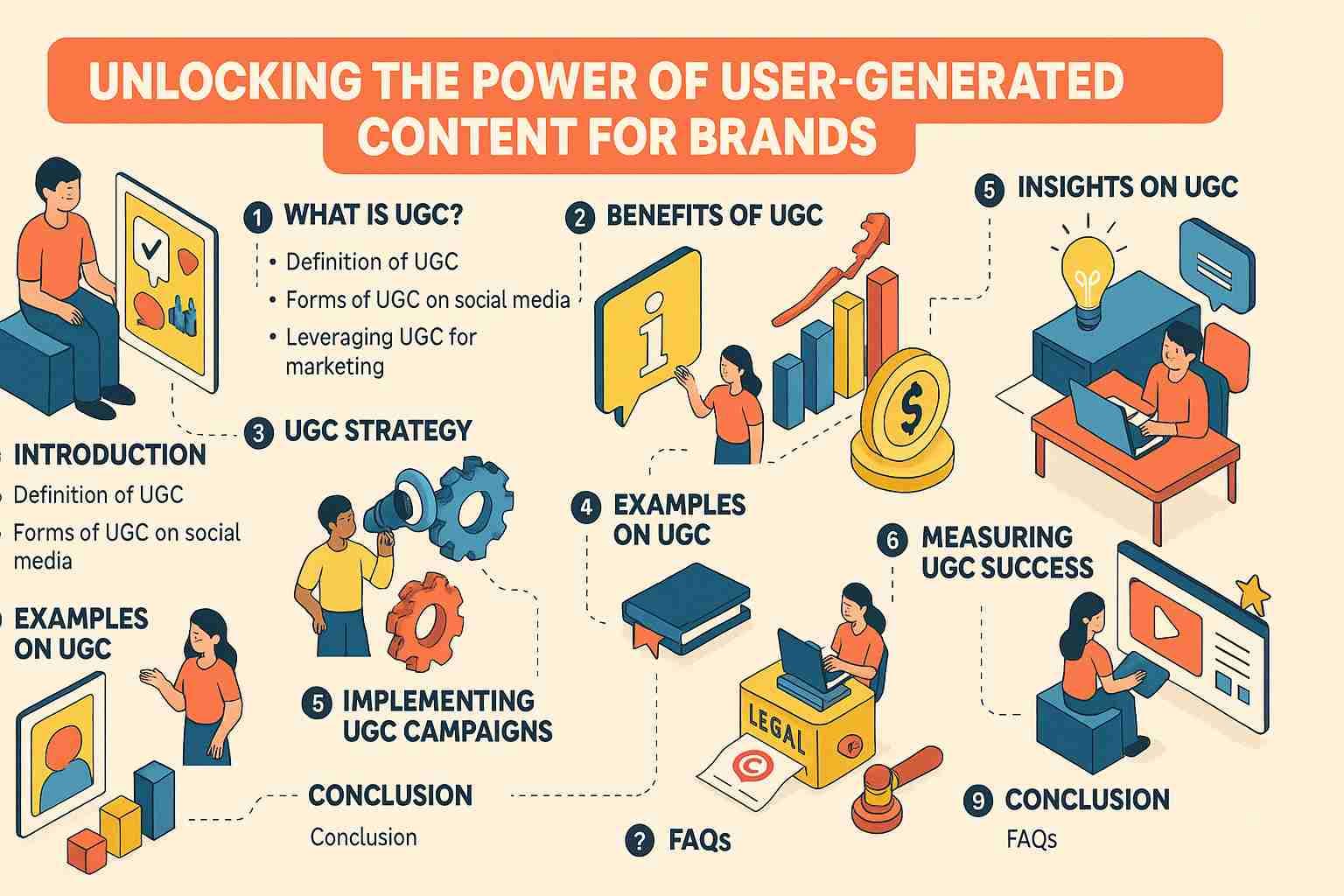
Industry Insights: UGC Marketing in Action
User-generated content marketing examples are now table stakes for brands with ambition. But the most effective UGC campaigns don’t just aggregate content—they leverage it with surgical precision, tailored to sector realities and audience behavior. Here’s how leading industries are extracting commercial value from UGC and what practitioners should actually take away.
Top user-generated content marketing examples by industry
E-commerce players were early adopters, using UGC to bridge the trust gap in digital shopping. Product reviews, customer unboxings, and peer-to-peer style guides are now baked into the purchase journey. Fashion brands have weaponized social proof, turning customers into micro-influencers—think hashtag-driven lookbooks that outperform traditional campaigns on engagement and conversion.
Travel and hospitality have pushed UGC further, using real customer stories and visuals to sell experiences. No glossy brochure competes with a traveler’s candid Instagram. Hotels and airlines curate destination content, not just their own amenities, to drive aspiration and bookings. Tech brands, meanwhile, focus on community-driven innovation—soliciting product hacks, tutorials, and troubleshooting from their most dedicated users, then amplifying the best for credibility and support cost savings.
What successful UGC campaigns have in common
Effective UGC campaigns share a few non-negotiables. First: frictionless participation. The best campaigns make it effortless for users to create and share, often integrating submission directly into the product or platform. Second: clear curation. Not all UGC is created equal; smart brands actively moderate, elevate, and repackage content to fit their standards—this is not a volume game, it’s a quality one.
Third: strategic integration. UGC isn’t a bolt-on. High-performing brands weave user content through the funnel—from discovery to decision—using it to address objections, showcase proof, and nudge action. Finally, incentives matter. While some sectors rely on intrinsic motivation (recognition, community), others see results by offering tangible rewards or exclusive access. The mechanism must match the audience’s motivation and the brand’s commercial goals.
Lessons from industry leaders in UGC
Industry UGC case studies show that context trumps copycatting. What works in fashion’s fast-moving, visually driven landscape won’t translate directly to B2B SaaS or regulated sectors. The lesson: tailor UGC mechanics to sector-specific marketing realities. E-commerce can rely on volume and variety; travel must prioritize authenticity and emotion; tech needs utility and credibility above all.
Another critical lesson: adaptability. UGC is not reserved for the giants. Small and mid-market brands are winning by focusing on niche communities and local relevance, using sector-specific UGC to outmaneuver better-resourced competitors. The key is to build feedback loops—test, refine, and scale what resonates. UGC tactics are highly portable, but only if you’re disciplined about fit and execution.
Applying sector-specific UGC at scale
For practitioners, the takeaway is clear: don’t chase trends, chase outcomes. Start with the commercial problem—conversion, retention, awareness—and reverse-engineer the UGC approach. Study successful UGC campaigns in your vertical, but don’t imitate blindly. Instead, dissect what made them work: Was it the frictionless user journey? The specificity of the prompt? The way content was repurposed across channels?
Ultimately, user-generated content marketing examples prove that UGC is not a monolith. Its power lies in adaptability—across sectors, business sizes, and campaign objectives. The brands winning with UGC are those treating it as a strategic lever, not a side project. That’s the benchmark for any marketer serious about effectiveness.
Decision Points: When to Use User-Generated Content Marketing
Knowing when to use user-generated content marketing is a strategic calculation, not a trend-chasing impulse. UGC delivers results when the conditions are right: when your audience is primed to participate, your product or service naturally lends itself to shareable experiences, and your organization is set up to manage and amplify the content that comes in. Miss those cues, and you’re left with mediocre engagement at best—and brand dilution at worst. Here’s how experienced marketers weigh the decision.
Signs your brand is ready for UGC marketing
Start with your audience. UGC thrives on active, invested communities. If your brand already sees organic mentions, reviews, or unsolicited content, you have a foundation. Brands with a dormant or disengaged audience will struggle to generate authentic UGC, no matter how well-crafted the campaign mechanics. Engagement is the leading indicator—if it’s not there, focus on building it before launching a UGC campaign.
Brand maturity also matters. Early-stage brands without a clear identity or audience risk muddying their positioning through UGC. Established brands with a defined voice and loyal following can harness UGC as a force multiplier, amplifying reach while maintaining control over narrative and quality. If you’re still fighting for basic awareness, UGC is premature.
Aligning UGC with product launches or events
UGC campaign timing is critical. The most effective UGC initiatives coincide with moments of heightened attention—product launches, seasonal campaigns, or cultural events that naturally invite participation. These windows provide context and urgency, giving audiences a reason to create and share content. For example, a new product drop paired with a UGC contest can turn early adopters into advocates and content creators, feeding the campaign’s momentum and credibility.
Event-driven triggers—think festivals, sporting events, or relevant industry moments—also create fertile ground for UGC. They offer shared context and emotional resonance, making participation more appealing and the resulting content more compelling. Don’t force UGC into moments that lack audience energy or relevance; timing is everything.
Assessing organizational readiness for UGC
UGC suitability isn’t just about audience or timing—it’s about internal capacity. Managing UGC at scale requires robust moderation, legal oversight, and a plan for amplification. If your team lacks the resources or workflows to review, curate, and deploy user content quickly, you’ll lose momentum and risk compliance missteps. UGC is not a set-and-forget tactic; it demands active stewardship.
Evaluate your tech stack and processes. Do you have tools to aggregate submissions, vet for brand safety, and handle rights management? Can your creative and social teams turn around repurposed assets at the speed of the campaign? If not, address these gaps before committing to UGC.
UGC marketing triggers: When not to pursue
Some products and services simply don’t lend themselves to UGC. Highly regulated industries, B2B categories with low emotional engagement, or offerings that lack a visual or experiential hook will see limited returns. If your audience isn’t naturally inclined to share, or your value proposition is too technical, UGC will underperform. In these cases, consider other tactics—see our guide on choosing marketing tactics and campaign planning questions for alternatives.
Ultimately, the decision to launch a UGC campaign is about fit, not FOMO. Brands that succeed with UGC know when to deploy it—and when to hold back. Treat UGC as a lever, not a default.
Measuring Success in User-Generated Content Marketing
Measuring user-generated content marketing success isn’t about vanity metrics or anecdotal wins. It’s about hard data that ties UGC activity to real business outcomes. Senior marketers know that if you can’t quantify it, you can’t optimize it. UGC analytics, when properly deployed, give you the clarity to move beyond gut feeling and into strategic iteration.
Essential metrics for UGC marketing campaigns
Start with the fundamentals. Engagement rate—likes, comments, shares—remains the baseline, but it’s not the finish line. Reach tells you how far your UGC travels, but participation rate is the real pulse: what percentage of your audience is moved to create or contribute content? Track conversions, not just clicks. Did UGC drive signups, purchases, or other bottom-funnel actions? These UGC KPIs must ladder up to your broader marketing objectives, not just look good in a dashboard.
- Engagement rate: Indicates resonance, not just exposure.
- Reach: Measures audience breadth, but not depth.
- Participation rate: Reveals active involvement—critical for brand advocacy.
- Conversion rate: Directly links UGC to revenue or lead generation.
Using analytics tools to track UGC impact
Manual tracking is dead weight. Sophisticated marketing analytics tools now parse UGC performance metrics across platforms—Instagram, TikTok, YouTube, and even owned channels. Look for platforms that aggregate content, attribute engagement to source, and integrate with your existing performance tracking stack. Tagging, sentiment analysis, and image recognition are table stakes for enterprise-level UGC analytics. If your tool can’t surface actionable insights or automate reporting, it’s a liability.
But don’t get distracted by dashboards. The point is to connect UGC KPIs directly to campaign goals. Are high-participation posts also driving conversions? Does UGC sourced from specific regions outperform others? Use data to answer business questions, not just fill slide decks.
Optimizing future campaigns based on UGC data
Effective UGC marketing isn’t static. The best teams close the loop—analyzing which content types, creators, and distribution tactics move the needle, then feeding those insights back into the next brief. Iterative improvement means running controlled experiments: test incentives, tweak submission mechanics, or shift platform focus based on what the numbers reveal. If participation spikes but conversions lag, your call to action may be off. If reach is high but engagement is flat, your creative isn’t sparking advocacy.
Ultimately, measuring user-generated content marketing success is about discipline. Define your UGC performance metrics up front, invest in the right analytics tools, and tie every datapoint back to commercial outcomes. UGC isn’t just a creative lever—it’s a measurable growth engine when tracked with intent and acted on without sentimentality.
Legal and Ethical Guidelines for UGC Marketing
Legal considerations for user-generated content marketing are non-negotiable. Brands operating at scale cannot afford to treat UGC as a free-for-all. The risks—copyright infringement, privacy violations, reputational damage—are real, immediate, and costly. Senior marketers must understand not just the law, but the commercial logic behind robust UGC governance.
Understanding copyright in UGC marketing
Copyright is the baseline. Unless users explicitly assign or license their rights, the original creator retains ownership of any content they produce. This applies whether it’s a 10-second testimonial or a viral TikTok remix. Brands must secure clear, documented permission to use UGC in any campaign. Relying on implied consent from a hashtag or public post is reckless. UGC copyright disputes rarely end well for brands; the reputational fallout often dwarfs any legal settlement.
Go beyond the basics. Map where UGC will be used—owned channels, paid ads, third-party platforms—and ensure your content usage policies cover each scenario. International campaigns add complexity: copyright law varies by market, and what’s permissible in one jurisdiction may not fly elsewhere. A single gap can expose the entire campaign.
Best practices for obtaining user consent
Consent is not a checkbox. UGC consent should be explicit, informed, and traceable. Use platform-native tools when possible, but back them up with direct communication and signed releases for high-visibility content. Document every step—who gave permission, for what use, and for how long. If you can’t produce a paper trail, you don’t have real consent.
Transparency builds trust. Make your UGC guidelines public and accessible. Spell out how submissions may be used and what rights users retain. This isn’t just about legal cover; it signals respect for your community and deters opportunistic claims.
Ethical dilemmas in user-generated content campaigns
The ethical bar is higher than the legal minimum. Ethical UGC use means more than avoiding lawsuits. It’s about curation with intent—never exploiting creators, never distorting context, and never amplifying harmful or misleading content. UGC moderation is essential. Establish approval processes that filter for accuracy, relevance, and brand safety. If you wouldn’t put your name on it, don’t publish it.
Respect works both ways. Give credit where it’s due and avoid editing content in ways that misrepresent the creator’s intent. If compensation is appropriate—because the content drives significant value—pay it. The era of “exposure” as currency is over for serious brands.
Building trust through transparent UGC policies
Trust is a strategic asset. Clear, enforced content usage policies protect both the brand and its audience. They also set expectations, reducing friction and confusion when campaigns scale. Make it easy for users to opt out or request removal. The brands that win with UGC are those that treat creators as partners, not assets to be mined.
In the end, effective user-generated content marketing is built on a foundation of respect, transparency, and rigor. Legal compliance is just the start—lead with ethics, and your UGC will work harder and travel further.
The Future of User-Generated Content Marketing
How AI is transforming user-generated content marketing
The future of user-generated content marketing is being redrawn by AI. Machine learning models are no longer just sorting or tagging UGC—they’re curating, remixing, and even generating content that mirrors authentic user voices. This isn’t about deepfakes or synthetic influencers. It’s about scalable personalization: AI-driven platforms can now serve hyper-relevant UGC to micro-segments, matching creative to context, channel, and moment. The result is a step-change in efficiency and resonance. Brands that treat AI as a creative collaborator, not just an automation layer, will unlock new forms of engagement and measurement. The economics shift: less manual curation, more strategic oversight, and a tighter feedback loop between campaign performance and content iteration.
Personalization trends in UGC campaigns
Personalized UGC is moving from aspiration to expectation. Audiences are increasingly immune to generic testimonials and staged “realness.” What cuts through is content that feels bespoke—tailored not just to demographics, but to intent, behavior, and moment-in-time context. UGC technology now enables dynamic creative assembly, where assets are pulled from a brand’s content pool and adapted in real time. Hyper-targeted UGC campaigns—driven by data from CRM, social listening, and on-platform engagement—are already delivering outsized returns. The next phase is predictive: anticipating what content a user will create, or respond to, before they do. This is where UGC ceases to be a passive byproduct and becomes a precision tool in the marketing stack.
Preparing your brand for the next wave of UGC
Emerging UGC trends are challenging brands to rethink both infrastructure and mindset. AR and VR are blurring the line between content creator and consumer, opening up new canvases for participatory storytelling. Blockchain is quietly rewriting the rules of ownership, attribution, and reward—making it possible to verify authenticity and compensate creators at scale. Community management is no longer a reactive function; it’s a strategic lever. The brands winning in this space are those investing in robust moderation, transparent governance, and tools that empower their advocates, not just their customers.
Multi-channel orchestration is the new baseline. UGC’s role isn’t confined to social feeds or campaign microsites—it’s being integrated into paid, owned, and earned channels, from shoppable video to programmatic display. This demands a more disciplined approach to rights management, quality control, and measurement. The future is less about chasing viral moments and more about building durable, two-way relationships that compound over time.
For senior marketers, the signal is clear: the future of user-generated content marketing will be defined by those who master the interplay of technology, creativity, and community. UGC is no longer a bolt-on or a nice-to-have. It’s the connective tissue of modern marketing—dynamic, distributed, and increasingly indispensable for brands that want to lead, not follow, in the next era of marketing trends and innovation in content marketing.
Conclusion
User-generated content has become a defining force in modern marketing, not because it’s a passing trend, but because it delivers what audiences and algorithms both value: authenticity at scale. For senior marketers and brand leaders, the shift is not about chasing the next viral moment—it’s about systematically integrating UGC marketing into the broader content and distribution ecosystem, amplifying impact without ceding control of the narrative.
The benefits of UGC are clear: it drives engagement, lowers production costs, and provides social proof that’s difficult to replicate with brand-led creative alone. Real people, real opinions, and real experiences cut through the noise in ways polished campaigns rarely do. But effectiveness isn’t accidental. The brands seeing the highest returns are those who approach UGC with the same rigor as any other channel—setting clear objectives, measuring user-generated content marketing success, and building frameworks for creative optimisation.
Balance remains the operative word. Authenticity is the currency, but brand safety and consistency are non-negotiable. The most effective UGC strategies are those where guidelines are explicit, curation is deliberate, and the brand’s voice is present without being overbearing. This requires a clear-eyed understanding of UGC effectiveness, not just in terms of reach or likes, but in how user-generated content drives measurable business outcomes—conversion, retention, and long-term brand equity.
None of this operates in a vacuum. Legal considerations for user-generated content marketing are not a footnote—they are foundational. Rights management, permissions, and compliance with evolving platform policies must be embedded into every UGC workflow. Overlooking these elements is not just risky; it’s commercially negligent in a landscape where reputational and regulatory stakes are only increasing.
In summary, UGC marketing is not a shortcut or a cost-saving gimmick. It’s a strategic lever for brands willing to invest in the infrastructure, governance, and creative direction required to harness its full value. The future of brand storytelling is participatory, but the brands that win will be those who combine the raw power of user-generated content with disciplined execution and a clear understanding of both its potential and its pitfalls.
FAQs
What is user-generated content marketing?
User-generated content marketing leverages content created by real customers—photos, videos, reviews, or testimonials—to drive brand messaging. It’s not about polished assets, but about authentic stories that resonate. UGC marketing turns audiences into brand advocates, amplifying reach and credibility with material that traditional campaigns can’t replicate.
How does user-generated content impact consumer trust?
UGC is persuasive because it’s perceived as unbiased. When consumers see peers sharing genuine experiences, skepticism drops. This trust translates into higher engagement and conversion rates. In a market saturated with brand-driven narratives, UGC stands out as a signal of legitimacy and social proof that’s hard to manufacture.
What are the benefits of implementing a UGC campaign?
UGC campaigns stretch budgets further by reducing content production costs and increasing output velocity. They drive higher engagement, as audiences are more likely to interact with relatable content. UGC also delivers a feedback loop—surfacing insights on what resonates, which can inform creative and product decisions downstream.
How can brands measure the success of their UGC marketing?
Success is measured by clear metrics: engagement rates, share of voice, conversion uplift, and content reach. Track hashtag usage, video shares, and sentiment analysis to gauge resonance. Attribution models should connect UGC touchpoints to business outcomes, not just vanity metrics. Use dashboards that integrate social and owned channel data for a holistic view.
What legal considerations should brands keep in mind for UGC?
Brands must secure explicit rights before repurposing user content—implied consent is not enough. Disclose partnerships or incentives to avoid regulatory breaches. Respect copyright, privacy, and local advertising standards. Ethical practice means crediting creators and never manipulating submissions in ways that distort intent or authenticity.
What are some examples of successful UGC campaigns?
Effective UGC campaigns include global hashtag challenges, product unboxing videos, and real-customer testimonial series. The common thread is clear: these campaigns harness the community’s creativity, driving organic reach and engagement. Standouts are those that integrate UGC into broader marketing, not just as a side activation.
What future trends are emerging in user-generated content marketing?
Expect automation to streamline UGC curation and rights management. AI-powered moderation and dynamic personalization will scale impact without sacrificing authenticity. As platforms evolve, short-form video and interactive formats will dominate, and brands will increasingly embed UGC deeper into their core creative and media strategies.
.webp)
Creative Collaboration Platform: The Backbone of Modern Creative WorkWhat is a creative collaboration platform?Clapboard defines a creative collaboration platform as the operational core for today’s distributed creative teams. This is not a collection of digital collaboration tools stitched together; Clapboard’s system

Understanding the Creative Production MarketplaceWhat is a Creative Production Marketplace?Clapboard defines a creative production marketplace as a structured ecosystem where brands, agencies, and production talent converge to execute video, advertising, and branded content at scale. Unlike the legacy agency or freelanREAD FULL ARTICLE

The Urgent Need for a Creative Production Operating SystemWhy Traditional Creative Production Models Break DownClapboard sees the creative production landscape shifting under pressure. Content velocity is no longer a buzzword—it’s a mandate. Modern advertising demands relentless output across dozens of channels, each wREAD FULL ARTICLE

JOIN THE NEWSLETTER.
Content Production insights, videos, books, and freebies, delivered to your inbox weekly


LEAVE A COMMENT
Your email address will not be published.