



Varun Katyal | Founder, Clapboard
Varun Katyal is the Founder & CEO of Clapboard and a former Creative Director at Ogilvy, with 15+ years of experience across advertising, branded content, and film production. He built Clapboard after seeing firsthand that the industry’s traditional ways of sourcing talent, structuring teams, and delivering creative work were no longer built for the volume, velocity, and complexity of modern content. Clapboard is his answer — a video-first creative operating system that brings together a curated talent marketplace, managed production services, and an AI- and automation-powered layer into a single ecosystem for advertising, branded content, and film. It is designed for a market where brands need content at a scale, speed, and level of specialization that legacy agencies and generic freelance platforms were never built to deliver. The thinking, frameworks, and editorial perspective behind this blog are shaped by Varun’s experience across both the agency world and the emerging platform-led future of creative production. LinkedIn: https://www.linkedin.com/in/varun-katyal-clapboard/
Why Modern Marketers Rely on Content Strategy Frameworks
The content strategy framework is now the backbone of any serious marketing operation. It’s not just a planning tool—it's the operating system that aligns teams, focuses resources, and delivers measurable business results. In a landscape where every marketing dollar is scrutinized, frameworks are what keep creative ambition tethered to commercial reality. The benefits of content strategy are clear: frameworks drive marketing team alignment, efficiency, and ultimately, content ROI.
How content strategy frameworks boost team productivity
Without a framework, content creation devolves into chaos—duplicated work, missed opportunities, and endless rounds of subjective feedback. A robust content strategy framework imposes clarity. It defines roles, timelines, and approval gates, so the marketing team knows exactly what to deliver, when, and why. This structure eliminates bottlenecks and accelerates production. Teams spend less time debating and more time executing, which is critical when speed-to-market is a competitive advantage.
Measuring the ROI of a content strategy framework
Marketers are under pressure to justify every initiative. A content strategy framework transforms content from a cost center into an accountable asset. By tying content objectives to business outcomes—lead generation, sales enablement, brand lift—frameworks make ROI measurable and repeatable. This isn’t about vanity metrics. It’s about tracking the full content lifecycle, from ideation to distribution to impact, and making data-driven decisions that improve marketing ROI quarter after quarter.
The role of frameworks in cross-functional marketing alignment
Modern marketing doesn’t happen in silos. Campaigns cut across creative, product, sales, and analytics teams. A content strategy framework is the common language that gets everyone on the same page. It ensures that messaging, timing, and goals are unified across channels and functions. This alignment is non-negotiable for brands operating in multiple markets or with distributed teams. It’s how you avoid wasted spend, inconsistent messaging, and internal friction that kills momentum.
Maximizing impact with limited resources
Budgets are tight and expectations are high. Frameworks force prioritization. They help teams focus on high-impact content instead of spreading themselves thin across every possible format or channel. By mapping content to audience needs and business priorities, teams can do more with less—repurposing assets, scaling what works, and killing what doesn’t. This is operational discipline, not creative compromise.
Adapting to a changing digital landscape
The only constant in marketing is change. New platforms, shifting algorithms, evolving audience behaviors—all of it demands agility. A content strategy framework isn’t static; it’s designed for iteration. It gives teams a process for testing, learning, and adapting without losing sight of the bigger picture. In volatile markets, this adaptability is the difference between leading and lagging.
For senior marketers and creative leaders, the case is closed: a content strategy framework isn’t optional. It’s the foundation for marketing team collaboration, measurable content ROI, and sustained competitive advantage.
What Is a Content Strategy Framework?
The term content strategy framework is often misused in marketing circles. It isn’t just a calendar of posts, nor a loose collection of campaign ideas. A content strategy framework is a deliberate, structured system that defines how content aligns with business objectives, audience needs, and distribution channels. It’s the scaffolding that holds every creative and tactical decision accountable to a measurable outcome.
How does a content strategy framework work?
A content strategy framework works by imposing discipline on the chaos of content production. It sets out the “why,” “who,” and “how” before a single asset is made. This means audience segmentation, message hierarchy, distribution mechanics, and performance metrics are all mapped from the outset. The result: content that isn’t just produced, but engineered for commercial impact. It’s the difference between scattering assets and orchestrating a campaign with purpose.
Content strategy framework vs content calendar
Confusing a framework with a content calendar is a rookie mistake. A content calendar is tactical—a scheduling tool that tells you what goes live and when. A content strategy framework is structural. It answers the bigger questions: What are we trying to achieve? Who are we targeting? Which formats and channels serve our goals? The framework sets the rules; the calendar executes them. Without the former, the latter is just noise.
Why every marketer needs a content strategy framework
Operating without a content strategy framework is gambling with your budget. Inconsistent messaging, wasted production spend, and missed opportunities are the inevitable outcomes. A robust framework ensures that every piece of content is traceable to a business objective, measurable in its impact, and optimised for the right audience. It’s not just about producing more—it’s about producing with intent and discipline.
Senior marketers and creative leads know that effective content marketing structure is what separates high-performing brands from the rest. A framework is not a luxury; it’s a necessity. It brings clarity, repeatability, and accountability to the entire content lifecycle. In a world where attention is expensive, structured strategy is non-negotiable.
For those looking to move beyond ad hoc efforts, start by understanding the difference between content planning vs strategy. One is reactive; the other is proactive. The brands that win are the ones that build from a foundation, not just a schedule.
Core Components of an Effective Content Strategy Framework
What are the key pillars of a content strategy framework?
Dissecting the content strategy framework components isn’t an academic exercise—it’s operational necessity. The most effective frameworks are built on five non-negotiable pillars: clear goal setting and alignment, rigorous audience research, a forensic content audit, robust workflow and governance, and deliberate channel and format selection. These aren’t theoretical ideals; they’re the backbone of results-driven content operations (Contensis, 2024).
First: goal setting. Without sharp objectives, content becomes noise. The reality is stark—42% of B2B marketers admit to struggling with unclear content goals, leading to wasted investment and missed opportunities. You need precise KPIs and a direct line from content output to business impact. If you can’t measure it, you can’t manage it (Content Marketing Institute, 2024).
Second: audience and persona research. Everything starts here. You must move beyond surface-level demographics. Detailed psychographics, behavioural patterns, and real consumption data shape content that cuts through. If you’re still guessing at what your audience wants, you’re already behind.
Third: content audit and gap analysis. This is not a box-ticking exercise—it’s about understanding your current assets, identifying redundancies, and exposing holes that competitors will exploit if you don’t. A proper audit covers quality, relevance, performance, and alignment with your strategic objectives.
How to structure your content workflow
A content strategy framework collapses without a defined workflow. This is where theory meets execution. Map every stage: ideation, creation, review, distribution, and measurement. Assign ownership at each step. Remove ambiguity—every delay or miscommunication is a drag on performance. The workflow must be lean, with clear handoffs and minimal friction. For practical guidance, see our deep dive on building a content plan.
Operationalising your workflow also means embedding feedback loops. Content doesn’t end at publish. Maintenance, repurposing, and even unpublishing are part of the cycle. Each phase should trigger specific actions, informed by real data, not just gut feel.
Content governance: why it matters
Content governance isn’t bureaucracy—it’s the insurance policy for your strategy. It defines who decides, who approves, and who is accountable. Governance frameworks set the standards for quality, voice, compliance, and risk mitigation. Without it, you get inconsistency, brand dilution, and regulatory exposure. For more on this, see our guide to content governance best practices.
Governance also underpins scalability. As teams grow and content volumes increase, only a strong governance model prevents chaos. It’s the difference between a scalable operation and a sprawling mess.
Channel and format selection: precision over presence
A mature content strategy doesn’t chase every channel. Instead, it prioritises based on audience behaviour, business goals, and available resources. Format choices—video, long-form, short-form, interactive—must be deliberate. Each piece should have a clear purpose and a defined place in the user journey.
In short, effective content strategy framework components are not optional—they are the minimum standard for any brand serious about performance. Ignore them, and you’re not running a strategy. You’re rolling the dice.

Building a Content Strategy Framework from Scratch
Steps to create your first content strategy framework
Building a content strategy framework is not a theoretical exercise — it’s a commercial necessity. First, define clear, measurable business objectives. Tie them directly to your company’s mission and values, then translate those into hard KPIs: brand awareness, lead generation, customer retention. If you’re not tracking performance against these, you’re guessing, not strategising (HBS Online, 2023).
Next, conduct a content audit. Inventory every asset. Analyse what’s working, what’s underperforming, and what’s missing. This isn’t just about cleaning house — it’s about identifying gaps for high-value keywords and opportunities for differentiation (Coursera, 2023). Don’t skip this. The audit is where you uncover the raw material for your next phase.
With the audit in hand, move to audience research. Go beyond surface-level demographics. Map out behaviours, motivations, and pain points. Understand how your audience moves from awareness to consideration to decision. This informs not just what you make, but how and where you distribute it.
Establish content pillars — three to five core themes that align with your expertise, audience interests, and commercial goals. These pillars are your north star for planning and resource allocation. They prevent drift and ensure every asset supports your strategic narrative.
Essential tools for building a content strategy framework
The right tools are force multipliers. For management, use a centralised platform to track content production, approvals, and distribution. If you’re serious about optimisation, integrate analytics from day one. This isn’t about chasing the latest SaaS trend — it’s about ensuring visibility across the entire content strategy process. Templates help, but only if they’re adapted to your workflow. Generic content framework templates rarely survive first contact with real business needs.
Don’t overlook distribution mechanics. Content that isn’t surfaced to the right audience, at the right time, is wasted budget. Build your framework around the platforms where your audience actually spends time, not where your team feels most comfortable.
Common mistakes to avoid when starting out
The most common failure is mistaking activity for strategy. Publishing without defined objectives or audience insight is just noise. Another pitfall: overcomplicating the process with unnecessary layers of approval or bloated documentation. Keep your framework lean, actionable, and focused on outcomes.
Neglecting iteration is another rookie error. The first version of your framework is a hypothesis, not a finished product. Build in regular reviews, measure against your KPIs, and refine relentlessly. This is where performance-oriented teams separate from the pack — they treat the content strategy process as a living system, not a static plan.
Finally, don’t conflate aesthetics with effectiveness. Creative excellence matters, but only in service of commercial impact. If your content isn’t moving the business needle, it’s time to revisit the fundamentals. Use a content strategy checklist to keep your team aligned, and embed your content planning process into every phase.
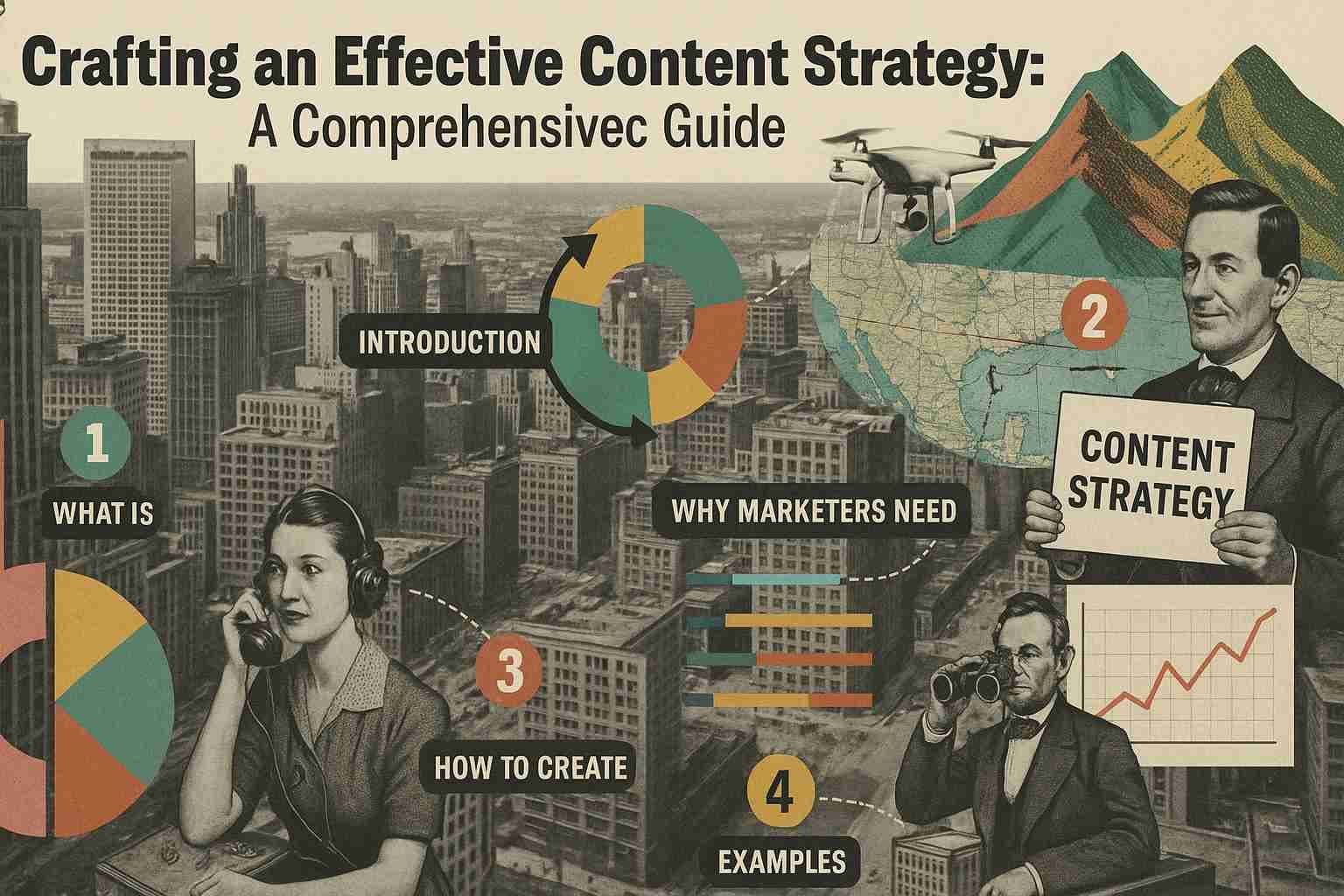
Content Strategy Frameworks in Action: Real-World Use Cases
The theory behind content strategy frameworks means nothing until it’s tested in the field. Senior marketers and creative leaders know that frameworks are only as valuable as the outcomes they drive. Here, we cut through abstraction and look at content strategy framework examples that have delivered tangible business results—across sales enablement, thought leadership, education, and retention. These aren’t hypothetical models. They’re real-world content frameworks applied by organizations that demand measurable impact.
Content strategy framework use cases by industry
B2B tech firms lead with content frameworks designed for sales enablement and lead nurturing. They map the buyer journey, then deploy targeted assets—whitepapers, case studies, and demo videos—at each stage. The focus is on accelerating deal velocity and reducing friction. In contrast, consumer brands often orient their frameworks around community-building and retention. Think modular video series that onboard new users and deepen product understanding, or editorial calendars built to sustain engagement post-purchase.
Healthcare organizations adapt frameworks for regulatory complexity and trust-building. Educational content is prioritized, but delivery is tightly controlled for compliance. Meanwhile, financial services leverage content frameworks to simplify complex offerings, using explainer videos and scenario-based guides to demystify products and nurture leads through long sales cycles.
Lessons learned from successful content strategy frameworks
The most effective frameworks aren’t static. They evolve in response to market feedback and performance data. In practice, high-performing teams start with a core structure—such as the classic “awareness, consideration, decision” funnel—but rapidly iterate based on what moves the needle. For example, when a SaaS provider noticed low engagement at the consideration stage, they retooled their framework to include interactive webinars and customer testimonials, directly addressing objections and shortening the sales cycle.
Another lesson: cross-functional alignment is non-negotiable. Frameworks that sit siloed in marketing rarely deliver. The best case studies content strategy leaders share involve tight integration with sales, product, and customer success. This ensures content is not just well-crafted, but contextually relevant and actionable at every touchpoint.
How brands adapt frameworks for unique goals
No two organizations execute frameworks identically. A global professional services firm, aiming for thought leadership, built its content strategy around proprietary research. The framework prioritized long-form reports, followed by derivative assets—executive summaries, infographics, and video explainers—distributed across owned and earned channels. The result: C-suite engagement and inbound leads from enterprise clients.
On the other hand, a fast-scaling e-commerce brand focused its framework on retention. They mapped the post-purchase journey, deploying sequenced educational content to reduce returns and increase repeat purchases. This included how-to videos, care guides, and user-generated content campaigns. The framework was designed to be nimble, with messaging and asset mix adjusted monthly based on retention analytics.
Integrating real-world content frameworks with business objectives
What unites these content strategy in practice examples is not the format, but the discipline: every framework is reverse-engineered from a business objective. Sales enablement frameworks are judged by pipeline acceleration. Thought leadership frameworks are measured by share of voice and lead quality. Retention frameworks live or die by cohort metrics. The lesson is clear—successful frameworks are not creative exercises, but commercial tools. They’re the connective tissue between content and enterprise value.
For more content strategy success stories and industry case studies, the pattern holds: frameworks that deliver are those that adapt, integrate, and stay ruthlessly aligned to business outcomes.
Decision-Making and Trade-Offs When Designing Your Framework
Designing a content strategy framework is a high-stakes exercise in commercial judgment. Every decision is a trade-off: time, budget, and attention are finite. Marketers who treat the process as an academic exercise end up with frameworks that look good on a slide but collapse in the real world. The real test is whether your framework can drive business outcomes, adapt to market shifts, and keep your team focused on what matters.
Trade-offs in content strategy framework design
The first and most persistent trade-off is between short-term gains and long-term brand equity. Quick-win content—think reactive social posts, trend-jacking, or performance-driven landing pages—can deliver spikes in attention and lead flow. But over-indexing here risks eroding brand distinctiveness and missing out on the compounding returns of consistent, high-value storytelling. The inverse is true as well: investing solely in long-form, evergreen assets or brand films may build authority, but it can leave the pipeline starved in the near term. The sharpest frameworks make room for both, sequencing them to match business cycles and campaign objectives.
Resource allocation is another fault line. Do you go deep on a handful of flagship pieces, or spread effort across a broader range of formats and touchpoints? There is no universal answer. If you’re operating in a crowded, undifferentiated market, depth—exceptional, in-depth content that becomes a reference point—can cut through. If your audience is fragmented or your product suite is diverse, breadth may be the only way to reach all relevant segments. The right mix is dictated by your commercial context, not by content theory.
How to prioritize content initiatives
Prioritizing content efforts is a ruthless process. Every initiative must earn its place by answering two questions: What business outcome does it serve? What is the opportunity cost? This is where most frameworks fail—they become wish lists instead of operating systems. Use hard criteria: revenue impact, audience fit, competitive differentiation, and speed to market. If a piece of content doesn’t move a key metric or unlock a new audience, it’s a distraction. Internal politics and creative ego are the enemy of effective content prioritization strategies; let data and commercial logic lead.
Channel selection is a related decision point. Too many marketers default to a “be everywhere” mindset, diluting impact and burning resources. Instead, map channels to audience needs and buying journeys. If your core buyers are decision-makers who live on LinkedIn and value substance, don’t waste cycles on TikTok just to tick a box. Every channel you add multiplies operational complexity—choose only what you can execute with excellence.
When to evolve your content strategy framework
No framework is static. Market conditions shift, audience behaviors evolve, and what worked last quarter may be obsolete tomorrow. Build in regular intervals—quarterly or biannually—to audit performance and stress-test your assumptions. Watch for signals: declining engagement, new competitors, or a shift in business objectives. Don’t cling to sunk costs. If the data says your framework isn’t delivering, pivot decisively. The strongest marketers are those who treat their frameworks as living systems, not sacred cows.
Designing a content strategy framework isn’t about perfection. It’s about making deliberate, commercially-grounded content strategy decisions, understanding your framework trade-offs, and prioritizing content efforts that actually move the business. In this game, clarity beats consensus—and decisive iteration is your only competitive advantage.
Measuring the Impact of Your Content Strategy Framework
Measuring content strategy framework success is not about chasing vanity metrics. Senior marketers understand that real impact is proven by business outcomes, not by inflated view counts or empty engagement. The only way to drive consistent improvement is to track the right content KPIs, analyze them with discipline, and act on what the data reveals—no excuses, no shortcuts.
Key metrics for content strategy framework evaluation
Start with metrics that map directly to your commercial objectives. If the framework is designed to build pipeline, pipeline growth and lead quality are the benchmarks. If it’s about brand salience, track unaided recall and share of voice. Content performance metrics like conversion rates, cost per lead, and audience retention show whether your creative is doing its job. Don’t overlook qualitative signals—message resonance, audience feedback, and stakeholder buy-in are as telling as any dashboard.
- Quantitative KPIs: Conversion rate, engagement depth, average session duration, cost per acquisition, pipeline velocity.
- Qualitative KPIs: Brand sentiment, customer testimonials, internal adoption, creative alignment with strategic intent.
How to use analytics to refine your framework
Analyzing content strategy means more than exporting a monthly report. It’s about identifying patterns, isolating variables, and running controlled tests. Use content analytics tools to break down performance by channel, asset type, and audience segment. If a campaign overperforms, dig into what differentiated it—timing, creative approach, or distribution mechanics. If something flops, diagnose quickly and feed those learnings back into your process. The goal is a feedback loop, not a post-mortem.
Integrate both macro and micro views: macro for long-term strategic shifts, micro for tactical tweaks. A/B testing, attribution modeling, and cohort analysis aren’t just technical exercises—they’re the levers for creative and commercial optimization.
Signs your content strategy framework needs adjustment
Stagnant or declining KPIs are obvious red flags, but the subtler signals matter too. If your team is producing more but achieving less, or if content is being published without clear purpose, the framework is drifting. Watch for misalignment between creative output and commercial objectives. If analytics reveal that certain formats or topics consistently underperform, it’s time to reallocate resources. Continuous improvement cycles are non-negotiable; frameworks that aren’t regularly challenged and iterated become obsolete fast.
Set review cadences that force objective self-assessment—quarterly at minimum, monthly for fast-moving campaigns. Don’t let sunk cost or internal politics cloud your judgment. The most effective leaders make hard calls early, pivoting before inefficiency becomes systemic.
Optimizing for commercial impact, not just activity
Measuring content strategy framework success demands a ruthless focus on business impact. Track the metrics that matter, analyze them with intent, and build a culture where data is the basis for creative and strategic decisions. Anything less is just noise. The frameworks that last are those that evolve—driven by evidence, not ego.
Essential Tools to Support Your Content Strategy Framework
The right content strategy framework tools are non-negotiable for any team serious about scaling output and measuring impact. It’s not about chasing the latest SaaS trend. It’s about picking platforms that reinforce your strategic priorities: clarity, efficiency, and accountability. Below is a practitioner’s map of the tool categories that matter—each selected for its ability to move the needle on real business outcomes.
Top tools for content strategy framework management
Content management systems (CMS) are the backbone of any serious content operation. They centralize assets, enforce version control, and provide the infrastructure for multi-market delivery. Enterprise-grade CMS platforms offer granular permissions, localization support, and robust API integrations—essentials for teams managing complex content architectures. The best content management tools aren’t just repositories; they’re operational nerve centers that keep content, metadata, and workflows tightly aligned.
Planning and collaboration platforms are equally critical. These tools give visibility across teams, streamline approvals, and reduce the friction that kills momentum. Look for solutions that offer dynamic calendars, task automation, and real-time commenting. The right platform should clarify ownership and deadlines at a glance, not add another layer of admin. This is where integration with your workflow automation tools pays off, turning planning into execution without manual handoffs.
How to choose a CMS for your content framework
Choosing a CMS is a strategic decision, not a technical one. Start with your distribution model: are you publishing across multiple languages or regions? Do you need headless flexibility for omnichannel delivery, or does a traditional CMS suffice? Assess scalability, API openness, and integration with your existing content marketing software. The goal is to future-proof your stack—avoid platforms that trap you in rigid structures or bolt-on complexity as you grow.
Security and compliance are non-negotiable at scale. Enterprise CMS solutions must offer audit trails, role-based access, and robust backup protocols. Don’t be distracted by cosmetic features; prioritize platforms that support structured content, granular workflow controls, and seamless integration with analytics and automation layers.
Integrating analytics into your content strategy workflow
Content analytics platforms are where strategy meets reality. They bridge the gap between creative intent and business performance. The best content analytics platforms provide actionable insights, not just vanity metrics. Look for tools that offer granular attribution, channel breakdowns, and predictive capabilities. Integration is key—data must flow seamlessly into your planning and reporting cycles, closing the loop between creation and outcome.
Analytics should inform every stage of the workflow, from ideation to optimization. Platforms that automate reporting and surface actionable trends allow teams to pivot fast, double down on what works, and cut what doesn’t. This is the difference between content that fills a calendar and content that moves the business forward.
Workflow automation for content publishing and distribution
Manual processes are the enemy of scale. Workflow automation for content isn’t about replacing people—it’s about removing bottlenecks. The right automation tools handle publishing, syndication, localization, and compliance checks with minimal touch. This frees creative and strategic talent to focus on high-value work, not repetitive admin. Automation also enforces consistency, reduces error rates, and accelerates speed to market—critical advantages in any competitive content landscape.
Ultimately, the best content strategy framework tools are those that disappear into the background, letting your teams focus on strategy, creativity, and measurement. Build your stack for adaptability, not just efficiency. The right tools won’t just support your framework—they’ll sharpen it.
Future-Proofing Your Content Strategy Framework
The future of content strategy framework design is about more than keeping pace—it’s about staying ahead. In a market where algorithms, platforms, and audience behaviors shift overnight, frameworks must be engineered for resilience and responsiveness. What worked last quarter is already being outpaced by emerging content strategy trends, and the cost of inertia is rising. Senior marketers and creative leaders who want to drive results must embed adaptability at the core of their approach.
How AI is shaping the future of content strategy frameworks
AI in content marketing is no longer a theoretical advantage; it’s a practical necessity. Machine learning is rewriting the rules of audience segmentation, predictive content planning, and distribution optimization. AI-driven analytics surface actionable insights at scale, allowing strategists to identify what’s working—and what isn’t—faster than any manual review ever could. Automated content generation tools are evolving beyond basic copywriting, enabling the rapid creation of personalized assets for micro-segments. The takeaway: frameworks that don’t integrate AI risk obsolescence, both in efficiency and output relevance.
Adapting your content framework to new technologies
Smart devices and voice search are shifting how audiences discover and interact with content. Optimizing for conversational queries and multi-modal interfaces is now table stakes, not a future consideration. Content frameworks must account for the nuances of voice search—natural language, brevity, and context—while also ensuring assets are structured for seamless delivery across smart speakers, wearables, and connected environments. This demands a shift from static content calendars to adaptive content frameworks that prioritize modularity, metadata, and real-time distribution triggers.
Trends every content strategist should watch
Personalization is moving beyond first-name tokens in email subject lines. The next wave is dynamic, interactive content that adapts in real time to user behaviors and preferences. Think shoppable videos, adaptive landing pages, and content journeys that shift based on data signals, not static personas. Sustainability is also moving up the agenda—both in terms of environmental impact and long-term asset value. Repurposing, upcycling, and evergreen content creation are now integral to frameworks built for longevity.
Finally, agility isn’t a buzzword—it’s a structural requirement. Frameworks must be designed to flex with shifting priorities, new platforms, and unforeseen disruptions. That means building in feedback loops, rapid experimentation protocols, and clear lines of ownership. The most effective frameworks are living systems, not rigid templates.
Building adaptability and sustainability into your framework
To future-proof your approach, embed mechanisms for continuous learning and iteration. Establish a cadence for reviewing performance data, sunset underperforming formats, and pilot emerging channels without overcommitting resources. Invest in tools that enable cross-team collaboration and real-time asset management. Most importantly, foster a culture where strategic pivots are expected, not penalized. The future of content strategy framework design belongs to those who treat change as a core feature, not a bug.
Conclusion
A content strategy framework is more than a planning tool—it is the operational backbone for any marketing function that takes results seriously. Without a clear content marketing structure, teams drift into tactical chaos, chasing trends instead of building assets that compound over time. The best frameworks don’t just organize content; they clarify purpose, define governance, and set the terms for what gets measured and why. This is not about imposing bureaucracy. It’s about enabling scale, consistency, and creative focus across every channel and market.
Structured content planning isn’t a theoretical exercise. It’s the difference between sporadic outputs and a system that delivers sustained marketing effectiveness. When a framework is properly embedded, creative teams know what matters, stakeholders have visibility, and the business can pivot without losing momentum. Every asset has a role, every brief is sharper, and wasted cycles are minimized. That discipline is what separates high-performing brands from the noise.
But even the most robust content strategy checklist is only as valuable as its execution and evolution. Content governance is not a static set of rules. It’s a living process—one that demands regular review, ruthless prioritization, and the discipline to retire what no longer serves. Measuring content strategy is not about dashboards for their own sake, but about extracting actionable insights that feed back into the system. The cycle of planning, execution, measurement, and refinement is what drives compounding returns.
In practice, the foundational role of a content strategy framework is clear: it aligns creative ambition with commercial reality, scales what works, and exposes what doesn’t. For leaders tasked with delivering results in volatile markets, this is not optional. It’s the baseline for marketing that performs at the pace of business. Build on it, revisit it, and let it evolve—because in content, structure is what unlocks impact.
FAQs
What is a content strategy framework?
A content strategy framework is a structured approach to planning, producing, distributing, and optimizing content to achieve specific business objectives. It aligns creative output with commercial goals, ensuring every asset serves a purpose. Without a framework, content execution is reactive and fragmented—resulting in wasted resources and missed opportunities for marketing success.
How do I create a content strategy framework?
Start by defining clear business objectives and audience segments. Map content themes to commercial priorities. Build a distribution plan aligned to channels where your audience actually engages. Set KPIs for each stage. Finally, establish feedback loops for creative optimization. The framework is only as strong as its execution discipline.
What are the benefits of using a content strategy framework?
It brings focus and consistency to marketing efforts. Teams operate with clarity on what to produce, why, and for whom. This reduces duplication, accelerates approval cycles, and improves ROI. A robust framework also makes it easier to scale campaigns across markets and adapt to shifting priorities without losing coherence.
How can I measure the success of my content strategy framework?
Success is measured by tracking KPIs tied to business outcomes: engagement rates, conversion metrics, pipeline impact, and content-driven revenue. Layer in qualitative feedback from sales and customer teams. Regularly audit performance against benchmarks, then iterate. The key is to tie creative output to commercial impact, not just vanity metrics.
What tools are essential for a content strategy framework?
Non-negotiables include a robust content calendar, analytics platform, and a central asset management system. Workflow tools keep production on track and approvals tight. Distribution platforms ensure assets reach the right audiences. Select tools that integrate cleanly with your existing stack—avoid fragmentation at all costs.
How do I adapt my content strategy framework for future trends?
Build in regular review cycles to assess emerging channels and formats. Monitor audience behavior shifts and competitor moves. Stay ruthless about sunsetting underperforming tactics. The most adaptable frameworks are modular—easy to update without starting from scratch. Future-proofing is about process, not prediction.
What are common mistakes to avoid when building a content strategy framework?
Don’t overcomplicate with unnecessary layers or jargon. Avoid chasing trends without a clear fit for your brand or audience. Neglecting measurement is fatal—frameworks must be accountable to results. Finally, don’t treat the framework as static; it should evolve with business needs and market realities.
.webp)
Creative Collaboration Platform: The Backbone of Modern Creative WorkWhat is a creative collaboration platform?Clapboard defines a creative collaboration platform as the operational core for today’s distributed creative teams. This is not a collection of digital collaboration tools stitched together; Clapboard’s system

Understanding the Creative Production MarketplaceWhat is a Creative Production Marketplace?Clapboard defines a creative production marketplace as a structured ecosystem where brands, agencies, and production talent converge to execute video, advertising, and branded content at scale. Unlike the legacy agency or freelanREAD FULL ARTICLE

The Urgent Need for a Creative Production Operating SystemWhy Traditional Creative Production Models Break DownClapboard sees the creative production landscape shifting under pressure. Content velocity is no longer a buzzword—it’s a mandate. Modern advertising demands relentless output across dozens of channels, each wREAD FULL ARTICLE

JOIN THE NEWSLETTER.
Content Production insights, videos, books, and freebies, delivered to your inbox weekly


LEAVE A COMMENT
Your email address will not be published.