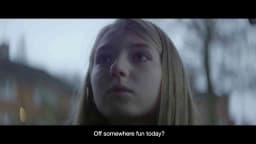
watergunz launched 'Have You Ever Heard the Sound of Indifference?' in Georgia in February 2019, using a live weapon orchestra and social experiment to push

watergunz Turns Bladed Weapons Into a Georgian Law Reform Rallying Cry
"Have You Ever Heard the Sound of Indifference?" is a 2019 public-interest film campaign created by Tbilisi-based agency watergunz, in which young participants legally purchased bladed weapons from Tbilisi shops, those weapons were used to produce a live orchestral performance, and the resulting documentary film was distributed via social media alongside an online petition demanding Georgian law reform to restrict minors' access to bladed weapons.
Launched in February 2019, the campaign operates simultaneously as a social experiment, a documentary, and a public mobilisation effort. Its central provocation is deceptively simple: if Georgian society cannot hear the danger encoded in these objects, perhaps it can hear the music they make. The campaign's geographic anchor is Georgia's capital, Tbilisi, where the weapon orchestra was performed on the city's main thoroughfare near the First Gymnasium — a location chosen for both its foot traffic and its symbolic proximity to youth. The performance drew crowds who were invited to sign the petition on the spot, translating artistic spectacle directly into civic action.
The campaign was independently produced with no external funding or sponsors, according to adsoftheworld.com, making it a rare example of an agency self-commissioning a public-interest initiative entirely on its own resources. Enkeny Films served as the production company. The creative team was led by creative director Bacho Meburishvili and senior art director Matassi Sulakauri, with campaign strategy developed by Mariam Mikelashvili and Elene Gugushvili. The core objective, as documented by adsoftheworld.com, was to pressure Georgian legislators to make bladed weapons less accessible to minors — a change the campaign argued existing Georgian law failed to enforce. Clapboard rates the campaign 77 out of 100, recognising its structural originality and its disciplined alignment of creative mechanic with legislative objective.
Watergunz identified a specific legal and social failure in Georgia. Approximately 50 shops in Tbilisi sold bladed weapons without adequate age restrictions in place at the time of the campaign, according to adsoftheworld.com — a figure that transforms an abstract policy concern into a documented, addressable gap. The campaign's social experiment design was built directly on this insight: young participants were sent to purchase bladed weapons commercially, and they succeeded, acquiring up to 100 bladed weapons for the experiment, as reported by adsoftheworld.com. The act of purchasing became evidence. The campaign did not argue that access was too easy; it demonstrated it.
In Georgia, public-service advertising typically relies on government budgets, nonprofit grants, or donated media, according to the broader funding landscape described by marketingdive.com. Watergunz departed from this model entirely, self-funding the initiative and thereby removing any institutional filter from the message. This independence gave the campaign a credibility that state-sponsored public safety communications often cannot claim. The social experiment format — documented on film and released as a documentary — also positioned the work outside the conventional public-service announcement genre, where audience scepticism is high and creative conventions are well-worn.
The competitive creative context in Georgia's public-interest sector includes internationally distributed campaigns by organisations such as UNICEF Georgia and campaigns supported by the Open Society Foundation Georgia, both of which operate with established institutional backing. Watergunz's decision to work without sponsors and to centre the campaign on a live, verifiable social experiment gave it a documentary authenticity those institutionally funded campaigns rarely achieve. The online petition component extended the campaign's reach beyond the live Tbilisi audience, connecting Georgia's urban viewers to the legislative demand through social media in a direct, participatory structure.
Director Dato Borchkhadze structured the film around a single, sustained act of transformation: bladed weapons purchased legally by minors in Tbilisi become the instruments of an orchestral performance. Sound and music composer Tornike Karchkhadze and electronic specialist Mamuka Apakidze engineered 11 weapons into a functional orchestra, according to adsoftheworld.com, selecting and preparing each instrument for its acoustic properties. The result is a score composed entirely from objects whose primary cultural association is violence — a formal inversion that gives the film its central rhetorical power.
Director of photography Omar Gelashvili shot the documentary component, capturing both the social experiment — the purchases, the participants, the indifferent shopkeepers — and the orchestral performance on Tbilisi's main thoroughfare. Production designer Dato Chkoidze and production designer assistant Zaza Gogorishvili shaped the visual environment of the performance. Production sound mixer Bacho Gvetadze and sound assistant Nika Kokhreidze handled the live audio capture, which was critical to the film's premise: the audience must hear the instruments as instruments before the campaign's question lands. CG artist Akaki Kapanadze contributed visual effects work, and SFX were handled by Soso Gvasalia, according to adsoftheworld.com.
The copywriting team — Niko Ksnelashvili, Toy Rua Toidze, Zura Jijiashvili, and Vano Kuparadze — shaped the campaign's verbal register, including its title, which functions as both a rhetorical question and a structural directive. Producer Sopho Orjonikidze coordinated the full production across its live, documentary, and social distribution phases. The title "Have You Ever Heard the Sound of Indifference?" reframes societal inaction not as silence but as a sound — a conceptual move that justifies the entire orchestral mechanic and gives the social campaign its organising metaphor.
The campaign generated verified public engagement across two channels: the live performance in central Tbilisi and the social media distribution of the documentary film. Thousands of people engaged with the campaign and signed the accompanying online petition, according to adsoftheworld.com and Meliora Ge — a meaningful civic response for an independently produced, self-funded initiative operating in Georgia's public-interest space without institutional media backing.
The petition was designed to apply direct legislative pressure, and the campaign's stated objective — to change Georgian law restricting minors' access to bladed weapons — gave that petition a specific, measurable target. No independently verified data on subsequent legislative outcomes is publicly documented at the time of writing. What is documented is that the campaign succeeded in translating a film-and-social-media distribution model into physical civic participation at the Tbilisi performance site, collapsing the distance between awareness and action that most public-service campaigns struggle to bridge.
Structurally, the campaign's effectiveness rests on three reinforcing mechanics: the social experiment generates evidence, the documentary distributes that evidence at scale, and the petition converts attention into political pressure. Each element depends on the others. The absence of external funding, noted by adsoftheworld.com, removes the institutional credibility risk while amplifying the campaign's moral authority. For a public-interest initiative operating in Georgia in 2019 with no paid media budget, reaching thousands of petition signatories and generating sustained social media distribution represents a proportionate and substantive result.
"Have You Ever Heard the Sound of Indifference?" is a 2019 public-interest campaign by watergunz in Georgia. It documents a social experiment in which minors legally purchased bladed weapons in Tbilisi, those weapons were used to create a live orchestral performance, and the resulting documentary film was paired with an online petition demanding Georgian law reform on underage access to bladed weapons.
Watergunz, a Tbilisi-based independent agency, created the campaign. Creative director Bacho Meburishvili and senior art director Matassi Sulakauri led the creative team. Director Dato Borchkhadze and production company Enkeny Films produced the documentary film. Sound composer Tornike Karchkhadze engineered the weapon orchestra. Campaign strategy was developed by Mariam Mikelashvili and Elene Gugushvili, according to adsoftheworld.com.
Sound composer Tornike Karchkhadze and electronic specialist Mamuka Apakidze selected and prepared 11 bladed weapons as musical instruments, according to adsoftheworld.com. Young participants had purchased up to 100 bladed weapons for the experiment. The orchestra performed live on Tbilisi's main thoroughfare near the First Gymnasium, where crowds gathered and were invited to sign the campaign's online petition.
The campaign's stated objective was to change Georgian law to make bladed weapons less accessible to minors. Approximately 50 shops in Tbilisi sold bladed weapons without adequate age restrictions, according to adsoftheworld.com. The social experiment demonstrated this gap directly by having young participants legally purchase up to 100 bladed weapons, turning the act of purchase into documented evidence of legislative failure.
The campaign was independently produced with no external funding or sponsors, according to adsoftheworld.com. Watergunz self-commissioned the initiative entirely from its own resources. This independence distinguished the campaign from most Georgian public-interest advertising, which typically relies on government budgets, nonprofit grants, or donated media, and gave the campaign a credibility free from institutional influence.
Thousands of people engaged with the campaign and signed the online petition, according to adsoftheworld.com and meliora.ge. The live orchestral performance on Tbilisi's main thoroughfare drew crowds who signed the petition in person. The documentary film was distributed through social media, extending the campaign's reach across Georgia. Clapboard rates the campaign 77 out of 100 for structural originality and creative discipline.
.webp)
Creative Collaboration Platform: The Backbone of Modern Creative WorkWhat is a creative collaboration platform?Clapboard defines a creative collaboration platform as the operational core for today’s distributed creative teams. This is not a collection of digital collaboration tools stitched together; Clapboard’s system


Understanding the Creative Production MarketplaceWhat is a Creative Production Marketplace?Clapboard defines a creative production marketplace as a structured ecosystem where brands, agencies, and production talent converge to execute video, advertising, and branded content at scale. Unlike the legacy agency or freelanREAD FULL ARTICLE

The Urgent Need for a Creative Production Operating SystemWhy Traditional Creative Production Models Break DownClapboard sees the creative production landscape shifting under pressure. Content velocity is no longer a buzzword—it’s a mandate. Modern advertising demands relentless output across dozens of channels, each wREAD FULL ARTICLE