Walgreens Battle Cry Puts Women With Cancer at the Center of Retail Care
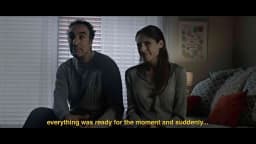
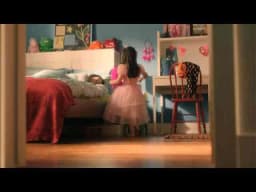
Walgreens' "Battle Cry" is a March 2019 United States film campaign created by Grey New York that positions the pharmacy chain as a holistic support resource for women living with cancer, uniting oncology-trained pharmacists and specially trained beauty consultants under the tagline "Battle Beautifully."
"Battle Cry" published on March 4, 2019, according to ispot.tv, making it one of the earlier retail pharmacy campaigns of that year to center the emotional and physical experience of cancer treatment rather than product features. The work promotes Walgreens' "Feel More Like You" program, a dedicated support initiative connecting patients with pharmacists who hold cancer expertise and with beauty consultants trained to assist women undergoing treatment — addressing both clinical and confidence-related dimensions of the illness. The single film asset carries considerable narrative weight for a retail services campaign, foregrounding personal resilience without reducing the subject to sentiment alone.
The campaign operates in the United States market, where Walgreens functions as one of the dominant pharmacy chains. According to drugchannels.net, Walgreens and CVS together represented roughly 67.5% of U.S. retail pharmacy sales in 2019, a concentration that frames the strategic stakes of brand differentiation clearly. In a category where convenience and price traditionally drive consumer choice, "Battle Cry" attempts a harder move: repositioning Walgreens as a partner in one of the most medically and emotionally demanding experiences a person can face. The campaign was produced by Missing Pieces and directed by Bridget Savage Cole, with actor Jocelyn A. Dorsey appearing in the film. The score draws on "F E M A L E" by Sampa the Great, a track whose title and lyrical identity reinforce the campaign's explicit focus on women.
Walgreens operates in one of the most consolidated retail pharmacy markets in the United States. According to drugchannels.net, Walgreens, CVS, and Rite Aid together accounted for approximately 72.3% of U.S. retail pharmacy sales in 2019, and pharmacy chains represented approximately 62.1% of the roughly 38,000 on-site pharmacies in the country, per interobservers.com. Within that landscape, differentiation on service depth rather than footprint or price becomes a meaningful lever, and "Battle Cry" applies that lever directly.
CVS Health represents Walgreens' most direct competitor for cancer-adjacent pharmacy services in the United States. CVS has long invested in health services branding, including its removal of tobacco products from stores in 2014 — a move that repositioned it as a health-first retailer rather than a convenience chain. Against that backdrop, Walgreens' "Feel More Like You" program, surfaced through "Battle Cry," addresses a specific patient cohort — women living with cancer — with a combination of clinical expertise and personal care that neither pure pharmacy chains nor general beauty retailers have historically claimed together.
The consumer insight driving the campaign is straightforward but underserved in retail advertising: women undergoing cancer treatment face visible, daily disruptions to their appearance and self-perception, and they navigate those disruptions largely without institutional support from the places they already rely on for medication. Grey New York's strategic framing treats the pharmacy not as a transactional endpoint but as a recurring point of contact during treatment, making the case that Walgreens' breadth — pharmacist expertise plus beauty consultation — is uniquely suited to that ongoing relationship. The choice to launch in March 2019, within a retail calendar that rarely foregrounds health narratives of this depth, signals intentionality about owning a space competitors had left largely unaddressed.
Director Bridget Savage Cole shapes "Battle Cry" as a narrative film rather than a traditional retail spot. The production, handled by Missing Pieces, carries the formal register of a short documentary or prestige television piece — a deliberate distance from the product-forward visual language that dominates retail services advertising in the United States.
Actor Jocelyn A. Dorsey anchors the film, and her presence establishes a specificity of character that generic casting would undermine. The decision to build the spot around a single, continuous performance rather than a montage of patient vignettes concentrates emotional credibility. Cole's direction, per coverage on thedrum.com, earned the campaign a place in The Drum's Creative Director's Choice feature on March 28, 2019 — a recognition awarded based on peer assessment from working creative directors rather than paid placement. Meredith Schwinder, creative director at Brownstein Group, offered a direct endorsement in that feature, stating that when she saw the Walgreens campaign she was captivated, according to thedrum.com.
The soundtrack choice reinforces the creative logic. "F E M A L E" by Sampa the Great is not a conventional advertising score — it is an assertive, politically aware track whose title functions as a statement the campaign itself is making. Placing it beneath footage of a woman navigating cancer treatment transforms what could read as inspiration-adjacent content into something closer to a declaration. The tagline "Battle Beautifully" follows the same structural move: it refuses to separate physical resilience from aesthetic identity, insisting that both matter simultaneously. For a retail services campaign in 2019, that integration of social awareness and product utility represents a distinct craft decision. Production credits beyond Cole and Missing Pieces are not publicly documented for this campaign.
No verified performance data for the "Battle Cry" campaign is publicly available. Metrics including viewership figures, brand lift results, conversion data tied to the "Feel More Like You" program, or sales impact from the March 2019 United States launch have not been disclosed by Walgreens or Grey New York in any publicly accessible source. The absence of published results is not unusual for a campaign in this category: healthcare-adjacent retail advertising rarely surfaces patient-program enrollment figures, and brand equity shifts operate across timescales longer than a single film's broadcast window.
Structurally, "Battle Cry" demonstrates several conditions associated with durable retail advertising. It addresses a specific and emotionally coherent audience — women living with cancer in the United States — rather than the broad consumer base Walgreens typically serves. It attaches that audience to a named, navigable program rather than a vague brand promise, which creates a conversion pathway that a conventional awareness campaign lacks. The campaign earned editorial recognition from The Drum, according to thedrum.com, and was noted by a working creative director as immediately captivating — a form of industry validation that indicates the work cleared a quality threshold within the professional community.
The Clapboard Score for "Battle Cry" is 58 out of 100. That score reflects the campaign's creative distinctiveness and strategic coherence while acknowledging the limits of a single-asset execution and the absence of verifiable outcomes. For a retail services narrative campaign without documented results, 58 represents a measured assessment of genuine ambition held against real structural constraints.
Walgreens' "Battle Cry" is a March 2019 United States film promoting the "Feel More Like You" cancer-support program. Created by Grey New York, it positions Walgreens as a holistic ally for women living with cancer, combining pharmacist expertise with specially trained beauty consultation under the tagline "Battle Beautifully."
Bridget Savage Cole directed "Battle Cry" for Walgreens. The film was produced by Missing Pieces and featured actor Jocelyn A. Dorsey. Cole's direction earned the campaign a place in The Drum's Creative Director's Choice feature in March 2019, where a peer creative director described the work as immediately captivating.
"Battle Cry" uses "F E M A L E" by Sampa the Great. The track's title and assertive tone reinforce the campaign's focus on women navigating cancer treatment. The music choice distinguishes the spot from conventional retail pharmacy advertising, giving the film a declarative quality that aligns with the tagline "Battle Beautifully."
The "Feel More Like You" program is Walgreens' dedicated cancer-support initiative. It connects patients with pharmacists who hold cancer expertise and with beauty consultants trained to assist women during treatment. "Battle Cry" brought this program to national attention in the United States when the campaign aired in March 2019.
Grey New York created "Battle Cry" for Walgreens. The campaign launched in the United States on March 4, 2019, according to ispot.tv. Production was handled by Missing Pieces, with Bridget Savage Cole directing and Jocelyn A. Dorsey appearing as the featured actor in the single film asset.
"Battle Cry" targets a specific cohort — women living with cancer — while CVS Health's brand advertising has historically addressed broader health positioning. Walgreens' campaign pairs clinical pharmacy support with beauty consultation, a combination CVS has not publicly claimed in comparable retail services advertising, giving "Battle Cry" a distinct competitive position in the United States market.
.webp)
Creative Collaboration Platform: The Backbone of Modern Creative WorkWhat is a creative collaboration platform?Clapboard defines a creative collaboration platform as the operational core for today’s distributed creative teams. This is not a collection of digital collaboration tools stitched together; Clapboard’s system


Understanding the Creative Production MarketplaceWhat is a Creative Production Marketplace?Clapboard defines a creative production marketplace as a structured ecosystem where brands, agencies, and production talent converge to execute video, advertising, and branded content at scale. Unlike the legacy agency or freelanREAD FULL ARTICLE

The Urgent Need for a Creative Production Operating SystemWhy Traditional Creative Production Models Break DownClapboard sees the creative production landscape shifting under pressure. Content velocity is no longer a buzzword—it’s a mandate. Modern advertising demands relentless output across dozens of channels, each wREAD FULL ARTICLE