Viacom18's Switch – You Can Free Us, created by Parallel Minds in India in January 2019, uses a 90-second social experiment film to expose modern slavery

Viacom18 Switch Campaign Puts Modern Slavery in Plain Sight
Switch – You Can Free Us is a 90-second public interest film created by Parallel Minds for Viacom18 and published in India in January 2019, designed to make audiences recognise that victims of modern slavery may already be present in their daily lives, entirely unseen.
The campaign operates on a single, disquieting premise: that modern slavery is not a distant abstraction but a condition endured by people who pass through ordinary spaces unnoticed. According to Ads of the World, the film directs viewers to YouCanFree.us, where they are invited to participate beyond passive viewership, sharing the film with friends and family as an act of awareness. The call-to-action is deliberately social, positioning individual action — the act of sharing — as the first step toward collective recognition.
In India, where Viacom18 operates as one of the country's prominent broadcast and digital media groups, the decision to dedicate a film format to a public interest cause in early 2019 placed the brand inside a conversation that few commercial broadcasters were willing to lead. The campaign carries a stated statistic, cited across its materials, that more than 40 million people worldwide live under conditions of modern slavery — a figure that gives the film's social experiment framing its moral urgency. Switch is, in structural terms, part of a broader period of social-impact and public-awareness activity for Viacom18, which had previously partnered with the Global Citizen Festival in November 2016 on themes of gender equality, quality education, and clean water and sanitation, according to reporting on BestMediaInfo. The You Can Free Us platform extends this lineage into the specific territory of modern slavery. Clapboard has assigned Switch a score of 60 out of 100, reflecting its clear thematic commitment and its limitations in documented reach and measurable impact.
Viacom18 operates in a media and entertainment landscape that was expanding rapidly at the time Switch was released. According to Assets Kpmg, the Indian media and entertainment industry was valued at ₹1,631 billion in FY19, representing year-over-year growth of 13.2%. Digital advertising alone reached ₹154 billion in calendar year 2018, growing 34% year-over-year and representing 21% of the total advertising market in India at the time, according to assets.kpmg.com. Within this context, a broadcaster choosing to invest in public interest film — rather than purely commercial content — signals a deliberate positioning strategy.
The insight driving Switch is anthropological rather than demographic. Parallel Minds built the campaign around the idea that modern slavery persists not because it is hidden in remote locations, but because social conditioning causes people to look past it. The film's social experiment format is chosen specifically to reproduce that conditioning on screen, making the audience complicit in the moment of oversight before revealing what they failed to see. This is a creative strategy with clear psychological precision: the viewer's discomfort becomes the campaign's most persuasive argument.
In the Indian public interest advertising category, Switch positions Viacom18 in a space distinct from competitors such as Star India, which has pursued social campaigns largely tied to its own programming franchises, and Sony Pictures Networks India, whose CSR communications have tended toward educational and sports-access themes. Viacom18's choice of modern slavery as a subject — and its decision to anchor the campaign to an international action platform in YouCanFree.us — signals an intent to participate in a global human rights conversation from an Indian broadcast base. The strategy aligns with a period during which Indian broadcasters were increasingly using digital-first film content to extend brand credibility beyond their schedules.
Parallel Minds Productions shaped Switch as a social experiment documentary, a format that carries inherent credibility because it records genuine human responses rather than scripted performances. The 90-second runtime is not an arbitrary constraint — it is calibrated to the threshold of sustained attention in a social media environment, long enough to build emotional context and short enough to be shared without friction.
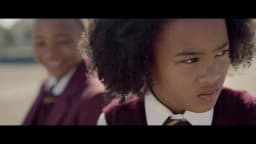
The social experiment structure places ordinary people in a constructed scenario in which a victim of modern slavery is present but contextualised in a way that discourages recognition. The film then reveals the gap between what was visible and what was seen. This technique borrows from documentary traditions of observational filmmaking while applying them to an advocacy brief, producing content that feels witnessed rather than produced. The result is a film that uses its own form — the recorded moment of human blindness — as its primary argument.
Nahida Coelho is credited as Co-Producer at Parallel Minds Productions, making her the primary publicly documented production figure associated with Switch. Beyond this credit, detailed production credits for Switch – You Can Free Us, including the director and director of photography, are not publicly documented in available sources. The campaign was submitted to Ads of the World as a single media asset, which limits the available record of its production infrastructure. What is clear from the film's construction is that the execution required careful scenario design, ethical management of participants, and precise editorial control to ensure the reveal lands with the intended moral weight rather than as manipulation. The decision to pair this craft with the YouCanFree.us platform, as noted across campaign documentation reviewed by Clapboard, demonstrates an understanding that a well-made film without an action pathway produces empathy without mobilisation.
 ARCHIVE
No verified performance data for Switch – You Can Free Us is publicly available across Cannes Lions, the Effie Awards, The One Show, D&AD, the Clio Awards, or the Webby Awards, according to a review of those organisations' records cited across Ads of the World and Clapboard documentation. No quantified audience reach, view counts, or participation figures for the YouCanFree.us platform have been confirmed through named public sources.
Structural analysis offers an alternative basis for assessment. The social experiment format is among the more durable mechanics in public interest advertising because it generates content that audiences perceive as unscripted, which lowers resistance and increases the credibility of the underlying message. The 90-second film length is consistent with content optimised for social sharing, and the explicit call-to-action — directing viewers to YouCanFree.us and asking them to share with friends and family — creates a participatory loop that extends potential reach beyond paid media. In the Indian media environment of early 2019, where digital advertising was growing at 34% year-over-year according to assets.kpmg.com, a socially distributed film with an emotional hook carried meaningful organic distribution potential.
The campaign's limitation, from an effectiveness standpoint, is the absence of any documented feedback mechanism or publicly reported outcome metric. Without these, it is not possible to determine whether the participation platform translated intention into measurable action. Clapboard's score of 60 out of 100 reflects this gap: the creative architecture is coherent and the thematic commitment is genuine, but the evidentiary record does not support a higher assessment of demonstrable impact.
Switch – You Can Free Us is a 90-second public interest film created by Parallel Minds for Viacom18 in India in January 2019. It uses a social experiment format to confront viewers with the reality that modern slavery victims may be present in everyday settings but go entirely unrecognised. Audiences are directed to YouCanFree.us to participate.
Parallel Minds created Switch – You Can Free Us for Viacom18. Nahida Coelho is credited as Co-Producer at Parallel Minds Productions and is the primary publicly documented production figure associated with the campaign. The film was published in India in January 2019 as a single film media asset, according to Ads of the World.
Switch – You Can Free Us cites that more than 40 million people worldwide live under conditions of modern slavery. This figure underpins the campaign's core argument that victims are present in ordinary social spaces but rendered invisible by social conditioning, making recognition — and action — the campaign's primary ask of its Indian audience.
The campaign directed viewers to visit YouCanFree.us and to share the film with friends and family. According to Ads of the World, this social sharing mechanism was central to the campaign's design, positioning individual acts of distribution as meaningful participation in raising awareness of modern slavery across India and beyond.
No verified awards for Switch – You Can Free Us have been found at Cannes Lions, the Effie Awards, The One Show, D&AD, the Clio Awards, or the Webby Awards, according to a review of those records cited across Ads of the World and Clapboard. The campaign's Clapboard Score stands at 60 out of 100.
Switch is not part of a recurring Viacom18 advertising platform but belongs to a broader period of social-impact work for the broadcaster. Viacom18 previously partnered with the Global Citizen Festival in November 2016 on gender equality and education themes, according to BestMediaInfo. Switch extends that tradition into the specific territory of modern slavery awareness in India.
.webp)
Creative Collaboration Platform: The Backbone of Modern Creative WorkWhat is a creative collaboration platform?Clapboard defines a creative collaboration platform as the operational core for today’s distributed creative teams. This is not a collection of digital collaboration tools stitched together; Clapboard’s system


Understanding the Creative Production MarketplaceWhat is a Creative Production Marketplace?Clapboard defines a creative production marketplace as a structured ecosystem where brands, agencies, and production talent converge to execute video, advertising, and branded content at scale. Unlike the legacy agency or freelanREAD FULL ARTICLE

The Urgent Need for a Creative Production Operating SystemWhy Traditional Creative Production Models Break DownClapboard sees the creative production landscape shifting under pressure. Content velocity is no longer a buzzword—it’s a mandate. Modern advertising demands relentless output across dozens of channels, each wREAD FULL ARTICLE