Lithuanian Centre for Human Rights launched Translation in March 2015, a digital social experiment directing audiences to svetimageda.lt, a handbook for

Lithuanian Centre for Human Rights Confronts Hate Speech With a Social Experiment
Translation is a 2015 digital public interest campaign by the Lithuanian Centre for Human Rights that stages a filmed social experiment to promote svetimageda.lt, a digital handbook advising people how to respond to racial discrimination, homophobia, and online bullying and hate speech in Lithuania.
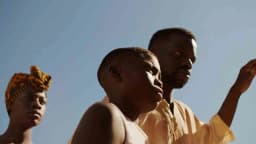
The campaign launches in March 2015 and centres on a single video asset in which participants, unaware of the full nature of the exercise, are asked to read aloud and translate real racist and homophobic language sourced from Facebook comments — in the presence of the very people those words target. The mechanism is deliberate and precise: the discomfort that surfaces on screen becomes the argument. When the participants realise the meaning and weight of what they are voicing, the experiment captures an unscripted emotional confrontation that no scripted advertisement could manufacture. The campaign is classified as a Digital medium in the Public Interest category.
The strategic destination of the film is svetimageda.lt — a name that translates from Lithuanian as Foreign Shame — a resource built to move bystanders from passive witnesses of online abuse to active respondents. In Lithuania, where the 2015 to 2020 Inter-Institutional Action Plan on Non-Discrimination explicitly included public awareness and support measures, according to Docstore Ohchr, the campaign arrives as part of a broader institutional effort to shift cultural norms around discrimination. Translation does not lecture. It places the audience inside the moment of reckoning and trusts that the feeling will do the work. The Clapboard Score for Translation is 83 out of 100.
The Lithuanian Centre for Human Rights identifies a specific behavioural gap as the strategic foundation for Translation. The problem is not that people in Lithuania are unaware that hate speech exists online — the problem is that most people do nothing about it. The svetimageda.lt handbook is designed to close that gap between awareness and action, and the campaign's job is to make the emotional case for crossing it.
The social experiment format serves this objective with unusual efficiency. By filming real, unscripted reactions rather than constructing performed advocacy, Translation generates credibility that traditional public service announcements consistently struggle to achieve. The viewer is not watching actors embody a message — they are watching ordinary people discover one. This is a meaningful creative distinction in a market where audiences have developed fluency in the conventions of charitable communication and the defences that come with it.
Lithuania joins the Council of Europe's Dosta campaign against prejudice toward Roma in 2013, according to docstore.ohchr.org, signalling that organised, institutionally backed anti-discrimination communication has real precedent in the country before Translation appears. The campaign therefore enters a landscape with growing but still nascent infrastructure for this kind of public interest work. Lithuania had approximately 17,512 associations and 1,507 charities and support funds at the beginning of 2015, according to opengovpartnership.org, which indicates a civil society sector active enough to carry and amplify a campaign of this nature but competitive enough in attention terms to require genuine creative distinction. Against the broader European context in which campaigns addressing online racial discrimination and homophobia are emerging across multiple markets, Translation distinguishes itself by anchoring its argument entirely in Lithuanian social reality and real Lithuanian language — a choice that makes the discomfort on screen impossible to disown as someone else's problem.
Director Mindaugas Sruogius shapes the entire emotional architecture of Translation through a single sustained act of restraint. The film does not editorialise. It observes. The camera holds on faces at the moment of comprehension — when participants processing the exercise understand what they are doing and to whom — and that choice of where to look and when to stay is the primary creative act.
The production is built around a concealed premise. Participants are invited to what appears to be a language or performance exercise. A Black actor is present. The racist and homophobic content being read aloud comes directly from real Facebook posts, lending the material an authenticity that scripted dialogue would undermine. The social experiment format, used here in a documentary mode, requires production infrastructure capable of capturing genuine spontaneous reaction — which means the technical crew must be invisible enough not to contaminate the moment they are recording.
Director of photography Audrius Budrys handles the visual grammar of that invisibility. Set design by Dalia Dūdėnaitė and Domas Butkus constructs a neutral, non-theatrical environment that keeps focus on faces and responses rather than production value. Sound by Ignas Mateika and music by Vainius Sodeika manage the emotional temperature without overriding the material — a particularly demanding task in a film where the most powerful sounds are human voices and silence. Post-production by Rokas Šydeikis and title design by Martynas Kazimierėnas complete a crew whose collective discipline serves a single editorial purpose: to stay out of the way of what actually happened. Art director Rokas Tarabilda and copywriter Dangiras Bugas shape the conceptual frame, and producer Rūta Bučiūnaitė of VšĮ Sviestas holds the production together. As described by famouscampaigns.com, the resulting film functions as an incredibly powerful stunt capable of raising awareness about the real impact of online abuse and encouraging people to report it.
No verified performance data for the Translation campaign — such as view counts, website traffic to svetimageda.lt, or audience reach figures — is publicly available at the time of writing. What the public record does confirm is a set of industry recognitions that speak directly to the campaign's standing within Lithuanian and regional advertising.
Translation receives the Grand Prix at the Adrenalinas Awards in 2015, according to adsoftheworld.com. The same campaign takes Gold in the Viral Campaign category at Adrenalinas 2015, also according to adsoftheworld.com. The Viral Campaign classification is itself a form of evidence: the category designation implies the film circulated beyond paid placement and generated organic distribution, which aligns with the social experiment format's inherent shareability — people who find the film uncomfortable or moving tend to pass it on precisely because of that response.
Structurally, the campaign is built to perform well in exactly this way. A single media asset carrying an unscripted emotional confrontation, distributed digitally in Lithuania in March 2015, requires no media budget to continue working once initial viewers begin sharing. The film's documentary quality gives it the aesthetic of testimony rather than advertising, which reduces the psychological friction that typically slows the spread of public interest content. The fact that its destination — svetimageda.lt — is a practical resource rather than a brand page means that the conversion the campaign seeks is a behavioural one: a person who watches and then visits is already closer to becoming someone who acts. That structural logic earns Translation its Clapboard Score of 83 out of 100 and its place as one of the more formally coherent public service campaigns to emerge from Lithuania in the mid-2010s.
Translation is a 2015 digital public interest campaign launched in Lithuania in March 2015. It uses a filmed social experiment to promote svetimageda.lt, a handbook advising people how to respond to online racial discrimination, homophobia, and hate speech. The campaign comprises a single video asset and was directed by Mindaugas Sruogius.
Svetimageda.lt is a digital handbook created by the Lithuanian Centre for Human Rights. It provides practical advice on responding to racist, homophobic, and other bullying and hate speech online. The Translation campaign promotes the site by using a social experiment film to demonstrate the real human impact of such language and direct viewers to the resource.
Mindaugas Sruogius directs the Translation film, with director of photography Audrius Budrys and producer Rūta Bučiūnaitė of VšĮ Sviestas. Art director Rokas Tarabilda and copywriter Dangiras Bugas shape the concept. The full crew also includes set designers, sound, music, post-production, and title design contributors, all documented in campaign records.
Translation wins the Grand Prix at the Adrenalinas Awards in 2015, according to adsoftheworld.com. It also takes Gold in the Viral Campaign category at the same awards. These recognitions establish it as one of the most decorated Lithuanian public interest campaigns of that year and confirm its standing within regional advertising.
The social experiment format generates unscripted emotional authenticity that scripted public service announcements cannot replicate. By filming real participants reading racist and homophobic Facebook content aloud to those it targets, the campaign creates visible, undeniable discomfort. This approach directly supports the campaign objective of moving Lithuanian bystanders from passive awareness to active response against online discrimination.
.webp)
Creative Collaboration Platform: The Backbone of Modern Creative WorkWhat is a creative collaboration platform?Clapboard defines a creative collaboration platform as the operational core for today’s distributed creative teams. This is not a collection of digital collaboration tools stitched together; Clapboard’s system


Understanding the Creative Production MarketplaceWhat is a Creative Production Marketplace?Clapboard defines a creative production marketplace as a structured ecosystem where brands, agencies, and production talent converge to execute video, advertising, and branded content at scale. Unlike the legacy agency or freelanREAD FULL ARTICLE

The Urgent Need for a Creative Production Operating SystemWhy Traditional Creative Production Models Break DownClapboard sees the creative production landscape shifting under pressure. Content velocity is no longer a buzzword—it’s a mandate. Modern advertising demands relentless output across dozens of channels, each wREAD FULL ARTICLE