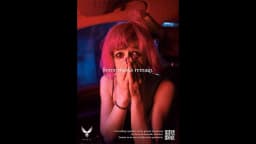
City of Cape Town's 'Boys Do What Men Teach Them' by FCB challenges gender-based violence in South Africa through a documentary social experiment released

Boys Do What Men Teach Them Puts Cape Town's GBV Crisis on Screen
Boys Do What Men Teach Them is a 2019 public service film campaign created by FCB — operating as HelloFCB+ — for the City of Cape Town, released in South Africa during the official #16DaysOfActivism observance period and structured as a documentary-style social experiment to confront the intergenerational transmission of gender-based violence.
The campaign positions gender-based violence not as an innate male disposition but as a conditioned response absorbed through observation. Its central argument is direct: boys learn from men. The film asset titled "My First Touch – #16DaysOfActivism" demonstrates this thesis by placing young people in proximity to adult male behaviors, allowing the camera to record what children absorb without commentary or dramatisation. The result is a piece of advocacy filmmaking that implicates the viewer rather than lecturing them.
In South Africa, the campaign launched against a charged national backdrop. The South African government formally opened the 2019 national 16 Days of Activism campaign on 25 November 2019 under the theme "Enough is Enough: 365 Days to End Gender-Based Violence and Femicide," according to Gov Za. That framing — extending moral urgency beyond a 16-day window into a year-round commitment — gave the City of Cape Town's film campaign both institutional alignment and a platform for wider distribution. The campaign ran across film and digital channels and comprised three media assets in total, as documented by Clapboard's editorial archive. It earned a Clapboard Score of 66 out of 100, reflecting its creative ambition and social relevance against the constraints of format and reach typical of municipal public service work.
FCB made a deliberate strategic inversion in constructing this campaign. Rather than centring the experience of women who suffer gender-based violence — the more conventional approach in GBV awareness communications — the agency directed its message at men and male caregivers as the primary agents of change. The campaign's logic is behavioural: if violence is learned, it can be unlearned, but only if the men transmitting it are made conscious of their role.
This choice is anchored in a well-documented insight about intergenerational harm. Mike Barnwell, Chief Creative Officer at HelloFCB+, articulated the rationale directly, stating: "It's these actions, and inactions, that young boys see happening daily and as a result, think that this is how a man should act. In reality, it's our responsibility to teach the next generation of men how they should behave so that we can break the cycle of gender-based violence." That statement, reported by Ididthat Co, defines the campaign's strategic spine — responsibility, not guilt; legacy, not condemnation.
In South Africa, gender-based violence represents one of the most persistent public health and social justice challenges facing government communicators. The Department of Women, Youth and Persons with Disabilities framed the 2019 national effort as a call for sustained, 365-day action rather than a symbolic annual moment, according to Dwypd Gov Za. This context made the City of Cape Town's film a complementary municipal voice within a coordinated national response. Comparable campaigns from organisations such as Sonke Gender Justice and international bodies such as UN Women have similarly targeted male behaviour change, meaning FCB needed to differentiate through creative form rather than thematic novelty. The documentary-social-experiment format provided that distinction, offering observable truth rather than constructed narrative.
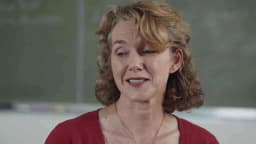
Jason Fialkov directed the campaign for production companies Carbon Films and Strangelove Studios, as reported by ididthat.co and confirmed in D&AD shortlist credits. Fialkov's approach relies on the grammar of observational documentary — minimal intervention, natural light, unscripted reaction — to produce footage that resists the aesthetic of traditional advertising. The children in the film are not performing; they are responding, and that distinction is the creative engine of the entire piece.
The creative team at HelloFCB+ was led by Chief Creative Officer Mike Barnwell, with Creative Director Dylan Davies and Art Director Reuben Abrahams shaping the visual and conceptual execution, according to campaignsoftheworld.com and ididthat.co. Their decision to present the campaign as a social experiment rather than a scripted film changes the audience's relationship to what they witness. Viewers are not watching actors demonstrate a thesis; they are watching children reveal an uncomfortable truth about the adults around them. That reframing transforms the film from advocacy content into evidence.
The asset titled "My First Touch – #16DaysOfActivism" accumulated 37,947 views and 50 likes on its primary platform as documented in Clapboard's editorial record. While those figures are modest for a digital campaign, they are consistent with the concentrated, community-specific distribution model typical of municipal public service work in South Africa, where reach is often mediated through civil society networks, community organisations, and government channels rather than paid mass media. The campaign's D&AD shortlist recognition for Casting (Performance), as reported by ididthat.co, affirms that the industry judged the non-actor casting and direction to be among its most significant craft achievements — a recognition that validates the social-experiment format as a creative strategy rather than simply a production choice.
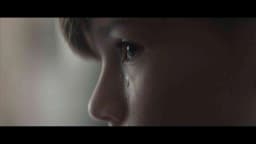
The campaign generated a documented public platform view count of 37,947 on the primary film asset, with 50 recorded likes, as noted in Clapboard's editorial archive. No independently published engagement benchmarks, conversion metrics, or reach figures for the broader three-asset campaign are publicly available, and no commissioned evaluation study has been identified in the public record.
The campaign received a D&AD shortlist for Casting (Performance), as reported by ididthat.co — a meaningful industry recognition that specifically validates the human authenticity at the centre of the work. For a municipal public service campaign operating without the media budgets available to commercial advertisers or large NGOs, shortlist recognition at D&AD represents a meaningful measure of creative effectiveness relative to category peers.
Structurally, the campaign demonstrates several markers of durable public service communication: a single, falsifiable idea expressed without abstraction; a production approach that generates credibility rather than scepticism; and a direct call to action — "Share the message for #16DaysOfActivism" — that distributes responsibility to the viewer. The alignment with the South African government's national 2019 theme, as documented by gov.za, also expanded the campaign's potential amplification beyond the City of Cape Town's own channels. The Clapboard Score of 66 out of 100 reflects the campaign's genuine creative intelligence and strategic clarity while acknowledging that its measured reach and engagement remain bounded by the constraints of municipal public service distribution in the South African market.
Boys Do What Men Teach Them is a 2019 public service film campaign created by FCB for the City of Cape Town in South Africa. Released during #16DaysOfActivism, it uses a documentary social experiment format to argue that gender-based violence is a learned behaviour transmitted from men to boys, and that male role models hold the power to break that cycle.
HelloFCB+, the Cape Town office of FCB, created the campaign. The creative team included Chief Creative Officer Mike Barnwell and Creative Director Dylan Davies, according to campaignsoftheworld.com and ididthat.co. Production was handled by Carbon Films and Strangelove Studios, with Jason Fialkov directing the documentary-format film assets.
The campaign was released in December 2019 to align with the official South African 16 Days of Activism period, which ran 25 November to 10 December 2019, according to gov.za. One key film asset was subtitled "My First Touch – #16DaysOfActivism," directly tying the City of Cape Town's municipal message to the national government's awareness observance.
The campaign received a D&AD shortlist for Casting (Performance), as reported by ididthat.co. This recognition specifically acknowledged the campaign's use of non-actor children in a social experiment setting. It also earned a Clapboard Score of 66 out of 100, reflecting strong creative strategy within the constraints of municipal public service advertising in South Africa.
FCB chose a documentary social experiment format to generate observable truth rather than scripted advocacy. Director Jason Fialkov, working with Carbon Films, filmed children reacting to adult male behaviour without scripted performances. This approach, as articulated by CCO Mike Barnwell per ididthat.co, positioned men as conscious teachers of values rather than passive bystanders to gender-based violence.
.webp)
Creative Collaboration Platform: The Backbone of Modern Creative WorkWhat is a creative collaboration platform?Clapboard defines a creative collaboration platform as the operational core for today’s distributed creative teams. This is not a collection of digital collaboration tools stitched together; Clapboard’s system


Understanding the Creative Production MarketplaceWhat is a Creative Production Marketplace?Clapboard defines a creative production marketplace as a structured ecosystem where brands, agencies, and production talent converge to execute video, advertising, and branded content at scale. Unlike the legacy agency or freelanREAD FULL ARTICLE

The Urgent Need for a Creative Production Operating SystemWhy Traditional Creative Production Models Break DownClapboard sees the creative production landscape shifting under pressure. Content velocity is no longer a buzzword—it’s a mandate. Modern advertising demands relentless output across dozens of channels, each wREAD FULL ARTICLE