


Varun Katyal | Founder, Clapboard
Varun Katyal is the Founder & CEO of Clapboard and a former Creative Director at Ogilvy, with 15+ years of experience across advertising, branded content, and film production. He built Clapboard after seeing firsthand that the industry’s traditional ways of sourcing talent, structuring teams, and delivering creative work were no longer built for the volume, velocity, and complexity of modern content. Clapboard is his answer — a video-first creative operating system that brings together a curated talent marketplace, managed production services, and an AI- and automation-powered layer into a single ecosystem for advertising, branded content, and film. It is designed for a market where brands need content at a scale, speed, and level of specialization that legacy agencies and generic freelance platforms were never built to deliver. The thinking, frameworks, and editorial perspective behind this blog are shaped by Varun’s experience across both the agency world and the emerging platform-led future of creative production. LinkedIn: https://www.linkedin.com/in/varun-katyal-clapboard/
The Plot Mechanics of Vertigo Explained
Any Vertigo movie analysis must begin with its narrative structure, which is meticulously constructed to serve both psychological depth and cinematic suspense. Hitchcock’s storytelling is not simply a matter of plot points but a deliberate orchestration of audience perception, memory, and revelation. The film’s opening sequence—Scottie Ferguson’s rooftop pursuit—establishes the protagonist’s acrophobia and sets in motion the film’s core tension: a detective who cannot trust his own senses.
Key plot points in Vertigo movie analysis
The inciting incident arrives swiftly: Scottie is hired to follow Madeleine Elster, whose behaviour suggests she is possessed by a dead ancestor. This assignment is less about the surface-level mystery and more about immersing both Scottie and the viewer in a labyrinth of obsession and uncertainty. The plot’s first major turn comes at the mission’s apparent climax—Madeleine’s plunge from the bell tower. Scottie’s failure, rooted in his vertigo, leads to a psychological unraveling that the narrative exploits with precision.
Understanding narrative structure in Hitchcock’s Vertigo
Vertigo’s narrative structure is bifurcated. The first half follows a classical investigation, with Scottie as detective and Madeleine as enigma. The second half fractures this, shifting from external mystery to internal compulsion. Hitchcock’s decision to reveal Judy’s true identity before the protagonist learns it is a calculated subversion of suspense conventions. The audience, now complicit in the deception, watches Scottie reconstruct Madeleine from Judy, a process as unsettling as it is inevitable.
This structural inversion—where the “twist” is delivered to the audience, not the protagonist—creates a tension unique to Hitchcock storytelling. It’s less about whodunit than about what the protagonist will do with the truth, and how far obsession can bend reality.
The function of suspense in Vertigo’s storyline
Suspense in Vertigo is never cheap. Hitchcock manipulates point of view and information flow, withholding and revealing with surgical control. The rooftop chase, the mission to the bell tower, and the final confrontation all hinge on Scottie’s psychological limitations. The audience is kept one step ahead or behind at critical moments, ensuring the tension is not merely about outcomes, but about the emotional and moral costs of pursuit.
Major plot twists—Madeleine’s death, Judy’s revelation, and the final fatal fall—are not arbitrary shocks. Each is rooted in character and causality. Scottie’s arc, from passive observer to active manipulator, is mirrored by Judy’s transformation from accomplice to victim. The plot mechanics of Vertigo are inseparable from the psychological mechanics; every narrative turn is an extension of obsession, guilt, and the impossibility of recapturing the past.
In sum, the narrative structure in Vertigo is not simply a skeleton for its events—it is the engine of its meaning. Every plot development is calibrated to escalate both suspense and emotional stakes, making Vertigo a benchmark for narrative structure in film. This is the foundation upon which all deeper Vertigo movie analysis must build.
Why Vertigo Movie Analysis Matters Today
Vertigo movie analysis is not a relic of film school syllabi or cinephile trivia. It’s a living practice—one that continues to shape how we think about cinematic storytelling, visual language, and the boundaries of genre. Alfred Hitchcock’s 1958 film didn’t just leave its mark on the critical canon; it redefined the very terms of classic film analysis, forcing both theorists and practitioners to recalibrate their approach to narrative, authorship, and audience psychology. For senior marketers and creative leaders, understanding why Vertigo endures is less about nostalgia and more about decoding the DNA of modern visual culture.
How Vertigo Became a Staple in Film Studies
Vertigo’s critical journey is as instructive as its plot. Initially dismissed—commercially underwhelming and critically misunderstood—the film’s reputation grew through decades of reappraisal. Today, film study Vertigo is shorthand for rigorous, layered analysis: its use of color, point-of-view, and psychological complexity is dissected in classrooms and creative studios alike. This elevation from box office disappointment to “greatest film” contender isn’t accidental. It reflects the film’s structural innovations and its willingness to confront uncomfortable truths about obsession, identity, and manipulation—topics that remain urgent in contemporary storytelling.
Why Film Scholars Revisit Vertigo Movie Analysis
The academic and creative fascination with Vertigo is not just inertia. Each new generation brings fresh questions to its surfaces and subtexts. For scholars, Vertigo is a test case for theories of gaze, authorship, and genre deconstruction. For practitioners, it’s a masterclass in formal control—how editing, camera movement, and sound design can evoke psychological states. The act of film analysis techniques applied to Vertigo isn’t just about parsing symbols; it’s about understanding how choices on set ripple outward, shaping meaning and emotion for decades after the final cut.
The Resurgence of Interest in Classic Psychological Thrillers
In an era saturated with content, Vertigo stands out for its precision and ambiguity. The resurgence of interest in classic psychological thrillers is no accident: audiences and creators alike are drawn to works that reward close reading and resist easy answers. Vertigo’s influence is visible in everything from prestige television to art-house cinema. Its DNA is present in the structure of modern suspense, the aesthetics of unreliable narration, and the blending of genre conventions. A Hitchcock film breakdown doesn’t just reveal historical technique—it illuminates why certain narrative patterns still resonate, and how they can be adapted for new contexts.
Ultimately, Vertigo movie analysis is not about reverence for the past. It’s about equipping ourselves with sharper tools for reading, making, and critiquing moving images. Whether you’re shaping a campaign, greenlighting a project, or crafting your own story, the lessons embedded in Vertigo’s construction remain urgent. The film’s endurance is a challenge: to look closer, to question more deeply, and to recognize that the most influential works never stop revealing themselves.
Character Dynamics and Psychological Depth
Scottie’s transformation in Vertigo
Vertigo character analysis begins and ends with Scottie Ferguson. His journey is not just a descent; it’s a systematic unravelling and rebuilding of self, shaped by trauma and obsession. Scottie’s acrophobia is more than a plot device—it’s a physical manifestation of his psychic instability. His near-fatal rooftop incident and the guilt over a colleague’s death trigger a vulnerability that Hitchcock exploits relentlessly, shifting Scottie from a rational investigator to a haunted, delusional lover (Shmoop, 2016). This arc is not linear. After Madeleine’s apparent death, Scottie collapses into melancholia, catatonia, and institutionalization. His breakdown is both public and private, mapped onto his body and mind. The film’s climax—Scottie’s ascent of the bell tower, now free of vertigo—signals a transformation, but it’s a hollow victory. The trauma isn’t resolved; it’s mutated. In production terms, this is a masterclass in using psychological depth as dramatic engine, not mere character shading.
Madeleine and Judy: Dual identities explained
The duality of Madeleine and Judy is Vertigo’s most enduring psychological riddle. On the surface, Judy is a pawn, manipulated into playing Madeleine for a murder plot. But the performance is not one-way. Judy, once revealed, is not simply a victim of Scottie’s projections. Her willingness to be remade—down to the hair, dress, and mannerisms—signals a desperate agency. She is complicit, not just compliant. Judy’s transformation is motivated by love and a hope for reconciliation, not mere submission (Shmoop, 2016). This is what separates Vertigo from standard psychological thriller characters: Judy’s arc is not reducible to passivity. She seeks control through surrender, a paradox that deepens the film’s psychological complexity. For the practitioner, it’s a lesson in how layered motivation—love, guilt, survival—can be written into performance and mise-en-scène, not just dialogue.
The psychological interplay between Vertigo’s leads
Scottie and Madeleine’s relationship is a dance of power, projection, and mutual need. Scottie’s obsession with reconstructing Madeleine is both a search for lost love and an assertion of control. He remakes Judy into Madeleine, not out of cruelty, but out of a compulsion to restore order to his fractured psyche. Judy, for her part, allows this transformation, hoping to be loved for herself, even as she disappears behind the mask of another. Their dynamic is a feedback loop: Scottie’s need creates Judy’s performance, and Judy’s willingness sustains Scottie’s delusion. This interplay is what gives Vertigo its psychological depth. It’s not just about what the characters want, but about how those wants collide, mutate, and ultimately destroy.
Supporting characters and narrative function
The supporting cast in Vertigo is not ornamental. Midge, in particular, serves as a counterpoint to Scottie’s spiralling obsession. Her grounded affection and pragmatic presence highlight the extremity of Scottie’s fantasy. She is the anchor to reality, the character who sees Scottie as he is, not as he wishes to be. Gavin Elster, meanwhile, is the architect of the deception, a catalyst whose manipulation sets the tragedy in motion. These roles are structurally essential: they frame the psychological stakes, offering the audience both a mirror and a contrast to the leads’ spiralling dynamic. In terms of character development, their presence sharpens the film’s focus on obsession, identity, and the cost of illusion.
Dissecting Vertigo’s Themes and Subtext
Exploring obsession as a central theme in Vertigo
Vertigo movie themes are inseparable from the film’s relentless focus on obsession. Hitchcock doesn’t just depict it—he immerses the audience in its logic. Scottie’s fixation on Madeleine is not romantic; it’s pathological, consuming his sense of reality and agency. Obsession in Vertigo is multi-layered: it manifests in Scottie’s pursuit, in the city’s spiraling streets, and in the film’s own structure, which circles back on itself with a dreamlike inevitability. The score, famously described as both fulfilling and despairing, reinforces the emotional claustrophobia of obsession, making the audience complicit in Scottie’s spiraling descent (The Art of Film Form, 2016).
Gender and identity in Hitchcock’s masterpiece
The film’s interrogation of identity in Hitchcock films reaches its apex in Vertigo. Identity is not fixed; it’s constructed, performed, and—crucially—imposed. Judy is forced to shed her own self and become Madeleine, not for love, but to fulfill Scottie’s fantasy. This is not mere narrative device; it is a direct engagement with gender roles in Vertigo, where the male gaze is not just present but weaponized. Scottie’s control over Judy’s appearance, voice, and even her gestures exposes the mechanics of desire and the violence of idealization (Cinephilia Beyond, 2018). Hitchcock’s own directorial obsessions bleed into the text, implicating both filmmaker and viewer in the act of objectification.
How Vertigo’s subtext elevates its narrative
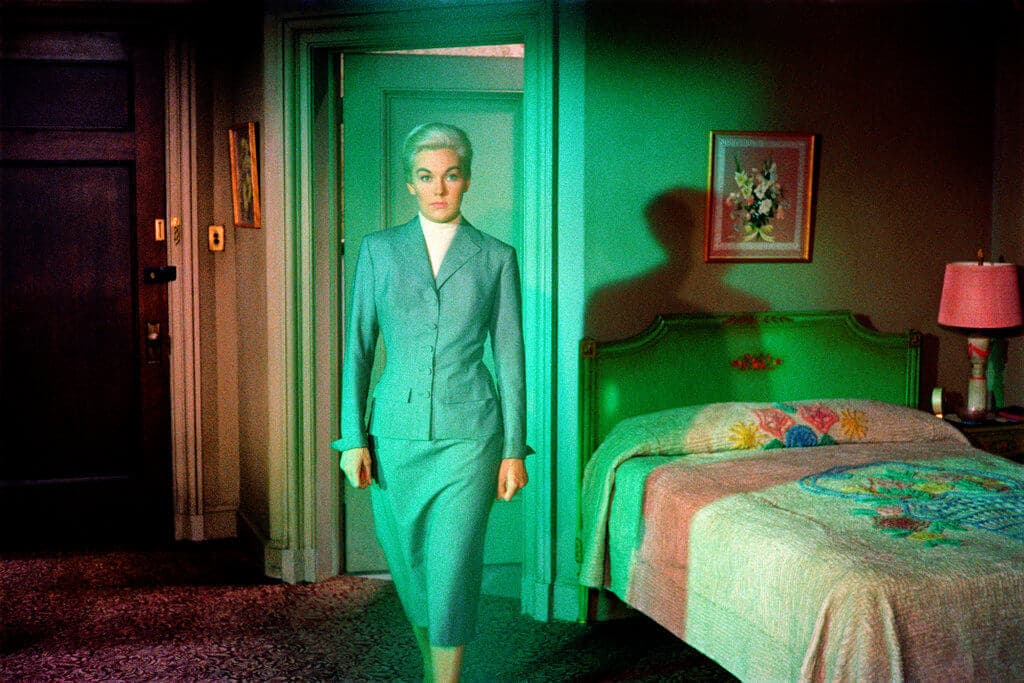
Vertigo’s subtext is not hidden beneath the surface; it is the current that animates every frame. The film adapts the Pygmalion myth, with Scottie as the creator attempting to sculpt Judy into his vision of Madeleine. This dynamic collapses boundaries between creator and creation, echoing the anxieties of authorship and control that pervade Hitchcock’s work. The motif of transformation, both visual and psychological, is signaled through mirrors, doubles, and the persistent motif of falling—literal and metaphorical. The film’s color symbolism is precise: green bathes Judy’s transformation, marking the boundary between reality and fantasy, while red signals sexuality and danger. These motifs do not merely decorate the narrative; they interrogate the audience’s complicity in the act of looking.
Vertigo’s themes—obsession, identity, gender dynamics, and the nature of desire—are not merely academic concerns. They are enacted, embodied, and made inescapable through craft. The film’s structure, sound, and iconography all serve to implicate the viewer in the cycle of longing and loss. In dissecting Vertigo, one finds not just a case study in film themes analysis, but an enduring reflection on the power and peril of seeing—and being seen.
Visual Storytelling and Cinematic Innovation
Vertigo cinematography analysis is not an exercise in technical admiration—it is an exploration of how visual language becomes narrative. Hitchcock’s approach to the camera is not merely functional; it is psychological architecture. Every frame in Vertigo is constructed to serve the story’s labyrinthine emotional terrain, using the full arsenal of cinematic techniques to manipulate, seduce, and unsettle.
The impact of the dolly zoom in Vertigo
The dolly zoom effect—often called the “Vertigo Effect”—is more than a technical flourish. It is a visual embodiment of acrophobia and existential dislocation. When Scottie peers down the mission staircase, the camera’s simultaneous tracking and zooming distorts spatial logic, externalizing his vertigo for the audience. The technique doesn’t just show fear; it makes the viewer feel it, collapsing the distinction between subject and spectator. This is Hitchcock visual style at its most invasive and immersive, forcing the audience into the protagonist’s fractured perception.
Visual symbolism and color in Vertigo movie analysis
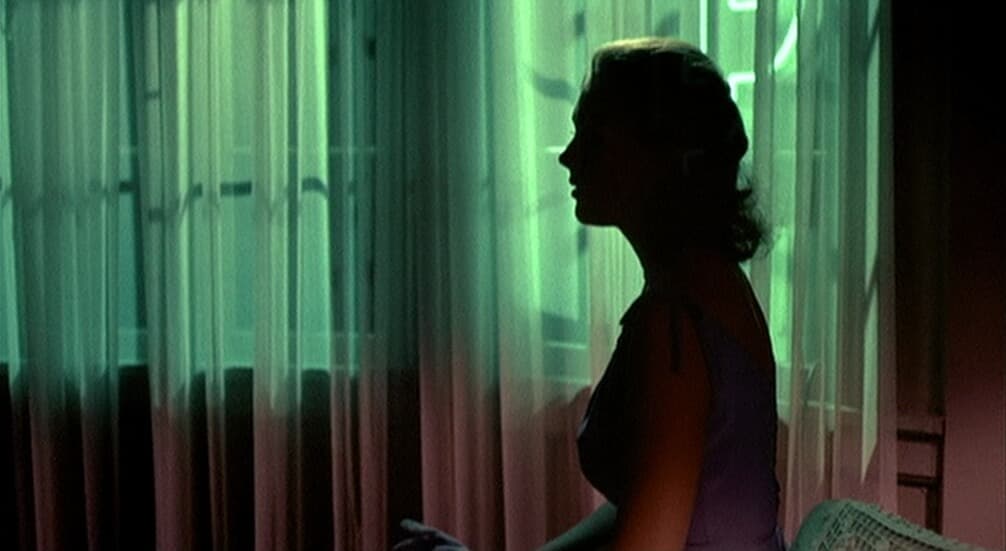
Color in Vertigo is never decorative. It’s a system of visual symbolism—Vertigo’s palette is meticulously controlled, with greens, reds, and muted golds mapping the psychological states of its characters. Judy’s transformation into Madeleine is bathed in a spectral green, a color that signals both rebirth and the artificial. The recurring use of red—on doors, interiors, and clothing—marks thresholds and moments of emotional rupture. These choices are not arbitrary; they are coded signals, deepening the film’s themes of obsession, identity, and illusion. The color story is a silent script, running parallel to the dialogue, informing every glance and gesture.
How Hitchcock’s cinematography shapes audience perception
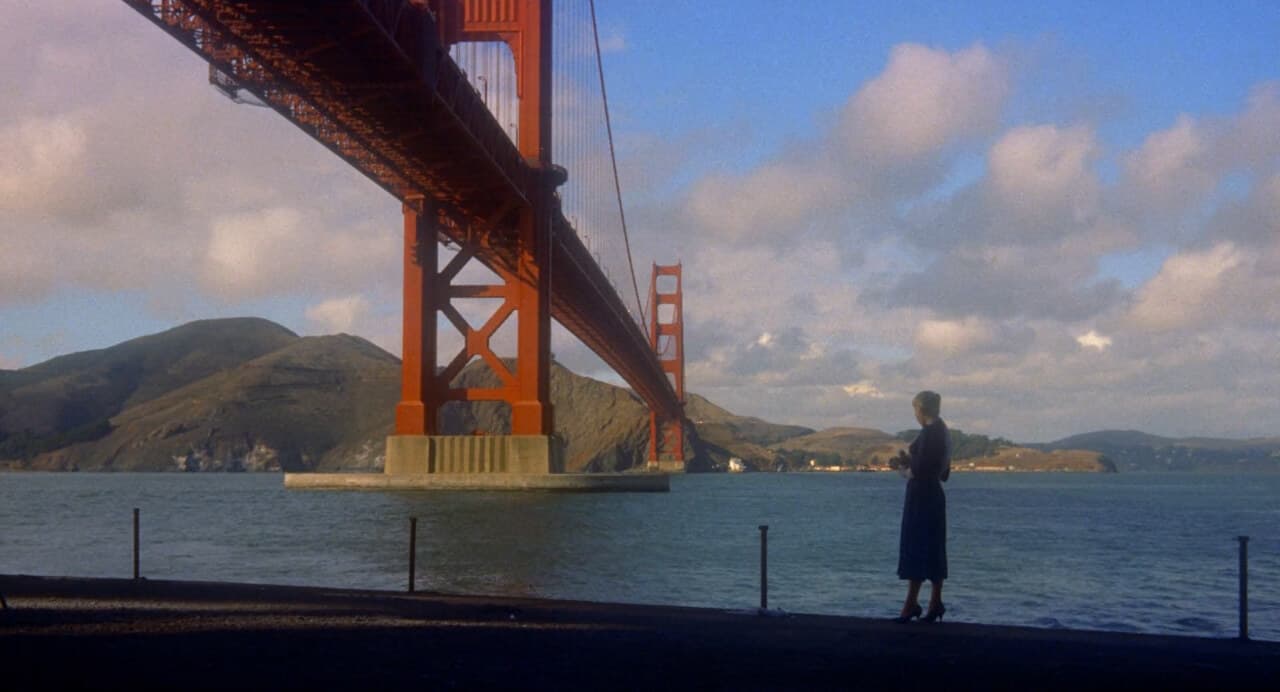
Hitchcock’s cinematography is an exercise in control. Shot selection, set design, and camera movement are all in service of destabilizing the viewer. The architecture of San Francisco—its winding streets and vertiginous heights—becomes a visual motif for psychological instability. Mirrors, staircases, and spirals recur, echoing the film’s central motif of doubling and descent. The camera lingers, tracks, and circles, refusing the audience stable ground. This is not just aesthetic bravura; it’s a deliberate strategy to make the audience complicit in Scottie’s obsession and confusion. By aligning visual form with psychological content, Hitchcock ensures that Vertigo’s anxieties are not just observed but experienced.
- Signature composition: Vertigo’s frames are often divided, obstructed, or fragmented, reflecting the characters’ fractured identities.
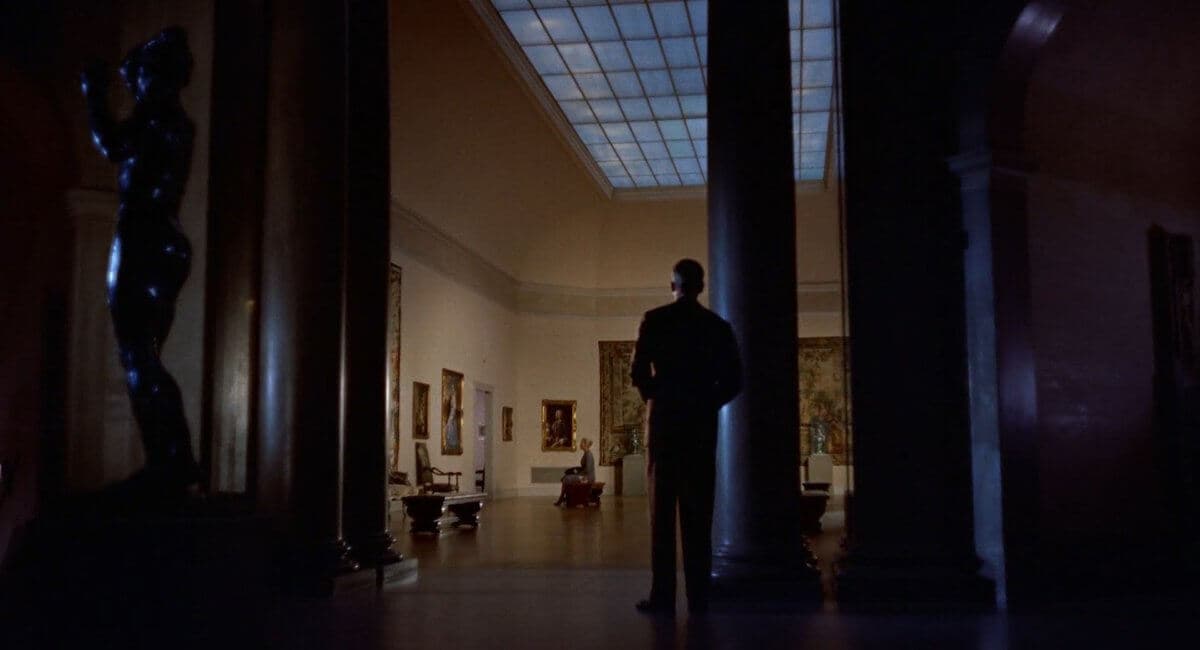
- Set design as subtext: Spaces are curated for symbolic resonance—hotel rooms, graveyards, and galleries become stages for memory and desire.
- Motif repetition: Spirals, circles, and doubles are embedded in the visual grammar, reinforcing the film’s preoccupation with recurrence and fatalism.
Vertigo’s visual storytelling is not a layer applied to the narrative—it is the narrative. Hitchcock’s innovations are not ends in themselves; they are means to probe the instability of perception, the unreliability of memory, and the danger of obsession. In Vertigo, the camera is not a witness. It is a participant, drawing the audience into a world where seeing is never simple, and every image is a question.
Music, Sound, and Emotional Resonance
Vertigo movie soundtrack analysis inevitably begins and ends with Bernard Herrmann. His score is not background—it is the film’s psychological bloodstream, pulsing through every frame. In Vertigo, music is not just an accompaniment but a narrative force, shaping the viewer’s emotional response as surely as Hitchcock’s camera or Stewart’s performance. Herrmann’s orchestration is precise, almost architectural, constructing a soundscape that both mirrors and manipulates the film’s spiraling obsessions.
How the Vertigo soundtrack intensifies suspense
Herrmann’s motifs are as relentless as Scottie’s fixation. The opening bars—dissonant, swirling, unresolved—signal from the outset that we are entering a world where stability is an illusion. The score’s cyclical patterns, echoing the film’s visual motifs of spirals and vertigo itself, create a sense of inevitable return, of psychological traps from which neither character nor audience can escape. The music’s tension is cumulative, never offering full release, so that even moments of apparent calm are laced with anxiety. This is film scoring at its most intrusive and most effective: the audience is not allowed to relax, because the score never does.
Bernard Herrmann’s musical influence on Vertigo
Herrmann’s approach to Vertigo is not about melodic beauty; it is about psychological precision. His use of leitmotifs—particularly the recurring “obsession” theme—anchors the film’s emotional landscape. When Scottie follows Madeleine, the score swells with romantic longing, only to shift abruptly into dissonance as the narrative darkens. Herrmann’s orchestration favors lower registers, dense harmonies, and subtle shifts in tempo, all designed to unsettle. This is not music that tells you what to feel; it makes you feel, often against your will. The result is a film sound design that works in tandem with Hitchcock’s visual storytelling, each amplifying the other’s impact.
The relationship between sound design and psychological impact
Silence, too, is weaponized. In Vertigo, the absence of music is as meaningful as its presence. Herrmann and Hitchcock use silence to isolate characters, heighten vulnerability, and sharpen the viewer’s focus on minute sonic details—a footstep, a distant bell, the rush of wind. These choices are not accidental. They are calculated to draw the audience deeper into Scottie’s fractured perception, making the film’s world feel both hyper-real and eerily unstable. The integration of music, silence, and carefully chosen sound effects exemplifies the potential of sound design in movies to shape psychological experience.
Vertigo’s soundtrack and sound design are not mere technical achievements; they are integral to the film’s emotional architecture. Herrmann’s score doesn’t simply accompany the story—it interrogates it, exposing the raw nerves beneath the surface. For anyone seeking to understand the emotional impact of music in cinema, Vertigo remains a masterclass in the art of film scoring and the enduring power of sound to haunt, unsettle, and move us.
The Director’s Lens – Hitchcock’s Meta Commentary
Hitchcock’s personal imprint on Vertigo
To approach a Hitchcock meta analysis Vertigo demands, one must reckon with how the film operates as an act of self-examination. Hitchcock’s signature is not just technical—camera moves, suspense mechanics, color design—but existential. Vertigo is a director’s confession, a film that both enacts and exposes the compulsions of its maker. Scottie’s relentless attempt to remake Judy into Madeleine is inseparable from Hitchcock’s own well-documented obsessions with his leading women. The director’s vision in Hitchcock’s hands becomes both a creative force and a destructive compulsion. Vertigo is not merely a thriller; it’s a meditation on the costs of authorship.
Auteur theory and Vertigo movie analysis
Auteur theory finds its most potent case study in Vertigo. The film is structured around the director-actor dynamic, literalized through Scottie’s manipulation of Judy. Hitchcock’s control over every frame, every gesture, mirrors Scottie’s attempt to control Judy’s image. This is not accidental. Vertigo’s narrative is a self-reflexive loop: a director (Scottie/Hitchcock) shaping a performer (Judy/actress) to fit an ideal, only to be haunted by the impossibility of true transformation. The meta filmmaking themes are not subtext—they’re the text itself. Hitchcock’s authorship is both the subject and the method, interrogating the very nature of cinematic creation.
Meta-commentary on filmmaking within Vertigo
Vertigo functions as a meta-narrative, a film about filmmaking disguised as psychological drama. The obsessive gaze, the reconstruction of identity, the power imbalance between creator and subject—these are the mechanics of cinema itself. Hitchcock invites the audience to witness not just Scottie’s unraveling, but the director’s own anxieties about authorship, control, and the ethics of artistic manipulation. The film’s structure—its doubling, its recursive reveals—mirrors the editing process, the constant reworking of raw material to achieve an elusive vision. In doing so, Vertigo implicates both director and viewer in the act of creation and consumption.
Implications for director-driven cinema
Vertigo’s legacy is not just stylistic, but philosophical. It challenges the myth of the infallible auteur, exposing the vulnerabilities and dangers inherent in the director’s quest for total control. The film’s meta commentary prefigures the later self-reflexive turns in cinema, from New Hollywood to contemporary auteur-driven projects. For anyone interested in auteur theory or the director’s influence in film, Vertigo remains a touchstone—a work that interrogates its own making as relentlessly as it manipulates its characters. The result is a film that continues to unsettle, not just as a story, but as an ongoing question about the nature and limits of cinematic authorship.
Vertigo’s Cinematic Legacy and Influence
The Vertigo movie legacy is not just a matter of critical consensus or box office trivia. It is a living, evolving conversation—one that has shaped the language of cinema itself. Vertigo’s journey from a divisive 1958 release to the apex of “greatest film” lists is a study in how art can outpace its era, then return to redefine it. Its influence is less about imitation and more about a deep, structural absorption into the DNA of modern filmmaking.
How Vertigo Shaped Modern Thrillers
Vertigo’s influence on cinema is most visible in the psychological thriller. Hitchcock’s meticulous use of point-of-view, unreliable narration, and subjective camera work set a template that directors still mine for tension and ambiguity. The film’s spiral motif—both literal and metaphorical—became shorthand for psychological descent. This is not mere homage; it is the adoption of a new grammar for depicting obsession, identity, and fractured reality. Films from De Palma’s “Obsession” to Aronofsky’s “Black Swan” owe a structural debt to Vertigo’s approach, not just its iconography.
The Evolution of Vertigo’s Critical Reputation
Vertigo’s rise to critical acclaim was neither immediate nor inevitable. On release, it was met with ambivalence—its pacing, opacity, and moral ambiguity confounded audiences and critics conditioned by Hitchcock’s earlier, more accessible thrillers. The film’s gradual ascent in the canon, culminating in its dethroning of “Citizen Kane” atop the Sight & Sound poll, reflects a shift in critical priorities: from narrative efficiency to psychological complexity, from external action to internal conflict. This evolution signals a broader maturation in how we assess classic films impact—less as fixed monuments, more as dynamic texts that reward re-examination.
Notable Films Influenced by Vertigo
Direct references to Vertigo in later cinema are both overt and subtle. The dolly zoom—now colloquially “the Vertigo shot”—is a staple in the filmmaker’s toolkit, deployed to signal disorientation or revelation. Filmmakers as varied as Scorsese, Lynch, and Nolan have engaged with Vertigo’s themes of memory, doubling, and the instability of desire. “La Jetée,” “Body Double,” and “Mulholland Drive” each echo Vertigo’s structure and mood, pushing the template into new cultural and psychological territory. Even outside the thriller genre, Vertigo’s visual and thematic signatures surface—testament to its reach across forms and generations.
Debates Around Vertigo’s Place in Film History
Vertigo’s status as a canonical work remains contested, and that’s part of its enduring power. Some critics see its elevation as a symptom of critical insularity or nostalgia; others argue its complexity and ambiguity have only become more relevant as cinema has matured. The ongoing debate is not just about Hitchcock’s legacy, but about what we value in the art of film itself. Vertigo is no longer simply a “classic”—it is a touchstone for questions about authorship, gender, and the mutable criteria of greatness. Its legacy, then, is not settled. It is a provocation, a challenge, and a lens through which the future of film will continue to be refracted.
Misconceptions and Re-examinations in Vertigo Movie Analysis
Debunking Vertigo movie analysis myths
Vertigo movie analysis is littered with persistent myths, many of which flatten Hitchcock’s layered intentions. The most common misconception is that Vertigo is simply a story about obsession. This reading ignores the film’s reflexive commentary on the act of looking—on cinema itself as a machinery of desire and projection. Another myth: that Scottie’s unraveling is a straightforward descent into madness. In reality, Hitchcock crafts a protagonist whose instability is less pathology, more a symptom of the era’s anxieties around identity, gender, and control. These oversimplifications are seductive because they offer closure, but Vertigo’s power lies in its refusal to resolve so neatly.
New perspectives on Vertigo’s ending
Much has been made of Vertigo’s final moments, often reduced to a fatalistic punchline: obsession leads to destruction. But this interpretation misses the recursive structure Hitchcock engineers. The ending is not merely a tragic conclusion—it’s a rupture in narrative logic, a demand that the audience confront its own complicity in the spectacle. Judy’s fall is not just the consequence of Scottie’s actions, but the result of a system that commodifies and remakes women to fit male fantasies. Contemporary analysis, informed by feminist and psychoanalytic perspectives, recasts the ending as an indictment of both the character and the viewer’s gaze. Vertigo’s conclusion is less an answer than an open wound, refusing to let us off the hook.
Why Vertigo rewards repeated analysis
Vertigo is a film that resists definitive interpretation. Each viewing reveals new fissures—details in performance, framing, and sound design that reorient meaning. The film’s structure, looping and recursive, mirrors the analytical process itself. Modern audiences, equipped with evolving social and cultural frameworks, find fresh relevance in its ambiguities. The myth that Vertigo is “solved” by any single reading is a disservice to its construction. It is a film that rewards the patient, the skeptical, and the restless analyst.
Reinterpreting classic films: the case for continual re-examination
The urge to canonize Vertigo, to fix its meaning in place, is strong—especially as it climbs “greatest film” lists and enters the cultural lexicon. But classic films endure precisely because they are porous to reinterpretation. Vertigo’s themes of identity, control, and loss are not static; they shift with each generation’s anxieties and insights. Senior creative leaders and marketers understand the necessity of challenging film interpretations and film analysis myths in their own work. The lesson from Vertigo is clear: the value of a classic lies not in its answers, but in its capacity to provoke new questions. To revisit Vertigo is to engage in a living dialogue—one that refuses closure, and in doing so, remains vital.
Conclusion
Vertigo endures as a cornerstone of classic film analysis, not because it offers easy answers, but because it resists them. Hitchcock’s film is less a puzzle to be solved than a landscape to be traversed, its contours shifting with every viewing and with every generation of critics and filmmakers who return to it. This is not simply a matter of technical mastery—though Vertigo remains a benchmark for cinematic techniques and psychological thriller analysis. It is the film’s willingness to inhabit ambiguity, to lay bare the mechanics of obsession and longing, that has secured its place in the canon and in the ongoing discourse of film studies.
The film’s structure, oscillating between subjective experience and objective reality, continues to challenge how we approach character development and narrative reliability. Vertigo’s influence is visible in the DNA of countless works that have followed, from the fractured identities of neo-noir to the self-reflexive thrillers that dominate contemporary screens. Its visual language—those iconic dolly zooms, the saturated San Francisco palette—remains a reference point for directors seeking to evoke unease or to externalize internal states. Yet Vertigo’s legacy is not merely stylistic; its examination of desire, control, and the impossibility of true knowledge resonates in any serious film themes analysis.
What distinguishes Vertigo in the context of Hitchcock film breakdowns is its refusal to resolve its tensions. The film’s final moments are not a neat conclusion but an open wound, inviting fresh interpretation and debate. This is why Vertigo retains its relevance: it is a text that grows with the viewer, reflecting the anxieties, fascinations, and blind spots of each era. For practitioners and scholars alike, it offers a model for how cinema can be both precise in craft and inexhaustible in meaning.
The ongoing analysis and reinterpretation of Vertigo are not acts of nostalgia, but of necessity. Each return to the film uncovers new layers, new questions about authorship, spectatorship, and the ethics of looking. In this sense, Vertigo is not just a relic of mid-century cinema but a living document—one that continues to shape the language and ambition of filmmakers working today. Its influence is not static; it is a challenge, a provocation, and a benchmark for what film can achieve when it dares to probe the unstable ground between reality and illusion.
FAQs
What is the plot of the Vertigo movie?
Vertigo follows retired detective Scottie Ferguson, who is hired to shadow Madeleine Elster, the wife of an old acquaintance. As Scottie becomes entangled in Madeleine’s mysterious behavior and apparent suicide, he spirals into obsession, only to uncover a complex deception that blurs reality, identity, and desire. The film’s structure is cyclical, mirroring Scottie’s psychological descent.
How does Vertigo explore themes of obsession?
Obsession is Vertigo’s gravitational force. Scottie’s fixation on Madeleine transcends infatuation, morphing into a compulsion to reconstruct her image in Judy Barton. The film interrogates the destructive nature of obsession—how it distorts perception, drives manipulation, and ultimately consumes both the pursuer and the pursued. Hitchcock exposes obsession as both seductive and ruinous.
What are the main character dynamics in Vertigo?
The psychological interplay between Scottie and Judy/Madeleine is fraught with projection and control. Scottie’s vulnerability—rooted in trauma—renders him susceptible to manipulation, while Judy’s complicity is laced with desperation and guilt. Their relationship is less a romance than a mutual haunting, each character trapped by the other’s expectations and regrets.
What visual techniques are used in Vertigo?
Vertigo pioneered visual storytelling methods that remain influential. The “dolly zoom” or “Vertigo effect” distorts spatial perception to evoke Scottie’s acrophobia. Hitchcock’s use of color—particularly greens and reds—signals psychological states and narrative shifts. Mirrors, spirals, and doubles recur, reinforcing the film’s themes of repetition, illusion, and fractured identity.
How does the music in Vertigo enhance its emotional impact?
Bernard Herrmann’s score is inseparable from Vertigo’s emotional architecture. Lush, spiraling motifs echo the film’s themes of longing and disorientation. The music amplifies tension and melancholy, guiding the audience through Scottie’s inner turmoil. Herrmann’s orchestrations create a sense of inevitability, making the film’s psychological stakes feel both intimate and operatic.
What is the significance of Hitchcock's direction in Vertigo?
Hitchcock’s direction is self-reflexive, interrogating the act of looking and the construction of narrative itself. He positions the audience as voyeurs complicit in Scottie’s gaze, implicating viewers in the cycle of obsession and illusion. Vertigo becomes a meditation on filmmaking—how images are crafted, controlled, and consumed.
How has Vertigo influenced modern cinema?
Vertigo’s legacy is vast. Its narrative ambiguity, psychological complexity, and visual innovation have shaped genres from neo-noir to psychological thrillers. Directors like Brian De Palma and David Lynch have drawn on its motifs and mood. The film’s meditation on identity and desire continues to reverberate through contemporary cinema, both as homage and critique.
.webp)
Creative Collaboration Platform: The Backbone of Modern Creative WorkWhat is a creative collaboration platform?Clapboard defines a creative collaboration platform as the operational core for today’s distributed creative teams. This is not a collection of digital collaboration tools stitched together; Clapboard’s system

Understanding the Creative Production MarketplaceWhat is a Creative Production Marketplace?Clapboard defines a creative production marketplace as a structured ecosystem where brands, agencies, and production talent converge to execute video, advertising, and branded content at scale. Unlike the legacy agency or freelanREAD FULL ARTICLE

The Urgent Need for a Creative Production Operating SystemWhy Traditional Creative Production Models Break DownClapboard sees the creative production landscape shifting under pressure. Content velocity is no longer a buzzword—it’s a mandate. Modern advertising demands relentless output across dozens of channels, each wREAD FULL ARTICLE

JOIN THE NEWSLETTER.
Content Production insights, videos, books, and freebies, delivered to your inbox weekly


LEAVE A COMMENT
Your email address will not be published.