Reingold's 2020 Stand By a Veteran PSA for the U.S. Department of Veterans Affairs directed family and friends to recognise health changes in veterans and seek

How Reingold's Stand By a Veteran PSA Mobilised America's Support Networks
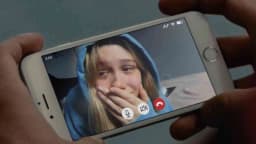
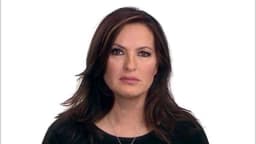
Stand By a Veteran is a 60-second public service announcement created by Reingold for the U.S. Department of Veterans Affairs and published in the United States in November 2020, designed to help family members and friends recognise early signs of health or emotional change in veterans and connect them with support resources on the Make the Connection platform.
The campaign operates on a foundational insight: the people closest to a veteran are often better positioned than any clinician to notice when something has changed. Rather than speaking directly to veterans in crisis, the U.S. Department of Veterans Affairs directed its message outward, toward the civilian support networks surrounding those who have served. This pivot — from veteran-to-institution communication to friend-and-family mobilisation — defines the campaign's strategic identity and separates it from more conventional public interest advertising.
Produced as an integrated campaign spanning health, public interest, and TV and streaming promos categories, Stand By a Veteran was built for distribution across broadcast and digital channels in the United States. Its documentary and social experiment execution gave the work an authenticity rarely associated with government public service advertising. The core call to action directed viewers to the Make the Connection platform, where hundreds of veteran stories and structured support resources were made available.
Fackrell Brothers served as the production company on the campaign, with direction and co-founding attributed to Nathan D. Fackrell, while VFX, design, animation, and direction were handled by Midnight Sherpa. The campaign contains one primary media asset — the 60-second PSA — which accumulated 8,953,381 views according to data documented at the time of submission. Clapboard scores Stand By a Veteran 64 out of 100, reflecting the campaign's strong strategic clarity and emotional relevance, offset by limited creative risk in its formal execution.
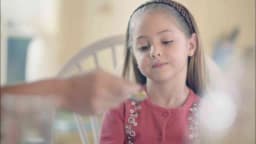 ARCHIVE
The U.S. Department of Veterans Affairs built Stand By a Veteran around a behavioural insight that public health researchers have long documented. Friends and family members frequently observe the earliest signs of mental health deterioration, isolation, or physical decline in veterans before any formal care pathway is triggered. The campaign translates this observation into an actionable communication strategy, positioning civilian relationships as a first line of support rather than a passive background to institutional care.
In the United States, veteran mental health represents one of the most persistently underpublicised public health challenges. Research published by RAND Corporation has consistently identified gaps between the veteran population's need for mental health services and the rate at which those services are accessed, with stigma and lack of peer or family awareness identified as structural barriers. The Stand By a Veteran campaign addresses those barriers directly by normalising the act of noticing and reaching out, removing the burden of self-identification from the veteran.
The broader context for the campaign's November 2020 release is significant. According to eMarketer, U.S. healthcare and pharmaceutical digital advertising was projected to reach approximately nine and a half billion dollars in 2020, representing double-digit year-over-year growth — a market environment in which health communication was expanding rapidly across all channels. While veteran public service advertising occupies a distinct and narrower category than commercial health media, the campaign launched into a digitally saturated health information landscape where cutting through required both emotional precision and platform fluency.
Within the public interest space, the VA's approach contrasts with campaigns from organisations such as the Wounded Warrior Project and the Bob Woodruff Foundation, both of which have historically centred their messaging on the veteran as protagonist. Stand By a Veteran shifts the protagonist role to the supporter, a strategic choice that widens the addressable audience and reduces the activation barrier for someone who might otherwise feel unqualified to help.
Stand By a Veteran adopts a documentary and social experiment framework, a creative register that signals authenticity and distances the work from the high-production PSA conventions common in government advertising. The format choice is deliberate: by grounding the campaign in observed or reconstructed real moments rather than scripted dramatisation, Reingold and the U.S. Department of Veterans Affairs position the work as testimony rather than advertisement.
Nathan D. Fackrell of Fackrell Brothers served as director and co-founder on the production, bringing a specific documentary sensibility to the campaign's visual language. Midnight Sherpa contributed VFX, design, and animation alongside directorial input, adding a layer of craft that elevates the 60-second asset beyond a straightforward talking-head format. The combination of Fackrell Brothers' production approach and Midnight Sherpa's design work produces a campaign that feels human in its pacing while remaining visually considered in its construction.
The social experiment dimension of the execution is particularly significant in the context of public service advertising. Social experiment formats work by placing real or representative people in emotionally charged situations and capturing their responses, creating a bridge between the audience's lived experience and the campaign's message. For Stand By a Veteran, this approach allows the emotional weight of a veteran's changed behaviour to land not through narration but through witnessed recognition — the exact cognitive and emotional process the campaign is asking civilian viewers to perform in their own lives.
The campaign's single 60-second asset is distributed through channels including YouTube, where its view count reached nearly nine million, and is anchored to the Make the Connection platform, which functions as the campaign's content ecosystem. The integration of the PSA with a broader library of veteran stories on that platform extends the campaign's effective length well beyond its 60-second runtime, turning a standalone asset into an entry point for sustained engagement.
Stand By a Veteran generated 8,953,381 views, 173 likes, and 20 comments on its primary video asset, according to data recorded at the time of the campaign's submission. For a public service announcement operating without a commercial media budget of the scale typical in pharmaceutical or consumer health advertising, a view count approaching nine million represents meaningful organic and paid distribution reach across the United States.
No verified performance data connecting the campaign to downstream outcomes — such as Make the Connection platform traffic, veteran support line contacts, or clinically measurable behaviour change — is publicly available. This is consistent with the broader challenge of measuring public interest campaigns, where the conversion from awareness to action occurs outside trackable digital environments and across extended time horizons.
Structurally, the campaign's effectiveness rests on three well-executed decisions. First, the audience targeting of civilian supporters rather than veterans themselves increases the pool of people who can act on the message immediately. Second, the documentary format generates credibility that scripted public service advertising rarely achieves. Third, the Make the Connection platform provides a meaningful next step, ensuring the 60-second PSA does not function as a closed emotional experience but as a directed invitation.
No awards from Cannes Lions, the Effie Awards, the One Show, or comparable advertising effectiveness programmes are publicly documented for Stand By a Veteran. The campaign's Clapboard Score of 64 out of 100 reflects an execution that is strategically coherent and emotionally grounded, with room for greater creative ambition in its formal choices. In the competitive landscape of U.S. public service advertising in 2020, the campaign's near-nine-million view count positions it as a demonstrably distributed piece of public health communication.
Stand By a Veteran is a 60-second public service announcement created by Reingold for the U.S. Department of Veterans Affairs in November 2020. It encourages friends and family members to recognise early signs of health or emotional change in veterans and directs them to support resources on the Make the Connection platform across the United States.
Reingold, an agency based in Alexandria, Virginia, created the Stand By a Veteran campaign for the U.S. Department of Veterans Affairs. Production was handled by Fackrell Brothers, directed by Nathan D. Fackrell, with VFX, design, animation, and additional direction provided by Midnight Sherpa, forming a collaborative creative team on the 2020 integrated campaign.
The Stand By a Veteran PSA accumulated 8,953,381 views on its primary video asset, according to data recorded at the time of submission. It also received 173 likes and 20 comments, indicating broad distribution reach across the United States for a public interest campaign without a large commercial advertising budget.
Stand By a Veteran targets civilian supporters — friends and family — rather than veterans directly, widening the addressable audience and lowering the activation barrier. Its documentary and social experiment format also distinguishes it from scripted government PSAs, giving the 2020 Reingold-created campaign a tone of observed authenticity uncommon in U.S. Department of Veterans Affairs advertising.
The Stand By a Veteran PSA directs viewers to the Make the Connection platform, which hosts hundreds of veteran stories and structured support resources. The campaign's distribution also included social channels under the Veterans MTC handle on YouTube, Facebook, and Instagram, extending its reach across the United States beyond broadcast and streaming placement.
No awards from Cannes Lions, the Effie Awards, or the One Show are publicly documented for Stand By a Veteran. The campaign received a Clapboard Score of 64 out of 100, reflecting strong strategic clarity and emotional relevance in its public service mission while indicating scope for greater creative ambition in its formal execution.
.webp)
Creative Collaboration Platform: The Backbone of Modern Creative WorkWhat is a creative collaboration platform?Clapboard defines a creative collaboration platform as the operational core for today’s distributed creative teams. This is not a collection of digital collaboration tools stitched together; Clapboard’s system


Understanding the Creative Production MarketplaceWhat is a Creative Production Marketplace?Clapboard defines a creative production marketplace as a structured ecosystem where brands, agencies, and production talent converge to execute video, advertising, and branded content at scale. Unlike the legacy agency or freelanREAD FULL ARTICLE

The Urgent Need for a Creative Production Operating SystemWhy Traditional Creative Production Models Break DownClapboard sees the creative production landscape shifting under pressure. Content velocity is no longer a buzzword—it’s a mandate. Modern advertising demands relentless output across dozens of channels, each wREAD FULL ARTICLE