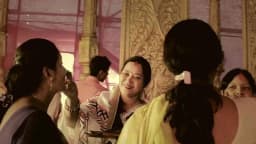
Don't Be Silent! and Grey Kazakhstan's 2019 campaign The Unsilent Bouquet used a social experiment to confront sexual violence stigma affecting one in three

Don't Be Silent Turns Flowers Into a Voice for Kazakhstan's Survivors
The Unsilent Bouquet is a 2019 public interest campaign by Don't Be Silent! and Grey Kazakhstan that uses a documentary social experiment format to confront the stigma surrounding sexual abuse, challenging women across Kazakhstan to break a deeply entrenched cultural silence.
Launched in October 2019, the campaign belongs to the Public Interest category and was created for Don't Be Silent!, a Kazakhstani public foundation that began as a survivor-advocacy movement in July 2016, according to nemolchi.kz. The foundation, registered formally in 2017, was co-founded after Dina Smailova, a well-known Kazakh producer, publicly disclosed her own experience of sexual assault and launched an online flash mob encouraging women to share their stories, as documented by Eca Unwomen. Thousands of women came forward in response, establishing the movement's founding rationale.
The campaign's strategic premise rests on a stark social reality. According to the World Health Organization, one in three women in Kazakhstan has experienced sexual violence. Despite that prevalence, cultural norms rooted in victim-blaming and traditional social pressure keep the overwhelming majority of survivors silent. In Kazakhstan as of 2019, no law specifically protecting women from sexual harassment was in place, a legislative gap documented by State Gov. The campaign's central objective was to disrupt that silence by creating a public-facing moment in which women's voices — suppressed by shame and perceived lack of governmental protection — could finally be heard. The Clapboard Score for this campaign is 64 out of 100, reflecting its creative and social ambition within the constraints of a single direct media asset.
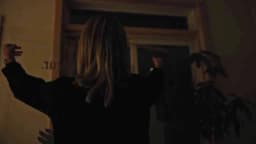
Don't Be Silent! identified silence itself as the primary barrier to addressing sexual violence in Kazakhstan. The strategic insight driving The Unsilent Bouquet is that silence is not merely personal — it is socially enforced through victim-blaming, stigma, and an absence of institutional protection. The campaign sought to externalise that silence, making it visible and therefore challengeable.
The documentary and social experiment format was chosen deliberately. Rather than producing a conventional awareness advertisement, the campaign staged real interactions that could capture unscripted emotional truth, creating material that functioned as both advocacy and evidence. This approach aligns with a broader global shift in public interest communication toward participatory and witness-based formats, a trend observed across campaigns produced by organisations including UNICEF, whose regional work on gender-based violence in Central Asia has consistently demonstrated that lived testimony outperforms abstract statistics in shifting social attitudes, as noted in UNICEF research and programming documentation.
The competitive landscape for public interest communication in Kazakhstan is shaped by the tension between formal government messaging and independent civil society campaigns. Campaigns produced directly by state bodies — which a 2019 Kazakhstani academic study, published via Be Kaznu Kz, found were perceived by respondents as occupying roughly twice the volume of the largest commercial advertiser in their environment — tend toward informational rather than emotional registers. Don't Be Silent!, operating outside that framework, could take a more confrontational creative position. Grey, operating as GForce Grey in the Kazakhstani market, brought international creative infrastructure to a specifically local social problem, a combination that distinguishes The Unsilent Bouquet from purely domestic public service announcements produced in Kazakhstan during the same period.
The Unsilent Bouquet uses the formal conventions of documentary filmmaking and social experimentation to generate an emotionally authentic record of women confronting silence in Kazakhstan. The campaign's single media asset functions as a case film, running approximately two minutes, constructed to move between observational and participatory modes.
Executive Creative Director Yevgeniy Kostylev led the creative work at GForce Grey, with creative team member Yuliya Tushina contributing to the campaign's development. The campaign was submitted to the archive record under Kostylev's editorial direction. The use of a bouquet as the campaign's central object is not incidental. Flowers carry a specific cultural weight in Kazakhstani and broader post-Soviet social contexts — they mark celebrations, gratitude, and public honour. Reframing that object as a vehicle for testimony about sexual abuse creates a deliberate collision between the familiar and the confrontational, a creative strategy designed to lower the psychological threshold for engagement before raising the emotional stakes.
The social experiment structure means the campaign's most powerful creative moments were not scripted. Real women responding to a real situation provide the film's emotional core, which insulates the work against the accusation that it aestheticises suffering. Instead, the aesthetic choices — documentary framing, natural sound, observational camera — serve to authenticate rather than dramatise. This formal decision mirrors techniques employed in internationally recognised gender-based violence campaigns, where the credibility of the recorded moment carries more persuasive force than produced imagery. The campaign's documentary integrity is its primary creative asset, and the choice to foreground unmediated human response over production spectacle reflects a sophisticated understanding of how public interest audiences in Kazakhstan and beyond receive and evaluate advocacy content.
No independently verified third-party performance data for The Unsilent Bouquet — such as reach figures, media coverage metrics, or behavioural outcome measurements — is publicly available beyond the archive record. The campaign's case film registered 456 views on its documented upload, with no recorded likes or comments at the time of archiving. These figures reflect the reach of a single documentary asset in a direct campaign format rather than a mass-media deployment, and they do not represent the campaign's full audience exposure across any activations conducted on the ground in Kazakhstan.
Structurally, the campaign's effectiveness can be assessed through the durability of the challenge it addressed. The legislative gap it implicitly targeted — the absence of specific sexual harassment law in Kazakhstan as of 2019, per state.gov — began to close in subsequent years, as the country's government came under sustained domestic and international pressure, including from UN Women's regional programming documented by eca.unwomen.org. While no causal link between The Unsilent Bouquet and legislative change can be established, the campaign belongs to a body of civil society advocacy work that collectively maintained pressure on these institutions. The Clapboard Score of 64 out of 100 reflects the campaign's genuine creative and social ambition — its use of documentary social experiment format to address entrenched gender-based violence and victim-blaming in Kazakhstan is strategically coherent — while acknowledging that its single-asset, direct-medium execution limits the structural leverage available to measure or amplify its impact at scale.
The Unsilent Bouquet is a 2019 public interest campaign by Don't Be Silent! and Grey Kazakhstan. It uses a documentary social experiment format to confront the stigma surrounding sexual violence against women in Kazakhstan, where according to the World Health Organization one in three women has experienced sexual abuse.
The Unsilent Bouquet was created by GForce Grey for Don't Be Silent!, a Kazakhstani public foundation. Executive Creative Director Yevgeniy Kostylev and creative team member Yuliya Tushina led the work. The campaign launched in October 2019 in Kazakhstan as a direct medium public interest campaign addressing sexual violence and silence.
The campaign addresses sexual violence against women and the cultural silence surrounding it in Kazakhstan. Victim-blaming, traditional social pressure, and a legislative gap — Kazakhstan had no specific sexual harassment law in 2019, per state.gov — discouraged survivors from speaking out, making public advocacy campaigns essential to shifting awareness.
Don't Be Silent!, known as NeMolchi KZ, began as a survivor-advocacy movement in July 2016, according to nemolchi.kz. Dina Smailova, a Kazakh producer, publicly disclosed her own experience of sexual assault and launched an online flash mob. The movement became a registered public foundation in 2017 and has since supported thousands of survivors.
The campaign uses a documentary social experiment format. This approach captures unscripted emotional testimony, generating creative material that functions as both advocacy and evidence. The format was chosen because lived, authentic human response carries greater persuasive force than scripted production, particularly when addressing entrenched stigma around gender-based violence in Kazakhstan.
The Unsilent Bouquet holds a Clapboard Score of 64 out of 100. The score reflects the campaign's coherent strategic use of documentary and social experiment formats to address sexual abuse stigma in Kazakhstan, while acknowledging that its single-asset direct-medium execution limits the structural scale available to amplify its measurable impact.
.webp)
Creative Collaboration Platform: The Backbone of Modern Creative WorkWhat is a creative collaboration platform?Clapboard defines a creative collaboration platform as the operational core for today’s distributed creative teams. This is not a collection of digital collaboration tools stitched together; Clapboard’s system


Understanding the Creative Production MarketplaceWhat is a Creative Production Marketplace?Clapboard defines a creative production marketplace as a structured ecosystem where brands, agencies, and production talent converge to execute video, advertising, and branded content at scale. Unlike the legacy agency or freelanREAD FULL ARTICLE

The Urgent Need for a Creative Production Operating SystemWhy Traditional Creative Production Models Break DownClapboard sees the creative production landscape shifting under pressure. Content velocity is no longer a buzzword—it’s a mandate. Modern advertising demands relentless output across dozens of channels, each wREAD FULL ARTICLE