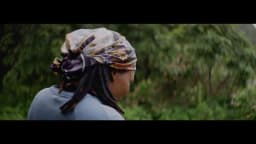
Child Abuse Prevention's 'Future, Voice, Erase It' PSA, created by Offspring in Austin, Texas, reframes community responsibility as the core of abuse reporting

How Offspring Turned Community Silence Into a Child Abuse Prevention Call to Action
"Future, Voice, Erase It" is a 2017 United States public service film campaign created by Austin-based agency Offspring for Child Abuse Prevention, designed to make community members recognise abuse, understand how to report it, and accept a shared civic duty to intervene before harm deepens, according to Fiscal Wa Gov.
Published in April 2017, the campaign comprises three film media assets, each built around a symbolic rather than graphic creative framework, according to Taggs Hhs Gov. Where many public interest campaigns on child safety lean on explicit or distressing imagery to provoke reaction, Offspring chose a different register entirely — representing the consequences of abuse through the abstracted ideas of erased potential and silenced voices, giving the work a quiet, cumulative power. The campaign was associated with the Child Abuse Resource and Education program, known as C.A.R.E., at Dell Children's Medical Center, which provided institutional grounding and credibility to the effort.
In the United States, April is nationally recognised as Child Abuse Prevention Month, and the timing of the campaign's release was deliberate. By launching within that cultural window, Offspring positioned "Future, Voice, Erase It" to reach audiences already primed for public discourse on child welfare, according to Pfsf. The campaign's core argument is not that abuse is someone else's problem to solve, but that every member of a community carries a responsibility to see it, name it, and report it. That repositioning of the bystander — from passive witness to active participant — is the campaign's defining strategic and creative move. The Clapboard Score for this campaign is 61 out of 100, reflecting its meaningful creative ambition and clear public interest purpose within a category where measurable outcomes are rarely disclosed publicly.
Offspring identified a specific and under-addressed gap in public health communication around child abuse in the United States. Most campaigns in the category focus on the victim or the perpetrator; "Future, Voice, Erase It" focuses on the witness. That strategic pivot reflects a well-documented reality in child protection research: according to the National Link Coalition, community recognition and reporting are among the most consequential variables in determining whether a child receives help. By making the community's role visible and central, Offspring addressed the psychological barrier that keeps most adults from acting — not ignorance of abuse, but uncertainty about whether intervention is their place.
The United States context makes this framing especially resonant. Child abuse reporting in the country operates through a mandated reporter system for professionals, but a significant portion of initial disclosures and referrals to child protective services originates from non-mandated community members — neighbours, family friends, and extended relatives. The campaign's association with the C.A.R.E. program at Dell Children's Medical Center in Austin, Texas, anchored it to an institution with direct operational involvement in the US child welfare infrastructure.
In the broader public service advertising landscape, campaigns addressing child welfare compete for attention against work from large national organisations such as Childhelp and the Dave Thomas Foundation, which command substantially greater media budgets and reach. Offspring's approach — favouring symbolic storytelling over scale — represents a deliberate creative counter-strategy, prioritising emotional precision over volume. The decision to work in film rather than static media also aligns with research into public service communication: according to UNICEF, video-format campaigns consistently generate stronger emotional engagement and recall than print equivalents when addressing sensitive social issues, particularly those involving vulnerable populations.
"Future, Voice, Erase It" takes its creative power from abstraction rather than depiction. The campaign's three film assets each approach the subject of child abuse through symbolic storytelling — representing lost futures, erased identities, and suppressed voices as visual and conceptual ideas rather than as scenes of harm. This was not a constraint imposed by platform or audience sensitivities alone; it was a considered artistic position. By refusing to show abuse directly, the work invites the viewer to complete the meaning themselves, which produces a more durable and personal emotional engagement than shock imagery typically achieves.
The conceptual architecture of the campaign rests on three interlinked ideas embedded in its title. "Future" evokes what is taken from a child when abuse goes unaddressed. "Voice" speaks to the silencing that accompanies abuse, both of the child and, implicitly, of the community that fails to speak up. "Erase It" functions simultaneously as a description of what abuse does to a child's potential and as a direct imperative addressed to the viewer — a call to act and remove that harm. Together, the three words construct a complete moral argument in six syllables.
Production credits for "Future, Voice, Erase It" are not publicly documented. What is evident from the work itself is a discipline in visual restraint that suggests experienced direction and a production team comfortable working in the territory where public service communication meets documentary sensibility. The three-asset structure also implies a campaign designed to work across multiple placements and contexts, with each film capable of standing alone while reinforcing the others thematically. The Austin, Texas, base of agency Offspring places the work within a creative market that has developed a distinct voice in purpose-driven advertising over the past decade.
No verified performance data for "Future, Voice, Erase It" is publicly available. This is common for public service campaigns of this scale produced in the United States in 2017, where independent measurement of reach, recall, and behavioural impact was rarely built into the production and distribution process for non-broadcast PSA work.
Structural analysis, however, points to several features that indicate genuine effectiveness potential. The campaign's symbolic approach reduces the risk of audience avoidance — a documented problem in child abuse communication, where graphic or distressing content causes viewers to disengage rather than act. By centring the community member rather than the victim, the work gives its audience a clear and actionable role, which according to research published through the National Centre for Action on Child Sexual Abuse in Australia is one of the most reliable predictors of campaign-driven behavioural intent. While that finding originates outside the United States, the underlying psychology of bystander intervention has been consistently replicated across Western contexts.
The association with the C.A.R.E. program at Dell Children's Medical Center lends the campaign an institutional legitimacy that amplifies perceived credibility — a factor that the research literature at the University of Waikato, as documented by scholars at Onehera Waikato Ac Nz, identifies as central to public persuasion in health communication contexts. The three-film format further demonstrates structural ambition: rather than a single message, Offspring built a narrative ecosystem, allowing the campaign to sustain attention across multiple touchpoints. These design decisions, taken together, suggest a campaign built to create durable attitude shift rather than momentary awareness, which is the more meaningful and difficult objective in public interest advertising.
"Future, Voice, Erase It" is a 2017 United States public service film campaign created by Offspring for Child Abuse Prevention. It comprises three film assets using symbolic storytelling to encourage community members to recognise child abuse, understand their responsibility, and report it through the C.A.R.E. program at Dell Children's Medical Center.
Offspring, an advertising agency based in Austin, Texas, created the campaign. Published in April 2017, the work was developed for Child Abuse Prevention and associated with the Child Abuse Resource and Education program at Dell Children's Medical Center, placing it firmly within the Texas child welfare landscape.
C.A.R.E. stands for Child Abuse Resource and Education. The program, based at Dell Children's Medical Center, provided the institutional foundation for the campaign. This association gave the 2017 PSA credibility within the United States child welfare system and connected its community-focused message to an organisation with direct operational involvement in abuse prevention.
Offspring chose symbolic storytelling to avoid audience avoidance, a documented risk when child abuse campaigns use distressing imagery. By representing erased futures and silenced voices abstractly, the campaign sustains viewer engagement and delivers a clear call to action, making the community member — not the victim or perpetrator — the emotional and strategic centre of the work.
The campaign was published in April 2017 in the United States, coinciding with National Child Abuse Prevention Month. That timing was strategically deliberate, positioning the three-film campaign within a period of heightened public attention to child welfare and maximising the relevance of its community-responsibility message across the US market.
"Future, Voice, Erase It" received a Clapboard Score of 61 out of 100. The score reflects the campaign's meaningful creative ambition and clear public interest purpose. No verified third-party performance metrics are publicly available for this 2017 United States PSA, making structural and conceptual analysis the primary basis for editorial assessment.
.webp)
Creative Collaboration Platform: The Backbone of Modern Creative WorkWhat is a creative collaboration platform?Clapboard defines a creative collaboration platform as the operational core for today’s distributed creative teams. This is not a collection of digital collaboration tools stitched together; Clapboard’s system


Understanding the Creative Production MarketplaceWhat is a Creative Production Marketplace?Clapboard defines a creative production marketplace as a structured ecosystem where brands, agencies, and production talent converge to execute video, advertising, and branded content at scale. Unlike the legacy agency or freelanREAD FULL ARTICLE

The Urgent Need for a Creative Production Operating SystemWhy Traditional Creative Production Models Break DownClapboard sees the creative production landscape shifting under pressure. Content velocity is no longer a buzzword—it’s a mandate. Modern advertising demands relentless output across dozens of channels, each wREAD FULL ARTICLE