Sandy Hook Promise and BBDO New York launched 'The Kids Are Not Alright' in May 2021, a three-film PSA series addressing teen mental health and gun violence

Sandy Hook Promise Reframes Teen Mental Health as a Public Emergency
Sandy Hook Promise's 2021 campaign 'The Kids Are Not Alright,' created by BBDO New York, is a three-film public service series that reframes everyday teenage behaviours — information overload, social withdrawal, and suppressed anger — as recognisable warning signs of mental health crisis and potential violence, directing United States audiences to the organisation's 'Know the Signs' prevention platform.
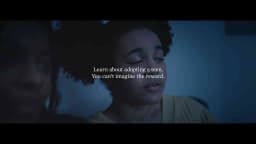
The campaign launched on May 13, 2021, with a media debut on ABC's Good Morning America, according to reporting by The Drum. Three short films — 'How to Overload a Circuit,' 'How to Make a Homemade Bomb,' and 'How to Perform a Disappearing Act' — each run approximately 15 to 30 seconds, per Muse by Clio. The titles deliberately echo the search language of troubled adolescents, borrowing the syntax of how-to queries to surface the emotional states those queries might conceal. Distribution extended across YouTube, Facebook, Instagram, and Twitter, supported by Sandy Hook Promise's grassroots network, as documented by The Drum.
In the United States, the campaign arrived at a moment of acute national concern about adolescent wellbeing. The organisation's mission, as stated on sandyhookpromise.org, is to build a future where children are free from shootings and acts of violence in schools, homes, and communities. 'The Kids Are Not Alright' extends that mission into the domain of teen mental health and suicide prevention, connecting the psychological precursors of violence to the everyday digital pressures of pandemic-era adolescence. The campaign is part of Sandy Hook Promise's broader 'Know the Signs' educational initiative, which trains young people and adults to identify behavioural warning signs before a crisis occurs. The series comprises three media assets and was published in May 2021 in the United States, with the campaign hashtags #AreOurKidsAlright and #KnowTheSigns anchoring its social distribution.
Sandy Hook Promise grounded 'The Kids Are Not Alright' in a specific and well-documented insight: the pandemic had not simply disrupted teenage life but had structurally worsened it. The creative insight, as quoted in Muse by Clio, came directly from BBDO New York Senior Creative Director Peter Alsante: 'It's hard enough being a teenager during normal times, as we all probably remember. When you add the events and circumstances of the past year, it becomes nearly impossible.' That observation — rooted in lived cultural reality rather than proprietary research — shaped every executional choice the team made.
The strategic architecture of the campaign sits within Sandy Hook Promise's 'Know the Signs' platform, which positions gun violence prevention and suicide prevention not as reactive emergency responses but as upstream behavioural recognition. By centring the series on the interior emotional lives of teenagers rather than on the spectacle of violence itself, the organisation and BBDO New York differentiated the work from campaigns by peer organisations such as Everytown for Gun Safety and Moms Demand Action, which have historically foregrounded legislative advocacy and incident-based awareness. Sandy Hook Promise's approach is programme-led: it asks audiences to act before a crisis, not after.
In the United States, nonprofit advertising represented a substantial and growing sector around the time of this campaign's release. U.S. nonprofits spent approximately $5.8 billion on advertising and promotion in 2020, up from $5.7 billion in 2019, according to data drawn from IRS Form 990 filings covering 7,171 organisations. Nonprofit digital advertising spending increased approximately 19 percent in 2020, according to The Connector. Against that backdrop, Sandy Hook Promise's decision to prioritise social-first, short-form film — rather than traditional broadcast placements — reflected both budgetary pragmatism and a precise understanding of where its target audience, teenagers and the adults responsible for them, actually spent their attention. The 'How to Overload a Circuit' film in particular addressed the specific conditions of pandemic-era adolescence: news saturation, remote learning, and algorithmically intensified social comparison.
Jakob Marky directed all three films in 'The Kids Are Not Alright' through production company Sweetshop, according to award documentation cited by The Drum and Ad Age. The production approach is deliberate in its restraint. Each film adopts the visual grammar of instructional or documentary content — a register that initially feels neutral, even mundane — before redirecting that familiarity toward emotional discomfort. The titles themselves perform a kind of conceptual misdirection: 'How to Overload a Circuit,' 'How to Make a Homemade Bomb,' and 'How to Perform a Disappearing Act' sound, in isolation, like search results for practical tasks. The reveal in each case is that the subject is a teenager, and the 'how-to' describes a psychological state rather than a physical one.
Peter Alsante, SVP and Senior Creative Director at BBDO New York, served as the creative lead on the project alongside David Lubars, Chief Creative Officer Worldwide at BBDO, as credited across Muse by Clio and campaign documentation. The creative team's structural decision — to use the syntax of internet search queries as both title and concept — gives the films their most durable quality. Each film functions as a standalone object, short enough to stop a scroll, but the three together form a coherent argument: that the warning signs of teen mental health crisis are hiding in plain sight, dressed in the ordinary language of curiosity and boredom.
The films were distributed across YouTube, Facebook, Instagram, and Twitter, per The Drum, with the national launch anchored by the Good Morning America debut on May 13, 2021. Sandy Hook Promise's grassroots network amplified distribution organically, extending the campaign's reach into the communities the organisation serves across the United States. The production's economy — short runtime, social-native format, documentary-adjacent aesthetic — is itself a strategic statement about where and how teen mental health conversations now happen.
Sandy Hook Promise's 'The Kids Are Not Alright' earned the Best Public Awareness award at the PRWeek Purpose Awards 2021, according to PRWeek. That recognition placed the campaign among the most formally validated public service efforts of the year in the United States. The Clapboard Score for the campaign is 79 out of 100, reflecting strong creative distinctiveness and cultural relevance against the platform's evaluative framework.
On measurable audience engagement, the campaign generated more than 10,000 unique visitors to the Sandy Hook Promise landing page during its first week of launch, according to PRWeek. The Good Morning America debut on May 13, 2021, provided a national broadcast launchpad that few nonprofit campaigns secure, and the subsequent social distribution across YouTube, Facebook, Instagram, and Twitter extended that reach into the digital environments where the campaign's core audience — teenagers and parents in the United States — actively exists, as documented by The Drum.
No independently audited figures for total video views or earned media value have been publicly released by Sandy Hook Promise or BBDO New York beyond these reported metrics. What the available data does confirm is structural effectiveness: a public service campaign that secured national broadcast placement, generated a measurable spike in direct site traffic within seven days, and won category-level recognition from a major industry awards body had achieved its primary communications objectives. Nicole Hockley, Co-founder and Managing Director of Sandy Hook Promise, framed the campaign's intent precisely in a Sandy Hook Promise press release: 'We may think kids are resilient, but the truth is — the kids are not alright.' That statement, used as both title and thesis, gave the campaign a quotable, media-ready hook that extended its reach beyond paid placement.
'The Kids Are Not Alright' is a 2021 three-film PSA series created by BBDO New York for Sandy Hook Promise. Released in May 2021 in the United States, it addresses teen mental health, suicide prevention, and gun violence prevention by reframing everyday teenage behaviours as recognisable warning signs, directing audiences to Sandy Hook Promise's 'Know the Signs' platform.
The three films are titled 'How to Overload a Circuit,' 'How to Make a Homemade Bomb,' and 'How to Perform a Disappearing Act.' Each title mimics internet search query language to describe a teenager's emotional state rather than a literal action, according to campaign documentation reported by Muse by Clio and The Drum.
Jakob Marky directed all three films through production company Sweetshop. BBDO New York's Peter Alsante served as Senior Creative Director and David Lubars as Chief Creative Officer Worldwide, according to Muse by Clio and award documentation cited by The Drum and Ad Age.
The campaign won the Best Public Awareness award at the PRWeek Purpose Awards 2021, according to PRWeek. It also earned a Clapboard Score of 79 out of 100. The campaign launched nationally on ABC's Good Morning America on May 13, 2021, according to The Drum.
The campaign generated more than 10,000 unique visitors to the Sandy Hook Promise landing page in its first week, according to PRWeek. It secured a national broadcast debut on Good Morning America and distributed across YouTube, Facebook, Instagram, and Twitter, supported by Sandy Hook Promise's grassroots network across the United States.
'How to Overload a Circuit' addresses teenage information overload from news, social media, and online learning as a mental health warning sign. It is part of Sandy Hook Promise's 'Know the Signs' prevention platform, which trains people across the United States to identify behavioural precursors to violence and suicide before a crisis occurs.
.webp)
Creative Collaboration Platform: The Backbone of Modern Creative WorkWhat is a creative collaboration platform?Clapboard defines a creative collaboration platform as the operational core for today’s distributed creative teams. This is not a collection of digital collaboration tools stitched together; Clapboard’s system


Understanding the Creative Production MarketplaceWhat is a Creative Production Marketplace?Clapboard defines a creative production marketplace as a structured ecosystem where brands, agencies, and production talent converge to execute video, advertising, and branded content at scale. Unlike the legacy agency or freelanREAD FULL ARTICLE

The Urgent Need for a Creative Production Operating SystemWhy Traditional Creative Production Models Break DownClapboard sees the creative production landscape shifting under pressure. Content velocity is no longer a buzzword—it’s a mandate. Modern advertising demands relentless output across dozens of channels, each wREAD FULL ARTICLE