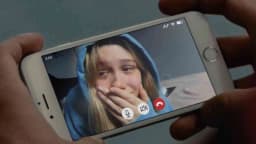
Millie Bobby Brown led UNICEF's Go Blue campaign on World Children's Day 2018, driving nearly 16 million views and 140,000 petition signatures across 178

Millie Bobby Brown Takes UNICEF Go Blue Global on World Children's Day
UNICEF's "Go Blue on World Children's Day" is a 2018 public service campaign in which then-14-year-old actor and newly appointed UNICEF Goodwill Ambassador Millie Bobby Brown led a global activation on 20 November 2018, calling on individuals, organisations, and landmarks worldwide to display the colour blue in solidarity with children's rights.
The campaign centres on a film asset produced for the United States market and distributed internationally, establishing Brown as the human anchor of UNICEF's annual World Children's Day observance. Her appointment, as reported by unicef.org, made her UNICEF's youngest-ever Goodwill Ambassador, a distinction that gave the activation immediate cultural currency among younger audiences and the broader entertainment press. The role was not honorary in the conventional sense: Brown served as on-camera spokesperson, petition champion, and social media mobiliser across the campaign's full arc.
UNICEF designed the activation around a single unifying visual code — the colour blue — asking participants to wear blue clothing, light blue on public buildings, or otherwise incorporate the colour into their daily lives on 20 November. This mechanic gave the campaign an accessible, shareable entry point regardless of geography or economic circumstance, allowing participation to scale from individual social media posts to institutional landmark illuminations. According to unicefusa.org, more than 50 organisations globally joined the effort, including FC Barcelona, the All Blacks, Beko, Qantas, Amadeus, Johnson and Johnson, and the LEGO Group, demonstrating the breadth of institutional commitment the campaign attracted.
In the United States, the campaign was classified as a public interest film, and the core media asset ran alongside organic social amplification driven by Brown's own platforms and those of her celebrity co-participants. The campaign carries a Clapboard Score of 71 out of 100, reflecting strong conceptual clarity and high-profile talent deployment set against the absence of independently verified production or agency credits.
 ARCHIVE
UNICEF anchors World Children's Day to 20 November, the anniversary of the UN Convention on the Rights of the Child. The date provides a built-in editorial hook that competing children's welfare organisations — most notably Save the Children and the Children's Defense Fund — do not own with the same institutional authority, giving UNICEF a structural advantage in annual media planning cycles.
The strategic decision to appoint Millie Bobby Brown as the campaign's lead reflected a deliberate pivot toward youth culture. By 2018, Brown's portrayal of Eleven in Netflix's Stranger Things had made her one of the most recognisable teenage actors on the planet, with a social media following that skewed directly toward the demographic UNICEF sought to activate: young people capable of peer-to-peer amplification. The appointment was not merely symbolic. As reported by unicefusa.org, Brown actively solicited petition signatures, appeared in the campaign film, and used her own channels to drive the Go Blue visual mechanic.
UNICEF reinforced the celebrity strategy with an unusually broad coalition of corporate and institutional partners. According to unicefusa.org, Johnson and Johnson committed ten million US dollars in support of the activation, a funding commitment that underlines the campaign's commercial partnership infrastructure alongside its advocacy mission. The coalition — spanning sport, aviation, technology, and consumer goods — enabled the blue visual device to appear across genuinely diverse contexts, from football stadiums to airline liveries, multiplying earned media without proportional paid media spend.
In the United States, where digital advertising grew approximately sixteen percent year-over-year in 2018 according to reporting attributable to industry analysts cited by News Un, UNICEF's approach of anchoring a film asset to organic social amplification was well-calibrated to the media environment. The campaign recognised that a single culturally credible figure, deployed across a unified visual mechanic on a specific calendar date, could generate attention disproportionate to its media budget.
The Go Blue campaign film assembles an ensemble of recognisable public figures around Millie Bobby Brown as the narrative anchor. According to unicefusa.org and news.un.org, the film featured Orlando Bloom, Liam Neeson, Lilly Singh, Dua Lipa, and the Blue Man Group alongside Brown, creating a roster that spanned film, music, digital media, and performance art.
The creative approach favours direct address and emotional sincerity over dramatic reconstruction or data visualisation. Brown speaks to camera with the directness that characterised her public profile at the time, and her co-participants reinforce the Go Blue mechanic through their own presence and vocal endorsement rather than through scripted narrative. The film functions less as a documentary and more as a collective declaration, using the colour blue as both literal prop and symbolic throughline. Millie Bobby Brown articulated the campaign's tone precisely, as quoted by unicefusa.org: "World Children's Day is a fun day with a serious message. It is a day where all children are encouraged to speak out about what matters to them, like education, safe spaces to learn and play, and positive environments. By going blue for UNICEF on this day, we are demanding the world provide a brighter future for kids."
The decision to incorporate the Blue Man Group is among the film's more distinctive creative choices. Their presence introduces a degree of visual wit that prevents the film from settling into the register of conventional public service advertising. Combined with Dua Lipa's music industry credibility and Liam Neeson's established humanitarian association, the ensemble communicates cross-generational reach with economy. Production credits for the Go Blue campaign film are not publicly documented, and no agency has been attributed to the work in publicly available records. The campaign was submitted as a film medium execution containing one media asset, consistent with a single hero film distribution model.
No independently verified third-party performance audit for the Go Blue campaign is publicly available. The figures in circulation originate from UNICEF's own reporting channels, and no major awards body — including Cannes Lions, the Effie Awards, the One Show, D&AD, the Clio Awards, the Webby Awards, or WARC — lists the campaign among its recognised entries, as confirmed by a review of those organisations' public databases.
Within those parameters, UNICEF's own reported figures, as cited by unicefusa.org, indicate the campaign film generated nearly sixteen million online views, that more than one hundred and forty thousand people signed UNICEF's global petition for children's rights, and that Go Blue activities took place in one hundred and seventy-eight countries. Each of these figures, taken individually, represents a meaningful outcome for a public service campaign built primarily on earned media and institutional partnership rather than paid distribution at scale.
Structurally, the campaign's effectiveness rests on three reinforcing mechanisms. First, the specificity of 20 November as a calendar anchor concentrates attention in a single news cycle rather than diffusing it across a campaign flight. Second, the blue visual device generates user-created content that extends the campaign's footprint without additional production cost. Third, Millie Bobby Brown's appointment as UNICEF's youngest-ever Goodwill Ambassador, as reported by unicef.org, ensured that the campaign attracted entertainment press coverage that conventional public service advertising rarely commands. Together, these elements explain how the campaign achieved broad reported reach in the United States and across one hundred and seventy-eight countries without a documented media spend that would support those numbers through paid channels alone.
UNICEF's Go Blue campaign launched on 20 November 2018 for World Children's Day. It invited individuals and organisations worldwide to display the colour blue in solidarity with children's rights. In the United States and across 178 countries, the campaign was anchored by a film featuring Millie Bobby Brown as UNICEF's newly appointed Goodwill Ambassador.
Millie Bobby Brown was appointed UNICEF's youngest-ever Goodwill Ambassador in 2018. Her global profile from Stranger Things and her teenage audience made her a credible peer voice for children's rights. As reported by unicefusa.org, she actively drove petition signatures and on-camera advocacy rather than serving in a purely honorary capacity.
The Go Blue film featured Orlando Bloom, Liam Neeson, Lilly Singh, Dua Lipa, and the Blue Man Group alongside Millie Bobby Brown. According to unicefusa.org and news.un.org, this ensemble spanned film, music, digital media, and performance art, giving the campaign cross-generational reach within a single hero film asset.
The Go Blue campaign film generated nearly 16 million online views, according to unicefusa.org. More than 140,000 people signed UNICEF's global petition for children's rights, and activities associated with the World Children's Day activation took place across 178 countries, as reported by unicefusa.org.
More than 50 organisations supported the Go Blue activation globally, according to unicefusa.org. Partners included FC Barcelona, the All Blacks, Beko, Qantas, Amadeus, the LEGO Group, and Johnson and Johnson, which committed ten million US dollars in support — demonstrating both the campaign's institutional breadth and its corporate partnership infrastructure.
No awards for the Go Blue campaign appear in the public databases of Cannes Lions, the Effie Awards, the One Show, D&AD, the Clio Awards, the Webby Awards, or WARC. The campaign's Clapboard Score of 71 out of 100 reflects strong conceptual clarity and high-profile talent alongside the absence of documented agency credits.
.webp)
Creative Collaboration Platform: The Backbone of Modern Creative WorkWhat is a creative collaboration platform?Clapboard defines a creative collaboration platform as the operational core for today’s distributed creative teams. This is not a collection of digital collaboration tools stitched together; Clapboard’s system


Understanding the Creative Production MarketplaceWhat is a Creative Production Marketplace?Clapboard defines a creative production marketplace as a structured ecosystem where brands, agencies, and production talent converge to execute video, advertising, and branded content at scale. Unlike the legacy agency or freelanREAD FULL ARTICLE

The Urgent Need for a Creative Production Operating SystemWhy Traditional Creative Production Models Break DownClapboard sees the creative production landscape shifting under pressure. Content velocity is no longer a buzzword—it’s a mandate. Modern advertising demands relentless output across dozens of channels, each wREAD FULL ARTICLE