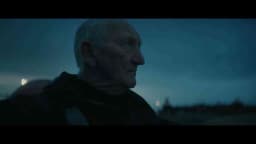
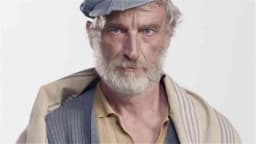
SOS Children's Villages and Dziadek Do Orzechow captured a child's first Christmas in a 2016 Poland public interest film that uses documentary realism to drive

SOS Children's Villages Puts a Child's First Christmas on Film
"First Christmas" is a 2016 public interest film created in Poland by agency Dziadek Do Orzechow for SOS Children's Villages, capturing the unscripted emotional reaction of a child experiencing the Christmas holiday for the first time, using documentary-style filmmaking to build empathy and awareness around children in institutional care, according to Soschildrensvillages Ca.
Published in November 2016, the campaign arrived as Polish audiences were beginning the seasonal period in which charitable giving and holiday storytelling converge most powerfully. SOS Children's Villages, the international nonprofit organisation that provides family-based care for children who have lost parental care or are at risk of losing it, used the film format to anchor an emotional truth at the centre of its public interest work: that something as ordinary as Christmas morning can be an entirely new experience for a child raised outside a family environment. The campaign comprises a single media asset, a disciplined choice that concentrates creative weight into one sustained viewing experience rather than diffusing it across a broader content architecture.
Kraków-based agency Dziadek Do Orzechow developed the concept through scenario writers Albert Stęclik and Tomasz Gębala, with Gębala also serving as art director, according to Sos-Childrensvillages. Production was handled by Propeller Film. In the Polish public interest advertising landscape, where emotionally direct seasonal films have become a recognised creative convention, "First Christmas" pursued authenticity over sentimentality, allowing observed behaviour rather than scripted performance to carry its communicative burden. The campaign operates firmly within the documentary and social experiment tradition, a lineage that by 2016 had demonstrated consistent effectiveness in driving audience engagement with charitable causes across European markets, according to Image Savethechildren. In Poland, where SOS Children's Villages has maintained a long-term organisational presence, the film spoke to a domestic audience already acquainted with the brand's mission but potentially underexposed to the lived reality behind it.
 ARCHIVE
SOS Children's Villages occupies a distinctive position in the Polish nonprofit sector, advocating specifically for children without adequate parental care rather than addressing poverty or disaster relief in broad terms. This specificity shapes creative strategy: the organisation's messaging must make an invisible population visible, and must do so within a media environment where holiday advertising competes fiercely for emotional attention.
The strategic logic behind "First Christmas" rests on a well-established insight in public interest communication: that abstract statistics about vulnerable children generate far less empathic response than a single, witnessed human moment. This principle, sometimes called the identifiable victim effect in behavioural economics literature, underpins the film's social experiment structure. Rather than asserting need through narration or graphic imagery, Dziadek Do Orzechow constructed a situation in which genuine first-time wonder could be observed and recorded, allowing audiences to reach their own emotional conclusions.
In Poland, the charitable giving environment in 2016 was shaped significantly by the country's percentage-of-tax-donation mechanism, which allows taxpayers to direct one percent of their income tax to registered public benefit organisations, according to reporting by Biznes Newseria Pl. This system creates a year-round fundraising context but concentrates public attention on nonprofit causes during periods of heightened civic and seasonal awareness, making a November film release a strategically sound placement. SOS Children's Villages competed for audience attention and donor consideration against other well-resourced international nonprofits operating in Poland, including UNICEF Poland and Save the Children Poland, both of which have produced seasonal awareness campaigns in the Polish market. Against this competitive backdrop, the decision to produce a single, craft-driven film rather than a multi-asset campaign reflects a commitment to depth of emotional impact over breadth of media presence.
Propeller Film produced "First Christmas" under the creative direction of the Dziadek Do Orzechow team, with scenario writers Albert Stęclik and Tomasz Gębala shaping the narrative architecture and Tomasz Gębala leading art direction. The production approach is rooted in documentary convention: minimal intervention in the subject's behaviour, camera work that prioritises intimacy over spectacle, and an editorial sensibility that trusts unmediated reaction to carry emotional weight.
The social experiment format, as a production methodology, requires significant pre-production rigour precisely because it foregoes scripted performance. The filmmakers must design a situation, control environmental variables, and then withdraw creative control at the moment the camera rolls. For "First Christmas," that situation is the Christmas experience itself, an event with its own culturally legible visual and emotional grammar in Poland and across the broader Central European context. The choice to present this experience to a child for whom it is genuinely new transforms a familiar cultural ritual into something seen afresh, which is precisely the perceptual shift the film asks of its audience.
Art direction by Tomasz Gębala ensures that the visual environment of the film reads as warmly domestic and authentically Polish rather than generically festive, grounding the emotional content in a specific cultural reality rather than an abstracted holiday aesthetic. The single-asset approach reinforces the craft argument: every production decision is concentrated into one film, which must sustain attention, build emotional momentum, and deliver a clear organisational message within a continuous viewing experience. This is a structurally demanding brief, and the documentary mode is well suited to meeting it, because real behaviour observed with skill generates a quality of attention that polished narrative production often cannot replicate in the public interest category.
No verified performance data for "First Christmas" is publicly available. No sales lift, donation increase, fundraising total, or audience reach figure has been attributed to the campaign in trade press or organisational reporting reviewed for this analysis. No awards recognition for the campaign has been confirmed at Cannes Lions, the Effie Awards, The One Show, D&AD, Clio Awards, Webby Awards, or WARC Awards. No trade press reviews were located in Campaign, Ad Age, Adweek, The Drum, or Contagious.
Structural analysis of the campaign nonetheless supports a credible case for communicative effectiveness. The single-film format demands that creative execution carry the entire persuasive load, and the documentary social experiment approach is demonstrably well matched to the public interest category, where earned emotional engagement is the primary mechanism of action. The November 2016 release timing in Poland aligns with the period of maximum audience receptivity to charitable and seasonal messaging. The specificity of the scenario — a child's genuinely first Christmas — creates an immediately legible emotional premise that requires no explanatory scaffolding and travels well across audience segments.
The campaign's Clapboard Score of 58 out of 100 reflects both the creative integrity of the approach and the absence of verifiable impact data or significant awards recognition. The score positions "First Christmas" as a competent and emotionally grounded piece of public interest filmmaking that demonstrates strategic coherence and craft discipline, while acknowledging the limitations imposed by limited documented reach and the absence of measurable outcomes. For SOS Children's Villages in Poland, the film represents a credible contribution to long-term brand empathy building, even where short-term campaign metrics remain unconfirmed.
"First Christmas" is a 2016 public interest film produced in Poland for SOS Children's Villages by Kraków agency Dziadek Do Orzechow. It captures a child experiencing Christmas for the first time using a documentary social experiment format, comprising a single film asset designed to build empathy for children in institutional care.
Dziadek Do Orzechow, a Kraków-based agency, created the campaign. Scenario writers Albert Stęclik and Tomasz Gębala developed the concept, with Gębala also serving as art director. Production was handled by Propeller Film. The campaign was published in November 2016 for SOS Children's Villages in Poland.
The film uses a documentary social experiment approach, observing a child's genuine first-time reaction to Christmas rather than relying on scripted performance. This format prioritises unmediated emotional authenticity, a strategy well established in European public interest advertising for generating audience empathy with vulnerable children.
No awards recognition for "First Christmas" has been confirmed. No record of recognition at Cannes Lions, the Effie Awards, D&AD, The One Show, Clio Awards, Webby Awards, or WARC Awards has been located for this campaign, according to Clapboard's archive research covering the 2016 Polish public interest category.
"First Christmas" holds a Clapboard Score of 58 out of 100. The score reflects the campaign's creative and strategic coherence as a documentary public interest film, balanced against the absence of verified performance data, measurable audience reach, and confirmed awards recognition in the Polish or international advertising press.
"First Christmas" was not a direct continuation of earlier SOS Children's Villages campaigns in Poland. Previous work included a 2013 campaign by Ogilvy and Mather Warsaw and a separate 2013 film by Studio FullGlass Warsaw. Dziadek Do Orzechow introduced a documentary social experiment approach distinct from those earlier creative platforms.
.webp)
Creative Collaboration Platform: The Backbone of Modern Creative WorkWhat is a creative collaboration platform?Clapboard defines a creative collaboration platform as the operational core for today’s distributed creative teams. This is not a collection of digital collaboration tools stitched together; Clapboard’s system


Understanding the Creative Production MarketplaceWhat is a Creative Production Marketplace?Clapboard defines a creative production marketplace as a structured ecosystem where brands, agencies, and production talent converge to execute video, advertising, and branded content at scale. Unlike the legacy agency or freelanREAD FULL ARTICLE

The Urgent Need for a Creative Production Operating SystemWhy Traditional Creative Production Models Break DownClapboard sees the creative production landscape shifting under pressure. Content velocity is no longer a buzzword—it’s a mandate. Modern advertising demands relentless output across dozens of channels, each wREAD FULL ARTICLE