 ARCHIVE
AARP and alma Turn a Single Spoon Into a Caregiver Advocacy Film
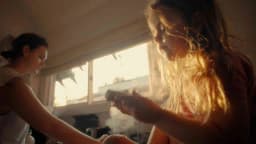
"Spoon" is a 2015 public service film created for AARP by Miami-based agency alma, directed by Esteban Sapir and produced by Cortez Brothers, using a social experiment documentary format to surface the emotional and physical toll of family caregiving in the United States.
Published in April 2015, the film operates as a single-asset film campaign within the broader AARP Caregiver Assistance initiative — a pro-bono effort that alma and AARP had been running jointly since fall 2012, according to reporting archived at multivu.com. The campaign's ambition is straightforward: to make the invisible labour of unpaid family caregivers visible to a general American audience that largely fails to recognise caregiving as a public health and social equity issue. "Spoon" pursues that ambition not through statistics or appeals to policy, but through observed human behaviour, letting real people respond to a simple, loaded domestic object in ways that reveal the depth of their daily burden.
In the United States, family caregiving affects tens of millions of households. The AARP Caregiver Assistance campaign, of which "Spoon" forms a key creative chapter, generated more than 15 million visits to AARP's caregiving website and drove a reported $72.4 million in donated media by 2015, according to multivu.com. Those numbers frame the stakes for a film that was never designed to sell a product but to shift a perception. The campaign sits squarely in the Public Interest category, and "Spoon" reflects the genre at its most restrained: no narrator, no title cards explaining what viewers should feel, and no resolution that lets the audience off the hook. Alma's creative team, led by Chief Creative Officer Luis Miguel Messianu and Executive Creative Director Alvar Suñol, built a piece of work that earns its place at the intersection of documentary craft and public service advertising. Clapboard Score: 63/100.
ARCHIVEAlma grounded the "Spoon" campaign in a strategic insight about recognition failure. The core problem the agency identified, per clapboard.com's editorial record, is not that Americans lack compassion for caregivers but that they lack the perceptual framework to see caregiving as a distinct, exhausting, and structurally unsupported role. Strategic planning on the campaign was led by Marta Insua and Virginia Reyes, whose approach leaned into behavioural observation as a tool for building that framework in real time, on screen.
The social experiment format was a deliberate strategic choice. Rather than asking audiences to accept an argument about caregiver hardship, the film puts them in the position of witnesses to a scenario that makes the argument self-evident. This positions "Spoon" in a lineage of PSA filmmaking that treats documentary truth as more persuasive than scripted advocacy — a tradition that organisations such as the Ad Council have long championed in the United States. The Ad Council was a formal partner in the original 2012 Caregiver Assistance campaign launch, according to multivu.com, lending institutional credibility to the initiative from the outset.
The competitive landscape for attention in the public interest space in 2015 was significant. Campaigns from organisations including the American Red Cross and the National Alliance on Mental Illness were competing for the same donated media inventory and the same audience goodwill. Against that backdrop, alma's decision to anchor "Spoon" in unscripted human response rather than polished narrative was both a creative and a strategic differentiator. In the United States, public service advertising has historically relied on emotional appeals built around clear calls to action; "Spoon" instead chose to create a moment of recognition, trusting that awareness itself was the conversion event the campaign needed to drive.
Esteban Sapir directed "Spoon" for Cortez Brothers, bringing a documentary sensibility to a single-asset film that relies entirely on the authenticity of its subjects' reactions. Sapir's approach treats the camera as an observational instrument rather than a framing device, allowing the film's emotional weight to accumulate through behaviour rather than through compositional signalling or scored sentiment.
The production's sound design and mix were handled by Vapor Post, according to clapboard.com. In a film structured around silence, hesitation, and the small physical gestures of people recalling exhaustion, sound design is not a supporting element — it is the architecture. Vapor Post's work on "Spoon" operates in the register of restraint, reinforcing the documentary register that Sapir established on set and ensuring that the film's emotional crescendos arrive through human voice and ambient texture rather than through music.
The agency-side creative team at alma included Creative Director Juan Diego Guzmán working under Executive Creative Director Alvar Suñol and Chief Creative Officer Luis Miguel Messianu. Account management was handled by Carola Chaurero. The production company, Cortez Brothers, brought the film together under conditions that required real participants to engage authentically with the campaign's central conceit — a deceptively simple object used to unlock complex emotional testimony. According to produ.com's production records, the collaboration between alma and Cortez Brothers on this project reflects a long-standing working relationship within the US Hispanic and general market advertising ecosystem. Production credits for the camera department and additional post-production personnel are not publicly documented beyond the Vapor Post attribution.
"Spoon" accumulated a notable festival record for a single-asset PSA. The film was shortlisted at the 2015 Cannes Lions in Film, according to records cited by clapboard.com — a benchmark achievement for public service work competing against commercially funded productions. It won Silver at the 2015 Círculo Creativo USA Idea Awards in the Film category covering commercial public services, public health and safety, public awareness, and fundraising, donations and appeals, according to circulocreativo.org. The New York Festivals World's Best Advertising 2015 listed the film as a finalist in Film under Commercial and Professional Public Services, according to ana.net. The film also received an Imagen Awards nomination in 2015, according to clapboard.com's archive.
No independently verified audience reach or conversion metrics specific to the "Spoon" film itself are publicly available beyond the broader Caregiver Assistance campaign figures. The campaign-level data — $72.4 million in donated media and more than 15 million website visits by 2015, according to multivu.com — provides the performance envelope within which "Spoon" operated, but attributing a precise share of those results to this single film is not possible from available public records.
Structurally, the film's effectiveness rests on its capacity to generate recognition in audiences who may not self-identify as caregivers but who see their own experience reflected in the participants on screen. That mechanism — recognition before persuasion — is what the festival community consistently rewarded, and it is what gives "Spoon" lasting relevance as a model for public interest filmmaking in the United States.
"Spoon" is a 2015 public service film created for AARP by alma. It uses a social experiment documentary format to reveal the emotional burden of family caregiving in the United States. Directed by Esteban Sapir and produced by Cortez Brothers, it forms part of the broader AARP Caregiver Assistance initiative launched in 2012.
Esteban Sapir directed "Spoon" for production company Cortez Brothers. The film was created by alma, with Chief Creative Officer Luis Miguel Messianu and Executive Creative Director Alvar Suñol leading the agency team. Sound design and mixing were handled by Vapor Post, according to clapboard.com.
"Spoon" was shortlisted at the 2015 Cannes Lions in Film, according to clapboard.com. It won Silver at the 2015 Círculo Creativo USA Idea Awards in the public services and public health Film category, according to circulocreativo.org. It was also a New York Festivals finalist, according to ana.net.
"Spoon" is one creative chapter within the AARP Caregiver Assistance campaign, which alma and the Ad Council launched pro bono in fall 2012, according to multivu.com. By 2015, that broader campaign had generated $72.4 million in donated media and more than 15 million visits to AARP's caregiving website, according to multivu.com.
Alma's strategic planners Marta Insua and Virginia Reyes identified that American audiences lacked a perceptual framework for recognising caregiving as a distinct burden. The social experiment format lets real participants' unscripted reactions carry the argument, treating observed human behaviour as more persuasive than scripted advocacy in the United States public interest space.
The AARP "Spoon" campaign holds a Clapboard Score of 63 out of 100. The score reflects the film's restraint and documentary craft alongside its single-asset scope. Festival recognition at Cannes Lions, Círculo Creativo USA, and the New York Festivals in 2015 supports its standing as an effective public service film.
.webp)
Creative Collaboration Platform: The Backbone of Modern Creative WorkWhat is a creative collaboration platform?Clapboard defines a creative collaboration platform as the operational core for today’s distributed creative teams. This is not a collection of digital collaboration tools stitched together; Clapboard’s system


Understanding the Creative Production MarketplaceWhat is a Creative Production Marketplace?Clapboard defines a creative production marketplace as a structured ecosystem where brands, agencies, and production talent converge to execute video, advertising, and branded content at scale. Unlike the legacy agency or freelanREAD FULL ARTICLE

The Urgent Need for a Creative Production Operating SystemWhy Traditional Creative Production Models Break DownClapboard sees the creative production landscape shifting under pressure. Content velocity is no longer a buzzword—it’s a mandate. Modern advertising demands relentless output across dozens of channels, each wREAD FULL ARTICLE