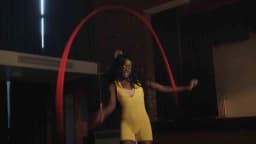
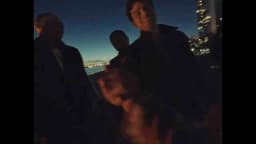
California Department of Public Health's 'Facts Fight Fentanyl' campaign, created by Duncan Channon in 2024, uses documentary-style social experiment

California Department of Public Health Puts Facts at the Center of Fentanyl Prevention
"Facts Fight Fentanyl" is a 2024 integrated public service campaign created by Duncan Channon for the California Department of Public Health, using documentary and social experiment filmmaking to inform Californians aged 16 to 39 about fentanyl contamination risks in social settings, centering peer responsibility over fear as its primary persuasive strategy.
The campaign launched statewide on August 29, 2024, as part of a broader opioid education effort operating across California. Its flagship execution, titled "Party's Over," poses the direct question: "Did fentanyl crash the party?" That framing is deliberate. Rather than leading with statistics or clinical warnings, the creative positions awareness itself as protective action, inviting young viewers to look out for their friends by getting informed. The campaign spans film, social media, television, radio, billboards, and bus stops, meeting its audience where they spend their time rather than redirecting them toward institutional channels.
In the United States, the fentanyl crisis has disproportionately affected younger populations, making youth-targeted public health communication an urgent policy priority. The California Department of Public Health commissioned this campaign as part of a 40-million-dollar opioid education investment, according to MediaPost, with Duncan Channon appointed as lead creative and media agency. Partner agencies Acento and APartnership extended the campaign's reach into Latino, Black, and AANHPI communities specifically, with materials produced in English, Spanish, Chinese, and Korean, according to duncanchannon.com. That multilingual, multicultural architecture reflects both the demographic complexity of California and the documented disparity in overdose impact across different communities. The campaign was planned to run through June 2025, according to duncanchannon.com, giving the creative work sustained presence across one of the most critical public health windows of the decade.
Duncan Channon grounded the "Facts Fight Fentanyl" strategy in a single insight: young people respond to peer accountability more reliably than to institutional warnings. That strategic foundation separates this campaign from the conventional fear-based approach that has defined much of anti-drug public service advertising in the United States over the past four decades.
The campaign targets Californians aged 16 to 39, a demographic that research consistently identifies as most likely to encounter fentanyl in recreational settings. Rather than positioning the California Department of Public Health as an authority issuing directives downward, the creative frames friends as the most credible messengers in a moment of risk. The social experiment genre amplifies this dynamic, creating content that appears observational and unscripted, which tends to register as more trustworthy with younger audiences who are attuned to the conventions of documentary storytelling.
The competitive landscape for fentanyl-awareness communication in the United States grew considerably during 2024. The White House developed a national fentanyl and naloxone campaign through the Ad Council, using social media, influencers, and digital billboards to reach young people, according to Whitehouse Gov. The Drug Enforcement Administration expanded its "One Pill Can Kill" program through a partnership with the NFL Alumni Health Association, according to Justice Gov. Against those federally funded efforts, the California Department of Public Health's campaign distinguishes itself through its cultural specificity — targeting Latino, Black, and AANHPI communities through dedicated agency partners — and through its choice to use the social experiment format rather than straightforward public announcement or influencer endorsement. Duncan Channon's track record developing public service messaging for the state of California, as noted by Creative Director Jessea Hankins in an interview with LBBOnline in August 2024, gave the agency the institutional knowledge to build a strategy calibrated for California's particular population and the fentanyl exposure patterns most relevant to it.
The "Party's Over" film positions itself inside the social experiment genre, a creative mode that trades the polished remove of traditional public service advertising for the texture of lived experience. The execution asks viewers to witness rather than simply receive information, a structural choice that generates emotional investment without resorting to graphic imagery or melodrama.
Jessea Hankins, Creative Director at Duncan Channon, stated in an interview with LBBOnline on August 29, 2024, that every creative decision on "Facts Fight Fentanyl" was passed through two filters: whether the work delivers information that will save lives, and whether it does so as compellingly and unforgettably as possible. That dual mandate shaped the aesthetic approach. The documentary register allows the campaign to maintain informational credibility — it is, at its core, a public health message — while using the grammar of social observation to sustain attention and generate the kind of peer-to-peer sharing that broadcast placements alone cannot achieve.
The integrated media build reinforces the film's intent. Television, social media, radio, billboards, and bus stop placements each carry the campaign's core question — "Did fentanyl crash the party?" — into different contexts of daily life in California, according to duncanchannon.com. The multilingual production in English, Spanish, Chinese, and Korean is not a translation exercise but a creative commitment to reaching distinct communities with culturally resonant executions, supported by the specialist capabilities of partner agencies Acento and APartnership. Duncan Channon issued the statement, reported by MediaPost in September 2024, that "the power to make a difference lies in understanding the fact" — a declaration that positions factual clarity as both the campaign's subject matter and its primary creative tool. Production credits beyond Jessea Hankins's creative direction are not publicly documented in available sources.
 ARCHIVE
The "Party's Over" film recorded over 3.3 million views, according to Clapboard's campaign record, a figure that indicates meaningful organic and paid distribution for a public service film operating outside the entertainment economy. For a state health agency campaign in the United States, that volume of engagement reflects the effectiveness of placing documentary-style content on social platforms where the target demographic — Californians aged 16 to 39 — already spends concentrated attention.
No verified awards for "Facts Fight Fentanyl" are documented in the records of Cannes Lions, the Effie Awards, the One Show, D&AD, the Clio Awards, the Webby Awards, or WARC as of the time of this analysis. The absence of award recognition does not diminish the campaign's structural ambition. The decision to invest in culturally specific outreach across four languages and to partner with specialist agencies for Latino, Black, and AANHPI communities represents a level of strategic thoroughness that generic reach metrics do not fully capture.
The campaign's planned duration through June 2025, according to duncanchannon.com, is itself a performance indicator. Sustained media investment over approximately 18 months reflects confidence from the California Department of Public Health that the creative platform is capable of holding public attention across a prolonged health communication effort. The 40-million-dollar budget reported by MediaPost is one of the larger public service media investments in California in recent memory, and the scale of that commitment points to institutional confidence in the campaign's ability to shift awareness among a high-risk population. Clapboard rates the campaign 69 out of 100, recognising its strategic clarity and documentary craft while noting the limited public data on behavioural outcomes.
"Facts Fight Fentanyl" is a 2024 public service campaign created by Duncan Channon for the California Department of Public Health. It uses documentary and social experiment filmmaking to educate Californians aged 16 to 39 about fentanyl risks in party settings, emphasising peer responsibility and awareness over fear-based messaging.
Duncan Channon created "Facts Fight Fentanyl" for the California Department of Public Health. The campaign launched statewide on August 29, 2024, as part of a 40-million-dollar opioid education effort, according to MediaPost, with planned media activity running through June 2025, per duncanchannon.com.
The campaign uses documentary and social experiment formats to engage young audiences. Creative Director Jessea Hankins stated, per LBBOnline, that every decision was filtered through whether the work delivers life-saving information as compellingly as possible. Media spans television, social, radio, billboards, and bus stops across California.
The campaign targets Californians aged 16 to 39, with culturally specific outreach to Latino, Black, and AANHPI communities. Partner agencies Acento and APartnership supported this outreach, per duncanchannon.com. Campaign materials were produced in English, Spanish, Chinese, and Korean to reach California's diverse population effectively.
Unlike the DEA's "One Pill Can Kill" program or the White House's Ad Council campaign, according to justice.gov and whitehouse.gov respectively, "Facts Fight Fentanyl" uses social experiment filmmaking and multilingual, multicultural agency partners to deliver community-specific messaging rather than broad national public announcement formats.
Clapboard rates "Facts Fight Fentanyl" 69 out of 100. The score reflects the campaign's strategic clarity, documentary craft, and culturally specific reach across California, while acknowledging limited publicly available data on measurable behavioural outcomes among the target demographic of Californians aged 16 to 39.
.webp)
Creative Collaboration Platform: The Backbone of Modern Creative WorkWhat is a creative collaboration platform?Clapboard defines a creative collaboration platform as the operational core for today’s distributed creative teams. This is not a collection of digital collaboration tools stitched together; Clapboard’s system


Understanding the Creative Production MarketplaceWhat is a Creative Production Marketplace?Clapboard defines a creative production marketplace as a structured ecosystem where brands, agencies, and production talent converge to execute video, advertising, and branded content at scale. Unlike the legacy agency or freelanREAD FULL ARTICLE

The Urgent Need for a Creative Production Operating SystemWhy Traditional Creative Production Models Break DownClapboard sees the creative production landscape shifting under pressure. Content velocity is no longer a buzzword—it’s a mandate. Modern advertising demands relentless output across dozens of channels, each wREAD FULL ARTICLE