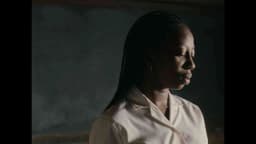
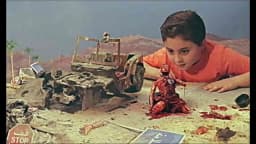
The Global Wellbeing Movement's 2022 'Move' campaign, created by Orel Bitan in Israel, reframes incidental daily movement as intentional physical activity

How The Global Wellbeing Movement Reframes Everyday Life as Exercise
'Move' is a 2022 Israeli public service film created by Orel Bitan through her one-person agency, Orel Bitan – One Woman Show, for The Global Wellbeing Movement, arguing that physical activity is already embedded in everyday life and that awareness of incidental movement is the first step toward lasting health behaviour change.
Published in Israel in May 2022, the campaign operates across digital and film channels and carries a single, quietly radical proposition: people already work out in their everyday lives without noticing it, and the opportunity lies in moving more consciously rather than more strenuously. That reframe distances 'Move' from the gym-culture messaging that dominates sports and health advertising and positions it instead as an accessible, inclusive call to action directed at the widest possible public audience. The campaign is classified across the Health, Public Interest, and Sports categories, reflecting its cross-sector ambition.
In Israel, where national health promotion infrastructure includes government-backed initiatives such as the Efsharibari programme — a population-wide healthy-lifestyle platform operated by the Israeli Ministry of Health, as documented at Efsharibari Health Gov Il — independent public-interest campaigns face meaningful competition for audience attention from well-resourced official communications. 'Move' enters that environment with no production team, no professional actors, and no stated production budget, relying instead on friends and family as on-screen participants. That constraint becomes a creative choice: the film's grassroots texture signals authenticity rather than institutional authority, which is a defensible strategic position in a crowded public health communications landscape. The Clapboard Score for 'Move' is 63 out of 100, reflecting its conceptual clarity and production originality against the limitations of its reach and documented impact.
The Global Wellbeing Movement anchors its brief in a behavioural insight rather than a health statistic. The campaign's core argument — that incidental activity is undervalued and underacknowledged — draws on a body of public health thinking that has gained institutional traction. The World Health Organization's 2022 technical brief, published at Cdn Who Int, modelled a community-wide physical-activity campaign using five annual waves across multiple media channels and estimated a 5.2-percentage-point absolute improvement in physical-activity levels as a potential outcome of sustained public communication effort. That modelling confirms the category in which 'Move' operates: mass-audience behaviour change through media, not clinical intervention.
In Israel, the Efsharibari programme, as documented at efsharibari.health.gov.il, represents the dominant institutional voice in healthy-lifestyle public communication, with state backing and multi-channel distribution that an independent, zero-budget campaign cannot match directly. Rather than competing on scale, 'Move' competes on register. Where Efsharibari communicates through official health authority framing, 'Move' adopts a documentary and social-experiment format that reads as peer observation rather than government advice. That tonal distinction is strategically coherent: research published through the World Wellbeing Movement, as referenced at worldwellbeingmovement.org, consistently identifies trust and relatability as determinants of public engagement with wellbeing messaging.
The decision to work without professional actors or a production crew is not merely a budget accommodation. It is an alignment of form and message. A campaign arguing that ordinary life contains more physical value than people recognise is strengthened when it is visibly made from ordinary life. Orel Bitan — credited as copywriter, director, photographer, editor, and producer simultaneously — embodies the campaign's own argument: significant output is achievable through effort already present in everyday practice. The documentary and social-experiment format reinforces this, positioning the work as observation rather than persuasion, which lowers audience resistance to a public health message.
Orel Bitan directs, photographs, edits, writes, and produces 'Move' without a production team. That single-authorship is the defining creative fact of the campaign and shapes every formal decision visible in the finished film. The work was created with friends and family — named in the credits as Alisa, Rashel, Darina, Sürayyn, Gila, Kobi, Igor, Anna, Eduard, and others — whose non-professional presence gives the film a texture of observed reality rather than constructed performance.
The documentary and social-experiment format that Bitan employs is a disciplined creative choice within public service filmmaking. Social-experiment films derive their persuasive force from the audience's belief that what they are watching was not staged for their benefit. By casting people she knows personally rather than professional talent, Bitan sustains that belief without requiring the viewer to suspend disbelief. The camera records movement as it occurs in daily contexts — not as choreographed exercise — which makes the film's central argument visible rather than merely stated. The proposition that physical activity is already embedded in everyday life becomes something the viewer sees demonstrated, not just asserted.
The campaign was entered into the Musicbed Challenge, a creative competition organised by Musicbed, the music licensing platform documented at musicbed.com and Campaigns Musicbed, which invites filmmakers to produce short-form work scored with licensed music. Participation in that competition contextualises the production approach: the Musicbed Challenge is designed for independent creators and small teams working under genuine constraints, and 'Move' was built within exactly those parameters. The film's use of music — a consistent element in Musicbed Challenge entries — functions as the primary emotional carrier in the absence of dialogue-driven performance, which places additional weight on the editing rhythm Bitan controls as sole editor. The result is a piece of public service film that communicates its health and physical activity message through accumulated visual evidence rather than instructional narration.
Archive engagement for 'Move' stands at 2,265 views, 9 likes, and 1 comment, as recorded in the campaign's directory listing. No verified broadcast reach figures, social distribution data, or independent audience measurement is publicly available for the campaign, and no reviews appear in trade publications including Campaign, Ad Age, Adweek, The Drum, or Contagious. The campaign's documented audience remains small relative to the scale of institutional public health communications operating in Israel during the same period.
Structural analysis offers a more complete picture of the campaign's potential effectiveness than engagement metrics alone. The proposition — that incidental movement is undervalued — is directly supported by the WHO's 2022 modelling at cdn.who.int, which identifies community-wide media campaigns as capable of producing measurable shifts in physical-activity behaviour. 'Move' deploys the format most associated with credible behaviour-change communication: observational documentary rather than aspirational lifestyle advertising. The absence of professional actors, sets, or scripted performance removes the visual cues that audiences have learned to associate with advertising, reducing the psychological distance between message and viewer.
The Musicbed Challenge entry, as noted at campaigns.musicbed.com, provided an independent distribution channel beyond the campaign's own network, exposing the work to an audience of filmmakers and creative industry professionals who evaluate entries on craft and concept. Within that specific context, 'Move' competes on its own terms. The campaign's Clapboard Score of 63 out of 100 reflects a case where conceptual integrity and production resourcefulness are present but where limited distribution infrastructure constrains the demonstrable public health impact that the work's strategic logic would otherwise support.
'Move' argues that physical activity is already embedded in everyday life. Created by Orel Bitan in Israel in May 2022, the campaign encourages people to recognise incidental daily movement as meaningful exercise rather than promoting structured gym-based fitness routines, making its public health message broadly accessible across audiences.
Orel Bitan created 'Move' as a one-person production. Working under her agency Orel Bitan – One Woman Show, she served simultaneously as copywriter, director, photographer, editor, and producer. The film featured friends and family as participants rather than professional actors, and was produced with no stated budget.
'Move' was entered into the Musicbed Challenge, a filmmaking competition run by Musicbed, the music licensing platform. The challenge is designed for independent creators working under real production constraints. Bitan created 'Move' within those parameters, using licensed music as the film's primary emotional element in the absence of scripted dialogue.
Israel's dominant institutional voice in healthy-lifestyle communication is the government-backed Efsharibari programme, documented at efsharibari.health.gov.il. 'Move' does not compete on scale or budget but on register, adopting a documentary social-experiment tone that reads as peer observation rather than official health authority guidance, which reduces audience resistance to its public interest message.
'Move' holds a Clapboard Score of 63 out of 100. The score reflects the campaign's strong conceptual clarity and production resourcefulness as a zero-budget Israeli public service film, balanced against limited documented distribution reach and the absence of independently verified audience impact data or trade press coverage.
.webp)
Creative Collaboration Platform: The Backbone of Modern Creative WorkWhat is a creative collaboration platform?Clapboard defines a creative collaboration platform as the operational core for today’s distributed creative teams. This is not a collection of digital collaboration tools stitched together; Clapboard’s system


Understanding the Creative Production MarketplaceWhat is a Creative Production Marketplace?Clapboard defines a creative production marketplace as a structured ecosystem where brands, agencies, and production talent converge to execute video, advertising, and branded content at scale. Unlike the legacy agency or freelanREAD FULL ARTICLE

The Urgent Need for a Creative Production Operating SystemWhy Traditional Creative Production Models Break DownClapboard sees the creative production landscape shifting under pressure. Content velocity is no longer a buzzword—it’s a mandate. Modern advertising demands relentless output across dozens of channels, each wREAD FULL ARTICLE