 ARCHIVE
TOPdesk IT Heroes Turns Dutch IT Professionals Into Action Figures
TOPdesk's 2024 "IT Heroes" campaign, created by TBWA\NEBOKO and produced with 5am Studios in Amsterdam, transforms real Dutch IT professionals into collectible action figures while personifying common IT problems as 3D-printed monsters, using humor and physical craft to argue that the technology workers keeping organisations running deserve far greater public recognition.
Launched in the Netherlands in February 2024 and archived on February 27 of that year, the campaign answers a deceptively simple strategic question: if IT professionals are indispensable, why does no one celebrate them? TOPdesk — a service management software company whose platform is designed to help IT teams resolve problems through continual, incremental improvement — used that tension as creative fuel. The result is a campaign that operates simultaneously as brand advertising, community recognition, and a physical gifting activation directed at the very audience TOPdesk most wants to reach.
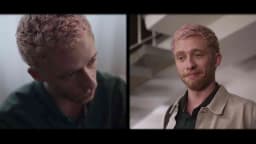
In the Netherlands, where the campaign originated and was primarily distributed, three IT professionals were selected and transformed into named characters: Sabine the IT Savior, Thibauld the Troubleshooter, and Marco the Service Desk Slayer. Each hero was matched against a corresponding monster representing a recognisable IT pain point — "The Many-Headed Request," "Techtopus of Chaos," and "Systemicus Malfunctius". These figures were 3D-printed, packaged in action-style boxes, and delivered directly to the featured professionals so that each could physically unbox their own heroic alter ego. The campaign earned a Clapboard Score of 79 out of 100, reflecting strong creative originality and strategic coherence.
ARCHIVETOPdesk identified a durable tension at the centre of modern workplace culture. IT professionals are structurally essential yet socially invisible — the people every employee calls in a crisis and few acknowledge on a ordinary day. TBWA\NEBOKO's strategy director Peter Kormanyos articulated the commercial logic directly: "By turning the world into IT fans, ultimately we'll turn IT professionals into TOPdesk fans," as reported by clapboard.com. The campaign therefore functions as an inbound marketing device disguised as an appreciation campaign, earning trust from the professional community it simultaneously addresses and seeks to convert.
The competitive landscape in which TOPdesk operates is dominated by considerably larger players. ServiceNow held an estimated forty to forty-five percent of the global IT service management software market in 2024, according to Smcconsulting Be, while BMC Software held an estimated eight to twelve percent share during the same period, per the same source. Against rivals of that scale, TOPdesk's differentiation strategy depends less on feature parity and more on cultural belonging — positioning itself as the platform built by and for practitioners who identify with the daily grind of service desk work. In the Netherlands, where the brand is headquartered and where its community roots run deepest, that positioning carries particular resonance.
TBWA\NEBOKO's creative team, Hampus Elfström and Inna Vartazarian, framed the insight with precision: "It's all based on a simple tension: we can't live without IT professionals. Still, they don't get the recognition they deserve," as quoted by clapboard.com. That framing turns a product campaign into a cultural argument, making IT professionals themselves the primary audience and their broader professional networks the secondary one.
TBWA\NEBOKO's creative execution for IT Heroes is grounded in a specific and committed aesthetic decision. The agency researched the most common IT problems, then designed and 3D-printed original monsters to embody each one — creatures given names precise enough to function as satirical taxonomy: "The Many-Headed Request," "Techtopus of Chaos," and "Systemicus Malfunctius". The physicality of those objects is central to the campaign's effect. These are not digital illustrations or motion graphics; they are tangible, collectible artefacts that exist in the world and were delivered by hand to the professionals they were designed to honour.
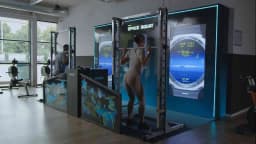
The campaign's film component, produced in partnership with 5am Studios in Amsterdam, drew deliberately on the dramatic and over-the-top register of 1990s toy commercials, as reported by clapboard.com. Three separate approximately twenty-second films were produced, each placing one IT professional hero against their corresponding monster, according to news.designrush.com. The format is inherently self-aware — its campness is the point — but the humour is precise rather than broad, landing because it accurately reflects the textures of IT work: cascading support requests, unstable legacy systems, and the entropy of a busy service desk.
The creative team responsible for the work was led by chief creative officer Darré van Dijk and creative director Joris Philippart at TBWA\NEBOKO, with Hampus Elfström and Inna Vartazarian serving as the hands-on creative pair, as reported by clapboard.com. Production was handled by TBWA\MAKE alongside 5am Studios, with media planning carried out by OMD, per clapboard.com. On the client side, Clementine Jones, creative at TOPdesk, described the campaign's product logic plainly: "TOPdesk is the weapon of choice for those who stop IT problems from becoming monsters by making small, continual service improvements where it matters most," as quoted by clapboard.com.
No independently verified performance data — such as view counts, earned media reach, or measurable shifts in brand consideration — for the TOPdesk IT Heroes campaign is publicly available at the time of writing. What the campaign's structure does make legible, however, is a deliberate effort to generate multiple layers of impact from a single creative idea. The direct delivery of personalised action-figure packages to named IT professionals creates an inherently shareable unboxing moment; the films, formatted for digital distribution, extend the campaign's reach to the broader IT community in the Netherlands and beyond; and the monster naming convention gives the campaign a linguistic toolkit that IT professionals can adopt in their own professional vocabularies.
The campaign architecture reflects a sophisticated understanding of how B2B brand campaigns accrue value. Rather than broadcasting a product message at a passive audience, IT Heroes invites community participation — first by recognising specific individuals, then by framing a shared professional experience as heroic by definition. This approach is structurally well-suited to the IT service management category in the Netherlands, where word-of-mouth credibility within professional networks carries outsized weight relative to paid reach.
The campaign earned a Clapboard Score of 79 out of 100, a rating that reflects strong creative originality, a clearly defined audience, and a concept with genuine cultural resonance — offset slightly by the inherent limits of a campaign built around three individuals in a single market. As a proof of concept for community-led brand building in the technology sector, IT Heroes represents a replicable model that TOPdesk and TBWA\NEBOKO could extend across additional markets.
IT Heroes is a 2024 campaign by TOPdesk created with TBWA\NEBOKO in the Netherlands. It transforms real IT professionals into action figures and 3D-prints monsters representing common IT problems. Three heroes — Sabine the IT Savior, Thibauld the Troubleshooter, and Marco the Service Desk Slayer — were packaged and delivered in action-style boxes.
TBWA\NEBOKO created the IT Heroes campaign for TOPdesk. The creative team included chief creative officer Darré van Dijk, creative director Joris Philippart, and creative pair Hampus Elfström and Inna Vartazarian. Production was handled by 5am Studios in Amsterdam and TBWA\MAKE, with OMD serving as media agency, as reported by clapboard.com.
TOPdesk's IT Heroes campaign features three named monsters representing common IT problems. They are "The Many-Headed Request," "Techtopus of Chaos," and "Systemicus Malfunctius". Each monster was designed and 3D-printed by TBWA\NEBOKO and matched to a specific IT professional hero featured in the campaign's films.
IT Heroes positions TOPdesk software as the tool IT professionals use to prevent problems from escalating. As Clementine Jones of TOPdesk stated, the platform supports "small, continual service improvements where it matters most," per clapboard.com. The campaign builds brand affinity with IT professionals by validating their work before introducing the product rationale.
The TOPdesk IT Heroes campaign received a Clapboard Score of 79 out of 100. This reflects strong creative originality and strategic focus on a clearly defined professional audience in the Netherlands, with the campaign's humorous format and physical activation distinguishing it within the IT service management software category.
TBWA\NEBOKO chose the dramatic, over-the-top style of 1990s toy commercials to amplify the campaign's humour and make IT professionals feel genuinely celebrated. The format's self-aware campness mirrors the outsized daily challenges of IT work, as reported by clapboard.com, while creating content that travels organically across professional networks in the Netherlands and internationally.
.webp)
Creative Collaboration Platform: The Backbone of Modern Creative WorkWhat is a creative collaboration platform?Clapboard defines a creative collaboration platform as the operational core for today’s distributed creative teams. This is not a collection of digital collaboration tools stitched together; Clapboard’s system


Understanding the Creative Production MarketplaceWhat is a Creative Production Marketplace?Clapboard defines a creative production marketplace as a structured ecosystem where brands, agencies, and production talent converge to execute video, advertising, and branded content at scale. Unlike the legacy agency or freelanREAD FULL ARTICLE

The Urgent Need for a Creative Production Operating SystemWhy Traditional Creative Production Models Break DownClapboard sees the creative production landscape shifting under pressure. Content velocity is no longer a buzzword—it’s a mandate. Modern advertising demands relentless output across dozens of channels, each wREAD FULL ARTICLE