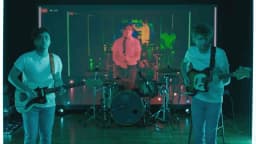
Watch Dogs and 360i launched Anti Heroes in the United States in October 2016, using cinematic VFX to reframe hacking as empowerment ahead of Watch Dogs 2.

How Watch Dogs and 360i Made Hackers the Heroes of a 2016 Gaming Campaign
Watch Dogs Anti Heroes is a 2016 film campaign created by agency 360i for Ubisoft's Watch Dogs franchise in the United States, designed to reposition hacking from a technical act into a cinematic symbol of personal empowerment ahead of the Watch Dogs 2 console launch in November 2016, according to En Wikipedia.
Published in October 2016, the campaign arrived at a precise strategic moment. Watch Dogs 2 was set to launch on PlayStation 4 and Xbox One on November 15, 2016, followed by a Windows release on November 29, 2016, according to Wikipedia. The title represented a deliberate creative pivot by Ubisoft away from the first game's more rigid, tower-focused structure toward what the publisher described as a fresh, open-world experience, according to Shortyawards. Anti Heroes was the advertising expression of that pivot, translating a reimagined game into a reimagined brand story for audiences across the United States, according to Leadiq.
The campaign consists of a single film asset, which uses exaggerated, visually heightened sequences to dramatise the game's core mechanic: controlling the urban environment through a smartphone. Drones, surveillance systems, traffic barriers, and electronic infrastructure all bend to the protagonist's will. The executional language is not documentary or instructional. It is mythological, treating the hacker as a figure of outsized capability operating just beneath the surface of a recognisable American city. The Anti Heroes title frames that figure not as a villain or a neutral agent but as someone operating outside conventional heroism while still serving a legible moral purpose. For a franchise whose first instalment had faced criticism for a protagonist perceived as emotionally flat, that reframing carried genuine strategic weight. The Clapboard Score for this campaign is 72 out of 100.
 ARCHIVE
360i built the Anti Heroes strategy around a media and entertainment landscape in which gaming had become the dominant entertainment spend category for young adults in the United States. The global games market reached a growing multi-billion dollar scale in 2016, with the console segment remaining the premium tier for high-production narrative titles, according to reporting by GamesBeat. Within that context, Ubisoft needed Anti Heroes to accomplish something specific: separate Watch Dogs 2 from both the shadow of its predecessor and the gravitational pull of competing open-world franchises.
The competitive pressure was real. Rockstar Games' Grand Theft Auto franchise had defined open-world urban gameplay for a generation of players. As noted in archived coverage cited by Wikipedia, the original Watch Dogs had been marketed partly as a technological challenger to Grand Theft Auto V, targeting players who had recently engaged with that title. By 2016, that positioning required updating. Watch Dogs 2 moved the setting to San Francisco, introduced a younger protagonist in Marcus Holloway, and leaned into hacker culture as an identity rather than a plot device. Anti Heroes had to make that identity legible and appealing to a US audience that had already formed opinions about the franchise.
360i's strategic answer was to bypass gameplay explanation entirely and go straight to emotional proposition. The film does not describe what the player can do in mechanical terms. It shows what it feels like to be the kind of person who can hack everything. That distinction matters because it targets aspiration rather than feature comparison, a more durable creative strategy for a franchise attempting to rebuild cultural relevance in a crowded gaming market across the United States.
Anti Heroes executes its empowerment proposition through a visual language borrowed from action cinema rather than conventional gaming advertising. The film presents hacking abilities including drone control, seeing through physical barriers, and manipulating urban infrastructure as visually spectacular events rendered with the production quality of a studio feature rather than a gameplay trailer. That creative decision is deliberate and strategically coherent: it asks the viewer to feel the game's power fantasy before they have played a single minute of it.
The executional approach relies heavily on VFX to transform mundane urban environments into responsive, hackable systems. Walls become transparent. Traffic systems submit to a phone command. The visual grammar communicates that the city itself is the controller, and the protagonist holds the only relevant input device. This approach aligns with what Clapboard's archive identifies as the campaign's core creative intent: using cinematic exaggeration to symbolise the game's empowerment-through-technology proposition. The technique is disciplined in that the exaggeration never becomes absurdist. Every visual beat remains tethered to something that exists within the game world, which preserves the film's credibility as an advertisement for a specific product rather than a general action fantasy.
Production credits for the Anti Heroes campaign are not publicly documented in any trade press source reviewed for this analysis, including Campaign, Adweek, Ad Age, The Drum, or Contagious. What the archive record confirms is that 360i served as the creating agency for the United States market release in October 2016. The single-asset execution suggests a campaign designed for high-impact placement, likely broadcast and pre-roll, where a concentrated creative statement outperforms a distributed multi-format approach. The film's cinematic scale supports that read.
No independently verified performance data for the Anti Heroes campaign is publicly available from named trade or platform sources. Clapboard's archive entry references a claim of nearly four million YouTube views for the television spot, but this figure is not corroborated by official Ubisoft or YouTube published records, and should be treated as unverified.
What can be assessed is the campaign's structural effectiveness. Anti Heroes was published in October 2016, giving it approximately six weeks of market presence before Watch Dogs 2 launched on PlayStation 4 and Xbox One on November 15, 2016, according to Wikipedia. That window is consistent with a pre-launch awareness campaign designed to build anticipation and shift brand perception rather than drive immediate conversion. The single-asset format concentrates creative and media investment, which typically produces stronger recall metrics than fragmented multi-format rollouts when the execution is of sufficient quality to sustain repeat exposure.
The strategic ambition of repositioning Watch Dogs from a first-game franchise with a mixed reception into a culturally confident sequel is a measurable objective in principle, though no post-campaign brand tracking data has been published for this campaign. What Anti Heroes demonstrates architecturally is a coherent brief, a disciplined creative response, and a clear connection between the film's visual language and the product's core differentiator. The Clapboard Score of 72 out of 100 reflects a campaign that executes its stated proposition with craft and strategic clarity, without reaching the level of cultural breakthrough that would distinguish it as a defining gaming advertisement of its year in the United States.
Anti Heroes is a 2016 film campaign created by 360i for Ubisoft's Watch Dogs in the United States. Published in October 2016, it uses cinematic VFX to frame hacking as a form of empowerment, positioning Watch Dogs 2 ahead of its November 2016 console launch on PlayStation 4 and Xbox One.
360i created the Anti Heroes campaign for Watch Dogs in the United States. The agency produced a single film asset published in October 2016, using exaggerated visual sequences to dramatise hacking abilities including drone control and infrastructure manipulation as the game's central empowerment proposition.
The strategy used cinematic exaggeration to make hacking feel like a superpower rather than a mechanic. 360i bypassed feature explanation and targeted emotional aspiration, repositioning the Watch Dogs franchise in the United States around a fresh identity ahead of Watch Dogs 2's November 2016 launch.
No award recognition for the Anti Heroes campaign is publicly documented in trade sources reviewed for this analysis, including Shorty Awards records. The campaign holds a Clapboard Score of 72 out of 100, reflecting solid creative and strategic execution without reaching the threshold for major industry award recognition.
Ubisoft had used interactive and social campaigns for the original Watch Dogs in 2013, including the H_ide app and a London Hacker Hunt, according to Clapboard's archive. Anti Heroes marks a shift toward purely cinematic brand advertising, reflecting the franchise's move toward a more confident and emotionally direct marketing posture for its US audience.
Anti Heroes used visual effects to render hacking abilities including drone control, barrier manipulation, and seeing through walls as spectacular cinematic events. The production treated the urban environment as a responsive system, communicating Watch Dogs 2's empowerment-through-technology premise without relying on conventional gameplay footage or mechanical description.
.webp)
Creative Collaboration Platform: The Backbone of Modern Creative WorkWhat is a creative collaboration platform?Clapboard defines a creative collaboration platform as the operational core for today’s distributed creative teams. This is not a collection of digital collaboration tools stitched together; Clapboard’s system


Understanding the Creative Production MarketplaceWhat is a Creative Production Marketplace?Clapboard defines a creative production marketplace as a structured ecosystem where brands, agencies, and production talent converge to execute video, advertising, and branded content at scale. Unlike the legacy agency or freelanREAD FULL ARTICLE

The Urgent Need for a Creative Production Operating SystemWhy Traditional Creative Production Models Break DownClapboard sees the creative production landscape shifting under pressure. Content velocity is no longer a buzzword—it’s a mandate. Modern advertising demands relentless output across dozens of channels, each wREAD FULL ARTICLE