Open Now's 2023 'A small gesture can make the difference' campaign for the Dutch Ministry of Health uses split-screen storytelling to tackle loneliness through

How Open Now Made Loneliness Visible for the Dutch Ministry of Health
Open Now created 'A small gesture can make the difference' for the Dutch Ministry of Health, Welfare, and Sport in October 2023, using split-screen television films to show bystanders in the Netherlands what happens when they act on loneliness — and what happens when they do not — as part of the broader government-backed Eén tegen Eenzaamheid health campaign.
The campaign launched on 25 September 2023, timed directly ahead of the Week Against Loneliness, which ran from 28 September through 4 October 2023, with the full campaign active until 27 October 2023. It represents a sequel to an earlier, widely recognised execution under the same Eén tegen Eenzaamheid programme, a long-running public health initiative that the Dutch Ministry of Health, Welfare, and Sport first established in 2018, according to Tweedekamer Nl. The 2023 iteration broadens the programme's original focus on older people to include a wider range of life situations — moving house, divorce, retirement, and bereavement — addressing both people experiencing loneliness and the bystanders positioned to help them.
In the Netherlands, loneliness is treated as a structural public health concern rather than an incidental social problem. The Eén tegen Eenzaamheid 2022–2025 programme includes an additional €40 million in funding allocated for local approaches, social initiatives, campaigns, and scientific research, according to Rijksoverheid Nl. The campaign's strategic objectives are threefold, as documented by rijksoverheid.nl: raise awareness that loneliness affects people across all ages and circumstances, encourage both bystanders and people experiencing loneliness to take action, and build the individual confidence — described in behavioural science terms as self-efficacy — that a single small gesture can produce a meaningful outcome. This Clapboard Score of 63/100 reflects a campaign with clear social purpose and disciplined creative mechanics, though limited measurable public reach data constrains a higher rating.
Research underpinning the campaign identified a specific psychological barrier. Bystanders across the Netherlands frequently recognise loneliness in others but do not act, because they lack confidence that intervention will be welcomed or effective. This is the problem of self-efficacy: a person's belief in their own capacity to produce a desired outcome. As Liselotte Vink, Managing Director at Open Now, stated in Adformatie Nl, the subject of loneliness is surrounded by stigma, shame, and psychological barriers that prevent both the lonely person and the potential helper from making the first move.
The Eén tegen Eenzaamheid programme has operated across multiple phases since its 2018 launch. The original 2018–2021 action programme made up to €1.7 million per year available for related initiatives, according to rijksoverheid.nl. By 2020, the programme had supported 125 initiatives and interventions through a ZonMw subsidy scheme totalling €5.2 million, according to tweedekamer.nl. The 2022–2025 iteration scaled substantially, with the €40 million allocation, per rijksoverheid.nl, reflecting the Dutch government's recognition of loneliness as a priority health challenge.
In the Netherlands, public health campaigns addressing loneliness operate in a space that distinguishes them clearly from commercial healthcare advertising. Rather than competing with pharmaceutical or insurance brands such as Zilveren Kruis or CZ, the Ministry's campaign competes for attention and behavioural change in a media environment crowded with social causes. The 2022 government evaluation, documented by rijksoverheid.nl, defined the programme's three-part strategic framework: help people recognise situations in which loneliness can arise, equip bystanders with concrete tools to respond, and demonstrate the positive impact of those responses so that self-efficacy grows. The 2023 campaign executes all three functions within a single creative format, making it one of the more strategically integrated healthcare interventions in the Dutch public communications landscape.
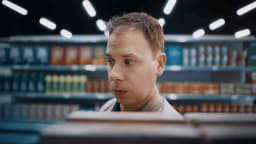
Open Now constructed the campaign around a single, disciplined creative mechanism: the split screen. Two television films present the same situation simultaneously from different perspectives — one from the bystander's point of view, one from the lonely person's — and each scenario branches into two outcomes depending on whether the bystander acts or does nothing. Lukas van de Ven, Creative Director at Open Now, confirmed in adformatie.nl that the split-screen format was a deliberate structural choice, designed to make both the emotional reality of loneliness and the practical simplicity of intervention immediately legible to a Dutch television audience.
The scenarios depicted in the 2023 films reflect the campaign's expanded target audience. Where earlier Eén tegen Eenzaamheid executions concentrated primarily on older people, the 2023 films address recognisable transitional life moments — moving house, divorce, retirement, and bereavement — situations that can affect adults at any age across the Netherlands. Lukas van de Ven noted, as reported by adformatie.nl, that small steps from both the bystander's and the lonely person's perspective are shown to make a concrete difference, reinforcing the self-efficacy principle at the creative level rather than leaving it to supplementary messaging.
The production centres on a single film asset titled 'Een tegen Eenzaamheid | TVC verhuisd omstander', delivered in Dutch and distributed via television as the primary medium. The campaign was commissioned by Pien Breukink and Dennis Cohen at the Ministry of Health, Welfare, and Sport, and created by Open Now, which operates as part of the DOT group, according to Opennow Nl. The split-screen format demands precise directorial coordination to ensure tonal and visual coherence across the two parallel narratives; the execution achieves this without melodrama, keeping the emotional register understated — a tonal choice that aligns with the behavioural science rationale of reducing stigma and making intervention feel ordinary rather than heroic.
No independently verified campaign performance data for 'A small gesture can make the difference' is publicly available beyond the view and engagement figures associated with the primary film asset. The Dutch-language television commercial recorded 4,076 views and 11 likes on its documented platform presence, figures that reflect a single distribution channel rather than the campaign's full broadcast reach across the Netherlands.
The structural effectiveness of the campaign, however, is grounded in the programme's documented long-term design. The Eén tegen Eenzaamheid framework, as outlined by rijksoverheid.nl, uses each annual campaign iteration to reinforce cumulative behavioural change rather than deliver a single-year spike in awareness. The 2023 execution adds the bystander intervention mechanic — with its explicit focus on self-efficacy — to a body of work that had already supported 125 initiatives and interventions by 2020, according to tweedekamer.nl. The split-screen creative device is itself an efficiency tool: by contrasting action and inaction within the same frame, the films reduce the cognitive distance between watching an advertisement and understanding exactly what a bystander in the Netherlands can do differently.
The campaign's alignment with the Week Against Loneliness, a nationally recognised awareness moment, amplifies its potential for earned media and community-level activation. According to Eentegeneenzaamheid Nl, the programme continues to provide campaign toolkits and resources that extend the reach of broadcast executions into local social and healthcare settings. The Clapboard Score of 63/100 reflects a campaign that executes its strategic brief with clarity and craft, but whose documented public impact data remains limited, placing a ceiling on its overall rating.
'A small gesture can make the difference' is a 2023 Dutch public health campaign created by Open Now for the Ministry of Health, Welfare, and Sport. It uses split-screen television films to encourage bystanders in the Netherlands to recognise loneliness and act on it, targeting situations such as moving, divorce, and bereavement as part of the Eén tegen Eenzaamheid programme.
Open Now, part of the DOT group, created the campaign. Creative Director Lukas van de Ven led the creative approach, which centred on a split-screen format. The Ministry of Health, Welfare, and Sport commissioned the work through contacts Pien Breukink and Dennis Cohen, as documented by adformatie.nl and opennow.nl.
The split-screen format shows two simultaneous outcomes — one where a bystander makes a small gesture, one where they do nothing. Lukas van de Ven, Creative Director at Open Now, confirmed in adformatie.nl that this structure makes both the emotional reality of loneliness and the simplicity of intervention immediately clear to a Dutch television audience without requiring narration or explanation.
The Eén tegen Eenzaamheid 2022–2025 programme includes an additional €40 million in funding for local approaches, social initiatives, campaigns, and scientific research, according to rijksoverheid.nl. An earlier 2018–2021 action programme made up to €1.7 million per year available, also per rijksoverheid.nl, reflecting a significant scaling of the Netherlands' commitment to addressing loneliness.
Self-efficacy is a person's belief in their own capacity to produce a meaningful outcome. The campaign targets it because, as Liselotte Vink of Open Now stated in adformatie.nl, stigma and psychological barriers prevent bystanders from acting. By showing concrete, low-barrier gestures and their positive results, the campaign builds confidence that one small action in the Netherlands can genuinely reduce loneliness.
The campaign ran from 25 September through 27 October 2023, timed to the Dutch Week Against Loneliness, which took place from 28 September to 4 October 2023. According to rijksoverheid.nl and eentegeneenzaamheid.nl, this alignment amplifies the broadcast campaign's reach through local social and healthcare activations supported by programme toolkits distributed across the Netherlands.
.webp)
Creative Collaboration Platform: The Backbone of Modern Creative WorkWhat is a creative collaboration platform?Clapboard defines a creative collaboration platform as the operational core for today’s distributed creative teams. This is not a collection of digital collaboration tools stitched together; Clapboard’s system


Understanding the Creative Production MarketplaceWhat is a Creative Production Marketplace?Clapboard defines a creative production marketplace as a structured ecosystem where brands, agencies, and production talent converge to execute video, advertising, and branded content at scale. Unlike the legacy agency or freelanREAD FULL ARTICLE

The Urgent Need for a Creative Production Operating SystemWhy Traditional Creative Production Models Break DownClapboard sees the creative production landscape shifting under pressure. Content velocity is no longer a buzzword—it’s a mandate. Modern advertising demands relentless output across dozens of channels, each wREAD FULL ARTICLE