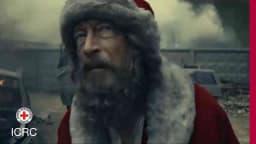
Think!'s The Road Whisperer, created by VMLY&R in March 2019, uses a surreal film character to deliver road safety advice to male drivers aged 17–30 across the

Think! Road Whisperer Targets Young Drivers on Country Roads
The Road Whisperer is a United Kingdom road safety campaign created by VMLY&R for Think!, the Department for Transport's flagship public interest initiative, launched on 5 March 2019 to deliver practical driving guidance to male drivers aged 17 to 30 through a surreal, narrative film character distributed across social media and cinema.
Think! launched the campaign in response to a persistent casualty pattern among new and novice drivers in the United Kingdom. The Road Whisperer character — described by VMLY&R chairman and creative director Mark Roalfe, as cited by campaignlive.co.uk, as "part spirit guide and part mad uncle" — delivers calm, direct advice across a range of situations in which inexperienced drivers commonly feel out of their depth. These situations include country road navigation, night driving, motorway entry, roundabouts, light rain conditions, tyre safety, and sharing the road with vulnerable users, as documented on Think Gov Uk.
The campaign spans two primary film executions: The Road Whisperer: Country Roads and The Road Whisperer: Night Driving. Both films deploy a consistent character voice and visual grammar, allowing the Department for Transport and VMLY&R to build narrative recognition across multiple viewing occasions. Distribution ran across online video, social media, video-on-demand, and cinema, reaching the target audience where they already spend leisure and attention time. The Road Whisperer campaign sits within Think!'s broader lineage of public service film work dating to the initiative's establishment in 2000, according to think.gov.uk, and represents one of the more tonally adventurous executions the brand has produced for the United Kingdom market.
Young male drivers represent a disproportionately high share of road casualties in the United Kingdom. The Department for Transport, as documented across Gov Uk and think.gov.uk, identified male drivers aged 17 to 30 as the primary audience for The Road Whisperer campaign, a group whose overrepresentation in casualty statistics had been a sustained concern for road safety policymakers.
The strategic challenge for VMLY&R was significant. Conventional public service advertising in the United Kingdom has long relied on shock tactics — graphic depictions of crashes and consequences — to compel behaviour change. Campaigns from competitors in the road safety space, including those from the Royal Society for the Prevention of Accidents and IAM RoadSmart, have historically leaned into fear as the primary motivational lever. VMLY&R took a deliberately different route, reasoning that young male drivers are both habituated to fear-based messaging and resistant to being lectured. The strategy, as reported by campaignlive.co.uk and The Drum, was to wrap practical, actionable advice inside a character-driven narrative that the target audience would actively choose to watch rather than skip.
The creative device chosen was a Road Whisperer figure modelled on Jeff Bridges's portrayal of The Dude in The Big Lebowski, as reported by campaignlive.co.uk. The cultural reference was calculated: The Big Lebowski carries strong recognition among the 17-to-30 male demographic, and The Dude's persona — unhurried, non-judgmental, quietly authoritative — offered a tonal register entirely absent from United Kingdom road safety film at the time. Jesse Norman, then UK Road Safety Minister, lent institutional endorsement to the campaign's launch, as cited by gov.uk, signalling that the Department for Transport was prepared to back creative risk in service of public interest outcomes.
Director Ali Ali led production on The Road Whisperer films, working through production company Sonny London. The creative team at VMLY&R responsible for the campaign comprised Sophie Taylor and George Robb, with Mark Roalfe serving as chairman and creative director, as documented by campaignlive.co.uk and confirmed on clapboard.com. Media planning and buying was handled by Manning Gottlieb OMD.
The films construct their authority through restraint. Ali Ali's direction keeps the Road Whisperer character in controlled, intimate visual settings that contrast with the open, unpredictable environments — country roads at night, motorway slip roads, rain-slicked tarmac — being described in dialogue. This tension between the calm of the character and the danger of the scenario is the campaign's primary emotional mechanism. The Road Whisperer speaks directly to the viewer without condescension, a tonal choice that required precise performance direction and editing discipline to sustain across two distinct film executions.
The production design draws consciously on the Coen Brothers' visual grammar associated with The Big Lebowski — soft light, unhurried cuts, deadpan delivery — without tipping into parody, as noted by Campaign magazine in its coverage dated 25 June 2024, as reported by campaignlive.co.uk. The result is a public service film that functions as entertainment first, instruction second, which is precisely the inversion VMLY&R intended. The two executions, Country Roads and Night Driving, share enough visual and tonal continuity to read as a coherent series, giving the Department for Transport an extensible creative platform rather than a single-use execution. Across both films, the narrative film format is deployed not as a stylistic indulgence but as a strategic tool for sustaining attention long enough to deliver genuinely practical road safety guidance to novice drivers across the United Kingdom.
No independently verified performance metrics for The Road Whisperer campaign — such as view counts, recall scores, or measured behaviour change data — are publicly available from think.gov.uk, gov.uk, or any named third-party research source at the time of this analysis. The campaign's effectiveness therefore must be assessed on structural and contextual grounds.
The Road Whisperer earned a Clapboard Score of 63 out of 100. This score reflects a campaign that demonstrates genuine creative ambition and strategic coherence — the character-based narrative approach, the culturally specific casting of The Big Lebowski as a tonal reference, and the decision to prioritise entertainment value over shock — while stopping short of the measurable impact evidence that would elevate it further. The absence of published outcome data is a meaningful gap for a Department for Transport initiative where behaviour change, not brand awareness, is the ultimate success criterion.
Structurally, the campaign's strengths are real. Distribution across social media, video-on-demand, and cinema gave the films access to the exact attention environments where 17-to-30-year-old male drivers in the United Kingdom consume long-form content. The two-film series format created narrative redundancy that a single execution cannot achieve. And the institutional endorsement of Road Safety Minister Jesse Norman at launch, as cited by gov.uk, provided credibility that purely commercial advertising cannot purchase. The Road Whisperer remains one of the more creatively distinctive public interest film campaigns produced in the United Kingdom in 2019, even in the absence of declared results.
The Road Whisperer is a UK road safety campaign created by VMLY&R for the Department for Transport's Think! initiative, launched on 5 March 2019. It features a surreal narrative film character delivering practical driving advice to male drivers aged 17 to 30 across country roads, night driving, and motorway situations, distributed via social media and cinema.
VMLY&R created The Road Whisperer for Think!, with creative direction from Mark Roalfe and campaign creatives Sophie Taylor and George Robb, as reported by campaignlive.co.uk. Director Ali Ali led production through Sonny London, and media planning was handled by Manning Gottlieb OMD, as documented on clapboard.com and think.gov.uk.
The Road Whisperer character is modelled on Jeff Bridges's portrayal of The Dude in The Big Lebowski, according to campaignlive.co.uk and thedrum.com. VMLY&R chairman Mark Roalfe described the character as part spirit guide and part mad uncle, designed to deliver non-judgmental, practical road safety advice to novice drivers in the United Kingdom without resorting to fear-based messaging.
The Road Whisperer targets male drivers aged 17 to 30 in the United Kingdom, identified by the Department for Transport as particularly vulnerable in road-casualty data, according to gov.uk and think.gov.uk. The campaign specifically addresses new and novice drivers navigating situations such as country roads, night driving, motorways, and adverse weather conditions.
The Road Whisperer campaign covers country roads and night driving as its two primary film executions, alongside advice on motorways, roundabouts, light rain, tyre safety, and sharing roads with vulnerable users, as documented on think.gov.uk. Both films were distributed across online video, social media, video-on-demand, and cinema channels across the United Kingdom.
The Road Whisperer received a Clapboard Score of 63 out of 100. The score reflects the campaign's creative ambition and strategic coherence — including its Big Lebowski-inspired character and narrative film format — balanced against the absence of publicly verified performance or behaviour-change outcome data for this United Kingdom public interest campaign.
.webp)
Creative Collaboration Platform: The Backbone of Modern Creative WorkWhat is a creative collaboration platform?Clapboard defines a creative collaboration platform as the operational core for today’s distributed creative teams. This is not a collection of digital collaboration tools stitched together; Clapboard’s system


Understanding the Creative Production MarketplaceWhat is a Creative Production Marketplace?Clapboard defines a creative production marketplace as a structured ecosystem where brands, agencies, and production talent converge to execute video, advertising, and branded content at scale. Unlike the legacy agency or freelanREAD FULL ARTICLE

The Urgent Need for a Creative Production Operating SystemWhy Traditional Creative Production Models Break DownClapboard sees the creative production landscape shifting under pressure. Content velocity is no longer a buzzword—it’s a mandate. Modern advertising demands relentless output across dozens of channels, each wREAD FULL ARTICLE