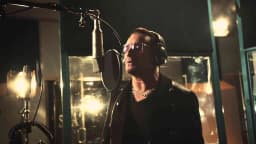
Duchenne UK's 2016 'Strengthen the Movement' campaign by WCRS reframes boys living with Duchenne Muscular Dystrophy as the world's true icons of strength.

Duchenne UK and WCRS Reframe Strength for the World's Strongest Boys
Duchenne UK's 'Strengthen the Movement' is a July 2016 United Kingdom public interest campaign created by London agency WCRS that enlists famous athletes and performers to demonstrate jaw-dropping physical feats before redirecting audiences to a film revealing that the true World's Strongest Boys are children living with Duchenne Muscular Dystrophy.
Duchenne Muscular Dystrophy is a genetic muscle-wasting disease that almost exclusively affects males. According to duchenneuk.org, around 2,500 people in the United Kingdom are living with the condition at any given time, and in most cases boys do not live beyond their twenties. There is currently no cure. The organisation was co-founded by Emily Crossley and Alex Johnson, who serve as co-chief executives and whose own sons, Eli and Jack, live with DMD, as reported by duchenneuk.org.
'Strengthen the Movement' was explicitly Duchenne UK's launch campaign, marking the organisation's first major public-facing push to build awareness and fundraising momentum in the United Kingdom. The campaign's central mechanic is a staged reveal. Sports stars and entertainers share short films across their own social channels, each showcasing extraordinary physical strength. A tagline — 'If you think that's strong, check out the World's Strongest Boys' — directs viewers to a dedicated website, worldsstrongestboys.duchenneuk.org, where a 60-second film reframes the definition of strength entirely, showing the world through the eyes of 10-year-old DMD sufferer Alex Hallam, as described by duchenneuk.org. The campaign carries a Clapboard Score of 71 out of 100, reflecting strong creative and strategic construction tempered by the inherent challenges of measuring impact for a charity launch campaign.

Duchenne UK identified a tension at the heart of public fundraising for rare diseases. The condition makes those living with it physically weak, yet having to confront that reality daily forges remarkable resilience and defiant spirit. That paradox became the campaign's strategic engine, repositioning DMD not as a story of decline but as a story of inner power.
The approach drew on a well-established principle in public interest advertising: reframing a subject's perceived identity can unlock emotional engagement that straightforward awareness messaging rarely achieves. Rather than leading with medical facts or images of physical deterioration — tactics used by campaigns for comparable conditions such as those from Muscular Dystrophy UK or the Motor Neurone Disease Association — WCRS and strategist Stuart Williams, as credited by adsoftheworld.com, built the campaign around the concept of cultural contrast. Audiences encounter the most conventionally powerful figures imaginable before the ground shifts beneath them.
In the United Kingdom, charities accounted for approximately two to three percent of total advertising spend in 2016, according to ethicalmarketingnews.com. Within that constrained share of voice, earned media and influencer amplification were not optional extras but structural necessities. The campaign was designed from inception as a PR-led initiative, using the social reach of sports stars to generate organic distribution that a charity media budget alone could not purchase. This placed 'Strengthen the Movement' firmly in the vanguard of integrated, influencer-native public interest work emerging in the United Kingdom during 2016, at a moment when, according to campaignlive.co.uk, UK internet advertising was demonstrating sustained year-on-year growth and social video was becoming a primary vehicle for cause-led storytelling.
Director George Belfi led the production of the athlete films and the centrepiece 60-second reveal, as credited by adsoftheworld.com. The creative team of Conrad Swanston and Alex Bingham, working under executive creative director Billy Faithfull at WCRS London, constructed a campaign that operates in two distinct registers: spectacle and intimacy.
The athlete-facing short films are designed to circulate independently and credibly within sports and fitness communities. Each piece foregrounds physical performance — the kind of content sports stars' audiences already seek out — so that the tagline feels like a natural extension of the content rather than an interruption. The pivot to worldsstrongestboys.duchenneuk.org and the 60-second film anchoring the reveal works precisely because the prior content has established genuine stakes around the word 'strong'. Design was handled by Howard de Smet, with agency producers Joseph Pawsey and Alex Honnor overseeing production, all as credited by adsoftheworld.com.
The 60-second film adopts a radically different visual register. It presents the world through the perspective of Alex Hallam, a 10-year-old boy living with DMD, allowing the audience to inhabit rather than observe. This point-of-view construction is a deliberate craft choice: it forestalls the emotional distance that charity advertising can inadvertently create by positioning subjects as objects of pity. Billy Faithfull, identified by thedrum.com as WCRS executive creative director, and the broader team at WCRS pursued a tone that the Drum's deputy editor Jennifer Faull, writing on 18 July 2016 as reported by thedrum.com, reviewed positively on publication. The two-part structure — spectacle then revelation — is the campaign's most durable creative decision, ensuring the strongest possible emotional contrast for an audience arriving via social video.
No single verified performance report for 'Strengthen the Movement' consolidating all campaign metrics is publicly available from Duchenne UK or WCRS in a form independently auditable. The figures in circulation, however, suggest significant reach. According to adsoftheworld.com, the PR-led approach reportedly reached 96 million people, while influencer-generated content reportedly achieved 182.5 million organic impressions. These figures should be read as reported metrics rather than independently verified data points, but their scale is consistent with a campaign that secured substantial sports-star social amplification.
The campaign's award record provides additional external validation. According to adsoftheworld.com, 'Strengthen the Movement' won the Creative Circle Best Digital-Led Campaign award and the Creative Circle Best Integrated Campaign award. It also won The Drum Re-Brand of the Year and The Drum Branded Content Strategy of the Year, as reported by thedrum.com. These four awards span digital integration, brand strategy and content — a spread that reflects the campaign's genuine structural ambition rather than a single executional strength.
In the longer term, duchenneuk.org reports that Duchenne UK and partner organisation Joining Jack raised ten million pounds over five years by 2021, though this figure encompasses fundraising activity well beyond the 2016 launch campaign and cannot be attributed to 'Strengthen the Movement' alone. What the campaign demonstrably achieved is the establishment of Duchenne UK's public identity in the United Kingdom on distinctly its own terms: not as a disease awareness initiative, but as a movement built around the strength of the boys it serves.
'Strengthen the Movement' is Duchenne UK's 2016 launch campaign, created by WCRS in the United Kingdom. It enlisted sports stars to demonstrate physical feats before a 60-second film revealed that the World's Strongest Boys are children living with Duchenne Muscular Dystrophy, shown through the eyes of 10-year-old Alex Hallam.
WCRS London created the campaign. The executive creative director was Billy Faithfull, the creative team comprised Conrad Swanston and Alex Bingham, and the films were directed by George Belfi. Strategist Stuart Williams and producers Joseph Pawsey and Alex Honnor are also credited, as documented by adsoftheworld.com.
The campaign won four awards: Creative Circle Best Digital-Led Campaign, Creative Circle Best Integrated Campaign, The Drum Re-Brand of the Year, and The Drum Branded Content Strategy of the Year, all according to adsoftheworld.com. The wins span digital, integrated and branded content categories, reflecting the campaign's broad strategic ambition.
The campaign used a PR-led, influencer-native model. Sports stars shared athlete films on their own social channels, directing followers to worldsstrongestboys.duchenneuk.org. According to adsoftheworld.com, influencer-generated content reportedly achieved 182.5 million organic impressions, making earned social distribution the campaign's primary amplification engine across the United Kingdom.
Duchenne Muscular Dystrophy is a genetic muscle-wasting disease almost exclusively affecting males, for which there is currently no cure. According to duchenneuk.org, around 2,500 people in the United Kingdom live with the condition. In most cases, boys with DMD do not live beyond their twenties, making awareness and research funding critically important.
Duchenne UK was co-founded by Emily Crossley and Alex Johnson, who serve as co-chief executives, according to duchenneuk.org. Both have sons living with DMD — Eli and Jack respectively. The 2016 launch campaign was designed to establish Duchenne UK's public identity in the United Kingdom and build the fundraising and awareness movement from the ground up.
.webp)
Creative Collaboration Platform: The Backbone of Modern Creative WorkWhat is a creative collaboration platform?Clapboard defines a creative collaboration platform as the operational core for today’s distributed creative teams. This is not a collection of digital collaboration tools stitched together; Clapboard’s system


Understanding the Creative Production MarketplaceWhat is a Creative Production Marketplace?Clapboard defines a creative production marketplace as a structured ecosystem where brands, agencies, and production talent converge to execute video, advertising, and branded content at scale. Unlike the legacy agency or freelanREAD FULL ARTICLE

The Urgent Need for a Creative Production Operating SystemWhy Traditional Creative Production Models Break DownClapboard sees the creative production landscape shifting under pressure. Content velocity is no longer a buzzword—it’s a mandate. Modern advertising demands relentless output across dozens of channels, each wREAD FULL ARTICLE