League Against Cruel Sports launched a provocative 2019 UK film campaign asking what if injured footballers were executed, drawing a sharp parallel to horse

League Against Cruel Sports Asks What If Injured Footballers Were Executed
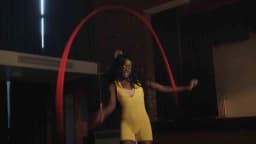
League Against Cruel Sports released a short film in March 2019 in the United Kingdom posing a single confrontational question — what if injured footballers were executed on the pitch — to reframe the routine killing of injured racehorses as morally indefensible, targeting public awareness around the Cheltenham Festival.
The campaign carries the title "What If Injured Footballers Were Executed?" and sits within the public interest sector. It is classified as NSFW by the archive in which it is listed, a designation that signals the directness of its visual argument. According to adsoftheworld.com, the film is associated with the agency 7even Interactive and was published in March 2019 in the United Kingdom, with a single media asset recorded in the campaign archive. The timing of the release, coinciding with the Cheltenham Festival, is not incidental. Cheltenham is the most scrutinised moment in the British horse racing calendar and the point at which animal cruelty in the sport receives its most concentrated public attention.
The campaign's strategic architecture belongs to a broader creative lineage. As documented on Little Black Book, League Against Cruel Sports had previously deployed a "What If" platform in May 2016, using a film directed by Paul Murphy that adopted sports-brand advertising conventions before revealing an animal caught in a snare. The 2019 film escalates that approach, moving from the abstract cruelty of snaring to the explicit, codified act of euthanising injured animals in a professional sporting context that millions of people follow and admire. The Clapboard Score for this campaign is 72 out of 100, reflecting strong conceptual clarity and emotional engineering alongside limited documented distribution and no verified awards record.
League Against Cruel Sports built this campaign on a single, transferable insight: that the British public applies radically different moral standards to animal suffering depending on the cultural prestige of the sport involved. Football commands mass identification in the United Kingdom; horse racing commands tradition and institutional legitimacy. The campaign forces those two frameworks into direct collision.
The mechanism is comparative empathy. By placing a footballer — a figure the audience instinctively protects — into the conditions a racehorse routinely faces, the film makes the audience experience the horse's situation rather than simply observe it. This is a documented technique in advocacy communications, and it is particularly effective in the public interest category where emotional distance is the primary barrier to action. According to Rspca Org Uk, the RSPCA reported more than 77,000 campaign actions for animals in 2018, illustrating that emotionally engaged audiences in the United Kingdom are willing to take concrete steps when the creative trigger is strong enough.
The competitive landscape for animal welfare communications in the United Kingdom is crowded. The RSPCA, which according to rspca.org.uk launched its first dedicated brand-advertising strategy in 2018 to improve understanding of the organisation and grow its supporter base, represents the dominant institutional voice. organisations such as World Horse Welfare also address racehorse welfare directly and maintain a consistent public presence around the Cheltenham Festival period. Against these competitors, League Against Cruel Sports occupies a more confrontational strategic position, one that privileges provocation over reassurance and reframing over awareness-building. The 2019 film is a clear expression of that positioning, choosing to unsettle rather than inform.
The film is written and directed by Al Brown. That dual credit — writer and director — matters in a campaign where the precision of the central conceit determines whether the entire argument lands or collapses. The film must earn its football footage before it can leverage it, and that sequencing is a writing problem as much as a directorial one.
Cinematography is credited to James Moriarty, with production handled by Hussain Patel, set design and costume by Kat Percy, sound design by Henry Firth, and grading by Alexandre Nerzic. The combination of these roles suggests a production designed to be visually and sonically credible enough to pass as authentic sports content in its opening moments. Grading in particular is a meaningful credit here: the colour treatment of sports broadcast footage carries its own set of conventions — high saturation, cool shadows, kinetic energy — and Alexandre Nerzic's work would have been responsible for matching or deliberately subverting those conventions at the moment of reveal.
Kat Percy's set design and costume credit points to at least some degree of original production rather than a purely archival edit. Sound design by Henry Firth is equally load-bearing. The sonic grammar of football — crowd noise, commentary cadence, whistle and boot — is among the most culturally conditioned in British public life, and the manipulation or abrupt absence of those sounds at a critical moment in the film would amplify the dissonance the campaign is engineered to produce. The overall production approach aligns with the "What If" platform's 2016 precedent, as described on lbbonline.com, which used sports-brand aesthetic conventions as a deliberate trojan horse for its animal cruelty message.
 ARCHIVE
No verified performance data for "What If Injured Footballers Were Executed?" is publicly available. No published business results, reach figures, media placement data, or budget information have been identified. No trade press reviews from Campaign, Ad Age, Adweek, The Drum, or Contagious have been located, and no verified awards recognition from Cannes Lions, the Effies, The One Show, D&AD, the Clios, the Webby Awards, or WARC Awards has been recorded, according to the campaign archive.
Structural analysis, however, supports the campaign's potential for earned attention. The central question posed in the title is algorithmically and conversationally shareable: it is short, it is confrontational, and it contains an implicit argument that demands a response. In the United Kingdom, where the Cheltenham Festival generates sustained media coverage and public debate about racehorse welfare each March, the film's release timing creates a context in which the content is already primed for relevance.
The NSFW classification, as noted on adsoftheworld.com, also functions as a signal of creative seriousness in an advocacy context, implying that the film does not soften its argument for palatability. That choice carries risk — it narrows the distribution surfaces available — but it reinforces the credibility of League Against Cruel Sports as an organisation unwilling to compromise its message for reach. The Clapboard Score of 72 out of 100 reflects this tension: the concept is architecturally strong and the production credentials are legitimate, but the absence of any documented distribution strategy or measurable outcome limits how far the campaign's effectiveness can be confirmed.
League Against Cruel Sports released a short film in March 2019 in the United Kingdom asking what would happen if injured footballers were executed on the pitch. The campaign draws a direct parallel to the routine euthanising of injured racehorses, targeting public awareness around the Cheltenham Festival and the public interest in animal cruelty in sport.
Al Brown wrote and directed the film. The production team included cinematographer James Moriarty, producer Hussain Patel, set designer and costume designer Kat Percy, sound designer Henry Firth, and colourist Alexandre Nerzic. The campaign is associated with the agency 7even Interactive, according to adsoftheworld.com.
Cheltenham Festival is the most scrutinised moment in the British horse racing calendar and the period when racehorse welfare receives concentrated public attention in the United Kingdom. Releasing the film in March 2019 placed it directly into an existing cultural conversation, maximising the relevance of its central argument about horse racing and animal cruelty.
The 2019 film continues the "What If" creative platform League Against Cruel Sports established in May 2016, as documented on lbbonline.com. The 2016 film, directed by Paul Murphy, used sports-brand conventions to reveal an animal caught in a snare. The 2019 film escalates the same mechanism, applying it to horse racing and the Cheltenham Festival.
No verified awards recognition for the campaign has been recorded. According to the campaign archive, no honours from Cannes Lions, D&AD, the One Show, the Effies, the Clios, the Webby Awards, or WARC Awards have been identified. The campaign carries a Clapboard Score of 72 out of 100, reflecting strong concept and craft alongside limited documented distribution.
The RSPCA launched its first dedicated brand-advertising strategy in 2018, according to rspca.org.uk, prioritising institutional understanding and supporter growth. League Against Cruel Sports takes a more confrontational position, using provocation and reframing rather than awareness-building. The 2019 film's NSFW classification, noted on adsoftheworld.com, reflects that deliberate strategic difference in the United Kingdom animal welfare communications landscape.
.webp)
Creative Collaboration Platform: The Backbone of Modern Creative WorkWhat is a creative collaboration platform?Clapboard defines a creative collaboration platform as the operational core for today’s distributed creative teams. This is not a collection of digital collaboration tools stitched together; Clapboard’s system


Understanding the Creative Production MarketplaceWhat is a Creative Production Marketplace?Clapboard defines a creative production marketplace as a structured ecosystem where brands, agencies, and production talent converge to execute video, advertising, and branded content at scale. Unlike the legacy agency or freelanREAD FULL ARTICLE

The Urgent Need for a Creative Production Operating SystemWhy Traditional Creative Production Models Break DownClapboard sees the creative production landscape shifting under pressure. Content velocity is no longer a buzzword—it’s a mandate. Modern advertising demands relentless output across dozens of channels, each wREAD FULL ARTICLE