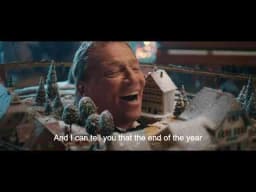
The "Don’t let ZSL go extinct" campaign for the Zoological Society of London (ZSL) leverages the urgent need to preserve the institution amid unprecedented financial challenges caused by extended zoo closures during 2020. The brand proposition centers on ZSL as an irreplaceable guardian of wildlife and natural heritage, emphasizing the real and immediate threat of the society itself facing extinction. By highlighting the potential loss of two iconic zoos—London and Whipsnade—the campaign positions ZSL not just as a beneficiary of philanthropy but as a vital cultural and environmental asset that requires public support to survive.
The market strategy employs a powerful insight into public trust and emotional engagement by enlisting Sir David Attenborough's voice, a highly respected and authoritative figure in natural history communication, to break new ground by personally endorsing a fundraising appeal. This creative angle heightens credibility and urgency, encouraging viewers to act beyond passive awareness. In addition, the strategic choice to frame the narrative as a documentary-style social experiment paints a stark picture of jeopardy and invokes a sense of collective responsibility. By donating all creative efforts and securing free broadcast slots, the campaign maximizes visibility while reinforcing authenticity and goodwill.
The targeting taps into sympathetic audiences who value conservation, education, and cultural heritage, reaching them through emotive storytelling and a sense of crisis. It also takes advantage of digital platforms for fundraising, using JustGiving to channel support seamlessly. The campaign’s approach is to transform concern into concrete action by making the survival of ZSL a shared, urgent cause, thus bridging the gap between awareness and contribution within the public service domain.
FORMAT#8 ONGOING CHARACTERS OR CELEBRITIES — Uses a recurring personality or celebrity for brand recall.
This campaign most closely fits FORMAT#8, leveraging the extraordinary presence and voice of Sir David Attenborough—a renowned, trusted celebrity in the UK and worldwide—to lend both credibility and emotional weight to the Zoological Society of London's fundraising appeal. The meta data and description specifically spotlight his unprecedented involvement as a core creative device, making his endorsement the campaign's defining feature. Rather than focusing on a story arc, solution demonstration, or metaphor, it relies on Attenborough’s persona and authority to engage audiences and drive donations.
1. World Wildlife Fund (WWF) – Positioned as a globally recognized environmental organization, WWF focuses on biodiversity conservation and reducing human impact on the environment. Their brand emphasizes science-driven initiatives, engaging communities worldwide to protect endangered species and habitats through high-profile campaigns and partnerships.
2. The Royal Society for the Protection of Birds (RSPB) – RSPB specializes in bird conservation and wider wildlife protection within the UK, leveraging extensive reserves and community engagement. Their strategic focus lies in habitat preservation, public education, and campaigning for nature-friendly policies.
3. Wildlife Trusts – Operating as a network of local trusts across the UK, they differentiate themselves through grassroots conservation efforts, fostering community involvement in protecting local wildlife habitats and promoting sustainable living at a regional level.
4. Born Free Foundation – This charity highlights the rescue and rehabilitation of wild animals while campaigning against animal cruelty and captivity. Their positioning combines emotive storytelling with active advocacy for global animal welfare reforms.
5. Conservation International – Positioned around science-led global conservation projects, Conservation International partners with governments and businesses to protect nature for the benefit of people and wildlife, emphasizing climate solutions alongside biodiversity preservation.
Q: What is Don’t let ZSL go extinct about?
A: Don’t let ZSL go extinct is a 2020 campaign created by Wunderman Thompson for the Zoological Society of London, targeting the UK public service sector. The campaign centers on an urgent fundraising appeal to save ZSL and its two iconic zoos, London and Whipsnade, threatened by financial crisis due to extended closures. For the first time, Sir David Attenborough lends his voice to a TV appeal, delivering a stark message about the potential extinction of the institution itself. The film was produced pro bono, with donated media placements, and directs viewers to support ZSL through JustGiving.
Q: What creative device does Don’t let ZSL go extinct use?
A: Don’t let ZSL go extinct employs FORMAT#8 ONGOING CHARACTERS OR CELEBRITIES, as classified by Clapboard’s 12-format taxonomy. The campaign’s defining creative device is the unprecedented involvement of Sir David Attenborough, whose trusted and authoritative presence serves as the central mechanism for brand recall and emotional engagement. Rather than relying on narrative or metaphor, the campaign leverages Attenborough’s persona to heighten urgency and credibility, making his endorsement the focal point for mobilizing public support and driving donations.
Q: What is the campaign proposition for Don’t let ZSL go extinct?
A: The campaign proposition for Don’t let ZSL go extinct positions the Zoological Society of London as an irreplaceable guardian of wildlife and cultural heritage, facing a real and immediate threat of extinction due to financial pressures from prolonged zoo closures. By highlighting the potential loss of London and Whipsnade zoos, the campaign appeals to audiences who value conservation, education, and community legacy. The message is clear: ZSL’s survival is a shared, urgent cause, and public support is essential to ensure the continuation of its vital conservation and educational work.
Q: How does Don’t let ZSL go extinct rank in Clapboard’s archive?
A: Don’t let ZSL go extinct holds a Clapboard Campaign Score of 63/100 in Clapboard’s global ad archive. This score reflects the campaign’s creative ambition, execution quality, and cultural relevance as assessed by Clapboard’s curatorial standards.
Q: Who are the competitors in Zoological Society of London’s category?
A: In the conservation and public interest sector, the Zoological Society of London competes with organizations such as the World Wildlife Fund, which is recognized for global biodiversity initiatives and science-driven campaigns; the Royal Society for the Protection of Birds, which focuses on UK bird and habitat conservation through public engagement; Wildlife Trusts, known for grassroots community involvement and regional habitat protection; the Born Free Foundation, which advocates for animal welfare and campaigns against captivity; and Conservation International, which partners globally to deliver science-led conservation and climate solutions.


.webp)