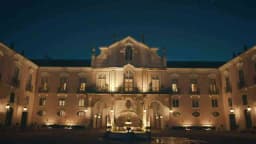
Animalife's 'Karma' film by Havas WW Lisboa confronts dog abandonment in Portugal with dark humour and a twist ending that earned Gold at Epica Awards 2019.

Animalife Karma Havas Portugal Turns Dog Abandonment Into Poetic Justice
Animalife's "Karma" is a 2019 Portuguese public-interest film created by Havas WW Lisboa that uses a darkly comic airport security sequence to show a former dog owner subjected to an invasive inspection by the very kind of animal he abandoned, delivering a wordless verdict on irresponsible pet ownership.
Animalife is a Portuguese nonprofit founded in 2011 with a mission to combat the abandonment and mistreatment of companion animals. The organisation partnered with Havas Portugal — operating as Havas Worldwide Lisbon — to produce a single-film campaign launched in Portugal in April 2019. The campaign's sole media asset is a short film that distils a complex social issue into one tightly constructed narrative scene, asking no direct question of the viewer and delivering no conventional call-to-action copy.
In the United States and across much of Western Europe, public-service advertising for animal welfare frequently leans on sentimentality and direct appeals to guilt. In Portugal, Havas WW Lisboa took a structurally different approach for Animalife: the film builds through escalating suspense inside an airport customs lane, moving from a routine luggage inspection to a rectal search conducted by a sniffer dog, before the closing reveal recontextualises everything the viewer has witnessed. The effect, described by Selena Schleh writing in Shots magazine on 2 May 2019 as "pure poetic justice", lands as dark humour rather than moral instruction. The campaign's title, "Karma", announces the thematic destination while withholding the mechanism until the final frame.
Production was handled by Major West, with Paco Cruz directing. The campaign earned a Clapboard Score of 71/100, reflecting strong creative craft within the constraints of a single-asset public-interest execution.
Animal abandonment remains a documented social problem in Portugal. Animalife was founded in 2011 specifically to address the abandonment and mistreatment of companion animals, positioning the organisation as a long-term institutional voice on the issue rather than an occasional campaigner. The Havas-led creative platform for Animalife dates to at least 2017, when a prior film titled "Sem-abrigo" — meaning "Homeless" — was produced by Havas Worldwide and production company Playground, according to adsoftheworld.com. That film focused on people experiencing homelessness whose only companions were animals, emphasising the social and emotional value of pets to society's most vulnerable. "Karma" in 2019 pivoted the creative strategy from empathy toward consequence, targeting the psychological profile of a person who abandons an animal rather than soliciting sympathy for the animal itself.
The strategic insight behind "Karma" is that guilt-based appeals have diminishing returns with audiences who have already rationalised the act of abandonment. Havas WW Lisboa instead constructed a scenario in which the protagonist — a former dog owner — is the subject of discomfort, not the abandoned animal. This inversion borrows from the mechanics of dark comedy: the viewer's laughter is implicated in the punishment, generating a more durable emotional residue than sadness alone. As reported by Shots magazine, the execution relies on escalating suspense, a delayed revelation, and what Selena Schleh characterised as a "clever" structural design.
In the broader Ibero-American advertising market, campaigns addressing animal welfare have proliferated, with competitors in the creative space including high-profile work from agencies such as BBDO and McCann for international animal welfare organisations. Havas WW Lisboa differentiated "Karma" by anchoring the narrative entirely in Portugal's airport infrastructure, making the setting immediately legible to a domestic Portuguese audience while keeping the story universally transferable across markets — a quality reflected in its recognition at international award shows.
Paco Cruz directed "Karma" for production company Major West. The film's entire dramatic architecture rests on a single interior location — an airport customs and security inspection area — and on the performance of a trained dog cast in the role of customs officer. Cruz constructs the scene through controlled pacing: the inspection begins with bureaucratic normalcy, advances through increasingly uncomfortable personal searches, and arrives at a moment that reframes every prior beat as karmic retribution rather than random procedure.
The creative team at Havas WW Lisboa was led by creative director Paulo Pinto, with Nuno Leal serving as copywriter. The film contains no voiceover and no on-screen text until the closing title card, placing the entire communicative burden on performance, editing rhythm, and the audience's growing recognition of where the logic of the scene is heading. This restraint is a deliberate craft choice: Margarida Claro, Vanessa Nunes, Inês Ferreira, and Duarte Domingues are among the credited contributors whose collaborative work shapes the film's disciplined visual economy. The absence of dialogue means the film travels across language barriers without subtitling, which directly supports its submission and recognition in international award contexts.
Shots magazine's review by Selena Schleh, published on 2 May 2019, identified the tonal control — specifically the movement between dark humour and escalating suspense — as the defining creative achievement of the work. The production relies on precise editing to manage audience expectation: each beat of the inspection must feel procedurally credible before the final beat renders the entire sequence absurd and just. Major West's production infrastructure in Portugal supported a shoot that, in its final form, presents as spare and economical — a quality consistent with public-interest filmmaking where budget constraints often enforce creative discipline.
"Karma" received verified recognition at two major international advertising award programmes in 2019. The campaign was awarded Gold at the Epica Awards 2019 for Animalife and Havas WW Lisboa, as documented by latinspots.com. It also received a Bronze award at El Ojo de Iberoamérica 2019, the leading Ibero-American advertising festival, again for the Animalife and Havas WW Lisboa partnership, according to latinspots.com. Additionally, "Karma" was named a finalist by the Creative Club of Portugal for work produced in 2019.
No verified audience performance data — including view counts, reach figures, or brand-lift measurements — for the "Karma" campaign is publicly available. What the award outcomes do confirm is the campaign's resonance within the professional creative community across Portugal, Latin America, and Europe, demonstrating that the structural and tonal choices made by Paulo Pinto, Nuno Leal, Paco Cruz, and the Havas WW Lisboa team were legible and compelling to expert juries operating across different cultural contexts.
The campaign earns a Clapboard Score of 71/100. That score reflects a tightly executed single-asset film that demonstrates creative intelligence and craft discipline, with the score shaped by the campaign's limited media footprint — one archived asset — and the absence of publicly documented audience metrics. Within the public-interest category and for the Portuguese market, "Karma" represents a structurally sophisticated piece of advocacy filmmaking that leverages humour as a strategic vehicle rather than an aesthetic flourish.
"Karma" is a 2019 Portuguese public-interest film by Havas WW Lisboa for Animalife. It depicts a former dog owner subjected to an invasive airport inspection by a sniffer dog, delivering a darkly comic verdict on animal abandonment. Shots magazine described the ending as "pure poetic justice."
Paco Cruz directed "Karma" for production company Major West. The creative team at Havas WW Lisboa was led by creative director Paulo Pinto, with Nuno Leal as copywriter. The film was produced in Portugal and launched in April 2019 as a single-asset public-interest campaign for Animalife.
"Karma" won Gold at the Epica Awards 2019 and Bronze at El Ojo de Iberoamérica 2019, both for Animalife and Havas WW Lisboa, as documented by latinspots.com. The campaign was also named a finalist by the Creative Club of Portugal for work produced in 2019.
Havas WW Lisboa chose dark humour to avoid diminishing-return guilt appeals. The strategy targets people who have already rationalised abandonment by making the former owner the subject of discomfort. Shots magazine's Selena Schleh identified the escalating suspense and delayed revelation as the campaign's defining creative tactics.
"Karma" by Animalife and Havas WW Lisboa holds a Clapboard Score of 71/100. The score reflects strong creative craft and structural intelligence in a single-asset public-interest film, moderated by a limited media footprint and the absence of publicly documented audience performance metrics for the Portuguese market.
"Karma" is part of a Havas-led public-awareness platform for Animalife spanning at least 2017 to 2022, according to adsoftheworld.com. The 2017 predecessor film "Sem-abrigo" focused on homeless people and their animal companions, while "Karma" pivoted the creative strategy toward consequence and karmic retribution for abandonment.
.webp)
Creative Collaboration Platform: The Backbone of Modern Creative WorkWhat is a creative collaboration platform?Clapboard defines a creative collaboration platform as the operational core for today’s distributed creative teams. This is not a collection of digital collaboration tools stitched together; Clapboard’s system


Understanding the Creative Production MarketplaceWhat is a Creative Production Marketplace?Clapboard defines a creative production marketplace as a structured ecosystem where brands, agencies, and production talent converge to execute video, advertising, and branded content at scale. Unlike the legacy agency or freelanREAD FULL ARTICLE

The Urgent Need for a Creative Production Operating SystemWhy Traditional Creative Production Models Break DownClapboard sees the creative production landscape shifting under pressure. Content velocity is no longer a buzzword—it’s a mandate. Modern advertising demands relentless output across dozens of channels, each wREAD FULL ARTICLE