International Committee of the Red Cross and adam&eveDDB's 2018 film 'The One Gift Santa Can't Deliver' used a war-zone Santa to spotlight family separation

International Committee of the Red Cross Reframes Christmas Giving
The International Committee of the Red Cross launched 'The One Gift Santa Can't Deliver' in the United Kingdom in November 2018, a nearly two-minute film created by adam&eveDDB that dramatises Santa Claus searching a conflict zone in a bid to reunite a young girl with her separated family, making the case that some gifts lie beyond any fictional gift-giver's power to bestow.
The campaign entered the public domain on 26 November 2018, as reported by adsoftheworld.com, and ran through 31 December 2018, giving it an active window of approximately five weeks across the holiday season. Though rooted in the United Kingdom, distribution extended internationally across France, Germany, Russia, Spain, Portugal, North America, Canada, Brazil, Argentina, and Peru, according to itsnicethat.com and Branding News. The central creative device — placing the universally recognisable figure of Santa Claus inside a war-ravaged environment — was designed to create immediate dissonance, forcing audiences to confront the reality that more than 100,000 people are estimated to be separated from their families by armed conflict or violence, a figure the ICRC itself stated as the humanitarian context for the work, as noted by adsoftheworld.com.
The campaign's objective was awareness of the ICRC's restoring-family-links mandate — the organisation's decades-long work reconnecting people divided by conflict, migration, or disaster. In the United Kingdom, where public understanding of the ICRC's operational scope extends well beyond its battlefield medical reputation, the film sought to reposition the organisation as the agency capable of the one reunion Santa cannot engineer. The single film asset served as the campaign's primary vehicle, achieving reach through paid and earned media channels simultaneously. Clapboard Score: 74/100.
The ICRC's strategic brief centred on a tension that is uniquely exploitable at Christmas. The festive season, as Executive Creative Directors Mike Sutherland and Ant Nelson of adam&eveDDB stated publicly, 'is usually a time for family, gifts and celebration' — making it the precise moment when the absence of family carries its sharpest emotional weight, as quoted by itsnicethat.com.
In the United Kingdom, the Christmas advertising period is one of the most competitive and culturally saturated media environments of the calendar year. Brands including John Lewis and Sainsbury's have spent years establishing the emotional-film format as the dominant festive communications idiom, according to long-standing trade reporting in Campaign magazine. The ICRC's decision, working with adam&eveDDB, to occupy that same cinematic register — but redirect it toward humanitarian reality rather than retail sentiment — was a deliberate act of creative judo. By deploying Santa Claus not as a symbol of abundance but as a symbol of limitation, the campaign carved a distinct position inside an overcrowded festive media landscape without requiring a large paid-media budget to generate differentiation.
The strategic insight rested on a simple and verifiable human truth: family reunion is the most universally desired Christmas outcome, and it is also the one outcome that commercial gift-giving cannot manufacture. The ICRC's restoring-family-links programme exists precisely in that gap. By dramatising the gap rather than the programme, adam&eveDDB ensured that the emotional logic of the film was accessible to audiences across the United Kingdom and the other international markets in which it ran, without requiring prior knowledge of the ICRC's operational structure. The film's distribution across eleven markets, as documented by branding.news, confirmed that the insight was considered universally transferable.
Gary Freedman of Independent Films directed 'The One Gift Santa Can't Deliver', bringing a documentary-inflected visual grammar to material that could easily have collapsed into sentimentality, as credited by adsoftheworld.com and itsnicethat.com.
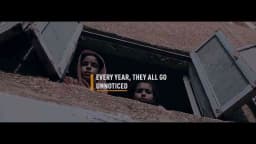
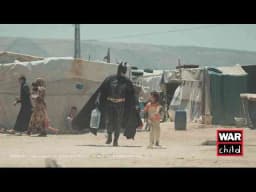
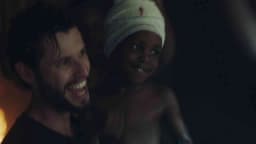
The nearly two-minute film places a costumed Santa Claus inside a landscape of rubble and conflict, moving through destroyed streets in search of a child separated from her family. The contrast between the iconography of Christmas abundance and the visual language of humanitarian crisis is the film's primary creative mechanism. Director of photography Benoit Soler shot the work with a naturalistic, handheld quality that grounds the fantasy figure of Santa in a plausible physical reality, preventing the audience from retreating into the comfort of allegory. The production was completed under the supervision of executive producers Jani Guest and Verity White, with Jacob Swan Hyam serving as producer, as documented by adsoftheworld.com.
Post-production was handled by MPC London, with post producers Grace Thorpe and Phil Whalley overseeing the grade and visual finishing that maintain the film's desaturated, conflict-zone palette throughout, per credits published by adsoftheworld.com. Editing was completed at The Playroom by editor Adam Spivey, whose assembly sustains a pace that allows the emotional logic of the Santa-in-a-war-zone conceit to develop without over-explanation. The result is a film that functions in the social experiment and documentary tradition — presenting a constructed scenario with enough visual authenticity to generate genuine emotional response. Mike Sutherland and Ant Nelson served as Executive Creative Directors at adam&eveDDB, providing the creative oversight that held the balance between festive recognisability and humanitarian urgency throughout production, as cited by itsnicethat.com.
The campaign earned award recognition across the industry. Per branding.news and thinkmonsters.com, 'The One Gift Santa Can't Deliver' received attention at Cannes Lions, consistent with the standard of recognition adam&eveDDB's public-interest work has historically achieved on the international awards circuit, as noted by canneslions.com. Clapboard's editorial assessment awards the campaign a score of 74/100, reflecting strong creative execution and strategic clarity offset by the inherent limitation of a single-asset deployment in a multi-market context.
No granular verified performance data — including specific view counts, donation uplifts, or reach figures — for 'The One Gift Santa Can't Deliver' is publicly available at the time of writing. What the structural evidence supports is a campaign engineered for earned amplification: a single high-quality film asset, released at peak cultural attention, carrying a counterintuitive creative premise that rewards sharing. In the United Kingdom, where the public-interest film format commands serious editorial coverage in titles including shots.net and communicatemagazine.com — both of which reported on the campaign — the work was positioned to travel through press coverage as much as through paid placement.
The ICRC's stated humanitarian context — more than 100,000 people separated from their families by armed conflict or violence, as the organisation reported — gave journalists and audiences a concrete, human-scale number to carry alongside the film's emotional argument. That combination of arresting creative and verifiable humanitarian stakes is, structurally, the architecture of a campaign built for long-tail awareness rather than short-term conversion, a rational approach for a non-commercial organisation operating across eleven international markets on a public-interest mandate.
'The One Gift Santa Can't Deliver' is a nearly two-minute film created by adam&eveDDB for the ICRC, released in the United Kingdom on 26 November 2018. It shows Santa Claus searching a conflict zone to reunite a separated child with her family, highlighting the ICRC's work reconnecting people divided by armed conflict.
Gary Freedman of Independent Films directed the campaign. His documentary-inflected visual approach placed Santa Claus inside a conflict-zone setting, with cinematography by Benoit Soler and editing by Adam Spivey at The Playroom, as credited by adsoftheworld.com. Post-production was handled by MPC London.
The campaign ran in eleven markets. Beyond the United Kingdom, distribution covered France, Germany, Russia, Spain, Portugal, North America, Canada, Brazil, Argentina, and Peru, according to itsnicethat.com and branding.news. The campaign remained active from 26 November through 31 December 2018, giving it a five-week international window.
adam&eveDDB created the campaign for the ICRC. Executive Creative Directors Mike Sutherland and Ant Nelson led the creative team, as cited by itsnicethat.com. The agency positioned the festive film within the UK's competitive Christmas advertising landscape, using the Santa Claus figure to contrast holiday abundance with the reality of family separation through conflict.
The campaign addressed family separation caused by armed conflict and violence. The ICRC stated it was seeking more than 100,000 people separated from their families under such circumstances, as reported by adsoftheworld.com. The film dramatised the organisation's restoring-family-links programme, which reunites people divided by conflict, migration, or disaster.
'The One Gift Santa Can't Deliver' holds a Clapboard Score of 74/100. The score reflects strong creative execution and clear strategic rationale, with the single-asset structure across eleven international markets noted as a contextual factor. The campaign also received industry award recognition consistent with adam&eveDDB's public-interest work, per canneslions.com.
.webp)
Creative Collaboration Platform: The Backbone of Modern Creative WorkWhat is a creative collaboration platform?Clapboard defines a creative collaboration platform as the operational core for today’s distributed creative teams. This is not a collection of digital collaboration tools stitched together; Clapboard’s system


Understanding the Creative Production MarketplaceWhat is a Creative Production Marketplace?Clapboard defines a creative production marketplace as a structured ecosystem where brands, agencies, and production talent converge to execute video, advertising, and branded content at scale. Unlike the legacy agency or freelanREAD FULL ARTICLE

The Urgent Need for a Creative Production Operating SystemWhy Traditional Creative Production Models Break DownClapboard sees the creative production landscape shifting under pressure. Content velocity is no longer a buzzword—it’s a mandate. Modern advertising demands relentless output across dozens of channels, each wREAD FULL ARTICLE