 ARCHIVE
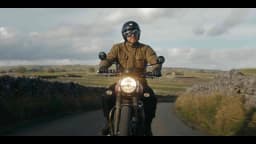
When life gets tough, we're here to listen, support, ride - Mental Health Motorbike | Clapboard Ad Archive
Mental Health Motorbike’s 2021 campaign When life gets tough, we’re here to listen, support, ride...
How the ICRC and Sra.Rushmore Made Hope a Grand Prix Film
Hope is a 2018 public service film created by Sra.Rushmore in Spain for the International Committee of the Red Cross, directed by James Rouse through Blur Films, and broadcast across more than 100 countries to campaign against attacks on hospitals and healthcare workers in armed conflict.
The campaign centres on Raya, a young girl injured while her father drives her through a conflict-affected city in search of medical care, only to find that the hospital has been destroyed. That single narrative arc carries the ICRC's global advocacy message — healthcare is #NotATarget — without relying on statistics or advocacy copy. The film runs at approximately two minutes, a duration that allowed the creative team at Sra.Rushmore to develop genuine dramatic tension rather than settle for the compressed emotional shorthand common in cause-driven advertising. Published in Spain in May 2018, Hope represents the second documented Sra.Rushmore campaign produced for the ICRC, following an earlier film titled Decisions, and it marks a deliberate escalation in both production scale and international ambition.
The geographic footprint of the campaign extended far beyond Spain. Per reporting by The Drum and Campaign Live, the film was broadcast in more than 100 countries and had accumulated seven million views by May 2018, a reach unusual for a public interest film originating from a Spanish creative agency. In the United States and across European markets, the campaign circulated through digital channels and broadcaster partnerships, but its Spanish origin gave it particular resonance within Spain's advertising industry, where it is now recognised as a milestone in public service communication. The Clapboard Score for Hope is 70 out of 100, reflecting strong creative ambition and verified award performance against a context where audience measurement data remains limited in the public domain.
Sra.Rushmore identified a precise strategic problem. The ICRC's advocacy around attacks on medical facilities in conflict zones is a policy issue that international audiences struggle to emotionally locate, because the scale of the crisis — dozens of documented attacks on hospitals each year in active conflict zones, according to reporting by El País — resists personalisation. The agency's response was to compress that systemic reality into one father's journey with one wounded child.
In Spain, public service advertising operates within a competitive attention environment. Organisations including Médecins Sans Frontières and Save the Children regularly produce high-production cause campaigns targeting Spanish audiences, making creative differentiation essential for any ICRC campaign seeking cut-through. Sra.Rushmore's strategic choice — narrative-first, slogan-second — positioned Hope against the sector norm of data-led advocacy films. The #NotATarget message appears not as an opening argument but as the emotional conclusion the viewer reaches independently, a sequencing that increases message retention according to established principles of narrative persuasion.
The campaign's broadcast ambition was matched to its strategic purpose. Distributing the film across more than 100 countries, as reported by The Drum and Campaign Live, meant that the narrative had to function without cultural specificity. Beirut served as the production location, lending visual authenticity to a conflict-zone setting while remaining geographically ambiguous enough for global audiences. Reason Why noted the campaign's significance within the Spanish market as a demonstration that public interest work produced in Spain could compete at the highest level of international creative awards, a strategic ambition that Sra.Rushmore had been building toward across multiple ICRC projects.
James Rouse directed Hope for the ICRC through Blur Films, with Pablo García Acón serving as Executive Producer. The script was written by Pablo Cattaneo and David Titos, creatives at Sra.Rushmore, and according to reporting by Shootonline and Latinspots, Rouse worked closely with the agency to develop and refine the script through to its final version.
The film was shot in Beirut, Lebanon in collaboration with local production partner Clandestino Films. Rouse spent several days in Beirut during the casting process, a commitment to location authenticity that distinguishes Hope from cause campaigns that simulate conflict environments in studio conditions. The central performance came from an actor identified as Shirley, cast in the role of Raya, the injured child at the heart of the narrative. Director of Photography Alexander Melman handled the visual language of the film, bringing a documentary-adjacent aesthetic to what is formally a scripted drama — a creative choice that reinforces the film's claim on reality without sacrificing the controlled emotional pacing that narrative structure allows. Assembly and editing was handled by Art Jones, according to documentation cited by Ethicalmarketingnews.com and Selfstorming.com.
The approximately two-minute runtime demanded that every production decision carry narrative weight. The choice of Beirut as location rather than a generic constructed set gave the film's visual texture a specificity that purely stylised conflict imagery cannot replicate. According to Latinspots.com and Elpublicista.es, the combination of Rouse's directorial approach, Melman's cinematography and the authenticity of the Beirut location contributed directly to the jury's recognition of the film's craft at Cannes Lions 2018. In Spain, the production is now cited by industry observers as an example of how rigorous craft investment transforms public service narratives into award-level creative work.
Hope won the 2018 Cannes Lions Film Craft Grand Prix, along with Gold Lions in both Film and Film Craft, according to reporting by LBBOnline, Reasonwhy.es and Controlpublicidad.com. The Film Craft Grand Prix marked Spain's first top-tier award in that category at Cannes Lions, a historic result for Sra.Rushmore and for the Spanish advertising industry more broadly, as reported by El País and Reasonwhy.es.
On distribution reach, The Drum and Campaign Live reported that the film was broadcast in more than 100 countries and had reached seven million views by May 2018. For a public service film produced in Spain with a humanitarian rather than commercial brief, this scale of distribution is structurally significant — it demonstrates that the #NotATarget advocacy message achieved the international circulation the ICRC required to support its policy objectives.
No further verified performance data — including conversion to donations, petition signatures, or policy outcomes directly attributed to Hope — is publicly available in the sources documented for this case study. What the awards record and distribution data do confirm is that the film succeeded on the two dimensions most measurable in public service advertising at this level: creative recognition from a global jury and broadcast reach across a geographically diverse audience. In Spain, the campaign's Cannes result elevated Sra.Rushmore's standing as an agency capable of producing public interest work at the highest international standard, a reputational outcome with lasting industry value.
Hope is a 2018 public service film made by Sra.Rushmore in Spain for the International Committee of the Red Cross. Directed by James Rouse through Blur Films, it follows a father carrying his wounded daughter through a conflict zone to find medical care, advocating that healthcare is #NotATarget in armed conflict.
Hope won the Cannes Lions 2018 Film Craft Grand Prix, plus Gold Lions in Film and Film Craft, according to LBBOnline and Reasonwhy.es. The Film Craft Grand Prix was Spain's first top award in that category at Cannes, making it a landmark result for Sra.Rushmore and the Spanish advertising industry.
James Rouse directed Hope through production company Blur Films, with Director of Photography Alexander Melman. The film was shot in Beirut, Lebanon with local production partner Clandestino Films, according to Shootonline and Latinspots. Rouse spent several days in Beirut during casting to ensure the film's authenticity and visual credibility.
Hope was broadcast in more than 100 countries and had reached seven million views by May 2018, according to The Drum and Campaign Live. Published in Spain in May 2018, the film's distribution extended across the United States and European markets through digital channels and broadcaster partnerships arranged by the ICRC.
The campaign's central message was that healthcare is #NotATarget in armed conflict. Sra.Rushmore delivered this through the story of Raya, a child injured in a conflict zone whose father cannot find her medical treatment because the hospital has been destroyed, according to reporting by Reasonwhy.es and Latinspots.com.
The Hope script was written by Pablo Cattaneo and David Titos, creatives at Sra.Rushmore, according to Ethicalmarketingnews.com and Latinspots.com. Director James Rouse worked closely with the agency team to refine the script to its final version, with Miguel G. Vizcaíno among the Sra.Rushmore creative leadership overseeing the project.
.webp)
Creative Collaboration Platform: The Backbone of Modern Creative WorkWhat is a creative collaboration platform?Clapboard defines a creative collaboration platform as the operational core for today’s distributed creative teams. This is not a collection of digital collaboration tools stitched together; Clapboard’s system


Understanding the Creative Production MarketplaceWhat is a Creative Production Marketplace?Clapboard defines a creative production marketplace as a structured ecosystem where brands, agencies, and production talent converge to execute video, advertising, and branded content at scale. Unlike the legacy agency or freelanREAD FULL ARTICLE

The Urgent Need for a Creative Production Operating SystemWhy Traditional Creative Production Models Break DownClapboard sees the creative production landscape shifting under pressure. Content velocity is no longer a buzzword—it’s a mandate. Modern advertising demands relentless output across dozens of channels, each wREAD FULL ARTICLE