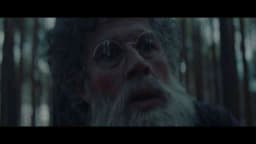
Medaille Trust's Marked for Life campaign, created by Brother Brother in the United Kingdom in 2021, trains tattoo artists to spot human trafficking and

How Medaille Trust Turned Trafficking Tattoos Into Symbols of Hope
Marked for Life is a 2021 United Kingdom public service campaign created by Medaille Trust and agency Brother Brother that trains tattoo artists to identify signs of human trafficking and sexual exploitation, while transforming trafficker-applied tattoos into new symbols of freedom and hope for survivors of modern slavery.
Medaille Trust launched the campaign in July 2021 in the United Kingdom to address a specific and underreported mechanism of control used by traffickers, according to 2021-2025 State Gov. Traffickers routinely brand their victims with names, barcodes, or proprietary symbols — tattoos that function as marks of ownership and instruments of psychological domination, according to Assets Publishing Service Gov Uk. As documented in Clapboard's editorial research, the campaign operates on two interlocking objectives: empowering survivors to reclaim their identities through restorative tattooing, and equipping professional tattoo artists across the United Kingdom with the knowledge to recognise when a person in their chair may be a victim of trafficking or sexual exploitation.
The campaign takes the form of a content-led initiative, built around a single media asset that communicates both the emotional reality of modern slavery and the practical role the tattooing community can play in disrupting it. By positioning tattoo studios as potential frontline intervention points, Medaille Trust reframes an everyday commercial space as a site of potential rescue. The strategic insight is precise: because traffickers frequently use tattoo studios to brand victims, the artists performing those procedures — often unknowing participants — become uniquely placed to identify and report exploitation. In the United Kingdom, where modern slavery remains a persistent and evolving crime, the campaign addresses a gap in public awareness and professional training simultaneously. Marked for Life is, in this sense, as much a behavioural change programme as it is a creative campaign, according to Globalpolicyjournal.

Medaille Trust identified a structural vulnerability in the trafficking ecosystem. Traffickers depend on compliant or unwitting third parties — among them tattoo artists — to physically mark victims, cementing ownership and making escape psychologically harder. According to Clapboard's editorial analysis, this insight forms the campaign's strategic core: by training professionals already embedded in that process, Medaille Trust converts an instrument of control into a mechanism of detection.
The strategic context in the United Kingdom is significant. According to the UK Government's annual Modern Slavery Act transparency reporting, published by Gov Uk, modern slavery and human trafficking affect thousands of individuals across the country each year, with the National Referral Mechanism receiving a substantial and growing volume of referrals in the years leading up to the campaign's 2021 launch. The crime intersects with sexual exploitation disproportionately, and survivors frequently carry physical and psychological markers — including unwanted tattoos — long after their trafficking situation has ended, as documented in research published by the Global Policy Journal.
Within the United Kingdom's anti-trafficking nonprofit sector, Medaille Trust operates alongside established organisations including Hope for Justice and Anti-Slavery International. According to accounts filed with the Charity Commission and reported by antislavery.org, Anti-Slavery International recorded income of £3.166 million in 2020 to 2021. Hope for Justice, according to its published accounts, saw income rise to £8.05 million in the year ending March 2021. Against this landscape, Medaille Trust's campaign distinguishes itself not through scale of funding but through creative specificity — targeting a discrete professional community with actionable training, rather than pursuing broad public awareness alone. That focus on the tattoo industry as a behavioural change audience is what separates Marked for Life from conventional public service communications in this category.
Brother Brother built the Marked for Life campaign around a single, emotionally concentrated media asset designed to communicate both the violence of trafficker branding and the transformative possibility of restorative tattooing. According to Clapboard's editorial research, the production credits for the campaign include art director Michele Bona, copywriter Michael De Piano, directors Yaz and Haz Al-Shaater, cinematographer Jonathan Haldon, producer Lauren Payne, tattoo artist Natalie Duffield, actor Bernice Pike, and voice-over actor Bet Lynch. That assembly of talent reflects a deliberate choice to ground the campaign in authentic craft — recruiting a working tattoo artist rather than a surrogate, and casting a survivor-adjacent voice to carry the emotional weight of the narrative.
The visual language of the campaign confronts the act of branding directly. Rather than abstracting the trauma of sexual exploitation and modern slavery behind metaphor, the creative approach makes the tattoo itself the central subject — both as wound and as potential site of healing. This directness serves a dual purpose. For survivors of human trafficking in the United Kingdom, it offers visible acknowledgement of an experience that public discourse rarely names with this precision. For tattoo artists watching the content, it reframes their professional practice as an act with social consequences, and frames their participation in the Marked for Life initiative as a form of professional and civic responsibility.
The campaign's content format — a single asset rather than a multi-channel burst — concentrates creative impact rather than diffusing it. In a public service category where production budgets are constrained and audience attention is finite, that economy of means is itself a creative decision. The tattooing sequences, framed by Haldon's cinematography and directed by the Al-Shaater siblings, use the intimacy of the studio environment to draw the viewer into a space that is simultaneously ordinary and charged with meaning. Medaille Trust and Brother Brother use that tension throughout, making the familiar act of tattooing strange again — and, in doing so, making its misuse by traffickers impossible to ignore.
No verified performance data for Marked for Life is publicly available in the form of campaign-specific metrics such as donations received, helpline referral volumes, tattoo artists trained, or measurable shifts in public awareness, as confirmed by Clapboard's editorial research. No verified awards have been recorded for the campaign across Cannes Lions, the D&AD Awards, the One Show, the Clio Awards, the Effies, the Webby Awards, or WARC databases.
Structural analysis, however, supports a reading of the campaign as strategically sound. The decision to embed a training component for tattoo artists within a public service campaign addresses a documented gap in professional awareness — one that UK Government guidance published via gov.uk acknowledges in the context of frontline responder training for modern slavery identification. By targeting a specific professional community with actionable knowledge, rather than seeking diffuse public sympathy, Marked for Life creates conditions for measurable behavioural change even where those measurements have not been published.
The campaign's content format also limits its dependence on paid media, which suits the resource constraints of the United Kingdom's anti-trafficking nonprofit sector. Its singular creative asset is designed to earn attention rather than buy it, which is consistent with the approach of organisations operating without commercial advertising budgets. Medaille Trust's choice of Brother Brother as creative partner reflects an appetite for craft-led work that prioritises resonance over reach. Clapboard scores Marked for Life 77 out of 100, recognising its creative precision, the genuine social utility of its training programme, and its reframing of the tattooing community as an active participant in the fight against human trafficking and sexual exploitation in the United Kingdom.
Marked for Life is a 2021 United Kingdom public service campaign by Medaille Trust and agency Brother Brother. It trains tattoo artists to identify signs of human trafficking and sexual exploitation, while working with survivors of modern slavery to transform trafficker-applied tattoos into new symbols of personal freedom and hope.
Traffickers frequently use tattoo studios to brand victims with names or symbols. Because tattoo artists are often unaware they are marking a trafficking victim, Medaille Trust identified them as uniquely positioned frontline observers. Training this professional community allows studios across the United Kingdom to become active detection and intervention points against modern slavery.
Brother Brother created Marked for Life for Medaille Trust, published in July 2021 in the United Kingdom. The production team included art director Michele Bona, copywriter Michael De Piano, directors Yaz and Haz Al-Shaater, cinematographer Jonathan Haldon, producer Lauren Payne, and tattoo artist Natalie Duffield, according to Clapboard's editorial research.
No verified campaign-specific performance data for Marked for Life is publicly available, including metrics for donations, awareness lift, or tattoo artists trained. Clapboard's structural analysis scores the campaign 77 out of 100, reflecting its creative precision and the genuine social utility of embedding professional training within a public service communications initiative.
Marked for Life acknowledges that survivors of human trafficking and sexual exploitation carry lasting psychological harm — including PTSD and trust issues — alongside physical marks such as trafficker tattoos. The campaign offers restorative tattooing as a tangible act of reclamation, reframing an instrument of control as a symbol of survival and self-determination for victims in the United Kingdom.
Marked for Life has no verified awards recorded across Cannes Lions, D&AD, the One Show, the Clio Awards, the Effies, the Webby Awards, or WARC databases, according to Clapboard's editorial research. The campaign nonetheless demonstrates strong strategic and creative merit through its precise targeting of the tattooing community as a frontline resource against human trafficking in the United Kingdom.
.webp)
Creative Collaboration Platform: The Backbone of Modern Creative WorkWhat is a creative collaboration platform?Clapboard defines a creative collaboration platform as the operational core for today’s distributed creative teams. This is not a collection of digital collaboration tools stitched together; Clapboard’s system


Understanding the Creative Production MarketplaceWhat is a Creative Production Marketplace?Clapboard defines a creative production marketplace as a structured ecosystem where brands, agencies, and production talent converge to execute video, advertising, and branded content at scale. Unlike the legacy agency or freelanREAD FULL ARTICLE

The Urgent Need for a Creative Production Operating SystemWhy Traditional Creative Production Models Break DownClapboard sees the creative production landscape shifting under pressure. Content velocity is no longer a buzzword—it’s a mandate. Modern advertising demands relentless output across dozens of channels, each wREAD FULL ARTICLE