Gustave Roussy Turns Santa Claus Into a Symbol of Cancer Recovery
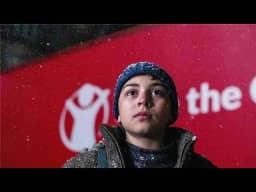
Gustave Roussy's "A True Story" is a five-minute fundraising film launched in France on 18 December 2023, produced pro bono by Publicis Conseil, that casts Santa Claus as a real cancer patient who undergoes treatment at Gustave Roussy and achieves remission, using the character's recovery to communicate that 66% of cancers can now be cured.
Gustave Roussy holds a specific position in global oncology. Recognised as the leading cancer centre in France, the leading cancer centre in Europe, and the fourth-ranked cancer centre in the world, it carries the institutional credibility to make a claim as bold as the one at the heart of this campaign. The central fact — that science has made more progress against cancer in the last ten years than in the previous hundred — is not a creative conceit. It is the clinical reality that the campaign was built to communicate.
In France, where cancer remains one of the most feared diagnoses in public consciousness, the campaign identified a fundamental gap: the public's perception of cancer as a death sentence had not kept pace with medical science's actual advances. To close that gap, Publicis Conseil constructed a social experiment disguised as a Christmas tale. The film follows Santa Claus through the year of his diagnosis — from discovery through chemotherapy, emotional collapse, and eventual remission — presenting the story not as fantasy but as documented fact. Fiction and reality are deliberately intertwined throughout the narrative, blurring the boundary between cultural myth and clinical truth. Television and digital broadcast followed on 20 December 2023, with the campaign subsequently extending into cinema screenings across the French market.
Gustave Roussy identified a measurable disconnect between clinical progress and public belief about cancer survival. Despite genuine advances in oncology, the cultural association between a cancer diagnosis and death remained dominant in France, suppressing both donation behaviour and the sense of hope that fundraising campaigns depend upon. The strategic brief, as executed by Publicis Conseil, was to make the progress tangible — not through statistics alone, but through a story that could shift emotional priors before presenting the data.
The choice of Santa Claus as the vehicle for this message was deliberately counterintuitive. Marco Venturelli, CEO and CCO of Publicis Conseil, explained that positioning Santa Claus as a defender of the fight against cancer worked precisely because he himself had been affected by the disease. The character's universal recognition meant the audience had an existing emotional relationship with him. Watching him lose his beard and white hair to treatment — the very attributes that define him — made the physical and psychological cost of cancer immediate and legible to a broad public, including children. Venturelli described the objective as raising awareness alongside Gustave Roussy and conveying a message of hope, demonstrating that Santa had been cured thanks to donations received for research.
In the competitive landscape of healthcare philanthropy in France, Gustave Roussy operates alongside institutions such as Institut Curie and the broader network of comprehensive cancer centres federated under UNICANCER. These institutions compete for donor attention, research funding, and public trust in a philanthropic environment where emotional salience determines share of voice. By anchoring its campaign in a universally beloved cultural figure rather than an anonymous patient story, Gustave Roussy claimed a distinct creative and strategic position. According to Grand View Research, the global cancer treatment facilities market was estimated at approximately 46.7 billion US dollars in 2023, with a projected compound annual growth rate of 7.8% through to 2030 — a trajectory that underlines the scale of investment and institutional competition shaping the sector in which Gustave Roussy raises funds and conducts research.
Vladimir de Fontenay directed "A True Story" for production company Iconoclast, and his approach defined the campaign's most distinctive quality: the refusal to let the film settle into either pure fiction or documentary convention. De Fontenay treated the Santa Claus narrative with the visual and emotional grammar of a true story — grounded, unhurried, and resistant to sentimentality. The five-minute runtime, unusual for a broadcast advertising film, was essential to this approach. It allowed the narrative to breathe through Santa's diagnosis, his treatment at Gustave Roussy, the support of his daughter, and the moments of doubt and partial joy that characterise any serious illness, as reported by LBBonline.
The creative team at Publicis Conseil was led by Marco Venturelli as CEO and CCO, with Pierre Mathonat serving as executive creative director. Kevin Salembier wrote the copy and Nicolas Hurez led art direction. Together, they constructed a film in which fiction and reality are not simply blended but made to reinforce each other. The decision to show Santa working in his workshop while undergoing heavy treatment — insisting on maintaining Christmas for children despite his illness — carried the thematic weight of the campaign's core message: that cancer does not have to mean surrender, and that recovery is a realistic outcome.
Publicis Media and Prodigious provided pro-bono support alongside Publicis Conseil's pro-bono creative work. The campaign's media reach was extended significantly through donated placement and planning support from a coalition of French and international media partners including TF1, NRJ, France Télévisions, Paramount, Canal, Gravity, and Snapchat, as documented by shots.net and MediaPost. This constellation of pro-bono contributions gave the film a broadcast footprint that a traditional paid campaign for a non-profit institution would rarely achieve in the French market.
"A True Story" earned a Clapboard Score of 71 out of 100, reflecting a campaign that achieves genuine structural effectiveness across creative originality, strategic clarity, and emotional resonance, while operating in a category where measurable consumer response is inherently difficult to attribute to a single piece of communication.
No independently verified donation uplift figures or audience reach metrics for "A True Story" are publicly available at the time of writing. What is documentable is the campaign's structural architecture for driving fundraising response: a universally recognised character, a clinically accurate central claim, a pro-bono media coalition that included TF1, NRJ, and France Télévisions, and a five-minute film format that allowed emotional investment to accumulate before the call to action was made. Each of these elements is known, according to research in philanthropic communications, to independently improve donor conversion — their combination in a single campaign represents a compounding of persuasive levers rather than a single bet.
The campaign's subsequent lineage is itself a form of performance evidence. As reported by gustaveroussy.fr and publicisconseil.fr, Gustave Roussy and Publicis Conseil followed "A True Story" with a documented successor campaign titled "Lucie," launched on 4 February 2025 for World Cancer Day. Institutions do not commission follow-up campaigns in the same strategic register unless the preceding work demonstrated meaningful traction. The continuity between the two campaigns signals institutional confidence in the creative and strategic model established in December 2023 in France.
"A True Story" is a five-minute fundraising film created by Publicis Conseil for Gustave Roussy, launched in France in December 2023. It presents Santa Claus as a real cancer patient who undergoes treatment and achieves remission, using his recovery to communicate that 66% of cancers can now be cured and to encourage public donations to cancer research.
Gustave Roussy used Santa Claus because his universal recognition created an immediate emotional connection with audiences. Marco Venturelli of Publicis Conseil explained that Santa's own experience of cancer made him a credible advocate for the fight against the disease, allowing the campaign to deliver a message of hope and recovery to a broad public in France.
Vladimir de Fontenay directed "A True Story" for production company Iconoclast. The creative team at Publicis Conseil was led by CEO and CCO Marco Venturelli, with Pierre Mathonat as executive creative director, Kevin Salembier as copywriter, and Nicolas Hurez as art director, all working on a pro-bono basis for Gustave Roussy in France.
The campaign's central claim is that 66% of cancers can now be cured. Gustave Roussy, the leading cancer centre in France and Europe, built the film around the fact that science has made more progress against cancer in the last ten years than in the previous hundred, countering the public perception that cancer remains a death sentence.
The film launched on 18 December 2023 and moved to television and digital broadcast on 20 December, followed by cinema screenings in France. Media partners including TF1, NRJ, France Télévisions, Paramount, Canal, Gravity, and Snapchat donated placement and planning support, giving the campaign a broadcast reach that pro-bono healthcare campaigns rarely achieve, as documented by shots.net and MediaPost.
Gustave Roussy launched a documented follow-up campaign titled "Lucie" on 4 February 2025 for World Cancer Day, also created by Publicis Conseil. As reported by gustaveroussy.fr and publicisconseil.fr, this continuity signals institutional confidence in the storytelling model established by "A True Story" in France in 2023.
.webp)
Creative Collaboration Platform: The Backbone of Modern Creative WorkWhat is a creative collaboration platform?Clapboard defines a creative collaboration platform as the operational core for today’s distributed creative teams. This is not a collection of digital collaboration tools stitched together; Clapboard’s system


Understanding the Creative Production MarketplaceWhat is a Creative Production Marketplace?Clapboard defines a creative production marketplace as a structured ecosystem where brands, agencies, and production talent converge to execute video, advertising, and branded content at scale. Unlike the legacy agency or freelanREAD FULL ARTICLE

The Urgent Need for a Creative Production Operating SystemWhy Traditional Creative Production Models Break DownClapboard sees the creative production landscape shifting under pressure. Content velocity is no longer a buzzword—it’s a mandate. Modern advertising demands relentless output across dozens of channels, each wREAD FULL ARTICLE