 ARCHIVE
Filter Caps - Red Cross, Colombian Red Cross, Filsa Water, Baylor International | Clapboard Ad Archive
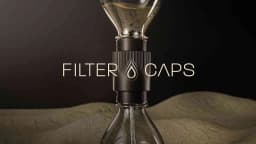
Filter Caps, created for Baylor International, Colombian Red Cross, Filsa Water, and Red Cross by...
Gustave Roussy Bets on Scientific Beauty to Fight Cancer Stigma
Gustave Roussy's 'Lucie' is a 2025 healthcare film campaign created by Publicis Conseil and directed by Jaco Van Dormael that tells one woman's life story entirely through medical and scientific imagery — scanners, MRIs, microscopy, and 3D visuals — launched in France on World Cancer Day, 4 February 2025.
The campaign traces Lucie's journey from birth through childhood, relationships, and illness, arriving at the diagnosis of a rare cancer at the age of 36. Her tumour is sequenced, she receives personalised treatment, and she survives. The film's central argument, drawn from Gustave Roussy's own scientific positioning, is that 66% of cancers are now curable and that, with greater support and resources, that figure could reach 80% by 2040. Lucie herself stands in for thousands of real patients — people who, as the campaign frames it, pass through illness and continue living without pausing to recognise how much accumulated scientific progress made that continuation possible.
Distributed across television and digital channels in France, 'Lucie' carried a direct fundraising mechanic: viewers could donate via a €10 SMS mechanism supported by dons-gustaveroussy.com. The campaign was created pro bono by Publicis Conseil, with production handled by Hamlet and additional support from Prodigious and Publicis Media, according to gustaveroussy.fr. In a healthcare advertising landscape crowded with stories of suffering, 'Lucie' takes the opposite position — it is a film about survival, told through the instruments that made survival possible. Clapboard rates the campaign 74 out of 100, recognising its formal ambition and strategic clarity while noting the inherent challenge of converting aesthetic innovation into measurable public donation behaviour.
Gustave Roussy holds a specific and provable position in global cancer care. Ranked first in Europe and fourth in the world in the fight against cancer, according to the Newsweek and Statista World's Best Specialized Hospitals 2025 Oncology ranking, the institution sits behind MD Anderson Cancer Center in first place and Memorial Sloan Kettering Cancer Center in second, with Institut Curie ranked seventeenth on the same list. In France, Gustave Roussy's standing gives it both the credibility and the obligation to shape how the French public understands the disease.
The strategic insight behind 'Lucie' is rooted in a documented shift in oncological outcomes that conventional health campaigns have been slow to communicate. Cancer incidence continues to rise in France, particularly among young adults, as noted in Gustave Roussy's own published materials. Yet the cure rate has moved decisively. Publicis Conseil's creative strategy does not ignore this tension; it makes it the entire subject. Rather than positioning Gustave Roussy as a place people go when hope is lost, 'Lucie' repositions it as the institution whose research ensures that hope was never reasonable to abandon in the first place.
The choice to launch on World Cancer Day — an internationally recognised awareness moment observed every 4 February — reflects a deliberate bid to capture both French media attention and a broader European cultural conversation simultaneously. The campaign continues a documented relationship between Gustave Roussy and Publicis Conseil that extends back at least to December 2023, when the agencies produced 'A True Story', a film directed by Vladimir de Fontenay and produced by Iconoclast, which depicted Santa Claus as a cancer patient recovering at Gustave Roussy. That earlier campaign established the tone: emotionally generous, narratively unexpected, and grounded in the same 66% cure-rate statistic.
Jaco Van Dormael directed 'Lucie', bringing to the campaign a filmmaking sensibility defined by non-linear narrative and visual lyricism established across features including 'Toto the Hero' and 'Mr. Nobody'. The decision to assign 'Lucie' to Van Dormael is itself a creative statement: his body of work consistently treats time and memory as malleable materials, which makes him a precise fit for a film that reconstructs a human life from the imagery of its biological interior.
The production, handled by Hamlet with support from Prodigious and Publicis Media, takes a formal gamble that separates 'Lucie' from virtually every other healthcare film in recent French advertising history. No actor appears on screen. No hospital corridor, no consulting room, no face registering fear or relief. Instead, the film builds its entire emotional architecture from scientific imaging: the blue-grey topographies of MRI scans, the cellular landscapes of microscopy, the geometries of 3D anatomical modelling. These are images that audiences have encountered as clinical data — documents of diagnosis, not materials of storytelling. Van Dormael and Publicis Conseil treat them as something else: as evidence of human ingenuity accumulated across centuries, and as a form of portraiture capable of rendering one woman's life from the inside out.
The creative direction, conceived by Publicis Conseil, frames each image not for its diagnostic meaning but for its visual quality — the texture, the colour, the scale. According to gustaveroussy.fr, the intent is to reveal the poetry latent in scientific images and to pay tribute to the researchers, doctors, and specialists whose work transformed once-fatal conditions into survivable ones. Professor Fabrice Barlesi, CEO of Gustave Roussy, articulated the institutional perspective when he stated, as reported by gustaveroussy.fr: 'Lucie's story is the story of thousands of patients.' That single sentence is the creative brief made explicit.
'Lucie' won a D&AD Gold Award in the Health and Wellbeing category in 2025, under the campaign title 'A True Story', according to D&AD records. The campaign also received two D&AD shortlist placements in 2025, though the specific shortlist categories have not been publicly identified, per available D&AD documentation. For a pro-bono healthcare film produced for a French non-profit institution, a D&AD Gold represents a significant independent validation of creative quality at an international level.
No verified public data on total donations generated through the €10 SMS mechanism is currently available for 'Lucie'. Similarly, broadcast reach figures and digital view counts for the campaign's television and digital distribution in France have not been disclosed by Gustave Roussy or Publicis Conseil in any source indexed at the time of writing. What is documentable is the structural effectiveness of the fundraising device: the SMS donation route lowers the friction of giving to a single physical action, a mechanic with demonstrated utility in French charitable campaigns where mobile penetration supports impulse giving.
The campaign's positioning within the Gustave Roussy and Publicis Conseil relationship also carries strategic weight beyond a single activation. By establishing 'Lucie' as a successor to 'A True Story' from December 2023, the institution builds a recognisable annual creative voice around World Cancer Day — compounding awareness and donor familiarity across years rather than relying on a single campaign cycle. Clapboard scores 'Lucie' at 74 out of 100, reflecting strong creative originality and institutional credibility offset by the absence of publicly verifiable audience and donation metrics.
'Lucie' is a 2025 film by Gustave Roussy and Publicis Conseil that tells a woman's life story through medical imagery alone. Launched on World Cancer Day in France, it follows Lucie from birth to a rare cancer diagnosis at 36, framing her survival as proof that scientific progress has transformed how humanity lives with disease.
Jaco Van Dormael directed 'Lucie'. The Belgian filmmaker, known for non-linear visual storytelling, was chosen by Publicis Conseil to construct Lucie's life entirely from scientific images including MRI scans, microscopy, and 3D anatomical visuals, with production managed by Hamlet and support from Prodigious and Publicis Media, according to gustaveroussy.fr.
'Lucie', entered under the title 'A True Story', won a D&AD Gold Award in the Health and Wellbeing category in 2025, according to D&AD records. The campaign also received two D&AD shortlist placements that year. Clapboard rates the campaign 74 out of 100 for creative originality and strategic clarity.
Publicis Conseil chose MRIs, scanners, and microscopy to reframe medical imaging as portraiture rather than diagnosis. According to gustaveroussy.fr, the intent was to reveal the poetry within scientific images and pay tribute to the researchers and doctors whose work across centuries turned serious illnesses into survivable conditions for patients like Lucie.
Gustave Roussy integrated a €10 SMS donation mechanism into the 'Lucie' campaign, supported through dons-gustaveroussy.com. The mobile-first mechanic reduced giving friction to a single action, suited to France's high mobile penetration, and directed funds toward Gustave Roussy's cancer research and patient care mission, per campaign documentation on gustaveroussy.fr.
Gustave Roussy ranks first in Europe and fourth in the world in cancer care, according to the Newsweek and Statista World's Best Specialized Hospitals 2025 Oncology ranking. MD Anderson Cancer Center ranks first globally and Memorial Sloan Kettering second on the same list, giving Gustave Roussy clear standing as France's leading oncology institution.
.webp)
Creative Collaboration Platform: The Backbone of Modern Creative WorkWhat is a creative collaboration platform?Clapboard defines a creative collaboration platform as the operational core for today’s distributed creative teams. This is not a collection of digital collaboration tools stitched together; Clapboard’s system


Understanding the Creative Production MarketplaceWhat is a Creative Production Marketplace?Clapboard defines a creative production marketplace as a structured ecosystem where brands, agencies, and production talent converge to execute video, advertising, and branded content at scale. Unlike the legacy agency or freelanREAD FULL ARTICLE

The Urgent Need for a Creative Production Operating SystemWhy Traditional Creative Production Models Break DownClapboard sees the creative production landscape shifting under pressure. Content velocity is no longer a buzzword—it’s a mandate. Modern advertising demands relentless output across dozens of channels, each wREAD FULL ARTICLE