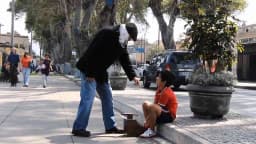
The "180 authors, one reader" campaign by Tell My Story aimed to reshape perceptions around drug addiction by illustrating the transformative potential of individual narratives. Centering on a single photograph, the campaign invited 180 contributors—ranging from children and seniors to celebrities and anonymous writers—to craft distinct mini-biographies inspired by the same image. This approach underscored the diversity of human experience and the possibility of change, positioning the brand as a mediator of hope and empathy for those struggling with addiction.
Strategically, the campaign leveraged the power of storytelling as both a social experiment and a documentary form, engaging a broad and varied group of authors to highlight that drug addiction does not define a singular identity or destiny. By involving multiple demographics and voices, the campaign created a layered narrative designed to resonate deeply with individuals facing addiction, as well as the broader public, encouraging reflection and compassion. The ambient medium choice—relying on a shared visual stimulus rather than direct messaging—enabled authentic, personal expressions that challenge stereotypes and inspire hope. This insight—that showcasing the multiplicity of potential life stories can foster empathy and self-reflection—guided the creative execution, positioning Tell My Story as a platform for reclaiming agency and envisioning alternate futures within the public service sector in Brazil.
FORMAT#3 SYMBOLIZE THE PROBLEM — Uses symbols or analogies to represent the problem instead of showing it literally.
This campaign uses the creative device of SYMBOLIZE THE PROBLEM by converting the challenges faced by drug users into a potent symbol: a single photo generating 180 diverse potential life stories, written by a spectrum of people—children, seniors, celebrities, and anonymous participants. Rather than showing the direct struggles of addiction, the campaign creates an analogy, suggesting that every individual (especially drug users) holds numerous unexplored, hopeful pathways for their lives. The symbolic device of multiple imagined biographies represents the untapped futures lost to addiction and aims to inspire reflection, hope, and change, making SYMBOLIZE THE PROBLEM the clearest fit.
ADVERTISING FORMATS EXPLAINED: https://www.clapboard.com/blog/branding-and-advertising/brand-strategy/12-advertising-creative-formats
1. Viva Rio – Market Positioning
Viva Rio focuses on reducing violence and social exclusion in Brazil through community engagement and education. Their campaigns emphasize grassroots participation and empowerment, using data-driven public safety initiatives alongside social programs to foster safer, drug-free communities with sustainable impact.
2. Instituto Vida Livre – Market Positioning
Instituto Vida Livre specializes in comprehensive drug rehabilitation, combining therapy and social reintegration. Their strategic angle centers on holistic recovery by addressing mental health, employment, and family support, positioning themselves as a leading advocate for reintegrating former addicts into society.
3. Instituto Nacional de Ciência e Tecnologia para Políticas Públicas de Álcool e outras Drogas (INCT-PPAD) – Market Positioning
INCT-PPAD leverages scientific research and policy development to influence public drug control strategies in Brazil. Their competitive edge lies in evidence-based social experiments and advocacy, aiming to shape legislation and public perceptions around drug addiction and treatment.
4. Rede Nacional de Pessoas Usuárias de Drogas (RENAUD) – Market Positioning
RENAUD is a network representing drug users’ rights and voices, focusing on harm reduction and destigmatization. Their strategic positioning involves activism and peer-led education, emphasizing humanization and empowerment to reshape societal attitudes toward addiction.
5. Centro de Referência em Álcool e Drogas (CRAD) – Market Positioning
CRAD delivers specialized support and awareness programs targeting alcohol and drug abuse prevention. They differentiate by integrating clinical care with community awareness and educational outreach, aiming to foster prevention and early intervention at local levels throughout Brazil.
Q: What is 180 authors, one reader about?
A: 180 authors, one reader is a 2015 campaign created by DDB for the Tell My Story brand in Brazil, operating within the public interest sector. The campaign centers on a powerful creative concept: a single photograph inspiring 180 different mini-biographies, each written by contributors ranging from children and seniors to celebrities and anonymous authors. This ambient media initiative was designed to bring hope and inspiration to drug users by illustrating the diverse possibilities that exist for every life. By leveraging storytelling as a tool for empathy and reflection, the campaign sought to challenge stigma and encourage new perspectives on addiction.
Q: What creative device does 180 authors, one reader use?
A: 180 authors, one reader employs the creative device classified by Clapboard’s 12-format taxonomy as FORMAT#3 SYMBOLIZE THE PROBLEM. Rather than depicting the realities of addiction directly, the campaign uses a single photograph as a symbol, generating 180 imagined life stories authored by a diverse group of people. This analogy represents the multitude of potential futures lost to addiction and invites viewers to reflect on the untapped possibilities within every individual. By converting the problem into a potent symbol, the campaign fosters empathy and hope without resorting to literal portrayals of drug use.
Q: What is the campaign proposition for 180 authors, one reader?
A: The campaign proposition for 180 authors, one reader positions Tell My Story as a catalyst for reshaping perceptions around drug addiction through the transformative power of individual narratives. By inviting 180 contributors from varied backgrounds to craft biographies inspired by a single image, the campaign underscores the diversity of human experience and the possibility of change. This strategic approach aims to reach both those struggling with addiction and the broader public, emphasizing that addiction does not define a person’s identity or destiny. The campaign’s message is one of hope, empathy, and the reclaiming of agency within the public service landscape.
Q: How does 180 authors, one reader rank in Clapboard's archive?
A: 180 authors, one reader holds a Clapboard Campaign Score of 67/100. This score reflects the campaign’s creative ambition, execution quality, and cultural relevance as determined by Clapboard’s global ad archive.
Q: Who are the competitors in Tell My Story's category?
A: In the public service sector addressing drug addiction in Brazil, Tell My Story competes with several notable organizations. Viva Rio is positioned around community engagement and violence reduction, emphasizing grassroots empowerment and public safety. Instituto Vida Livre focuses on holistic drug rehabilitation, integrating therapy, employment, and family support for comprehensive recovery. INCT-PPAD leverages scientific research and policy advocacy to influence drug control strategies and public perceptions. RENAUD represents the rights and voices of drug users, prioritizing harm reduction and destigmatization through activism and peer-led education. CRAD specializes in prevention and early intervention, combining clinical care with educational outreach to address substance abuse at the community level.


 ARCHIVE
.webp)