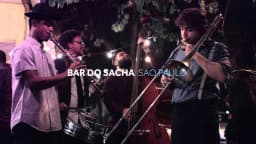
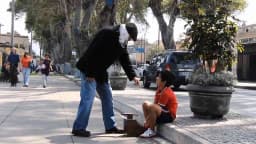
Released in Brazil in 2011, "The Waiting Ticket" campaign by Santa Casa aimed to raise awareness about the critical issue of organ donation through a social experiment format. The campaign employed ambient media to engage the public in a direct and thought-provoking manner, illustrating the emotional and tangible realities faced by those on organ transplant waiting lists. By simulating the urgency and uncertainty experienced by patients, the campaign conveyed Santa Casa’s proposition of highlighting the profound need for organ donors, implicitly positioning the brand as a crucial facilitator in saving lives.
The market strategy hinged on evoking empathy and social responsibility within the Brazilian audience, leveraging a documentary-style approach to make the abstract concept of organ donation more immediate and personal. The creative angle rested on the insight that people are more likely to respond to real-life scenarios that provoke self-reflection about health and mortality. By situating the communication in everyday public spaces, the campaign surfaced the waiting period for organs as a shared social concern rather than a distant medical issue, effectively targeting the general public with the goal of increasing donor registrations. This approach connects emotional engagement with public service messaging, enhancing awareness through experiential impact rather than direct appeals, which is particularly suited to an issue that requires societal participation and compassion.
FORMAT#3 SYMBOLIZE THE PROBLEM — Uses symbols or analogies to represent the problem instead of showing it literally.
This campaign, "The Waiting Ticket," leverages an ambient medium and documentary/social experiment genre to address organ donation. The title and format strongly suggest a symbolic approach: the "waiting ticket" becomes an analogy for the experience of those waiting for organ transplants, abstracting the problem rather than showing it literally. There is no evidence of a standard narrative story arc, direct demonstration, or testimonial style. The campaign instead utilizes a physical or visual metaphor, designed to make the severity of waiting lists tangible and emotionally resonant to the audience, classic characteristics of the "Symbolize the Problem" creative format.
ADVERTISING FORMATS EXPLAINED: https://www.clapboard.com/blog/branding-and-advertising/brand-strategy/12-advertising-creative-formats
1. Hospital Sírio-Libanês – Positioned as a leading private hospital chain in Brazil, it combines cutting-edge technology with personalized care to cater to high-income patients, emphasizing excellence in medical expertise and international standards.
2. Hospital Albert Einstein – Known for innovation and research, this hospital emphasizes superior healthcare services and advanced treatments, targeting an affluent demographic that demands premium medical solutions with strong educational and social responsibility programs.
3. Rede D’Or São Luiz – As one of the largest private hospital networks in Brazil, it focuses on accessibility and quality care across multiple specialties, positioning itself as a reliable, comprehensive healthcare provider with extensive hospital infrastructure.
4. Fundação Oswaldo Cruz (Fiocruz) – A public health institution known for research, education, and innovation in healthcare, Fiocruz positions itself at the forefront of public health policies and scientific development, prioritizing social impact and disease prevention.
5. Hospital Moinhos de Vento – Acting as a reference in southern Brazil, this hospital is distinguished by a patient-centered approach and commitment to quality and safety, merging advanced treatment techniques with a strong emphasis on humanized care.
Q: What is The Waiting Ticket about?
A: The Waiting Ticket is a professional campaign launched in Brazil in 2011 for Santa Casa, created by the agency Y&R. This ambient campaign was designed to raise public awareness about organ donation by making the emotional and tangible realities of patients on transplant waiting lists visible to the public. Developed under the creative leadership of Rui Branquinho and Flavio Casarotti, the campaign used a social experiment format to engage audiences directly in public spaces, highlighting the urgency and uncertainty faced by those awaiting life-saving organs. The campaign’s central idea was to transform the abstract concept of waiting for an organ into a relatable, shared experience.
Q: What creative device does The Waiting Ticket use?
A: The Waiting Ticket employs the Symbolize the Problem creative format, as classified by Clapboard’s 12-format taxonomy. Instead of depicting the issue of organ donation literally, the campaign uses the metaphor of a waiting ticket to represent the experience of patients on transplant lists. This symbolic approach makes the invisible struggle of waiting for an organ tangible and emotionally resonant for the audience. By leveraging ambient media and a documentary-style social experiment, the campaign turns a complex public health issue into a direct, relatable encounter, aligning with the FORMAT#3 classification in Clapboard’s system.
Q: What is the campaign proposition for The Waiting Ticket?
A: The campaign proposition for The Waiting Ticket centers on Santa Casa’s commitment to raising awareness about the critical need for organ donors in Brazil. By targeting the general public with an experiential, documentary-style approach, the campaign aims to evoke empathy and a sense of social responsibility, positioning organ donation as a shared societal concern rather than a distant medical issue. The strategy is rooted in the belief that real-life scenarios that provoke self-reflection about health and mortality are more likely to inspire action, aligning Santa Casa as a vital facilitator in the life-saving process of organ transplantation.
Q: How does The Waiting Ticket rank in Clapboard's archive?
A: The Waiting Ticket holds a Clapboard Campaign Score of 74/100 in Clapboard’s global ad archive. This score reflects the campaign’s creative ambition, the quality of its execution, and its cultural relevance within the context of public health communication.
Q: Who are the competitors in Santa Casa's category?
A: In Santa Casa’s category, key competitors include Hospital Sírio-Libanês, which targets high-income patients with a focus on advanced technology and personalized care; Hospital Albert Einstein, known for its innovation and research-driven healthcare for an affluent demographic; Rede D’Or São Luiz, which emphasizes accessibility and comprehensive care across a broad hospital network; Fundação Oswaldo Cruz (Fiocruz), a leader in public health research and policy with a strong social impact mission; and Hospital Moinhos de Vento, which stands out in southern Brazil for its patient-centered approach and commitment to quality and safety.


 ARCHIVE
.webp)