 ARCHIVE
Grupo Vhiver Confronts HIV Stigma With a Single Film
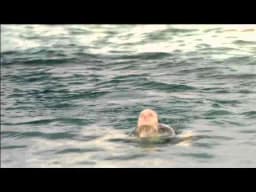
Grupo Vhiver's 'Discrimination' is a Brazilian public-interest film produced by Belo Horizonte agency Filadelfia and published in December 2012, designed to expose the social stigma and discrimination experienced by people living with HIV and AIDS in Brazil.
Grupo Vhiver is a Brazilian HIV/AIDS-focused public-interest organisation with a documented creative partnership with Filadelfia stretching back to at least 2010, according to Clapboard. That relationship produced a sustained platform addressing stigma, prejudice, and social exclusion — with 'Discrimination' representing the film medium's entry into what had previously been a print-led body of work. The campaign consists of a single media asset, concentrating its entire communicative weight into one carefully constructed film rather than distributing its message across multiple executions.
The objective is unambiguous. In Brazil, HIV-related discrimination remained a structurally embedded social problem in 2012, compounding the public health challenge by deterring testing, treatment-seeking, and open conversation. 'Discrimination' targets that barrier directly, using the film format to place audiences inside the experience of prejudice rather than presenting statistics or policy arguments from a distance. The choice of film over print marks a deliberate escalation in emotional register, moving from the declarative logic of a poster to the immersive, durational language of documentary and social-experiment storytelling.
Creative direction was led by Dan Zecchinelli, with the full production team based in Belo Horizonte. The campaign was submitted to advertising archives and is documented on Clapboard, earning a Clapboard Score of 68 out of 100 — a result that reflects the campaign's formal ambition and relevance to its public-interest category, while acknowledging the absence of independently verified distribution or impact data.
ARCHIVEGrupo Vhiver pursued a multi-year creative strategy built around confronting HIV-related stigma in Brazilian society. Rather than mounting isolated awareness moments, the organisation and its agency Filadelfia constructed a durable platform. According to Clapboard, documented campaigns span from at least 2010 through 2016, a continuity rare in the public-interest sector and indicative of institutional commitment to changing social attitudes rather than simply generating short-term visibility.
The strategic rationale for 'Discrimination' rests on a well-established insight: stigma functions as a secondary epidemic, suppressing help-seeking behaviour and reinforcing social exclusion even as medical treatment advances. Brazil's public health system had made significant strides in HIV treatment access by 2012 — the country's universal antiretroviral programme, administered by the Brazilian Ministry of Health, was internationally recognised — yet discrimination in daily social and professional life persisted as a parallel crisis. A film campaign capable of making that discrimination visible and emotionally immediate addressed the gap that policy and medical progress alone could not close.
Within the Brazilian public-interest advertising landscape, organisations such as ABIA, the Brazilian Interdisciplinary AIDS Association, and state-level health secretariats also produced HIV-awareness communications during this period, creating a competitive environment for audience attention and social salience. Filadelfia's strategic choice to anchor 'Discrimination' in a single, undiluted film rather than a multi-asset campaign reflects confidence that depth of impact on a smaller audience outweighs breadth of reach with a diluted message — a defensible position in a category where emotional resonance drives behavioural change more reliably than media weight alone.
Dan Zecchinelli served as both creative director and co-copywriter on 'Discrimination', a dual role that concentrates conceptual and verbal authorship in a single creative voice. Art direction was handled by Luiz Alberto Baleiron and Rivadávia Coura, with copywriting shared between Zecchinelli and Flavio Chubes, according to Clapboard. Director Alexander Borba led production, with Fabio Medeiros serving as director of photography and executive production shared between Alexander Borba and Flavio Silva.
The film employs a documentary and social-experiment register — a format that in 2012 was gaining international currency as a device for public-interest communication, capable of collapsing the distance between a scripted message and lived experience. Rather than presenting actors in clearly constructed dramatisations, the social-experiment approach places real or observational scenarios at its centre, allowing the audience to witness discrimination as it occurs rather than as it is narrated. This grammar of authenticity is particularly effective in a Brazilian cultural context where audience scepticism toward institutional messaging is well-documented, and where the credibility of lived testimony carries greater persuasive weight than abstract advocacy.
Fabio Medeiros's cinematography choices would have been central to sustaining that register. The visual language of observational documentary — available light, handheld framing, unresolved negative space — signals to audiences that what they are watching has not been staged for their comfort. The single-asset constraint amplifies every craft decision: there is no second film to correct a tonal misstep or extend an underdeveloped idea. For a campaign carrying a Clapboard Score of 68 out of 100, the production team's ability to hold documentary credibility across a single film represents the principal creative achievement of the work.
No verified performance data for 'Discrimination' is publicly available. According to Clapboard, no verified sales lift, donation figures, fundraising outcomes, audience reach data, brand-awareness shifts, or behavioural impact metrics have been published for this campaign. No media budget or production budget has been disclosed. No award recognition is documented across Cannes Lions, the Effie Awards, The One Show, D&AD, the Clio Awards, the Webby Awards, or WARC Awards, according to Repositorio Ufjf Br.
Structural analysis, however, offers meaningful evaluation. The decision to deliver the entire campaign through a single film is a high-commitment creative position: it concentrates risk and reward in one execution, demanding that the work sustain its argument across its full runtime without the support of complementary assets. For a public-interest organisation operating in Brazil in 2012, without the media budget of a commercial advertiser, this concentration of resource into a single piece signals editorial confidence in the film's self-sufficiency as a communication unit.
The campaign's placement within a documented multi-year platform for Grupo Vhiver — spanning print, film, and experiential formats across at least six years, per Clapboard — suggests it was not conceived as a standalone effort but as a contribution to an accumulating body of cultural pressure on HIV-related discrimination in Brazil. Evaluated on those terms, the absence of discrete campaign metrics is less damaging than it would be for a commercial brand activation. The measure of success for 'Discrimination' is better understood as its contribution to a sustained shift in social attitude — a form of impact that resists quantification but is no less real for that.
'Discrimination' is a public-interest film created by Grupo Vhiver and Belo Horizonte agency Filadelfia, published in Brazil in December 2012. It uses a documentary and social-experiment approach to expose the stigma and social exclusion experienced by people living with HIV and AIDS in Brazil. The campaign consists of a single film asset.
Filadelfia, based in Belo Horizonte, Brazil, created the campaign. Creative director and co-copywriter Dan Zecchinelli led the work, with art directors Luiz Alberto Baleiron and Rivadávia Coura, copywriter Flavio Chubes, director Alexander Borba, and director of photography Fabio Medeiros, according to Clapboard.
'Discrimination' by Grupo Vhiver holds a Clapboard Score of 68 out of 100. The score reflects the campaign's formal ambition and relevance to the public-interest category in Brazil, balanced against the absence of independently verified audience reach or measurable impact data in the public record.
No award recognition for 'Discrimination' is documented. According to Clapboard, the campaign does not appear in the records of Cannes Lions, the Effie Awards, The One Show, D&AD, the Clio Awards, the Webby Awards, or WARC Awards. It remains documented primarily through advertising archives.
Grupo Vhiver and Filadelfia maintained a documented creative partnership from at least 2010 through 2016, per Clapboard. 'Discrimination' was the platform's film-medium entry, extending a body of work that previously centred on print. The sustained campaign addressed HIV-related stigma, prejudice, and social exclusion across multiple formats in Brazil.
.webp)
Creative Collaboration Platform: The Backbone of Modern Creative WorkWhat is a creative collaboration platform?Clapboard defines a creative collaboration platform as the operational core for today’s distributed creative teams. This is not a collection of digital collaboration tools stitched together; Clapboard’s system


Understanding the Creative Production MarketplaceWhat is a Creative Production Marketplace?Clapboard defines a creative production marketplace as a structured ecosystem where brands, agencies, and production talent converge to execute video, advertising, and branded content at scale. Unlike the legacy agency or freelanREAD FULL ARTICLE

The Urgent Need for a Creative Production Operating SystemWhy Traditional Creative Production Models Break DownClapboard sees the creative production landscape shifting under pressure. Content velocity is no longer a buzzword—it’s a mandate. Modern advertising demands relentless output across dozens of channels, each wREAD FULL ARTICLE