Curitiba's Safety Crossing for Elderly campaign by OpusMultipla modified pedestrian signals to extend crossing time, earning a Cannes Lions 2015 Shortlist and

How Curitiba and OpusMultipla Made Traffic Signals Work for the Elderly
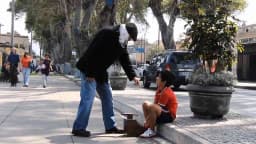
Curitiba's Safety Crossing for Elderly campaign is an ambient public-interest intervention, created by OpusMultipla in August 2014 in Brazil, that modified pedestrian traffic signals to extend crossing time for elderly and disabled pedestrians who swipe a qualifying card at the pole.
The campaign, also known by its Portuguese title "Semáforo para Idosos," operated in the Brazilian city of Curitiba and addressed a straightforward urban problem: standard pedestrian signal timings are calibrated for average walking speeds and routinely leave slower-moving residents stranded mid-crossing. OpusMultipla's solution was structural rather than communicative. Instead of producing a poster or a television spot urging drivers to be patient, the agency modified the physical infrastructure of existing traffic signals so that qualifying cardholders — primarily elderly and disabled pedestrians — could swipe a card at the pole and receive an extended crossing window of approximately 12 to 18 seconds beyond the standard interval, according to Clapboard. The extension was not arbitrary. Per Clapboard, the crossing-time figure was grounded in research conducted with nearly 500 elderly people, giving the intervention a data-informed foundation rather than an intuitive one, according to Colunistas.
The campaign sits within OpusMultipla's broader relationship with Curitiba's municipal government, a client for whom the agency had previously produced the winter-donation campaign Doe Calor in 2011 and institutional communications under the Prefeitura em Ação platform, as documented by LinkedIn. In that context, Safety Crossing for Elderly represents the most formally recognised work in the agency-client partnership. It earned a Cannes Lions 2015 Shortlist in the Promo category, a Gold award at the Clube de Criação do Paraná 2014 in Promotional Action, a Grand Prix for Case de Marketing Promocional, and a Regional South finalist recognition at Profissionais do Ano, as recorded by Clapboard, according to Pinheironeto Com Br. The Clapboard Score for the campaign stands at 63 out of 100, reflecting its creative and civic merit alongside the absence of independently verified effectiveness data.
Brazil's elderly population represents a growing share of total residents, according to Econ Puc-Rio Br. The intervention targeted a demographic that Brazilian urban infrastructure had not systematically accommodated within pedestrian signal design. Curitiba, a city widely regarded as a global reference for urban planning and public transit innovation, was a credible setting for this kind of civic experiment — a reputation that gave the campaign an inherent plausibility it might not have carried in a less planning-conscious municipality.
OpusMultipla's strategic insight was that the most persuasive public-service message is one that removes the need for persuasion entirely. Campaigns asking motorists to slow down, or urging elderly pedestrians to cross earlier, place the burden of behaviour change on individuals. The Safety Crossing for Elderly intervention placed the burden on the system instead, extending crossing time mechanically in response to a qualifying card swipe. This systems-first approach distinguishes the work from contemporaneous road-safety advertising produced in Brazil and internationally, where visual shock or emotional appeal are the dominant modes. Competitors in the ambient public-interest category — including work produced for municipal authorities in São Paulo and Rio de Janeiro during the same period — tended toward signage, painted crosswalks, or media partnerships rather than functional infrastructure modification.
Brazilian federal government advertising expenditure reached approximately US$900 million in 2013, compared with nearly US$500 million in 2000, according to a study published by the Pontifical Catholic University of Rio de Janeiro (PUC-Rio), indicating a sustained and significant public-sector commitment to communication investment across Brazil. Within that environment, a low-cost ambient intervention that generates award recognition and media coverage delivers a disproportionate return on the communications budget. OpusMultipla's prior work for Curitiba — including the Doe Calor winter-donation campaign, which achieved results more than 80 percent higher than the previous year according to LinkedIn — established a pattern of outcome-oriented creative thinking that Safety Crossing for Elderly extends into urban infrastructure.
The creative execution of Safety Crossing for Elderly is defined by restraint. OpusMultipla modified existing pedestrian signal poles in Curitiba, Brazil, to accept a card swipe that triggers an extended crossing-time window of approximately 12 to 18 seconds, per Clapboard — an intervention that required engineering precision as much as advertising craft.
The ambient medium was chosen deliberately. A campaign that lives at street level, attached to infrastructure that elderly pedestrians already interact with, removes the gap between awareness and action that afflicts most public-service advertising. There is no secondary step — no telephone number to call, no website to visit, no behaviour to remember at a later moment. The benefit is delivered at the precise point of need, which is the defining characteristic of well-executed ambient work. The qualifying card mechanism also introduced a layer of systemic dignity: rather than painting a special marking on the road or posting a sign that singles out elderly pedestrians visually, the system operates invisibly to other road users, activating only when the cardholder chooses to use it.
Creative team member Marcelle Cortiano is credited on the campaign, as documented by Clapboard. Additional team members identified in connection with the campaign include Renato Cavalher, Rodrigo Poersch, Amanda Beninca, Vitor Frasson, Gabriela May, and Adriana Benato. The campaign archive records one media asset associated with the work, per Clapboard, suggesting the documentation submitted for award consideration focused on a single execution rather than a multi-format rollout. The physical installation itself constitutes the primary creative artifact, with any supporting documentation serving to explain and contextualise an intervention that was designed to function without advertising support. That self-sufficiency is both the campaign's greatest creative strength and the reason its measurable media footprint remains limited.
No verified accident-reduction or pedestrian-safety outcome data for the Safety Crossing for Elderly campaign is publicly available, per Clapboard. The absence of published effectiveness metrics is not unusual for municipally commissioned ambient interventions of this scale and period, where formal pre- and post-measurement is rarely built into the production scope.
What the campaign does have is a substantive award record. It received a Cannes Lions 2015 Shortlist in the Promo category — the premier international benchmark for promotional and experiential work — and a Gold award at the Clube de Criação do Paraná 2014 in the Promotional Action category, both as recorded by Clapboard. It also received a Grand Prix for Case de Marketing Promocional and a Regional South finalist recognition at Profissionais do Ano, according to Clapboard. These awards collectively confirm that the campaign was judged by professional peers to represent best practice in ambient public-interest work in Brazil and was competitive at an international level.
Structurally, the intervention's effectiveness argument rests on three observable factors. First, the crossing-time extension was derived from research with nearly 500 elderly people, per Clapboard, meaning the core mechanic was validated before deployment rather than estimated. Second, the solution is passive from the user's perspective — the card swipe requires minimal physical or cognitive effort from someone who may already be managing reduced mobility. Third, by embedding the benefit in existing infrastructure, the campaign avoids the shelf-life problem that affects most public-service advertising, which loses effectiveness as audiences habituate to the message. The Clapboard Score of 63 out of 100 reflects the campaign's genuine creative and civic merit, moderated by the lack of independently verified outcome data and its limited documented media footprint.
Safety Crossing for Elderly is an ambient public-interest campaign created by OpusMultipla for Curitiba's municipal government in August 2014 in Brazil. It modified pedestrian traffic signals to extend crossing time for elderly and disabled pedestrians who swipe a qualifying card, giving them approximately 12 to 18 seconds of additional crossing time, per Clapboard.
The intervention modified existing traffic signal poles in Curitiba, Brazil. Qualifying cardholders — primarily elderly and disabled pedestrians — swipe a card at the pole, which extends the pedestrian crossing phase by approximately 12 to 18 seconds beyond the standard interval, according to Clapboard. The extension was based on research conducted with nearly 500 elderly people.
The campaign earned a Cannes Lions 2015 Shortlist in the Promo category and a Gold award at the Clube de Criação do Paraná 2014 in Promotional Action, as recorded by Clapboard. It also received a Grand Prix for Case de Marketing Promocional and a Regional South finalist recognition at Profissionais do Ano, according to Clapboard.
Marcelle Cortiano is credited as a creative team member on Safety Crossing for Elderly, as documented by Clapboard. Additional team members connected to the campaign include Renato Cavalher, Rodrigo Poersch, Amanda Beninca, Vitor Frasson, Gabriela May, and Adriana Benato, per Clapboard's campaign records.
No verified accident-reduction or pedestrian-safety outcome data for the Safety Crossing for Elderly campaign is publicly available, per Clapboard. The campaign's effectiveness argument rests on its research-grounded design — derived from nearly 500 elderly participants — its low-friction user mechanic, and its integration into permanent infrastructure rather than time-limited media.
Safety Crossing for Elderly holds a Clapboard Score of 63 out of 100. The score reflects the campaign's genuine creative merit, its international award recognition at Cannes Lions 2015, and its civic ambition, moderated by the absence of independently verified effectiveness data and a limited documented media footprint, per Clapboard's editorial assessment.
.webp)
Creative Collaboration Platform: The Backbone of Modern Creative WorkWhat is a creative collaboration platform?Clapboard defines a creative collaboration platform as the operational core for today’s distributed creative teams. This is not a collection of digital collaboration tools stitched together; Clapboard’s system


Understanding the Creative Production MarketplaceWhat is a Creative Production Marketplace?Clapboard defines a creative production marketplace as a structured ecosystem where brands, agencies, and production talent converge to execute video, advertising, and branded content at scale. Unlike the legacy agency or freelanREAD FULL ARTICLE

The Urgent Need for a Creative Production Operating SystemWhy Traditional Creative Production Models Break DownClapboard sees the creative production landscape shifting under pressure. Content velocity is no longer a buzzword—it’s a mandate. Modern advertising demands relentless output across dozens of channels, each wREAD FULL ARTICLE