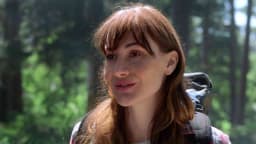
Equal Pay Day 2019, created by Mortierbrigade for Belgium's ZIJkant, uses provocative NSFW film to argue men must share unpaid household work to close the

How Mortierbrigade Made Belgium's Gender Pay Gap Impossible to Ignore
Equal Pay Day 2019 is a Belgian public interest film campaign created by Mortierbrigade, Brussels, for the advocacy brand Equal Pay Day, associated with Belgian feminist organisation ZIJkant, and released in February 2019 to mark Equal Pay Day on March 14 — arguing that men must share unpaid household work to close the gender pay gap.
The campaign carries a single, unambiguous slogan: "Share the work and close the gender pay gap." Its creative premise places men in deliberately unpleasant, unglamorous, and explicitly adult situations — what the campaign frames as the "shitty jobs" routinely absorbed by women in domestic life. The logic is direct: if men were willing to do those jobs at home, women would have more time and capacity to compete equally in paid employment. The film medium was chosen for its ability to carry that argument with discomfort, humour, and visceral force, and the work was flagged NSFW on release, a designation that itself signalled the campaign's refusal to soften its message.
In Belgium, the gender pay gap stood at 20 percent before tax at the time of the campaign's launch, according to ZIJkant. That figure gave Mortierbrigade a hard number to work against, and the 2019 execution represented a deliberate shift in creative strategy — away from earlier campaigns that used provocative inequality metaphors and toward a direct challenge to masculine norms around domestic labour. The campaign sits within a long-running series: as reported by Mortierbrigade Prezly, the agency had been producing quirky Equal Pay Day campaigns for over ten years by 2022, making 2019 one instalment in a sustained public interest commitment rather than a one-off activation. Clapboard Score: 67/100.
Mortierbrigade's strategic insight for Equal Pay Day 2019 rests on a specific causal argument. The campaign's focus, as documented by ZIJkant, was the unequal division of unpaid household work and its direct connection to the gender pay gap in Belgium. Rather than targeting discriminatory employers or lobbying for legislative change — approaches taken by peer campaigns elsewhere in Europe — Mortierbrigade directed its message at men's behaviour in the domestic sphere, framing household labour participation as a precondition for pay equality.
This approach reflects a broader shift in how Belgian advocacy has chosen to address structural inequality. The narrative premise of the 2019 campaign assigns agency and responsibility explicitly to men, using the language of masculinity against itself: the same cultural associations that define "manly" work in physical, demanding terms are applied to domestic drudgery to argue those tasks are equally worthy of male participation. Strategic planner Dorien Mathijssen shaped this framing, ensuring the campaign's provocation was anchored in a coherent behavioural argument rather than spectacle alone.
In Belgium, where the gender pay gap reached 20 percent before tax according to ZIJkant, the domestic labour angle gave Mortierbrigade a differentiating creative territory. Comparable public interest campaigns addressing pay equality — including work produced internationally by agencies such as Publicis and McCann for clients including UN Women — have historically leaned on data visualisation or testimonial formats. The 2019 Equal Pay Day campaign rejected both in favour of absurdist, NSFW film comedy, a genre choice that aligned with Mortierbrigade's documented history of quirky campaign-making for this client, as noted by adsoftheworld.com. The soundtrack, "Manly Men" written by poet Greg Keeler, reinforced the strategic framing by scoring scenes of unglamorous domestic work with ironic masculine bravado.
Director Lionel Goldstein led the film's production for Czar.be. Goldstein, a recurring collaborator in Belgian commercial and public interest filmmaking, was tasked with translating a premise that could easily have collapsed into cheap shock value into something with comic timing and tonal precision. The film depicts men performing unpleasant or grotesque versions of ordinary domestic tasks, and its effectiveness depends on walking the line between disgust and absurdity without losing the argumentative thread.
Director of photography Grimm Vandekerckhove handled the visual language of the piece, while editor Manu Van Hove shaped its rhythm — a critical responsibility in a campaign where comic timing carries much of the persuasive weight. Grading was handled by Joost Van Kerckhove, with online finishing by Robin De Praetere. Executive producer Eurydice Gysel oversaw the production, with Lander Engels producing and Charlotte Coddens serving as head of production on the agency side.
The creative team at Mortierbrigade was led by creative directors Jens Mortier, Joost Berends, and Philippe De Ceuster, as documented by adsoftheworld.com and luerzersarchive.com, with creatives Yana Gestels and Zoé de Priester responsible for the concept's development. Art direction was handled by Tanker, whose work gave the film its visual grammar — functional, unflattering, and deliberately unglamorous in a way that serves the campaign's argument. Stunt coordinator Marco Maes was credited, a detail that confirms the production's commitment to practical, physical filmmaking rather than digital artifice. The soundtrack choice — Greg Keeler's "Manly Men" — was as deliberate as any production decision, using ironic musical masculinity to underline the campaign's core provocation about who performs domestic work and why.
No verified performance data for the Equal Pay Day 2019 campaign is publicly available. Metrics such as reach, earned media value, or measurable shifts in public attitude toward the gender pay gap in Belgium have not been published by Mortierbrigade, ZIJkant, or any independently verifiable source. This is common for long-running public interest campaign series, where advocacy organisations rarely publish campaign-by-campaign effectiveness data.
What the campaign's structure reveals, however, is a considered approach to durable public interest communication. By embedding the 2019 execution within a campaign lineage extending over a decade — as reported by mortierbrigade.prezly.com — Equal Pay Day Belgium built institutional recognition that individual campaign metrics cannot fully capture. The NSFW designation and the quirky, absurdist tone served a specific function: generating organic discussion and press coverage in a media environment where public service campaigns compete directly with commercial content for attention.
The decision to anchor the narrative in male domestic behaviour rather than employer conduct is structurally significant. It identified an audience — men — who are rarely the primary target of gender pay gap communications, and gave them a concrete behavioural ask rather than an abstract moral appeal. The slogan "Share the work and close the gender pay gap," as documented by ZIJkant and adsoftheworld.com, functions both as a campaign tagline and as a policy-adjacent argument, which extends the campaign's utility beyond its broadcast window. The Clapboard Score of 67/100 reflects a campaign with genuine creative clarity and strategic focus, held back by limited documented creative ambition in execution relative to the strength of its central idea.
Equal Pay Day 2019 is a Belgian public interest film campaign created by Mortierbrigade for advocacy organisation ZIJkant, released in February 2019. It depicts men performing unpleasant domestic tasks to argue that sharing household work is necessary to close Belgium's gender pay gap, which stood at 20 percent before tax according to ZIJkant.
Mortierbrigade identified the unequal division of unpaid household work as a primary driver of Belgium's gender pay gap. The campaign used scenes of men in unglamorous domestic situations to challenge masculine norms around household labour, arguing directly that men sharing domestic work would free women to participate more equally in paid employment.
Lionel Goldstein directed the Equal Pay Day 2019 film, produced by Czar.be. Goldstein worked alongside director of photography Grimm Vandekerckhove and editor Manu Van Hove. Creative directors Jens Mortier, Joost Berends, and Philippe De Ceuster led the Mortierbrigade team, as documented by adsoftheworld.com and luerzersarchive.com.
Belgium's gender pay gap stood at 20 percent before tax at the time of the campaign's February 2019 launch, according to ZIJkant. This figure provided the campaign's core statistical foundation and gave Mortierbrigade's creative argument — that sharing domestic work directly affects pay equality — a concrete national context.
Mortierbrigade had been creating Equal Pay Day campaigns for over ten years by March 2022, as reported by mortierbrigade.prezly.com. The agency's work for the campaign dates to at least 2011, making the 2019 edition one instalment in a sustained public interest series rather than a standalone activation for ZIJkant.
A Clapboard Score of 67/100 reflects a campaign with clear strategic focus and a distinctive creative premise rooted in Belgium's documented gender pay gap. The score acknowledges the strength of Mortierbrigade's central argument and its quirky execution while noting that the campaign's creative ambition in production does not fully match the clarity of its core idea.
.webp)
Creative Collaboration Platform: The Backbone of Modern Creative WorkWhat is a creative collaboration platform?Clapboard defines a creative collaboration platform as the operational core for today’s distributed creative teams. This is not a collection of digital collaboration tools stitched together; Clapboard’s system


Understanding the Creative Production MarketplaceWhat is a Creative Production Marketplace?Clapboard defines a creative production marketplace as a structured ecosystem where brands, agencies, and production talent converge to execute video, advertising, and branded content at scale. Unlike the legacy agency or freelanREAD FULL ARTICLE

The Urgent Need for a Creative Production Operating SystemWhy Traditional Creative Production Models Break DownClapboard sees the creative production landscape shifting under pressure. Content velocity is no longer a buzzword—it’s a mandate. Modern advertising demands relentless output across dozens of channels, each wREAD FULL ARTICLE